

General News
Taxing, Borrowing the Future Without Building: What Has Nigeria’s Fiscal Authority Done for the Real Sector?


By Blaise Udunze
In today’s Nigeria, one uncomfortable truth has become glaring that the fiscal authority collects, but it does not build. It borrows, but it does not produce. It taxes, but it does not empower. For years, the Nigerian government has pursued fiscal policies more obsessed with revenue than with results.

The removal of fuel subsidy in 2023 was supposed to mark a new dawn. It was sold to Nigerians as a path to fiscal freedom as a step that would redirect over $10 billion annually from consumption subsidies to capital investment, infrastructure, health care, education and job creation. Two years later, that promise has vanished into a fog of political spending and bureaucratic complacency.
The question now is not how much the government has collected, but what it has done with it. What tangible impact have these revenues from taxations and borrowings had on the real sector which is the part of the economy that actually produces goods, creates jobs, and drives development?
A Fiscal Authority Fixated on Taxation, Not Production
Nigeria’s fiscal policy in recent years has tilted dangerously toward aggressive revenue collection. Under immense pressure to grow non-oil income, the Federal Inland Revenue Service (FIRS) has expanded its reach to virtually every corner of the economy. From VAT on electricity and telecommunications (data usage) to call credits, bank transactions to stamp duties on bank transfers, to levies on postal deliveries for online purchases, almost nothing escapes the government’s tax net.
The average Nigerian entrepreneur now faces a labyrinth of taxes such as company income tax, education tax, signage fees, land use charges, and a myriad of local levies. Yet the same entrepreneur operates in an environment defined by power shortages, failing infrastructure, forex volatility, and regulatory uncertainty. These are not conditions for business growth; they are conditions for extinction.
Taxation, in principle, should be a partnership between the state and the productive class as a social contract that trades compliance for development. But in Nigeria, taxation has become punishment, not partnership. The fiscal authority appears to be taxing poverty to sustain bureaucracy. It has forgotten that the strength of any economy lies not in how much it extracts, but in how much it enables.
Taxing Without Building
For a government that collects billions of naira daily from taxes, surcharges, levies, and newly designed revenue streams, it is difficult to find any visible reflection of these revenues in the productive base of the economy.
Based on FIRS and government releases, tax collections amounted to about N34 trillion in 2023-2024, and non-oil receipts reached around N20.6 trillion in January to August 2025, indicating total government collections of at least N50-N55 trillion since mid-2023, depending on how partial-year and FAAC items are aggregated and without double counting.
The contradiction is glaring that Nigeria’s fiscal managers have become more efficient at collecting taxes but less effective at building the economy that sustains those taxes.
The reality is sobering. SMEs that stand as the true backbone of national productivity are closing shop in droves. The cost of diesel, transportation, and rent have tripled, while the naira’s freefall continues to eat away at margins. Rather than offer relief, fiscal agencies have tightened the noose with new charges and penalties. The result is a climate of exhaustion and economic fatigue.
Borrowing Without Building
If taxation is squeezing businesses dry, borrowing is suffocating the nation’s future. As if taxes were not enough, Nigeria’s fiscal authorities have doubled down on borrowing, amassing debts at an unprecedented rate. These have resulted to spiral of loans justified in the name of development but rarely seen in tangible outcomes.
As of mid-2025, Nigeria’s total public debt has ballooned to N152.4 trillion, a staggering 348.6 percent increase since President Bola Tinubu assumed office in June 2023, when the figure stood at N33.3 trillion. For a country already struggling to meet basic obligations, this is unsustainable.
Reflecting on the wider African context, the picture is equally alarming. The continent’s external debt now exceeds $1.3 trillion, with debt servicing costs hitting $89 billion this year alone. Nigeria is one of the hardest hits, not merely by the size of its debt, but by its lack of productive return.
Even as businesses groan under the weight of multiple taxation, the Federal Government has kept its foot firmly on the borrowing pedal. Between July and October 2025, Nigeria’s fiscal authorities secured over $24.79 billion (plus €4 billion, ¥15 billion, N757 billion, $500 million in Sukuk) in new borrowings and facilities, the bulk of which were justified as “development financing.” Yet the real sector still awaits to feel the promised impact.
Over 25 percent of Nigeria’s annual revenue now goes into debt servicing, leaving little fiscal space for investment in health, education, or industry. Experts warn that when over 90 percent of government revenue is consumed by old debts, governance becomes survival, not progress.
Uche Uwaleke, professor of finance and capital markets at Nasarawa State University, said the high cost of debt repayment continues to undermine the country’s economic potential.
“Nigeria’s debt service ratio is inimical to economic development, chiefly because what could have been used to build infrastructure and invest in human capital is used to service debt,” Uwaleke told BusinessDay. “The opportunity cost for the country is high. To ensure debt sustainability, the government should tie future borrowings to self-liquidating projects that can generate revenue to repay the loans.”
At the 2025 IMF and World Bank Annual Meetings in Washington D.C., global leaders again pledged to tackle developing countries’ debt burdens. But as Nigeria’s borrowing continues unchecked through Eurobonds, sukuk, and bilateral loans. The question Nigerians should be asking is simple, who benefits from all this borrowing?
What is more troubling is the government’s pattern of borrowing to service past debts and fund recurrent expenditures. Instead of financing projects that create value, loans are spent plugging budget holes. The chain of debt grows longer, and the productive economy remains static.
We are witnessing a fiscal irony as in a nation borrowing to survive, not to thrive.
The Missed Opportunity of Subsidy Savings
The removal of fuel subsidy was supposed to free up capital for productive investments. Instead, it has freed up more money for recurrent consumption. Subsidy funds are now shared monthly among the three tiers of government, with no visible developmental footprint.
Nigerians were told that the subsidy windfall would improve power supply, roads, and transport infrastructure. But more than a year later, there is little to show.
In one of the world’s largest oil producing nations, fuel prices quintupled, increasing more than 514 percent from N175 in May 2023 to N900. Across the country, small businesses are closing down; transport fares remain unbearable; and electricity supply remains erratic. The fiscal authority appears to have replaced subsidy waste with revenue waste.
Instead of using subsidy savings to ignite productivity, the funds have been channeled into the same unsustainable cycle of political spending, salary payments, and administrative overheads. This is not reform, it’s redistribution without responsibility.
Where Is the Fiscal Policy Coordination?
The disconnect between Nigeria’s fiscal and monetary authorities has become a fundamental barrier to progress. While the Central Bank of Nigeria (CBN) tightens liquidity to control inflation, the fiscal authority simultaneously floods the economy with new taxes and levies, inflating business costs and undermining the same stability the CBN is trying to achieve.
The contradictions are endless. The CBN preaches financial inclusion, yet fiscal agencies impose bank transfer duties that discourage banking usage. The CBN claims to promote SME credit schemes, yet fiscal authorities drain disposable income with new taxes.
This absence of policy synergy sends mixed signals to investors and citizens alike. Businesses cannot plan, investors cannot forecast, and even the government’s own intervention funds lose impact. Nigeria’s economic management, as it stands, resembles an orchestra without a conductor.
State Governments as the Silent Beneficiaries
While the federal government collects the bulk of taxes, state governments have become silent beneficiaries of the subsidy savings. Each month, they receive billions from FAAC allocations swollen by oil receipts, VAT, and subsidy removals.
Based on data from NEITI and OAGF/NBS monthly communiqués, the conservative FAAC disbursement total from June 2023 to June 2025 stands at approximately N25.65 trillion, covering only months with publicly available and verifiable reports.
Yet, few states have anything to show for it. Industries are dying, roads are deteriorating, and capital budgets are chronically underfunded. In many states, governance has been reduced to salary payments and political campaigns, not development.
Nigeria’s fiscal success cannot be measured by how much Abuja collects but by what states deliver. Development is a chain, if one link is weak, the entire system collapses. Yet, most states continue to depend on federal allocations as a feeding bottle rather than a development engine.
The federal fiscal authority cannot claim progress while sub-national governments squander shared revenues without accountability. Until FAAC allocations are tied to measurable developmental outcomes, Nigeria will keep sharing poverty, not prosperity.
The Real Sector being Neglected and Starved
Nigeria’s real sector, particularly SMEs continues to suffer neglect. Despite contributing about 48 percent of GDP, accounting for over 90 percent of businesses and employing over 80 percent of the workforce, SMEs receive less than 5 percent of total bank credit. Fiscal policy has done little to change that.
Rather than providing targeted tax reliefs, infrastructure subsidies, or credit guarantees, government policies have worsened the cost of doing business. The manufacturing sector’s growth rate remains sluggish, and capacity utilisation in many factories has dropped below 50 percent.
Manufacturers grapple with power cuts, forex scarcity, and multiple taxation. Many are forced to rely on expensive diesel generators, further eroding competitiveness. Import duties remain high, ports are congested, and logistics costs keep rising.
Ajayi Kadiri, Director-General of the Manufacturers Association of Nigeria (MAN), recently captured this frustration bluntly:
“We can’t plan under fiscal chaos. Manufacturing in my village is extremely expensive. Multiple levies, some without a legal basis, are suffocating businesses. You can wake up one day and see a 50 percent increase in port charges without prior consultation. That’s not policy that’s chaos.”
Kadiri’s statement is more than an industry complaint; it is a mirror of national dysfunction. When manufacturers cannot plan, the economy cannot grow. When fiscal policy becomes unpredictable, investment flees. The result is a landscape of abandoned factories, unemployed youth, and shrinking export potential.
In effect, the fiscal authority is extracting value without creating it. Government has become an expert in revenue collection but a failure in economic coordination.
The Human Cost of Fiscal Mismanagement
Behind the numbers lies a painful reality. Every percentage increase in tax or tariff translates into higher prices, lower wages, and fewer jobs. The removal of subsidy without a viable safety net pushed millions deeper into poverty. Despite the inflation claimed to have eased to 18.02 percent from 20.12 is still eroding purchasing power and diminished consumer demand, which is the lifeblood of production.
The market woman who pays for electricity she rarely gets, the manufacturer laying off workers due to diesel costs, the young entrepreneur crushed by levies, as these are not statistics. They are the casualties of a fiscal system that prioritises collection over compassion.
Instead of designing targeted support, energy rebates, SME tax credits, or rural infrastructure programs the fiscal authority has chosen the easier path by taking more from those already struggling. This short-term approach sacrifices long-term productivity for instant revenue gratification.
Need for Building, Not Just Taxing
To rescue the economy, Nigeria’s fiscal managers must adopt a production-first mindset. A nation cannot tax or borrow its way to prosperity. It must produce, build, and export its way there.
Rebalance fiscal priorities.
– Channel subsidy savings into infrastructure, agro-industrial hubs, and SME credit facilities not recurrent spending.
– Reward production, not compliance. Offer tax breaks for local manufacturers, exporters, and innovators.
– Enforce fiscal transparency. Every borrowed dollar should be tied to measurable outcomes, with clear public reporting.
– Align fiscal and monetary policy. End the contradiction between tax expansion and credit tightening.
– Demand state-level accountability. States must show what they are doing with FAAC allocations through verifiable projects, not political slogans.
The Urgency of a Fiscal Rethink
Nigeria’s fiscal policy has lost its moral and developmental compass. It has become a machine that extracts without empowering as a structure more focused on sustaining government than building an economy.
Taxation should create an environment where businesses thrive. Borrowing should build the future, not mortgage it. And subsidy savings should become the foundation of national renewal, not political redistribution.
Until Nigeria’s fiscal authorities understand that revenue collection is not development, and that loans are not progress, the economy will remain trapped in a vicious cycle of taxing without building, borrowing without producing, and spending without transforming.
Blaise, a journalist and PR professional writes from Lagos, can be reached via: [email protected]


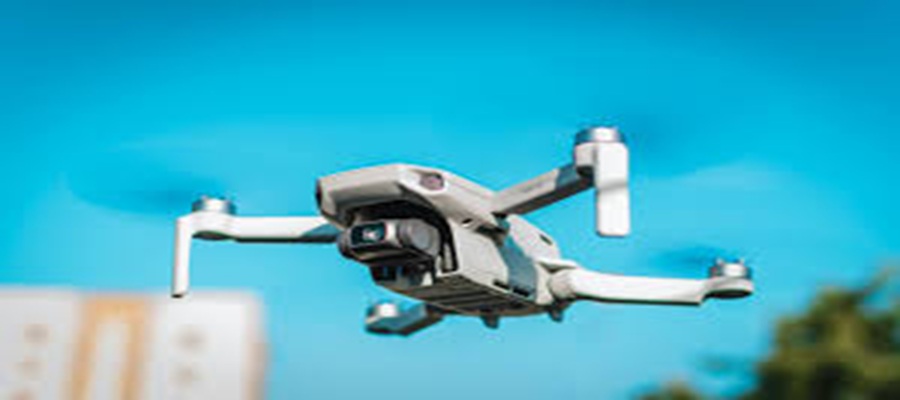
Federal government said it is committed to the implementation of stricter, more organized drone regulations to balance innovation with national security.

This came as stakeholders at the 6th Dronetecx Conference and Exhibition in Lagos called for stronger regulation and a comprehensive national policy framework for unmanned aircraft systems as the Nigeria Civil Aviation Authority (NCAA) launched a Drone Portal.
Speaking at the conference, representatives of Office of the National Security Adviser (ONSA), the Ministry of Aviation and Aerospace Development and NCAA, said Nigeria is intensifying efforts to balance innovation with national security as drone operations continue to expand across sectors such as agriculture, healthcare, oil and gas, logistics, construction and security.
Mallam Nuhu Ribadu, national security adviser, represented by Commodore Oscar Mbanu, deputy director, Defence Affairs, said the federal government had adopted a strict but innovation-friendly regulatory framework requiring security clearance, end-user certification and operational approval before drones can be deployed.
He disclosed that a multi-agency drone task force involving the NCAA, security agencies and other relevant bodies had been established to strengthen monitoring, enforcement and accountability, while the End-User Certificate system would help track imported drones and prevent misuse.
Also speaking, Mahmud Kambari, permanent secretary, Ministry of Aviation and Aerospace Development, represented by Mrs Rubiyatu Aliu, director of Air Safety and Administration in the Ministry of Aviation and Aerospace Development, announced the launch of a new digital drone registration portal and Flyer ID scheme introduced by the NCAA in partnership with Dronetecx to improve oversight and proper registration of operators.
She urged drone operators to comply with regulatory requirements, warning that innovation must operate within the law.
Captain Chris Najomo, director general of NCAA, said the Federal Government was moving from policy discussions to implementation with plans to establish a comprehensive national drone policy and roadmap approved by Mr Festus Keyamo, minister of Aviation and Aerospace Development.
He noted that the framework would complement existing aviation regulations and provide clearer direction for investors and operators in the rapidly growing industry.
Mr Fortune Edu, conference organiser and founder of Dronetecx, said Nigeria must urgently position itself as a leading player in Africa’s emerging drone economy or risk losing opportunities to countries already advancing in the sector.
He explained that the proposed national framework would support innovation, research, advanced air mobility and job creation while preparing the country for future drone applications including cargo delivery and passenger transportation.
Stakeholders at the conference expressed optimism that stronger collaboration between government agencies and industry operators would accelerate the safe growth of drone technology and support national development.

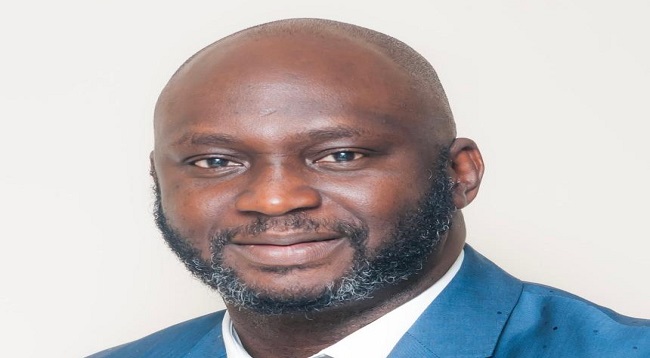
Dr. Olasupo Olusi, the Managing Director/Chief Executive Officer of Bank of Industry, has described the media as Nigeria’s most important development partner, noting that effective communication remains critical to national growth and institutional impact.

Speaking during an interactive session with media partners in Lagos, Olusi said journalists play a central role in shaping development outcomes by amplifying progress, accountability, and national aspirations.
“The media is the biggest agent of development anywhere,” he said. “Communicating what needs to be done and what has been done is critical in the journey of any development institution.”
Olusi used the engagement to unveil major milestones in BOI’s ongoing transformation agenda, which he said is focused on strengthening support for Nigeria’s private sector and driving inclusive economic growth.
On the BOI he met when he was appointed, Olusi said: “I inherited a very strong institution. The Bank of Industry was already one of the leading development finance institutions in Africa, and certainly a respected institution in Nigeria. I usually describe it as inheriting a Rolls-Royce.” He noted that the current leadership is innovating and repositioning the Bank to become even more effective in delivering long-term financing and developmental impact for Nigeria’s private sector.
“I came with the mindset of a development economist who truly believes in impact-making,” he said.
Olusi revealed that BOI has established an Impact Fund financed through a percentage of the Bank’s annual profits to support strategic national investments.
According to him, the Fund invested $15 million in the New Africa Medical Centre of Excellence in Abuja and N25 billion in the National Credit Guarantee Company (NCGC) to improve access to financing for MSMEs lacking collateral.
“The objective is to remove the long-standing barriers preventing small businesses from accessing finance,” he explained.
The BOI boss also announced plans to commence non-interest banking operations following final regulatory approvals from the Central Bank of Nigeria.
He said the initiative would provide inclusive financing options for Nigerians who prefer non-interest financial products.
In addition, Olusi disclosed that BOI has established more than 20 youth and skills hubs nationwide focused on ICT, agro-processing, fashion, printing, and entrepreneurship development.
“These hubs are designed to help young Nigerians learn, innovate, package products, and eventually establish sustainable businesses,” he stated.
Reaffirming BOI’s commitment to Nigeria’s economic transformation, Olusi said the Bank remains focused on creating measurable impact across communities and sectors nationwide.
“The opportunities for making a difference in Nigeria are enormous across all sectors and spheres of life,” he added.

Google’s annual I/O developer conference is a hub for exciting product updates. This year, “The Android Show: I/O Edition” offered an early preview of Android’s future. Packed with groundbreaking news, these updates will transform our Android interactions. Android, the world’s most popular OS with over 3 billion active devices, continues to innovate, bringing practical benefits and new possibilities.

For people in Nigeria, these advancements promise easier, safer, and more personal digital lives driven by Gemini Intelligence. From handing off your to-do list to unbreakable theft protection, dive into how Android’s 12 latest offerings will empower users across the continent:
1. Hand Off Your To-Do List with Gemini App Automation
Google is introducing Task Automation, allowing Gemini to navigate multi-step tasks across your apps so you can focus on other things. Instead of manually switching between apps and copying data, you can simply point your camera at a travel brochure in a hotel lobby and say, “Find a tour like this on Expedia for a group of six.” You can also long-press your power button over a grocery list in your notes app and ask Gemini to build a shopping cart with all the items for delivery. Gemini handles the logistics in the background while keeping you in complete control.
Availability: Already in beta on S26 and P10 Pro devices, and launching on Galaxy Fold8 and Pixel 11 later this year.
2. Speak Naturally with “Rambler” (Powered by Gemini)
Google is announcing Rambler, a revolutionary voice typing feature in Gboard that captures your underlying intent rather than just transcribing your exact words. Because we don’t always speak the way we want to write, Rambler lets you talk naturally—including self-corrections, repeats, and filler words like “ums” and “ahs”—and turns those raw thoughts into a polished, concise message. It is built for a global community and can seamlessly switch between multiple languages, like blending English and Hindi, within a single sentence.
Availability: Rolling out first to Pixel devices starting in Q3 2026.
3. A Personal Browsing Assistant with Gemini in Chrome
Google is announcing a built-in personal browsing assistant for Chrome on Android, designed to help you research and understand web content without ever leaving the app. By tapping the Gemini icon on your toolbar, the assistant opens at the bottom of your display so you can ask specific questions about the webpage you are currently viewing. Whether you need a quick summary of a long article or a detailed explanation of a complex topic, this tool seamlessly enhances your mobile web experience.
Availability: Rolling out to select Android 12+ devices with 4GB+ of RAM in the U.S. starting at the end of June.
4. Instant Image Customization with Nano Banana
Google is introducing Nano Banana, an innovative feature that lets you instantly create and customize images directly within your Chrome browser. For example, if you are studying for an online exam, you can simply ask your browsing assistant to turn a text-heavy page into an informative infographic. Similarly, if you are scrolling through apartment listings, you can ask the assistant to alter a photo of an empty room to include modern living room essentials, allowing you to instantly visualize ideas on the go.
Availability: Available in Chrome for Android starting next month.
5. Share with Anyone Using Quick Share & AirDrop
Google is announcing a massive expansion to Quick Share, making it compatible with AirDrop to solve the universal hassle of sharing files between different phone brands. If you are at a family gathering and want to share a video with friends using iOS, you can simply use Quick Share on your Android phone to generate a QR code. Scanning this code lets you instantly share high-quality media across devices via the cloud, breaking down the barriers between operating systems.
Availability: Expanding to more partners including Samsung, OPPO, OnePlus, Vivo, Xiaomi, and HONOR this year.
6. OSmosis: Wireless iOS-to-Android Transfer
Google is announcing OSmosis, a completely overhauled, wireless iOS-to-Android transfer process that makes switching phones easier than ever. You can now wirelessly migrate your passwords, photos, messages, favorite apps, contacts, and even your precise homescreen layout directly from your iPhone to your new Android device without needing a cable.
Availability: Launching first on new Samsung Galaxy and Google Pixel devices later this year.
7. Pro-Grade Creator Tools Natively on Instagram
Google is announcing an expanded partnership with Meta to bring pro-level camera and editing features natively to the Instagram app on Android flagships. Android creators can now enjoy Ultra HDR capture for lifelike, vibrant colors, along with built-in video stabilization to keep footage smooth while walking or dancing. The update also includes deep Night Sight integrations, ensuring you can capture the perfect shot even in the dimmest settings.
Availability: Rolling out to flagship devices throughout Q3 and Q4 2026.
8. Reclaim Your Time with “Pause Point”
Google is introducing Pause Point, a new digital wellbeing tool designed to help you stop mindless, autopilot scrolling. When you try to open an app you have identified as distracting, Pause Point gives you a mandatory 10-second breather to ask yourself, “Why am I here?” During this pause, you can do a quick breathing exercise or set a strict timer for your app usage. To ensure you stick to your goals, turning the feature off completely requires you to restart your phone.
Availability: Available in Q4 2026 across all countries and languages.
9. Unbreakable Biometric Theft Protection
Google is announcing a powerful new anti-theft measure that enhances the “Mark as lost” feature with biometric authentication. If your device is snatched, you can now lock it using your fingerprint or face in addition to the standard passcode. This provides an immediate, unbreakable layer of security, meaning that even if a thief spied on your PIN before stealing your phone, they will not be able to turn off device tracking or re-access your personal data.
Availability: Rolling out as a built-in feature on devices running Android 17.
10. Express Yourself with Noto 3D Emoji
Google is announcing Noto 3D, a massive update to the way we express ourselves with nearly 4,000 newly designed emoji. Moving away from flat 2D icons, these new 3D emoji bring a touch of physicality and weight to your digital conversations. Whether you are sending a wrapped burrito or a joyful smile, this visually vibrant collection bridges the digital divide, representing the difference between a message simply being received and a true presence felt.
Availability: Available across Google platforms, starting with Pixel phones later this year.
11. Fill Out Forms in a Single Tap with Gemini Personal Intelligence
Google is announcing an evolution to Autofill with Google, powered by Gemini’s Personal Intelligence. This new feature allows Android to automatically fill in complex forms across your apps and Chrome browser. By securely pulling relevant information from your connected apps or saved photos—such as passport details or frequent flyer numbers—your device saves you from the universal hassle of typing out tiny text on a mobile screen.
Availability: Rolling out in Q2 2026 for phones, and Q4 2026 for laptops and tablets.
12. Build Custom Widgets with Gemini Intelligence
Google is introducing Create My Widget, taking the first step in generative UI to give you more ways to make your device truly yours. You can now build entirely custom widgets just by describing what you want using natural language. For example, a meal prepper can ask for a widget that suggests high-protein recipes every week, or a cyclist can create a weather dashboard that surfaces exact wind speed and rain stats right on the home screen.
Availability: Launching in Q3 2026 for phones, watches, laptops, and tablets.

Lagos Captures over 6.4m Residents in LASRRA Database

FG to Launch Nationwide Free Digital TV Platform June 17

FG, World Bank Launch $65m SPESSE Funding for 24,000 Nigerians

FG to Balance Innovation with National Security with Stronger Drone Regulations

Kaspersky Challenges IT Leaders with Next-generation Cyber Protection Simulations

Vitel Wireless Partners Fintechs to Expand Access to Services

Kaspersky Discovers Vulnerability in Qualcomm Snapdragon Chips that can Lead to Data Loss & Device Compromise

MTN, VDT, Zoracom, Digital Realty Back 2026 Girls in ICT Campaign

MTN Suspends Data, Airtime Borrowing Service over New FCCPC Lending Rules

Bank Customers to Pay N1,500 for ATM Card Issuance, Replacement – CBN




 Telecom2 days ago
MTN, Airtel, Glo Under Pressure as FG Demands Better Service Delivery

 E-Financial2 days ago
Mastercard, BMONI Launch Multi-Currency Payment Cards in Nigeria

 E-Business2 days ago
Firm Warns of Phishing Attacks via Compromised Amazon Simple Email Service Accounts

 General News1 day ago
PalmPay, LASUBEB Deepen Efforts to Keep More Children in School

 News2 days ago
Dr. Olusola Teniola, Honoured with Yoruba Study Group Golden Leadership Excellence Award

 General News2 days ago
Moniepoint Partners GDG Lagos, Women Techmakers to Empower the Next Generation of Women Architects in Tech

 Broadcasting2 days ago
Metro Digital, Nigerian Firm Accuses Multichoice Of Refusal to Obey Court Judgements

 General News2 days ago
Google Disrupts AI-Driven Cyberattack, Warns of Emerging Security Risks