

E-Business
5 Sure Ways To Get Free Wi-Fi When You Travel


Regardless of the fact that you have mobile data, you will definitely welcome the opportunity to connect to a free WiFi. Using WiFi instead of your network is faster and it saves your battery life.
So, WiFi is perfect for a traveller who needs the World Wide Web to work. This said, do you know that you can actually get WiFi for free when travelling? Jumia Travel, the leading online travel agency shares some of the ways to get free WiFi.
Only book hotels with free WiFi
When booking a hotel, you should make it clear that you want the one that offers free WiFi. Some hotels offer it as an incentive to attract more bookings.
Know businesses that offer free WiFi
Today, there are some places or businesses you visit that you will get free WiFi. Restaurants, schools and gyms now have free WiFi.
Browse free sites
You can browse some selected sites for free. Here, you do not need to connect to any WiFi. For example, you can surf Facebook for free on some mobile networks in Nigeria.
Use your friend’s phone as a hotspot
If you happen to be travelling with someone, simply use their phone as your hotspot. Ensure that you let them know before connecting to their hotspot.
Use a WiFi hotspot database
Using a WiFi database will show you all of the places in a particular location where you can find free WiFi. WeFi is great for this purpose. This is a platform where you simply type in your location and it populates the map with places offering free WiFi. There are also WeFi apps for iPhone and Android you can download.



Weebly, US-based free, beginner-friendly, drag-and-drop website builder and eCommerce service, will no longer be available for customers in 67 countries, including Nigeria, after September 2026, according to an email seen by Nigeria CommunicationsWeek.

Weebly said it is “winding down” services in different nations “due to changes in regulation and to simplify our global operations”.
The firm released a timeline of gradual changes, to help existing users access their data before the site shuts down.
Starting June 29, customers of 67 countries were no longer able to publish any new pages.
September 27, 2026: Weebly websites will be unpublished.
Before this date, users should download site content and data. Follow these steps:
Go to Account Settings, click on My Data, and select Download My Data.
This will help you migrate your content to another website provider, or retain it.
Concerned about privacy? Ask Weebly to delete your data, through the Erase Data and Forget Me option under the My Data tab on your account page.
December 26, 2026: Last date of accessing Weebly account.
Until this date, you will have access to the account, although sites will be unpublished.
This period helps users move their site, domains, and data to another service.
Domain names can be moved to another registrar only after 60 days from the registration date.
According to the Weebly website, users must make sure that they do not make changes to your registrant contact information (email, phone number, first/last name), as this will lead to a 60-day registrar lock and prevent you from transferring your domain name.
Note that domain name transfers work differently for country-specific domains; users must contact Weebly’s support team for assistance.
How to unlock, transfer domain name
From your Weebly Dashboard, go to websites, and click on Domains, then select Manage Domain.
Disable registrar lock, get EPP authorisation code, and copy the full code.
Disabling registrar lock will also disable privacy protection. It is important to set privacy protection once again with the new registrar.
Follow the instructions for the newly chosen registrar as the rest of the transfer process will be managed by them
Why is Weebly winding down?
While the firm attributed it to “a change in regulation,” online users have argued that Square, which acquired Weebly in 2018, is pushing its platform ‘Square Online’.
Square is originally a US-based payment processor, and the firm says it has since evolved into the “largest business tech platform”.
It calls Square Online a “free online store” but clarifies that those who do not sell online can also use it to build their websites.
In an earlier support update for the Weebly Website Builder, Square Online was consistently referred to as a better alternative, although at the time, it was said that Square “has no plans to discontinue the Weebly website builder”.
Which countries will Weebly no longer be available in? Albania, Algeria, Andorra, Armenia, Aruba, Azerbaijan, Bahamas, Bahrain, Bangladesh, Barbadoa, Belarus, Benin and Bosnia and Herzegovina.
Others are: Cambodia, Cameroon, Chile, Colombia, Congo, Costa Rica, and Côte d’Ivoire.
Also affected are: Ecuador, Egypt, Ethiopia, French Polynesia, Gabon, Georgia, Ghana, Guinea, Iceland, Jordan, Kazakhstan, Kenya, Laos, Malaysia, Mauritius, Moldova, Montenegro, Morocco, Nepal and New Caledonia.
The rest are: Nigeria, Oman, Pakistan, Palau, Paraguay, Peru, Russia, Saudi Arabia, Senegal, Serbia, Sierra Leone, Singapore, South Korea, Suriname, Taiwan, Tajikistan, Tanzania, Thailand, Turkey, Uganda, Ukraine, United Arab Emirates, Uruguay, Uzbekistan, Vietnam, Zambia and Zimbabwe.
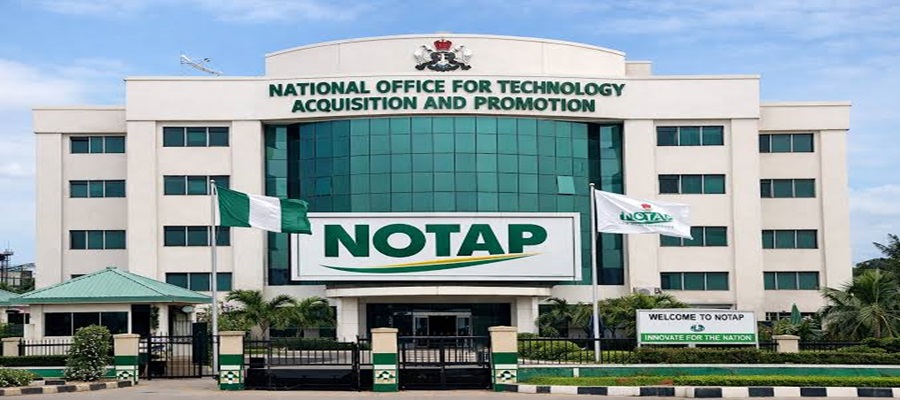
National Office for Technology Acquisition and Transfer (NOTAP), has commenced the process of patenting and commercialisation of research works by universities and other research institutions in the country.

Dr. Obiageli Amadiobi, director general of NOTAP
Dr. Obiageli Amadiobi, director general of NOTAP, stated this in Abuja, during an interaction with journalists on her achievements since assuming office.
Speaking on the theme, “Strengthening Indigenous Capacity: NOTAP’s Drive for Technology Transfer, Local Content Development, and Innovative activities,” Amadiobi said the agency had involved both the academia and industry so that researchers can work on topics brought forward for commercialisation purpose.
“My minister is very intentional about this– very intentional about commercialisation of research results, which we have already submitted to him. They are meaningful researches, which we need to commercialise.
“We have established 69 intellectual property technology transfer offices in 69 universities that we are still counting. We have informed the vice chancellors of Nigerian universities to set up such offices and we will come and educate them on intellectual property and technology transfers.
“As we are doing this, we are also taking record of all the researchers of these universities and research centres and documenting them in a compendium.
“So, we have compendiums from the universities to us and we put them in a database. If you will recall, recently, the ministry, our supervising ministry, which is the Federal Ministry of Innovation, Science, and Technology, launched a programme titled Energise Commercialisation. This entirely was for commercialisation of all R&Ds,” she said.
On research Institutions carrying out research on areas of industry needs, she said, “NOTAP is bridging the gap between research and development with industry needs, “it is on our programme called the NITDF, NOTAP Industry Technology Transfer Fellowship. By this programme, we engage the universities and the industries, in what we call the triple helix. We liaise with the universities and the industries to sponsor, the industries will sponsor a Ph.D candidate in a Nigerian university to conduct relevant researches.
“They will provide the topics that they want researches for and such students will research on that with the assistance of the industries, because they wear the shoes, so they know where it pinches them. But usually, there are Ph.D candidates already established. This year alone, we certified about 15 of them to enter into this programme and they have gone into the various universities.
“And we are still looking for people to update some of the projects; the research topics we already have. But we are not getting enough persons to do the researches. So, we are going to do further advertisement to see if other candidates will come up.
Federal government has launched a drive to standardise operations across all Ministries, Departments, and Agencies (MDAs) through the nationwide adoption of the new National Digital Alphanumeric Postcode System.

Dr Bosun Tijani, minister of Communications, Innovation and Digital Economy, launched the initiative at a high-level stakeholder workshop on Thursday in Abuja.
The conference, themed “Embedding the Nigerian Digital Postcode in Public Service Delivery,” brought together key stakeholders to discuss the adoption of the system across government institutions.
Represented by Nadungu Gagare, permanent secretary of the Ministry, declared that the initiative was a critical pillar for the country’s economic and security framework.
“The Nigerian Digital Postcode represents far more than an improvement to postal services. It is a strategic national asset. Without accurate location intelligence, governments struggle to plan effectively, emergency responders lose valuable time, and financial institutions face verification challenges,” he said.
Tijani said the Alphanumeric digital postcode system was a pathway and a defining moment for Nigeria’s digital transformation under the Renewed Hope Agenda of President Bola Tinubu.
He said an accurate national addressing system would enable government agencies to plan better, improve emergency response, support credible census and elections, expand financial inclusion and ensure citizens were not excluded from essential services because of poor location data.
The Minister commended NIPOST for leading the initiative and urged MDAs and state governments to integrate the system into their operations, stressing that its success would depend on collaboration, interoperability, and nationwide adoption.
Omotola Odeyemi, postmaster general and chief executive officer, Nigerian Postal Service (NIPOST), explained that the digital postcode system creates a “common language of location” for the entire government.
She urged federal and subnational entities to integrate the infrastructure into their daily operations to maximise its value.
“Just as digital identity has helped to establish who a citizen is, this National Digital Postcode helps us to determine where services, opportunities, and interventions should be delivered. Its success will not be measured by the number of postcodes that we generate but by the lives that we improve,” the NIPOST boss explained.
Mrs Didi Esther Walson-Jack, head of the Civil Service of the Federation, represented by Dr Abdul Sule Garba, permanent Secretary of the Service Welfare Office, pledged full administrative backing for the rollout.
She noted that the civil service would be properly equipped to adapt to the data-driven system.
“The operationalisation of the Nigerian digital postcode is a strategic initiative that has the potential to significantly improve public administration, service delivery, and digital governance across the country,” Mrs Walson-Jack added.
The workshop featured live demonstrations and technical panel sessions focused on linking the new digital postcode system directly into national healthcare, social protection, education, and electoral planning.

GBB Engages Banks, Fintechs on Digital Trust, Regulatory Compliance

Beyondsurface Hairhub Equips Women Entrepreneurs with Practical Business Structure Skills at Free Lagos Seminar

A New Blueprint – How Strategic Collaboration is Rewriting the Narrative on Youth Drug Abuse

MTN Foundation, MUSON Deepen Investment in Nigeria’s Creative Economy Ahead of 2026 Graduation Activities

NCC Urges Nigerian Students to Help Stop Telecom Vandalism

Mobile Internet Gender Gap Widest in Africa – GSMA

Nigeria Launches FreeTV Nationwide

NASENI Moves to Digitize CCB’s 5m Assets Declaration and Operations

CANAL+ Partners Samsung to Pre-Load DStv Stream on New Samsung TVs In Nigeria, Other African Countries

UK, Nigeria Launch £15m Growth Programme to Accelerate Economic Transformation




 Telecom3 days ago
Xenophobia: MTN Nigeria Belongs to Nigerians, Not Only South Africans — Toriola

 E-Financial3 days ago
World Bank Okays New $1.25Bn Loan for Nigeria

 General News24 hours ago
NIS Deploys Advanced Surveillance Masts, other Critical Infrastructure to Boost Border Security

 E-Financial24 hours ago
Tokenization, Blockchain Technology will Transform Financial Institutions – IMF

 E-Business24 hours ago
Weebly Websites to Shut Down for Nigeria, 66 Other Countries from September

 Broadcasting24 hours ago
Obi, NDC Presidential Candidate Faces N50Bn Defamation Claim over Alleged Podcast Remark

 Telecom24 hours ago
No Plans for Fresh Tariff Hike – MTN

 E-Financial24 hours ago
FG Denies N8 Trillion ‘Shadow Budget’, Says IMF Quoted out of Context