

General News
How Digital Payment is Disrupting Traditional Payment System

By Adeniyi Ogunfowoke,
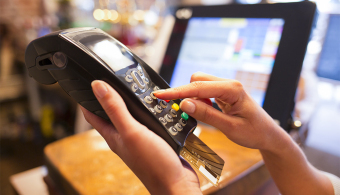
Digital payment is no doubt the future as more and more Nigerians embrace it. This is because whether we like it or not, the era of carrying or paying cash will soon come to an end.
The interesting thing here is that even in the rural areas, fintechs are setting up small shops where rural dwellers can send and receive money thus promoting financial inclusion and supporting the government’s cashless policy. This is perhaps why you don’t need a soothsayer to tell you that the traditional payment system is under threat.
There is still a lot of work to be done as Nigeria’s economy is still largely a cash-based economy despite the efforts of the Central Bank of Nigeria. Regardless, there has been so much progress. So, we will look at some of the progress being made and how the digital payment system encouraging Nigerians to carry little or no cash around to settle transactions.
Convenience
Your PayTv subscription was suddenly suspended while watching a top league match in the night. What will you do? You can’t visit a physical store to renew your subscription. The next reasonable thing to do is to grab your phone, download the Jumia One App and pay for your subscription. And immediately your payment is confirmed, it will be renewed. This process takes less than 5 minutes. It is very very convenient.
Safe and secure
Banks and fintech companies now understand the importance of assuring their customers of the security of their transactions. This is why they budget and spend millions of naira on ensuring that their systems are impenetrable. Today, in Nigeria, you can send and receive money, buy a prepaid card and pay for a transaction without worrying about losing your money. This is not the case with the traditional payment system where you are unsure of who would swap your money, and the number of hours spent counting money can be used for something else.
Supports the economy
Excess liquidity (too much cash) can raise inflation and impact the exchange rate, and interests rates. This is why the Central Bank of Nigeria usually have no choice than to mop-up cash so as to limit the cash exchanging hands. Also, this is the reason why the CBN place a limit on cash withdrawals and if you are going above that withdrawal barrier, there is a penalty. There is no doubt that digital payments support and grow the economy.
Payments are easily traceable
If you demand from your bank to see your bank statement, you will get it or alternatively, you log into your internet banking to see your statement. Also, if a transaction goes wrong, the mistake can easily be traced and appropriate corrections made. Any of these does not apply to cash transactions or the traditional payment system. You only need to lay a complaint.
Provision of discounts
Going digital can benefit the users in terms of discounts provided to them for various purchases. For example, for encouraging people to use a digital payment, Jumia Pay will give you 5% cash back. Such incentives and measures will help people be more digital-friendly.



Economic and Financial Crimes Commission (EFCC), has detained Tunde Ayeni, former chairman of defunct Skye Bank Plc, for alleged fraud involving N36.5 billion and $30 million.

Tunde Ayeni, former chairman of defunct Skye Bank Plc,
This follows the probe of alleged diversion of N36.5 billion and $30 million secured as loans from Polaris Bank Plc through companies linked to Ayeni.
He was arrested by EFCC operatives in Abuja on April 23, 2026, and is still been held in custody as at the time of filling the report.
Dele Oyewale, spokesperson, EFCC, confirmed the arrest on Friday but declined to provide further details.
Ayeni is under investigation for diverting funds obtained for marine security, electricity distribution, and real estate projects into other unknown projects.
Investigators allege the loans were instead channelled into telecom investments tied to NITEL/MTEL assets via a NATCOM account.
About 12 firms believed to be connected to Ayeni are also under investigation for their role in securing the loans.
The EFCC is expected to file charges once the investigation is concluded.


Summit Household Solutions Limited has opened its ultra-modern manufacturing facility in Ota, Ogun State, as part of its efforts to scale production of home and personal care products in Nigeria.

The plant, which started operations in April 2025, produces items such as dishwashing liquids, handwash, sanitisers and multipurpose liquid soaps, with an annual capacity estimated at 7,000 tonnes.
Commissioning the facility on behalf of Governor Dapo Abiodun, the Permanent Secretary, Ministry of Commerce, Trade and Investment, Mr Kehinde Akintomide, said the investment reflects growing confidence in Ogun State’s business environment.
He noted that the state hosts over 6,000 manufacturing firms and described the development as consistent with ongoing efforts to promote industrialisation, attract investment and reduce reliance on imports under the Federal Government’s Renewed Hope initiative.
Akintomide disclosed that the factory has already employed more than 50 Nigerians, with projections to exceed 250 jobs as operations expand.
In his remarks, the General Manager of the company, Mr Sadiq Ali, said the facility represents a major step in Summit’s growth plans, adding that its flagship brand, 2Sure, currently leads production at the plant.
He also revealed that the company is preparing to introduce new home and personal care products later this year.
Summit Household Solutions manufactures the 2Sure brand and has expanded into the personal care segment with Lewar, a premium beauty soap line positioned for quality and affordability.
Among dignitaries present were the Onikotun of Otun, Ota, Oba Abdulakeem Odunaro, representing the Olota of Ota, Prof. Adeyemi Abdulkabir Obalanlege; the Agba Akin of Ota, Chief Dada Olusola; Director of Investment, Ms Yemisi Folarin; Director of Industrial Promotion, Mr Femi Adeboye; former Managing Director of 7Up Bottling Company, Mr Ziad Maalouf; and the Chief Executive Officer of OmniRetail, Mr Deepanker Rustagi.
Speaking at the event, Maalouf, who conceived the 2Sure brand during his time at 7Up Bottling Company, expressed satisfaction with its growth and commended Summit Solutions Limited for advancing the brand.
The special guests were conducted around the facility, and the programme was concluded with a luncheon.


NCC Blames Growing Data Demand Network Quality Issues

EFCC Detains Ayeni, Ex-Skye Bank Chairman over Alleged N36.5Bn, $30m Fraud

Bank Customers to Pay N1,500 for ATM Card Issuance, Replacement – CBN

Summit Factory Opens in Ogun, Targets Hygiene Market Expansion

Kaspersky Discovers Vulnerability in Qualcomm Snapdragon Chips that can Lead to Data Loss & Device Compromise

NITDA Takes Over National Digital Architecture System

FG to Gift Nigerians over 100 Free TV Channels from May 15

FG Shifting Focus to “Meaningful Connectivity” to Drive Inclusion – Minister

Microsoft Revamps Copilot in Workplace AI Push

Dangote Refinery Debunks Speculations on IPO




 Telecom3 days ago
NCC Orders Telcos to Give Users Free Airtime for Poor Network Service

 Telecom3 days ago
MTN to Pay Subscribers After NCC Cracks Down on Service Failures

 E-Financial3 days ago
EXPLOSIVE: How Titan Trust Bank Allegedly Used Union Bank’s Own Assets to Fund Its Takeover
 E-Financial2 days ago
Bank Customers to Pay N1,500 for ATM Card Issuance, Replacement – CBN
 Telecom2 days ago
NCC Blames Growing Data Demand Network Quality Issues

 E-Financial2 days ago
ATM Card Fees Jump to ₦1,500 as CBN Scraps Maintenance Charges

 General News3 days ago
Airtel Africa Foundation Calls for Applications for “DigiLeap” Tech Training for Young Women

 Telecom3 days ago
From Malta to Marriott: IPv6 Council Nigeria Inauguration Solidifies 16-Year Path to Digital Sovereignty