

General News
How to Travel the World Without Breaking the Bank


By Adeniyi Ogunfowoke,
To some people, you need a huge budget to travel or explore your favourite destinations. This is not necessarily the case as you can still travel without emptying your account or incurring debt. These suggestions as shared by Jumia, Nigeria’s leading online travel agency will help you travel the world without breaking the bank.
Book your flight months ahead
This is one of the most important tips that you should follow. The earlier you book your flight with Jumia’s hotel and flight marketplace, the cheaper the flight will be. While it might seem like a lot of commitment to book this far ahead, the benefits it will serve in the long run will be immense.
Go for package deals
Package deals can be a great way to save money on a trip. Again, Jumia’s hotel and flight marketplace have quite affordable packages to some of your favourite destinations like Dubai, South Africa, London, Cape Town, Accra and France among others. Regardless, it is important to do an extensive amount of homework before committing. But the value of finding a good one could be tremendous.
Travel in a group
An excellent way to save money is by having other people come along for the ride. While this largely depends on who you feel comfortable travelling with (as well as for how long), consider bringing a group together to cut costs down.
Barter with other travellers
Trading with other travellers can be a great way to save money. You never know who might be willing to host you in exchange for you doing the same. Additionally, certain things could go far on the road, so don’t discount what you and others might find valuable.
Focus on what’s free
The world is filled with things you can do that are 100 percent free. If you work from there and establish your upfront costs as to what you find valuable, you can not only travel for a long time but see some of the most incredible sights you’d ever imagine.


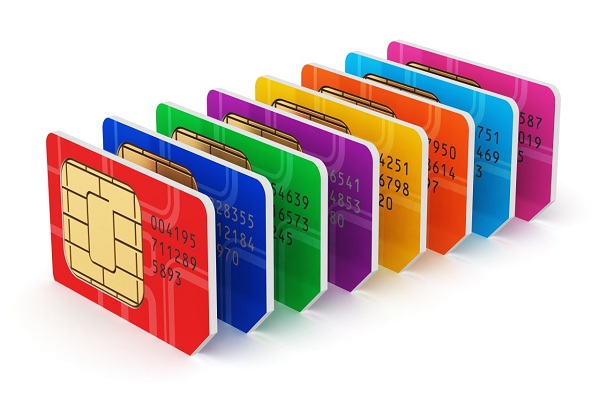
Nigerian Communications Commission (NCC) has unveiled plans to introduce a Telecoms Identity Risk Management System (TIRMS) platform to tackle SIM-related fraud, strengthen digital security and boost confidence in Nigeria’s digital economy.

Aminu Maida, executive vice chairman of the commission, disclosed this on Thursday in Abuja at a stakeholders’ consultative forum on the proposed platform and planned regulatory changes.
Maida, represented by Rimini Makama, executive commissioner, Stakeholder Management, said the Mobile Station International Subscriber Directory Number (MSISDN), commonly known as SIM or mobile phone number, had become central to financial transactions, digital identity and access to services, but warned that its widespread use had also created vulnerabilities.
He noted that fraudulent activities linked to recycled, swapped, churned and barred SIMs had emerged as a major channel for identity theft and financial crimes, weakening trust in digital platforms.
He said, “The Mobile Station International Subscriber Directory Number commonly known as the SIM or mobile phone number has evolved into a critical identifier underpinning financial transactions, digital authentication, and access to essential services across all sectors of our economy.
“This evolution, however, has created new and challenging vulnerabilities. The fraudulent use of churned, recycled, swapped, and barred MISISDN’s has become a significant vector for financial fraud and identity theft, eroding public trust in our digital platforms and undermining the identity of systems we have worked hard to build.
“It is in direct response to these challenges that the Commission has initiated the Telecoms Identity Risk Management System Platform.”
According to him, the platform will enable service providers to verify mobile numbers flagged for suspicious or fraudulent activities before granting access, a move expected to reduce exposure to fraud and improve accountability.
He added that the system would enhance coordination among regulators, financial institutions and security agencies to build a more resilient digital ecosystem.
To support the rollout, the commission has proposed amendments to its Quality of Service Business Rules and the Registration of Communications Subscribers framework.
The proposed changes will require telecom operators to notify subscribers at least 14 days before recycling their lines and to upload details of churned numbers to the platform within seven days.
The amendments also introduce stricter provisions for blocking fraudulently registered or misused SIMs, aimed at improving transparency and protecting consumers.
Maida said the initiative reflects the commission’s commitment to collaboration and a whole-of-government approach to addressing digital risks, urging stakeholders to actively contribute to shaping the framework.
Also speaking, Olatokunbo Oyeleye, director of Cybersecurity and Internet Governance at the commission, emphasised the importance of trust in the digital economy.
“As rightly noted, digital trust is the operating licence of modern economy. Without it, nothing scales and with it everything accelerates. For our sector, this trust must be embedded across the entire value chain,” she said.
It was reported earlier that the NCC proposed that telecom operators must give subscribers a minimum of 14 days’ notice before deactivating their SIM cards over inactivity or post-paid churn.
The proposal was contained in a consultation paper titled Stakeholders Consultation Process for the Telecoms Identity Risks Management Platform, dated February 2026 and published on the Commission’s website.
Under the proposed amendments to the Quality-of-Service Business Rules, the NCC stated that “prior to churning of a post-paid line, the Operator shall send a notification to the affected subscriber through an alternative line or an email on the pending churning of his line.”
It added, “This notification shall be sent at least 14 days before the final date for the churn of the number.”
A similar provision was proposed for prepaid subscribers. The commission said, “prior to churning of a pre-paid line, the Operator shall send a notification to the affected subscriber through an alternative line or an email on the pending churning of his line,” stressing again that the notice “shall be sent at least 14 days before the final date for the churn of the number.”
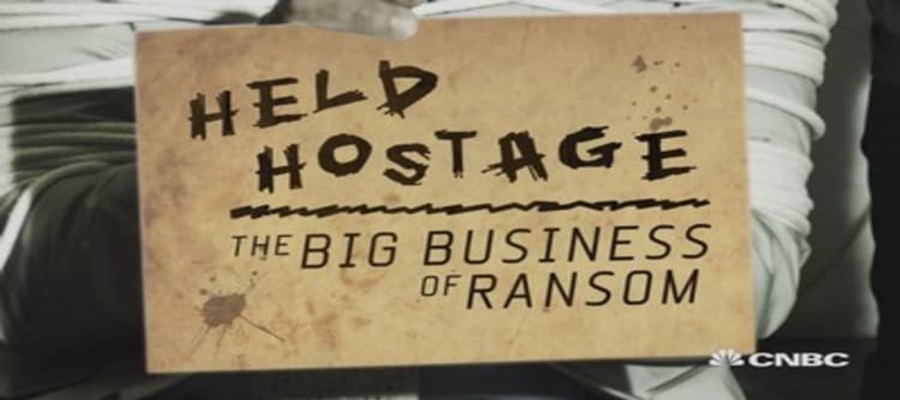
Dr. Kabir Adamu, a security expert, has raised concern that kidnappers in Nigeria are now using banks to collect ransom payments.

Pix… CNBC
Adamu explained that in the past, kidnappers typically demanded cash payments for ransom.
However, there has been a noticeable shift to using mainstream banks for transactions.
Speaking on Arise News, Adamu, who is the CEO of Beacon Security and Intelligence Ltd, said this trend is worrying. In the past, kidnappers usually demanded cash, but now they are asking victims’ families to pay money through bank accounts.
He revealed that his team has tracked cases where ransom money was paid into bank accounts and successfully withdrawn.
Although he did not mention the banks involved, he said some progress is being made to address the issue.
Adamu explained that criminals previously used fintech platforms, but have now moved to traditional banks. This shift raises serious concerns about how well banks are monitoring transactions and following regulations.
He said Nigeria has improved its financial intelligence systems, especially after being removed from the Financial Action Task Force (FATF) gray list.
However, he noted that there are still weaknesses in how rules are enforced.
According to him, “A lot has been done in terms of policy, but there are still major gaps in operations and compliance.”
“We’ve monitored kidnapping for ransom cases where the ransom is being collected by formal banks,” Adamu said.
“My team and I were shocked when the ransom demand was made in a formal bank. It was paid and collected. I don’t want to mention the names of the two banks that were extremely guilty, but even for those two, progress is being made,” he said.
The security expert noted that although fintech platforms had previously been linked to ransom payments, criminals have now shifted their operations to traditional banking channels, raising significant concerns about compliance and oversight in the banking industry.
Adamu emphasized that this shift in tactics underscores the urgent need for stronger accountability measures and compliance standards within Nigeria’s financial institutions.
He also pointed out the challenges faced by regulatory bodies in fully addressing the issue, despite recent advancements in financial intelligence efforts.
“From the point of view of policy, a lot has been done, but from the point of view of operations, there is still a lot that remains to be done,” Adamu stated.
According to a report by SBM Intelligence, Nigeria’s kidnap-for-ransom crisis generated at least N2.57 billion for criminal groups between July 2024 and June 2025.
The report, titled “The Year Ahead at an Inflexion Point,” highlighted that despite kidnappers’ demands totaling N48 billion during the year, they only received N2.57 billion in actual payments.
General News
Stakeholders at Crisis Management Flagship Conference 2026 Call for AI-Driven Preparedness, National Coordination


CMC Connect LLP (Perception Consulting) convened the Crisis Management Advocacy Month Flagship Conference 2026 in Lagos, spotlighting the urgent need for artificial intelligence-driven strategies and more coordinated systems to address today’s rapidly evolving crisis landscape.

The conference, held at the Metropolitan Club, Lagos, brought together key stakeholders from government, industry, and the communications ecosystem under the theme, “Crisis Management in the AI Milieu: Fresh Threats, Smarter Responses.” Discussions throughout the event reinforced the need to shift from reactive crisis management to a more proactive, intelligence-led approach to preparedness.
In his welcome address, Yomi Badejo-Okusanya, Lead Partner at CMC Connect LLP, called for a fundamental repositioning of crisis management within organisational leadership. He noted that crisis management must move from the background to the centre of leadership, stressing the importance of anticipation, preparation, and decisive leadership in navigating crises. He described the conference as part of a broader movement aimed at redefining preparedness in an increasingly volatile environment.
Badejo-Okusanya also announced the launch of Crisis-X, an AI-driven crisis management platform developed by CMC Connect LLP, describing it as “built for speed, intelligence, and the demands of the current moment.”
“In the age of AI, a stitch in time doesn’t just save nine, it preserves reputation, leadership, and the trust that underpins both,” he added.
Delivering the keynote address, Bosun Tijani, Honourable Minister of Communications, Innovation and Digital Economy, highlighted the growing importance of data, technology, and coordinated systems in managing modern crises.
He emphasised the need for a forward-looking approach, stating that while crises are inevitable, responses can be shaped through preparedness. “With the right data and systems, organisations can move from reacting to crises to anticipating risks and managing them in real time,” he said.
A key highlight of the conference was the unveiling of the CMC Connect Crisis-X Intelligence Engine, an AI-powered platform designed to enhance how organisations detect, analyse, and respond to crises. The solution integrates real-time monitoring, sentiment analysis, strategic response planning, and recovery mechanisms. It also incorporates emotional intelligence capabilities to help organisations better interpret and respond to public sentiment during critical situations.
In addition, a Public Verification Portal was introduced to help combat misinformation by enabling organisations to validate and disseminate accurate information in real time, thereby safeguarding credibility and strengthening public trust.
Discussions at the conference reflected a shared concern about the speed and complexity of modern crises, particularly in an era shaped by digital platforms and artificial intelligence. Speakers noted that misinformation now spreads faster than institutional responses, placing credibility and trust at the centre of effective crisis management.
As one of the key observations from the sessions highlighted, “today, crises are faster than facts, louder than truth, and increasingly engineered,” reinforcing the urgency for organisations to adopt faster, more coordinated, and intelligence-driven responses.
As the conference drew to a close, participants collectively underscored the importance of embedding preparedness as a strategic priority. There was a shared commitment to leveraging innovation, collaboration, and responsible use of technology to navigate an increasingly complex risk environment.
In his goodwill message, Olalekan Fadolapo, Director General and Chief Executive Officer of the Advertising Regulatory Council of Nigeria, who represented the Honourable Minister of Information and National Orientation, Mohammed Idris Malagi, commended the Board and Management of CMC Connect LLP for its forward-thinking approach to crisis management.
He raised concerns about the growing misuse of artificial intelligence by unregulated content creators to spread misinformation and amplify negative narratives, urging stakeholders to deploy AI more responsibly in support of national development.
Dignitaries at the event also included Femi Olubanwo, Immediate Past President of Igbobi College Old Boys Association and Partner at Banwo & Ighodalo; Kunle Elebute, Immediate Past Chairman of KPMG Africa and current Chairman of CMC Connect LLP; and Bolajoko Bayo-Ajayi, the first female President and Chairman of Council of the Nigerian Institute of Marketing, among other distinguished guests.
The Crisis Management Advocacy Month Flagship Conference ultimately reinforced a central message, while crises are inevitable, organisations that invest in anticipation, intelligence, and coordinated response will be better positioned to protect trust and emerge stronger.

NCC to Curb SIM Fraud, Strengthen Digital Security with New Platform

NBC Boss Urges Content Ceators to Participate in DSO

Kidnappers Now Use Banks to Collect Ransoms — Expert

CBN Says Bank Customers Won’t Lose Deposits because of Recapitalisation

Jury Finds Meta, Google Liable for Woman’s Social Media Addiction

Kaspersky Discovers New Phishing Campaign Exploiting Google Tasks Notifications to Steal Corporate Credentials

esentry 2025 Report Shows Healthcare, Financial Services and Telecoms as Staging Grounds for Increased Cyberattacks in Africa

Spotify’s Loud & Clear Report Reveals Over ₦60Bn Revenue for Nigerian Artists in 2025

MTN Nigeria Posts Record N1.70 Trillion Pre‑Tax Profit, Declares N20 Dividend for 2025

China Threatens to Shut Nigeria’s Satellite Over $11.44m Unpaid Debt




 E-Financial2 days ago
CBN Directs IMTOs to Open Naira Settlement Accounts

 Telecom2 days ago
Nigerians Lose N12.5Bn to AI-Driven Scams- PwC

 General News2 days ago
Court Remands Hacker for Allegedly Stealing N3.09Bn from FCMB

 Telecom2 days ago
Airtel Africa, Starlink Mobile Data and Messaging Testing Take off in Kenya

 E-Financial2 days ago
DLM Capital Group’s AAA-Rated Sovereign Bond-Backed Composite Notes (“SBCNS”) Strengthens Investor Confidence with Successful First Principal & Interest Payment

 E-Business2 days ago
AU Sees AI Adoption Evolving to Boost Economic Growth in Africa

 Telecom2 days ago
GATEWAY Programme Opens Doors for 340,000 Nigerian Youths to Tap into $1.85trn Global Gig Economy

 News2 days ago
Kaspersky, AFRIPOL Conduct Joint Cybersecurity Training for African law Enforcement