

News
Scientists Moot Satellite-based Earthquake Detection from Space

We may one day be able to detect earthquakes in remote areas of the Earth from space, say scientists who used a satellite to pick up low-frequency sounds from the earthquake that hit Tohoku, Japan, in March 2011.
According to a report published by scidev.net, the researchers report that the satellite is the “first seismometer in orbit”.
During an earthquake the Earth’s surface “moves like that of a drum”, creating a low-frequency sound in the atmosphere that cannot be heard by humans, said Raphaël Garcia, a researcher at the University of Toulouse, France, and the lead author of the study.
Garcia and colleagues were able to trace these acoustic waves — known as ‘infrasounds’ — from the Tohoku earthquake to the Gravity Field and Steady-State Ocean Circulation Explorer (GOCE) satellite.
It is the first time that infrasounds have been detected in space, they say.
The European Space Agency launched the satellite in 2009 to measure the Earth’s gravity field. It orbits the earth at a relatively low altitude of about 270 kilometres — an ideal height for detecting infrasounds, which fade at higher altitudes.
It is because of this fading that researchers had previously failed to find infrasounds, despite searching for a number of years.
Now they suggest a standard altitude of about 300 km for satellite detection of infrasounds.
Other gravity-measuring satellites that have failed to detect such signals include the Challenging Minisatellite Payload (CHAMP), which orbits at 320 km, and the Gravity Recovery and Climate Experiment (GRACE), which orbits at 480 km.
GOCE was not designed to be a seismometer. “We have been interested in using data from GOCE for studying the atmosphere,” says study co-author Eelco Doornbos of Delft University of Technology in the Netherlands. “Detection of earthquakes is a spin-off of the application of the satellite.”
But it is unlikely that satellites will be able to act as real-time detectors for earthquakes on land as there was a lag of 27 minutes between the earthquake and GOCE detecting the first infrasound wave.
“An advantage of having seismometers in space would be to detect the signals from earthquakes that happen in the middle of an ocean,” said Doornbos. “But I don’t think they will replace ground-based seismometers.”
He says that more than one satellite would be necessary to detect earthquakes from space, a prospect too expensive to see in the next ten years.
But as instruments become smaller and cheaper it may “be feasible to launch a few inexpensive satellites at the same time, which might be used to help in pinpointing earthquakes”.
Doornbos adds: “At some point, the space agencies may decide that it might be a good idea to [install seismometers] on older satellites.”
Ramesh P. Singh, a geophysicist at Chapman University, United States, said that, when an earthquake occurs, ground-based seismometers provide information on the event within a few minutes. By the time GOCE detected the first signal from the Tohoku earthquake, almost half an hour later, it was already known that the earthquake had occurred.



Economic and Financial Crimes Commission (EFCC,) insisted on Monday at the High Court of the Federal Capital Territory that the signatures of late President Muhammadu Buhari and former Boss Mustapha, secretary to the Government of the Federation (SGF), were forged by unscrupulous Nigerians to defraud the country of $6,230,000.

Mr Godwin Emefiele, former CBN governor
Mr Chinedu Eneanya, assistant commander II, EFCC, told the court that five officials of the Central Bank of Nigeria (CBN) moved the money out of the apex bank under the guise that it was meant for the payment of foreign election observers in the 2023 general elections.
The anti-graft agency testified on Monday at the resumed trial of Mr Godwin Emefiele, former CBN governor, on a 20-count charge of criminal breach of trust brought against him by the federal government.
Emefiele is being prosecuted by the EFCC in the charge marked FCT/HC/CR/577/2023.
He is standing trial on an amended 20-count charge bordering on criminal breach of trust, forgery, abuse of office, conspiracy to obtain by false pretence, and obtaining money by false pretence while serving as CBN governor.
Emefiele was, among others, alleged to have knowingly obtained by false pretence the sum of $6,230,000 purportedly meant for international election observers for the 2023 general election.
The EFCC accused him of conferring corrupt advantages on two companies — April 1616 Nigeria Ltd and Architekon Nigeria Ltd.
He, however, pleaded not guilty to the charges during his arraignment.
At Monday’s proceedings, Chinedu Eneanya, who served on the probe panel, was called to testify as the 13th prosecution witness (PW13).
In his evidence-in-chief, the witness told the court that his team was assigned to investigate the matter.
“The investigation revealed that the money, $6.2 million, was removed from the coffers of the CBN for a purported funding of foreign observers for the 2023 elections.”
He told the court that those connected with the movement of the fund were interviewed.
The witness said documents were recovered from the CBN regarding the release of the money.
Eneanya told the court that investigations also revealed that the signatures of the then President, Muhammadu Buhari, and then Secretary to the Government of the Federation (SGF), Boss Mustapha, were forged to collect the money.
He said forensic examination was carried out, which established that the two signatures were forged.
Drama, however, ensued during cross-examination by Mathew Burkaa, SAN, counsel to Emefiele, when the witness admitted that forensic examination was not carried out on Emefiele’s signature despite Emefiele’s claim that his signature was also forged by the culprits.
The witness said five CBN officers signed the internal memo that authorised the release of the money and that none of them is standing trial alongside Emefiele, but were only suspended by the CBN.
The witness told the court that he was not the one who took Emefiele’s extra-judicial statements.
When asked if any of the investigators established that Emefiele received any money, he said Emefiele’s lawyer, Ifeanyi Omeke, said he received money on behalf of Emefiele, but that he did not interview Emefiele on the claim.
Earlier, Emefiele’s counsel had frowned at bringing another Investigating Police Officer (IPO) on the ground that the witness would say the same thing said by two other IPOs.
He also drew the attention of the court to the last proceedings where the EFCC told the court that it was bringing its last witness.
“We understand their strategy. It seems they are ridiculing the court. All the same, we are ready to go on.”
Emefiele, through his counsel, applied for the foreclosure of the EFCC’s case after prosecution counsel, Rotimi Oyedepo, SAN, told the court that he was not sure of bringing two witnesses on April 28.
Oyedepo informed the court that the EFCC was yet to obtain the subpoena from the court and that the witnesses were outside jurisdiction in Benin and Lagos.
When the court asked the prosecution how many more witnesses it intended to call, Oyedepo said two more and mentioned their names as Jim Obessa and CP Eloho Okpozikbo.
The court then asked the prosecution to bring all the witnesses between April 27 and 28.
At this point, Burkaa applied to the court that the EFCC’s case be foreclosed if it failed to bring the two remaining witnesses to court on April 28.
“If the witnesses do not come on April 28, we apply that they should be foreclosed. Justice is both for the prosecution and the defendant.
“This is an antic by the prosecution to put maximum hardship on the defendant. Please let it be on record that the prosecution has severally brought out this scenario,” he said.
Responding, Oyedepo told the court that he was not there to be a clog in the expeditious trial of the case and prayed the court to refuse the application to shut the doors against the prosecution.
Justice Hamza Muazu advised parties to reserve their arguments till their final addresses and directed Oyedepo to go to the court registrar for the signing of the subpoena.
Justice Muazu then adjourned till April 28 for continuation of trial.

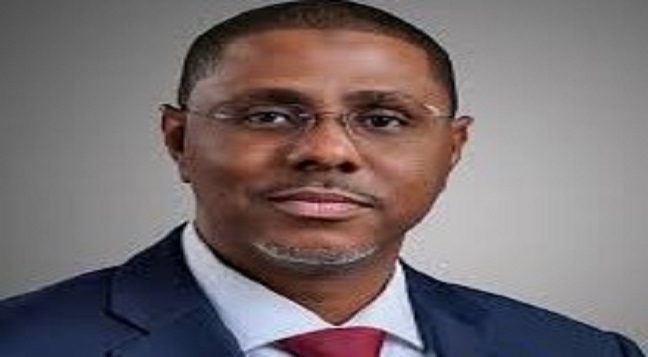
Central Securities Clearing System Plc (CSCS) has reaffirmed its commitment to strengthening the resilience of Nigeria’s capital market infrastructure through sustained investment in technology and enhanced operational efficiency, as it positions to stay ahead of evolving industry trends.

Speaking at the company’s 32nd yearly general meeting held in Lagos, Chairman of CSCS, Temi Popoola, outlined a forward-looking strategy aimed at reinforcing the firm’s role as a systemically important market infrastructure institution.
He disclosed that the company is intensifying efforts to expand its product offerings across multiple asset classes and market segments, a move designed to support broader capital market development and unlock new growth channels.
Also at the meeting, shareholders approved a dividend of N1.78 per share.
Popoola explained that CSCS was also prioritising value creation from its data assets and post-trade service capabilities, with a clear focus on diversifying revenue streams while increasing shareholders’ value on investment.
According to him, the strategic initiatives are expected to position the organisation to effectively capture emerging opportunities in an increasingly dynamic financial landscape.
He emphasised that the company’s growth ambitions are closely tied to broader macroeconomic and policy developments, noting that sustained reform implementation, fiscal discipline and continued market modernisation remain critical to improving liquidity, widening investor participation and unlocking long-term value within the Nigerian capital market.
Despite prevailing global uncertainties, including geopolitical tensions, trade disruptions, commodity price volatility and the uneven pace of domestic reform execution, Popoola maintained that the board remains optimistic about the long-term trajectory of the market.
Also speaking, the Chief Executive Officer of CSCS, Shehu Yahaya Shantali, said the company launched a comprehensive internal data integrity initiative designed to enhance the accuracy, reliability and robustness of the systems underpinning market operations.
He noted that technology remains the central pillar of CSCS’ long-term strategy, with the firm completing a major upgrade of its core application to deliver a more scalable and resilient platform capable of meeting the evolving demands of market participants.
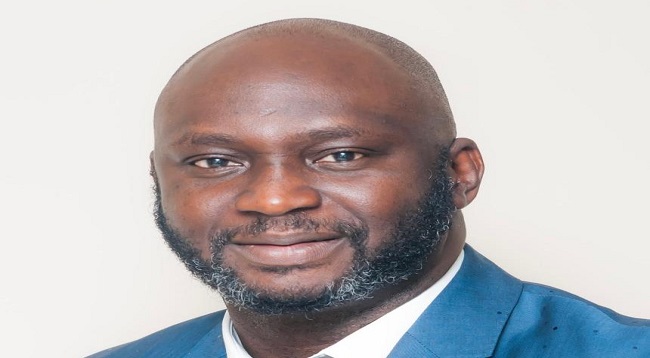
Dr. Olasupo Olusi, the Managing Director of the Bank of Industry (BOI), has challenged Nigeria to urgently convert its vast reservoir of talent into measurable productivity, declaring that the nation’s economic future depends less on potential and more on deliberate organisation of skills, technology, and capital.

Delivering the 18th Convocation Lecture at Ladoke Akintola University of Technology (LAUTECH), Ogbomosho, Oyo State, Olusi presented a sweeping diagnosis of Nigeria’s economic paradox – abundant human capital, yet underwhelming output – while positioning technology as the critical bridge between the two.
Olusi argued that Nigeria’s problem is not a shortage of talent but the failure to translate that talent into economic value. According to him, productivity, defined as output relative to input, remains the missing link between effort and impact in the country’s development trajectory.
“Nigeria’s challenge is not necessarily to produce more talents. The challenge is to organise that talent pool into productivity,” he said, adding that while Nigerians are globally competitive, systemic inefficiencies continue to limit economic outcomes.
He drew attention to comparative data showing Nigeria trailing peer economies in manufacturing output and agricultural yields, despite possessing similar starting advantages decades ago. The implication, he noted, is clear: the country must rethink how it deploys its resources.
Anchoring his argument on technology, Olusi pointed to ongoing transformations across sectors – from financial technology platforms expanding access to credit, to precision agriculture solutions improving yields and incomes. These examples, he said, demonstrate how innovation can amplify human effort and unlock productivity gains at scale.
“Technology does not replace human effort. It multiplies it, and that is the bridge between talent and productivity,” Olusi stated, urging Nigerian universities to move beyond theoretical knowledge and focus on producing practical, scalable solutions to real economic challenges.
He specifically called on institutions like LAUTECH to lead the charge in innovation, stressing that universities must become engines of production by linking research directly to industry and markets.
Speaking on the role of development finance, Olusi outlined the strategic repositioning of the Bank of Industry to support technology-led growth. He revealed that BOI is embedding digital transformation at the core of its 2025–2027 strategy, with a focus on accelerating access to finance, supporting innovation, and building enterprise capacity.
A key initiative, he disclosed, is the launch of a digital loan application platform scheduled for June 2026, which will enable entrepreneurs to access funding more efficiently.
“If technology multiplies productivity, then development finance must be organised to accelerate technology adoption. Without capital, talent and technology remain mere potential. With it, they become production,” he said.
Olusi highlighted several BOI-backed interventions across manufacturing, agriculture, infrastructure, and sustainability, noting that the Bank is increasingly financing technology upgrades that enable businesses to scale, compete globally, and create jobs.
He also underscored the need to strengthen the link between academia and industry, announcing plans for an Industrial Innovation Fund aimed at bridging the gap between research and commercialisation. In addition, he disclosed a proposed student venture capital grant programme designed to support young innovators with funding of up to ₦50 million.
Addressing the graduating students, Olusi urged them to prioritise problem-solving, production, and integrity, while encouraging those considering migration to remain connected to Nigeria’s development.
“This nation is still under construction, and she needs her most capable people,” he said, noting that meaningful transformation will occur not in theory but through practical engagement in farms, factories, and enterprises.
Olusi expressed confidence in Nigeria’s economic outlook, pointing to ongoing reforms and increased investment in digital skills, innovation, and infrastructure as signs of progress.
“I am optimistic about Nigeria, not because the challenges are small, but because I have seen what Nigerians achieve when the right systems are in place. The journey from talent to productivity is not a slogan. It is the work of a generation,” he said.
He concluded with a direct charge to the graduates and the broader Nigerian youth, whom he described as central to the country’s future.
“The question is not whether this transformation will happen. The question is who will do it. And the answer is sitting here. You are the builders. Go and build.”

Buhari, SSG’s Signatures Forged to Defraud Nigeria of $6.2m in CBN – EFCC

EFCC Declares Tejuosho, City Boys Movement’s Women Leader Wanted over “419”

Angst as FG Drops $32.8m Fine on Meta for Data Breach

Afreximbank to Fund 3 New Refineries in Nigeria

CSCS Targets Market Leadership Through Technology, Diversified Revenue

FG to Gift Nigerians over 100 Free TV Channels from May 15

Microsoft Revamps Copilot in Workplace AI Push

Dangote Refinery Debunks Speculations on IPO

What Adekunle Gold’s Support Means for ‘The Gathering on 100

NRS Takes Over Mineral Royalties Collection Under New Tax Laws




 Telecom1 day ago
Elon Musk Launches XChat with Video Calling to Take on WhatsApp, Messenger

 Telecom1 day ago
MTN-Backed Pitchathon Awards ₦45m to Startups @‘Gathering on 100’ in Lagos

 Telecom1 day ago
How NITDA Is Transforming Corps Members into Digital Millionaires

 Telecom1 day ago
Globacom Unveils Two New TVCs Showcasing the Future of Connectivity

 Broadcasting1 day ago
SERAP, NGE Sue NBC over Threat to Sanction Broadcasters

 E-Financial1 day ago
CRMI Backs CBN’s New Measures to Curb Fraud

 E-Financial1 day ago
Systemically Weak Banks Put Nigeria’s $1Trillion Ambition at Risk

 News1 day ago
BOI MD, Olasupo Olusi, Charts Tech-Driven Path to Growth for Nigeria