

News
BBC Report Reveals Hydra-Headed Monsters Threatening Nigeria


Nigeria is up against five hydra-headed monsters threatening the lives and proprties of her citizens, according to recent report by British Broadcasting Corporation (BBC).

The report by Aliyu Tanko, BBC Hausa editor, said that Nigeria is faced with an unprecedented wave of different but overlapping security crises – from kidnapping to extremist insurgencies – almost every corner of the country has been hit by violence and crime.
Audu Bulama Bukarti, a senior analyst on Sahel security at the Tony Blair Institute was quoted in the report as saying that the scale of the insecurity threatens the very fabric of Nigerian society: “With every attack, human lives are lost or permanently damaged and faith in democracy and the country is diminishing.”
When President Muhammadu Buhari was elected in 2015, he promised to protect citizens from terrorists and criminals.
But there are less than two years left of his final term in office and the country is more unstable than it’s been in decades.
Some have linked the recent surge of insecurity to the staggering poverty across the country.
Youth unemployment currently stands at 32.5% and the country is in the middle of one of the worst economic downturns in 27 years.
Here are Nigeria’s five biggest security threats:
Jihadism
Despite claiming during his first year in office that Islamist militant group Boko Haram had been “technically” defeated,
President Buhari now admits that his government is failing to stop the insurgency, which began in the north-east.
Indeed, Boko Haram is expanding into new areas and taking advantage of Nigeria’s poverty and other security challenges to fuel its extremist ideologies.
According to the UN, by the end of 2020, conflict with the group had led to the deaths of almost 350,000 people and forced millions from their homes.
Boko Haram launches deadly raids, in some cases hoisting its flag and imposing extremist rule on local people.
It levies taxes on farms and the sale of agricultural products.
The once booming international fish market in the Chad Basin is now completely controlled by the group.
Dozens of farm labourers were slaughtered by Boko Haram last year
The challenge is made harder by Nigeria’s ungoverned spaces – areas that are remote and largely ignored, where groups can torment rural communities without fear of reprisal.
In recent years, a splinter faction allied to the Islamic State group, called the Islamic State’s West Africa Province, has surpassed Boko Haram in size and capacity.
It now ranks among IS’s most active affiliates in the region.
Both groups have so far resisted the government’s military operations.
Clashes between herders and farmers
There have been violent disputes between nomadic animal herders and farmers in Nigeria for many years.
But disagreements over the use of land and water, as well as grazing routes, have been exacerbated by climate change and the spread of the Sahara Desert, as herders move further south looking for pasture. Thousands have been killed in clashes over limited resources.
Benue State, in the centre of the country, has recorded the deadliest attacks.
Recently, seven people were killed when gunmen opened fire on a camp for those fleeing the conflict.
Some have also blamed herders for kidnapping people and demanding a ransom.
The tension has led to some state governors banning grazing on open land, and thus creating friction with the central government.
In 2019, federal authorities launched a 10-year National Livestock Transformation Plan to curtail the movement of cattle and boost livestock production in an attempt to stop the conflict.
But critics say a lack of political leadership, expertise and funding, plus delays are derailing the project.
Banditry and kidnapping
One of the scariest threats for families in Nigeria is the frequent kidnapping of schoolchildren from their classrooms and boarding houses.
More than 1,000 students have been abducted from their schools since December 2020, many only released after thousands of dollars are paid as ransom.
Some of the kidnappers are commonly referred to as “bandits” in Nigeria. These criminals raid villages, kidnap civilians and burn down houses.
Attacks by bandits have forced thousands of people to flee their homes and seek shelter in other parts of the country.
The north-west is the epicentre of these attacks. In Zamfara state alone, over 3,000 people have been killed since 2012 and the attacks are still going on.
Hundreds of schools were closed following abductions at schools in Zamfara and Niger state, where children as young as three years old were seized.
By every indication, Nigeria’s lucrative kidnapping industry is thriving – expanding into previously safe areas – and seemingly beyond the control of the country’s army. It poses a real threat to trade and education, as well as the country’s farming communities.
Separatist insurgency
A separatist group called the Indigenous People of Biafra (Ipob) has been clashing with Nigeria’s security agencies.
Ipob wants a group of states in the south-east, mainly made up of people from the Igbo ethnic group, to break away and form the independent nation of Biafra.
President Buhari has vowed to crush Ipob
The group was founded in 2014 by Nnamdi Kanu, who was recently arrested and is set to face trial on terrorism and treason charges. His arrest has been a major blow to the movement.
The idea of Biafra is not new. In 1967, regional leaders declared an independent state, which led to a brutal civil war and the death of up to a million people.
Supporters of Nnamdi Kanu’s movement have been accused of launching deadly attacks on government offices, prisons and the homes of politicians and community leaders.
President Buhari has vowed to crush Ipob. Last month he tweeted that “those misbehaving today” would be dealt with in “the language they will understand”.
The post was removed by Twitter for violating its rules after Mr Buhari faced a backlash online. The incident led to the suspension of Twitter in Nigeria.
Oil militants
Well-armed militants staged numerous attacks on oil installations in the early 2000s
In the oil-producing south, security challenges are nothing new.
It is Nigeria’s biggest foreign export earner, and militants in the Niger Delta have long agitated for a greater share of the profit. They argue the majority of the oil comes from their region and the environmental damage caused by its extraction has devastated communities and made it impossible for them to fish or farm.
For years, militants pressured the government by kidnapping oil workers and launching attacks on security personnel and oil infrastructure, like pipelines.
To address this, ex-president Umaru Musa Yar’Adua launched a presidential amnesty programme in 2009, which saw the formal end of the Niger Delta militants.
But armed cult groups still pose a security challenge in the region and industry officials have been warning that militancy is once again picking up.



Federal government has said that more than 32 million students have been captured on the Federal Government’s Digital National Education Information Management System (DNEMIS), ahead of the official launch of the platform on Wednesday, July 1.

The DNEMIS, is part of efforts to replace paper-based and fragmented education records with a single digital database.
Mr. Adebayo Onigbanjo, national project coordinator of the Special Programmes Operations and Implementation Unit in the Office of the Minister of Education, disclosed this on Monday in Abuja at a press conference.
Onibanjo said that the digital platform would transform education administration through technology and data-driven decision-making.
He said DNEMIS is the core platform of the Nigerian Education Data Infrastructure (NEDI), an initiative under the Nigeria Education Sector Renewal Initiative (NESRI), established to provide accurate, integrated and timely education data for planning, budgeting, policymaking and service delivery.
According to Onigbanjo, the platform replaces the fragmented data systems that have long constrained effective planning in the education sector.
“For many years, education planning relied on fragmented systems, inconsistent reporting structures and limited access to reliable data. DNEMIS changes that by ensuring that every learner, every school, every teacher and every investment in education is captured within a system that supports evidence-based decision-making,” he said.
He described education data as a strategic national asset, noting that the platform would strengthen transparency, accountability and governance across the sector.
Onigbanjo said the availability of reliable data would also support government efforts to tackle Nigeria’s out-of-school children challenge by enabling authorities to monitor enrolment, identify dropout patterns and target interventions where they are most needed.
“If you don’t measure, you can’t get a good sense of what the data is. Today, we already have 32 million students on the platform, and that gives us an indication of where learners are.
“We are also understanding their journey from when they start school and when they drop out. That gives us insight into their challenges and where investments need to go. Every school becomes visible, every student gets counted, every teacher is known, and every government expenditure in education becomes trackable. To a greater extent, this will stop wastage,” he said.
He added that the ultimate goal is to provide government with complete visibility into every learner’s educational journey, from enrolment through graduation, to improve learning outcomes and policy decisions.
Addressing concerns over data privacy, Onigbanjo said the platform was developed using globally recognised digital architecture with robust safeguards to protect personal information.
He explained that sensitive data would be masked while secure digital identity profiles would allow authorised users to access relevant information without exposing personal details.
Also speaking, Abubakar Isah, national coordinator, Nigerian Education Data Infrastructure (NEDI), said the system fully complies with Nigeria’s data protection regulations and international data security standards.
“We recognise the importance of data protection. We are complying with the country’s data protection rules and taking every necessary precaution to ensure that this data is secure,” he said.
Isah noted that while schools and state governments would have access to their respective data, communities, alumni associations and development partners would be able to access selected non-sensitive information to support school improvement and strengthen public accountability.
Earlier, Miss Mojoyin Adebajo, special adviser to the Minister of Education on Digital Communications and E-Learning, described DNEMIS as a major milestone in Nigeria’s digital education transformation.
She said the platform, developed on the globally recognised DHIS2 infrastructure, would digitise the Annual School Census and provide reliable information on schools, teachers, learners and education infrastructure across the country.
Adebajo added that Wednesday’s event would also witness the unveiling of the Public DNEMIS Portal, which will provide researchers, journalists, civil society organisations, development partners and members of the public with access to selected official education data through an interactive online platform.
She said the initiative underscores the Federal Ministry of Education’s commitment to promoting transparency, strengthening evidence-based planning and leveraging technology to improve educational outcomes nationwide.

President Bola Tinubu on Thursday urged Nigerians to pay their taxes, because the revenue is critical for his administration’s Renewed Hope Agenda to fund public infrastructure like roads, hospitals, and amenities across the country.

President Bola Tinubu
He spoke during the commissioning of interchange at Arterial Road N16 – Ring Road III Intersection linking Jahi District to Gwarimpa District of the FCT.
The project was among those earmarked to celebrate his third year anniversary and he was represented at the commissioning by Godswill Akpabio, Senate President.
He said: “I’m very proud to stand here to commission this Arterial road interchange N16 linking Jahi district to Gwarimpa District of the FCT.
“This is not just a bridge and slip roads, this is freedom of movement and time returned to the people, this is renewed hope that you can even drive on. This intersection used to choke the entirety of Abuja, gridlock stretched from Maitama to Gishiri, from Jahi to Gwarimpa; hours lost, fuel wasted, business were lost but today that story ends.
“This interchange opens up critical districts of the FCT and connects them smoothly to the rest of the FCT. Workers will get home earlier, security will improve because criminals strive when security stands still.
“Ladies and gentlemen, infrastructure is the foundation of prosperity which is the cardinal principle of this administration. Roads are the arteries of a nation, when we connect districts we connect destines and that is the logic of the renewed hope agenda, build the roads unlock the economy and let Nigerians strive.
“The Jahi-Gwarimpa interchange is prove that Nigeria is not beyond redemption. With focus, discipline, and political will, Nigeria will deliver and we are delivering, the FCT is delivering.”
The president also charged Nigerians and residents of the FCT to pay their taxes.
According to Tinubu, it would allow his administration to provide more infrastructural projects.
“Also pay your taxes and levies so that government can do even more for you,” he added.
News
MTN ASAP Enugu Stakeholders’ Conference Rallies More Action Against Youth Drug Abuse, Unveils N33Bn ASAP Impact

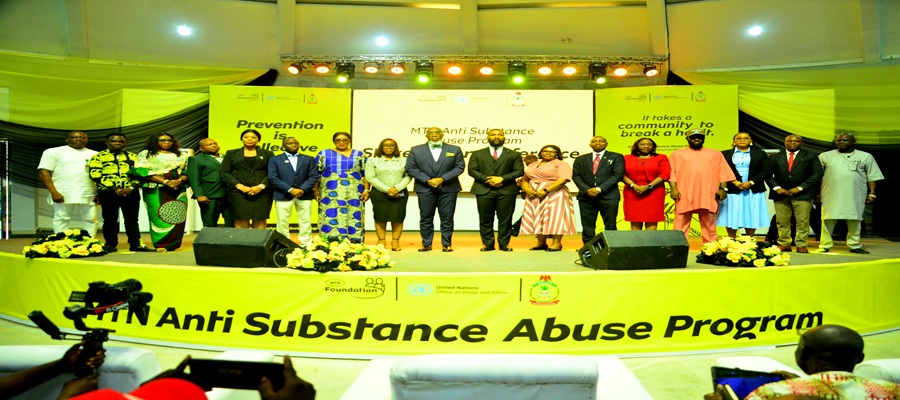
In a renewed push to confront the rising tide of drug abuse among Nigerian youth, stakeholders converged on Tuesday, June 9, 2026, at the ICC Dome, Enugu, for a State Stakeholders’ Engagement convened under the Anti-Substance Abuse Programme (ASAP).

The conference brought together government representatives, educators, development partners, and civil society actors to chart a unified path against substance abuse, with disclosures at the gathering revealing that an estimated ₦33 billion has so far been committed to developmental projects, programmes, and initiatives across the country, interventions that have impacted more than 33 million Nigerians directly and reached over 100 million through advocacy and awareness campaigns.
The Executive Governor of Enugu State, Barr. Peter Mbah, represented by the Secretary to the State Government, Prof. Chidiebere Onyia, commended the Foundation for its sustained investment in youth development and the fight against substance abuse.
He noted that the state’s transformation agenda is anchored in youth empowerment, education, healthcare, and human capital development – areas where the Foundation’s ₦33 billion commitment was already making a measurable difference.
“The MTN Foundation’s investment in youth development and the fight against substance abuse aligns directly with our administration’s transformational agenda. Initiatives like ASAP are exactly the kind of partnerships that move the needle on national development,” Prof. Onyia said.
He further urged other private sector players to emulate the Foundation’s example, stressing that the scale of Nigeria’s drug abuse demands sustained collaboration between government, the private sector, development partners, and civil society.
Addressing stakeholders, Odunayo Sanya, Executive Director of the MTN Foundation, said the Foundation, established in 2004 and fully funded by MTN Nigeria, was created to drive impact across health, capacity building, and economic empowerment, with deliberate focus on young people, who constitute the majority of Nigeria’s population.
She explained that the ASAP initiative, launched in 2019 in partnership with the National Drug Law Enforcement Agency (NDLEA) and the United Nations Office on Drugs and Crime (UNODC), was designed to reduce first-time drug use among young Nigerians through awareness campaigns and school-based interventions.
“We have reached over 50,000 students across the country and trained about 1,556 teachers as part of our efforts to create anti-drug ambassadors in schools and communities.”
“For us at the MTN Foundation, saving even one young person from substance abuse is a worthwhile achievement. The consequences go beyond the individual and affect families, communities, and the nation at large,” Odunayo said.
Looking ahead, she disclosed that the Foundation plans to reach more than 20,000 additional students in 2026 through expanded stakeholder engagements, school-based interventions, teacher training programmes, and community awareness campaigns.
She described substance abuse as a major threat to families, communities, and national development, stressing the urgent need for collective action to shield young people from addiction.
According to her, the Foundation’s mission is rooted not just in numbers, but in human outcomes – the lives, families, and futures it helps preserve.
The Executive Director, on her part, called on parents, educators, faith leaders, and community influencers to remain active partners in safeguarding the next generation from the dangers of substance abuse.
The intervention comes at a critical time. Fresh data presented at the conference indicate that over 360,000 youths in Enugu State – approximately 13.4% of the state’s young population – are actively involved in drug use.
Currently, the MTN Foundation (MTNF) and the United Nations Office on Drugs and Crime (UNODC) are conducting a comprehensive National Substance Use Survey to gather grassroots data on drug abuse, especially among secondary school students.

NDIC Says 281m Depositors Protected against Bank Failure

Wema Bank Suspends Telegram Operations over Scams

Akara Business Can Pay More than Bank Jobs – Governor Aide

OPay Unveils Emergency Lock, Safety PIN to Boost Customer Protection

FG Captures 32m Students DNEMIS ahead July 1 Rollout

Mobile Internet Gender Gap Widest in Africa – GSMA

London Strengthens Global Investment Ties with Africa @ First Ever London-Africa Business Summit

FG Targets Alleged N3tn Capital Flight, Opens Airtime Credit Market to Nigerian Fintechs

Japan, UNESCO Boost Digital Learning in 15 CoEs with Donation of ICT Equipment

Good News for DStv Users: Watch over 160 Channels Without Paying Extra




 E-Business2 days ago
LG Showcases AI-Powered Smart Living Innovations @ Africa Technology Expo 2026

 E-Financial2 days ago
UBA mobilises employees across Africa for environmental clean-up, wellness campaign

 Telecom2 days ago
OADC Reaffirms Abundant Capacity in Data Centres in Nigeria to Host Financial Data

 General News2 days ago
LASTMA Launches 3367 Toll-Free Hotline for Emergency Response, Traffic Management

 E-Financial2 days ago
PalmPay Calls for Trust, Infrastructure and Responsible AI to Drive Payment Ecosystem Innovation

 E-Business2 days ago
Want a Business Loan Without Interest? SMEDAN Launches N500m Fund

 Telecom2 days ago
ALTON Backs NCC’s Local Smartphone Manufacturing Drive to Widen Digital Access

 E-Financial2 days ago
ngCERT Raises Alarm over Surge in Banks’ ATM Cyberattacks