

General News
A Look at Emerging B2B E-commerce Trend


By Victor George
Twitter is now back in business in Nigeria. Having taken a hiatus from conversation on the bird app after the suspension by the federal government, I returned sometime last week. As usual, Twitter Nigeria is a no dull moment space.

The African Cup of Nations is on and memes were flying regarding the big name casualties of the tournament. African football powerhouse, Ghana was dumped out of the tournament at the group stage after losing to debutants, Comoros Islands. “What is a Comoros?” “Trouble be like Comoros” were some of the trending hashtags on twitter.
In the midst of the fun and banter, something caught my attention: a retweet popped up on my timeline of a tweet by @ajalayemi. It was something different from the flow of things in space.
The author of the tweet is based in Ibadan. His tweet was about branding by Alerzo Limited, a business-to-business e-commerce platform delivering goods with vans and buses. He was fascinated by what he saw and decided to do some little search about the company.
From his findings, Alerzo’s business model was designed to make business seamless for informal retailers. Unlike the Kongas and Jumias that connect sellers to customers, Alerzo is connecting informal retailers to direct supply from manufacturers. An informal retailer is that woman with the small shop on your street who sells almost everything.
Yoruba call them “gbogbo lowo”, meaning “I sell all you need”. These sellers are forced to close their shops when going to the market to restock. Some of them lose customers in the process. The stress of frequent market trips also takes a toll on them both mentally and physically. So what Alerzo service implies is that instead of market trips, they simply pick up their phones to restock, or order via Alerzo app and get their stocks delivered at their shops.
The idea sounded novel to me. I’ve not heard or seen such in Nigeria. At that point, I decided to do some digging about the company. Alerzo started off in Ibadan almost two years ago as a brainchild of the son of an informal retailer.
In one of his interviews, the Chief Executive Officer of Alerzo Limited, Adewale Opaleye said he witnessed first hand the ordeals of his mother who went through a lot to keep her retail business going while managing the family. He saw the gap that could be bridged by e-commerce technology and decided to make it a reality in Nigeria.
Alerzo is not the only company offering this type of service, there are others like Omnibiz, TradeDepot. Their services are already being enjoyed in other parts of the South West, North West and North Central. Apparently, I’ve been missing a growing trend, just like many of my readers right now.
Thousands of retailers are already enjoying the ease and convenience of e-commerce. Improved lifestyle, increase in profit and savings are the immediate benefits that come with the service.
On a broader scale, these platforms with their services will spike huge business activities in the digital space in the next few years. This is due to the fact that informal retail is a multimillion dollar business in Nigeria. Imagine the economic benefits Nigeria will derive from bringing just 50% of those retailers into the digital economy space.
The increasing rate of mobile phone adoption in Nigeria makes this a possibility. In 2021, the number of mobile internet users in Nigeria amounted to over 101.7 million, with over 32% using smartphones. The rate of smartphone usage is increasing and many of these sellers can afford the cheaper versions.
As a matter of fact, many informal retailers have tech savvy children who indirectly hijack their phones for games and internet surfing. With the help of these young ones, they can easily make their orders and get them delivered.
For all tech enthusiasts, this is an interesting trend to watch. There are reports of millions of dollars investment by external investors in the B2B e-commerce platforms. This shows the faith and belief that the model can work in the country. From all indications, there are interestings times ahead for informal retailers in Nigeria thanks to a new wave of innovators opening up the market to new possibilities.
Victor George, a tech enthusiast, writes from Lagos


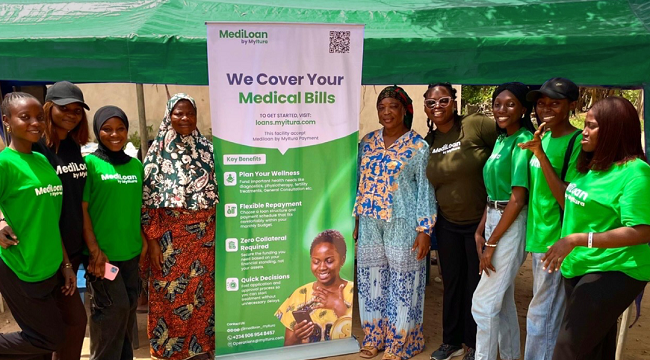
In commemoration of Women’s Month, health-tech platform Myitura has released a new white paper addressing the critical gaps in healthcare financing for women in Nigeria.

Titled “Closing the Gap: Healthcare Financing for Women in Nigeria,” the report highlights how high out-of-pocket costs, limited insurance coverage, and socio-economic factors continue to prevent women from accessing timely healthcare.
According to the report, over 70% of healthcare expenses in Nigeria are paid out-of-pocket, disproportionately affecting women who often delay care due to financial and social constraints.
“When women can afford to take care of their health early, we don’t just save lives; we strengthen families, communities, and the economy,” said Chialuka Kelechi, MyItura’s Chief of Staff.
Key Insights from the White Paper:
- Preventable conditions often escalate due to delayed care
- Women are more likely to deprioritize their own health
- Affordable, structured healthcare financing can significantly improve outcomes
Introducing a Women’s Health Initiative
As part of its commitment, Myitura is launching affordable women-focused health packages (powered by Mediloan), starting at ₦58,180, designed to encourage preventive care and early detection.
The package provides access to:
- Fasting/Random Blood Sugar
- Urinalysis
- Electrolytes
- Urea
- Creatinine
- Pap Smear Submitted slides
- HIV I & II Rapid (Qualitative)
- Hepatitis B Surface Antigen Screening (Rapid)
- Hepatitis C Virus Screening (Rapid)
- Abdominopelvic Ultrasound
- Ongoing support via the Myitura platform
Access:
Women can access these packages by downloading the Myitura app, which makes healthcare more accessible and convenient.
Myitura is a health-tech platform focused on improving access to healthcare through financing, technology, and preventive care solutions.
General News
DBI Unveils Nigeria Digital Economy Outlook 2026: Q1 Report Highlights Strategic Trends, Risks

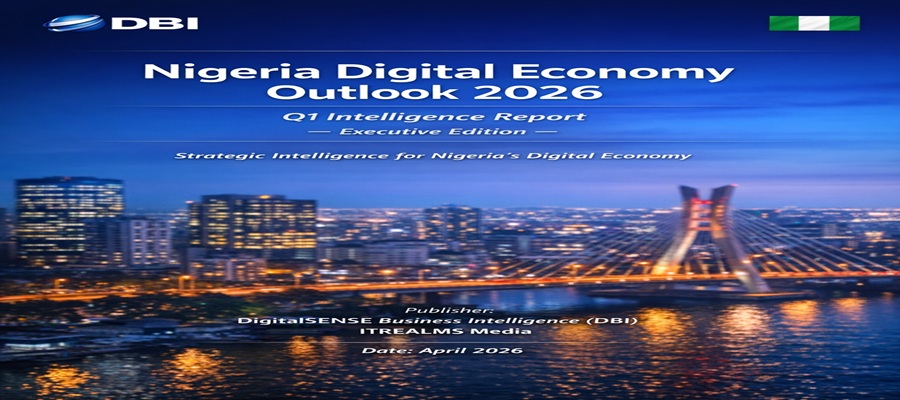
DigitalSENSE Business Intelligence (DBI), powered by ITREALMS Media, has launched the Nigeria Digital Economy Outlook 2026: Q1 Intelligence Report (Executive Edition), delivering vital insights for navigating Nigeria’s fast-paced digital landscape.

This executive summary spotlights trends, risks, and opportunities in telecommunications, fintech, digital infrastructure, policy shifts, and investment flows. It underscores digital transformation’s pivotal role in boosting economic growth, financial inclusion, and nationwide innovation.
DBI Publisher, Ogbuefi Remmy Nweke, emphasized its value for leaders: “This Executive Edition offers a sharp, strategic view of Nigeria’s digital economy during a pivotal moment. As the sector surges ahead, reliable intelligence is key to seizing opportunities and tackling risks.”
Key highlights include:
Broadband infrastructure expansion.
Surge in digital payments adoption.
Evolving regulations.
Investor pivot to sustainable, profitable ventures.
The report urges action on digital financial inclusion, infrastructure funding, skills training, and public sector digitization.
Freely accessible, the Executive Edition complements the premium Full Edition with in-depth analysis for executives and institutions. Stakeholders can request full access or briefings.
Media & Access Contacts:
Email: [email protected]
Website: www.itrealms.com.ng
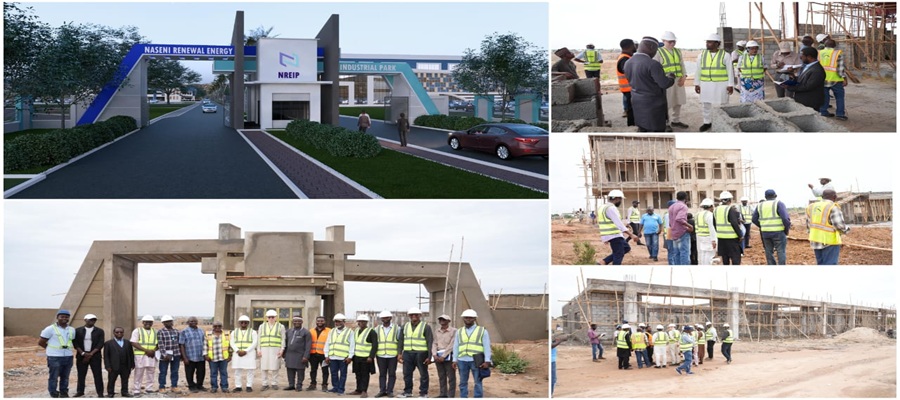
The on-going construction works at the National Agency for Science and Engineering Infrastructure, NASENI’s Renewable Energy Industrial Park, Gora, Nasarawa State is gathering momentum as the project is envisioned to address the country’s energy needs.

NASENI’s Renewable Energy Industrial Park, Gora, Nasarawa State
The project occupying a 40-hectare park designed as a multi-energy hub will help curb capital flight and save foreign exchange expenditure by enabling local production of key renewable energy components such as solar panels, mounting racks, wind systems and biomass technologies.
Speaking during an inspection visit on the project site on Tuesday, March 31, 2026, Special Adviser to the Executive Vice Chairman on Renewable Energy, Engr. Suyud Abdullahi Muhammad, who also serves as the Gora Project Manager, disclosed that the initiative is designed to significantly reduce Nigeria’s dependence on imported renewable energy equipment.
“There will be a wind assembly plant, small hydro power equipment production, and solar panel manufacturing; Renewable energy goes beyond just solar, and this park reflects that broader vision,” he said.
Abdullahi noted that the project aligns with NASENI’s goal of reducing energy poverty in Nigeria, where over 80 million citizens remain off-grid, while many connected to the national grid continue to experience inadequate power supply.
The Special Adviser also emphasised on the project’s industrialisation potential, highlighting its role in job creation and value chain development. The park is expected to generate 2,000 direct jobs, with an additional 50,000 indirect employment opportunities across supporting industries when completed.
“This initiative will localise the renewable energy value chain. Instead of relying on imports, Nigeria will begin to produce and eventually export these technologies, starting with the West African market and scaling up to the rest of the continent,” he added.
On sustainability and long-term viability, he revealed that the project is being executed in collaboration with private sector players, academia and other stakeholders, in line with NASENI’s “3Cs” principle of Creation, Collaboration and Commercialisation.
The ongoing construction is being handled by about 35 contracting firms, each handling specific components at varying levels of execution such as Multipurpose Halls for industrial productions, Research and Development (R&D) Centre, Knowledge Park, Energy Centre, Workshops, Researchers Lodge, Studio Apartments, Clinic, Restaurant, Wellness Centre, Solar Farm, Drivers Lounge, Gate House, Internal roads and drainage system and Fencing.
The Gora Renewable Energy Industrial Energy Park is considered a key component of the Federal Government’s Renewed Hope Agenda, aimed at strengthening local manufacturing, enhancing energy security and positioning Nigeria as a renewable energy hub in Africa.

Nigeria, Others Lose $88bn Yearly to Illicit Flows —Edun

Oracle Sacks 12,000 in India, Begins Shift to AI

CBN Says 33 Banks Raise Fresh N4.65 Trillion in Recapitalisation Exercise

NCC Insists Telcos Must Compensate Subscribers for Poor Quality of Service

NITDA Urges Joint Action to Drive Nigeria’s Digital Innovation

Spotify’s Loud & Clear Report Reveals Over ₦60Bn Revenue for Nigerian Artists in 2025

Madonna University Taps Tech Guru Adote for Strategic Board Role

China Threatens to Shut Nigeria’s Satellite Over $11.44m Unpaid Debt

FCCPC Bans Lagos ‘No Refund’ Policy, Vows Fines and Shutdowns for Traders

EFCC Arraigns Two FSDH Bank Officials Over $307k, €50k Fraud




 E-Financial3 days ago
NGX REGCO Fines 5 Firms N291m for Market Manipulation

 News3 days ago
Dangote Refinery Debunks Speculations on IPO

 E-Financial3 days ago
FG Launches Cross-Border Digital Payments Report

 News3 days ago
Descasio Launches “Give to Gain” Leadership Insights Report, Hosts Executive Brunch for Women in Leadership

 E-Financial3 days ago
Interswitch Deepens Strategic Partnership with KCB Group to Advance Digital Payments and Financial Inclusion

 News3 days ago
World Backup Day: Research Reveals 84% of Users Store Sensitive Data Digitally

 News2 days ago
Microsoft Revamps Copilot in Workplace AI Push

 E-Business2 days ago
Kaspersky Warns of a New Phishing Technique Leveraging Bubble, a no-code AI Platform