

Telecom
Ad Dynamo by Aleph Taps Carl Jordan Regional Sales Director, Sub Saharan Africa


Ad Dynamo by Aleph, a subsidiary of Aleph Group, has appointed Carl Jordan to the position of Regional Sales Director. Jordan will be in charge of Ad Dynamo by Aleph’s business strategy for Sub-Saharan Africa’s (SSA) region. He will bring a wealth of experience to his new position, having worked at the intersection of media and technology for over two decades.

Carl Jordan
A key focus for Carl will be to grow partner representation, including territory footprint and, by extension, revenues. This includes platform acquisition and representation, country launches, and advertiser and agency engagements.
“I am excited to work for a global company that is serving both developed and emerging countries and understands the link between growing the SSA region’s digital ecosystem and social impact. I’m especially pleased about the opportunity to educate businesses about the efficiency of digital channels, as well as to collaborate with the telcos, to make it more cost effective, for consumers to access the digital economy,” says Carl.
According to PWC’s Insights from the Entertainment & Media outlook report, In key markets such as Nigeria, Ghana, and Kenya, digital advertising still accounts for less than 20% of total media spend, suggesting that the SSA region offers substantial growth potential for the digital economy.
“The development of local / regional businesses, the creation of jobs and delivering social impact, are all made possible by serving communities,” Jordan explains.
Carl has held a number of leadership and commercial positions, most notably for Yahoo, Google, and Thomson Reuters in the UK, as well as Outbrain and Datafree across SSA.
He has contributed to the growth of Africa’s digital economy and start-up (disrupter) ecosystem over the last three years with Meta, in collaboration with VCs, brands, agencies, and startups.


Nigeria Data Protection Commission (NDPC) has issued a stern warning to content creators filming and sharing videos of unsuspecting citizens on social media, describing such practices as direct violations of citizens’ rights to informational self-determination.

NDPC
The Commission drew attention to individuals capturing pictures and footage of the general public without consent, breaching Section 37 of the 1999 Constitution of the Federal Republic of Nigeria (as amended) and the Nigeria Data Protection Act, 2023 (NDP Act).
NDPC specifically flagged a content creator in Lagos State who films unsuspecting passersby at roadsides for a “reality show”. The Commission stressed that processing personal images in this manner demands explicit consent or a justifiable lawful basis under the NDP Act.
Preliminary investigations revealed no public or legitimate interest served by this “wilful invasion of privacy”. Data subjects, the Commission noted, have no reasonable expectation that their images would be captured and broadcast globally by an unknown individual.
National Commissioner/CEO Dr Vincent Olatunji has instructed social media platform owners—including TikTok, X (formerly Twitter), and Meta—to intensify enforcement of community guidelines to prevent harm from unlawful and unfair personal data processing.
Platforms failing to act promptly face sanctions under the NDP Act. Individual creators remain personally liable for violations, potentially facing criminal prosecution for infringing citizens’ and data subjects’ privacy rights.
The advisory was signed by Babatunde Bamigboye, Esq. CDPRP, Head of Legal, Enforcement and Regulations.
NDPC emphasised that abuse of rights under the guise of entertainment will not be tolerated, urging compliance to safeguard Nigerians’ data privacy in the digital age.
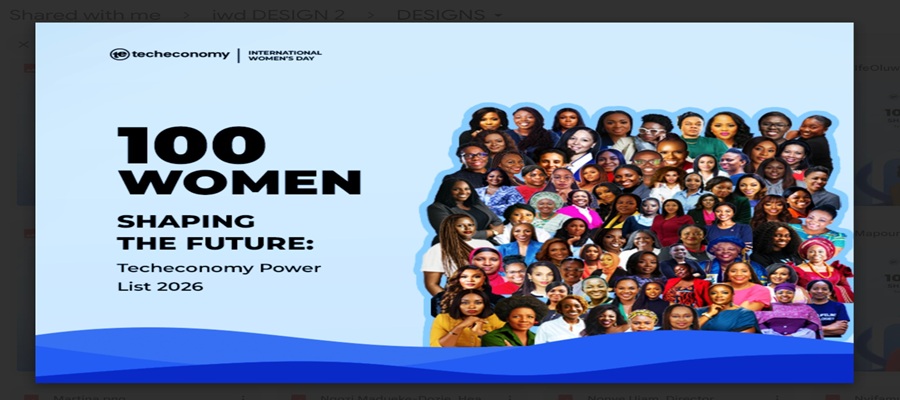
In celebration of International Women’s Day (IWD) 2026, Techeconomy, a leading business news platform in Nigeria, has unveiled its “100 Women Shaping the Future: Techeconomy Power List 2026,” recognizing exceptional women driving innovation, leadership, and impact across technology and the broader digital economy.

Techeconomy
The annual recognition spotlights women who are transforming industries through entrepreneurship, policy leadership, digital innovation, financial inclusion, media, education, and emerging technologies.
The initiative is part of Techeconomy’s commitment to promoting gender inclusion and highlighting female leadership shaping Africa’s technology ecosystem.
The Techeconomy IWD Power List features a diverse group of women, from corporate executives and startup founders to policymakers, ecosystem builders, and social innovators, whose work continues to influence the future of technology, business, and digital transformation in Nigeria and across Africa.
Speaking on the initiative, Joan Aimuengheuwa, the Managing Editor at Techeconomy, noted that the recognition goes beyond celebrating titles, focusing instead on impact, resilience, and the ability to shape the future through innovation and leadership.
According to her, “the women on the list represent different sectors including fintech, banking, healthcare, agriculture, education, communications, and the creative economy, demonstrating the growing role of women in advancing technology-driven development.
The unveiling aligns with the global celebration of International Women’s Day, which highlights the achievements of women and calls for accelerated progress toward gender equality. Across the world, the technology sector continues to push for greater female representation and leadership as part of efforts to build more inclusive digital economies.
Also speaking, Oluwatosin Aloba, the Brand Manager at Techeconomy, said: “Techeconomy IWD 2026 Power List is specially designed to inspire the next generation of female innovators and leaders by showcasing role models who are breaking barriers and redefining possibilities in the technology landscape.
“Techeconomy encouraged industry stakeholders, institutions, and the broader public to celebrate the achievements of these women while continuing to support policies, programs, and investments that expand opportunities for women in technology”, she added.
The full list of the “100 Women Shaping the Future: Techeconomy Power List 2026” is available on the Techeconomy website or visit: https://techeconomy.ng/techeconomy-iwd-2026-power-list-celebrates-100-women-shaping-the-future-of-tech/.

National Information Technology Development Agency (NITDA), via its Office for Nigerian Digital Innovation (ONDI), has partnered with the Japan International Cooperation Agency (JICA) to launch applications for the fifth cohort of the iHatch Startup Incubation Programme, targeting 37 innovation hubs—one per state and the Federal Capital Territory (FCT).

NITDA
The initiative selects hubs as state-level managers to run incubation programmes, addressing uneven support outside Lagos and Abuja. “Nigeria’s startup ecosystem has grown rapidly, but access remains uneven,” said ONDI National Coordinator Victoria Fabunmi. “iHatch builds stronger hubs, standardises quality, and boosts investment readiness across all regions.”
Amid Africa’s $3.42 billion startup funding in 2025, Nigeria’s innovation clusters in major cities, sidelining rural founders. Selected hubs will incubate five startups each for at least one year, providing structured guidance for growth and funding. Hubs gain operational support, resources, and performance rewards—prioritizing ecosystem leadership over cash grants.
Eligibility and Timeline
Eligible hubs must:
Operate for at least one year with local engagement.
Possess infrastructure for incubation activities.
Applications close March 16 at ondi.nitda.gov.ng/#/ihatch.
Fabunmi emphasized: “By equipping hubs with tools, curriculum, and oversight, iHatch ensures consistent outcomes for founders everywhere,” tackling geographic gaps to scale local innovation.

CBN Orders Banks to Restrict Access to Banking Services for Loan Defaulters

NLNG Advances Media Excellence with Change Your Story Workshop
Interswitch Advocates Trust-Driven Infrastructure as Cornerstones of Africa’s Cross-Border Capital Future

Why JustMarkets Is a Strong Choice for Gold Trading

UBA Business Series Celebrates ‘Gen.W: The Evolved Woman’ in Push for Female Empowerment

Kaspersky Discovers New Phishing Campaign Exploiting Google Tasks Notifications to Steal Corporate Credentials

esentry 2025 Report Shows Healthcare, Financial Services and Telecoms as Staging Grounds for Increased Cyberattacks in Africa

AfDB, UNDP Launch $10Bn AI Initiative for Africa

Pheelz Shares His Journey on Glo-Sponsored African Voices

Mutual Benefits Assurance Settles ₦5.9bn Claims in January 2026




 General News1 day ago
Court Freezes Bank Accounts of Petrocam, Founder over Alleged N9Bn Zenith Bank Debt

 E-Business2 days ago
FG Moves to Strengthen Children’s Online Safety

 General News1 day ago
FCCPC Says Telcos, Energy Firms Lead Consumer Complaints in Nigeria

 E-Financial2 days ago
CBN Directs Banks to Activate Anti-Money Laundering Systems

 Telecom1 day ago
Techeconomy Unveils IWD 2026 Power List Celebrating 100 Women Shaping the Future

 Telecom2 days ago
Canal+ Unveils €100m Rescue Plan to Revive MultiChoice after Subscriber Slump

 E-Business2 days ago
How Africa Can Turn the AI Wave into Inclusive Growth

 E-Business2 days ago
Nigeria’s Non-Oil Exports Hit N12.36trn in 2025 – NBS