

News
Africa’s Richest Men and their Mantras

Power and drive are two things business leaders seem to have in common.
Add an uncommon determination to succeed, and the extraordinary that pushes them to surpass expectations and do things others have not thought, or found the wit to do then you might might probably have all the ingredients that these geniuses embody.
The veritable Ventures Africa, Pan-African business magazine and news service, across the globe, entrepreneurs and business leaders are marked by their enviable managerial skills and intellectual capacity which they demonstrate.
According to Ventures Africa, no wonder when they as much as cough everyone pays apt attention: that split-second action of opening their lips could be some kind of code unlocking the next billion dollar opportunity.
In the Africa, the story is the same. From Cape to Cairo via Nairobi and the busy ports of Lagos, African has it fair share of dynamic business leaders who have not just built world-class businesses, but have positioned the continent’s economies for unprecedented growth and development. Ventures Africa takes a look at 21 ‘words of wisdom’ from some of Africa’s billionaire businessmen.
Johann Rupert, South Africa
Johann Rupert is one of South Africa’s richest people with an approximate net worth of $6.6 billion. Johann serves as Chairman of Richemont, Swiss -based luxury-goods company, as well as of Remgro, South Africa-based company.
However, Rupert’s wealth has grown an astonishing 30% recently, after he upgraded fortunes of his Swiss-based luxury goods outfit, Compagnie Financiere Richemont.
Quote: ‘‘I just want to be master of my own time. It is ironic that someone in the watch business should not be in control of his own time.’’
Christoffel Wiese, South Africa
Christoffel Wiese is a veteran business leader from South Africa with a net worth of $3.5 billion. Wiese is one of the richest people in South Africa.
Christoeffel Wiese serves as Chairman and the largest single shareholder of Shoprite, Africa’s biggest retailer, low-priced supermarket chain.
He is also the Executive Chairman of Pepkor, a chain of discount clothes, shoes and textiles, where he holds a large stake.
Quote: ‘‘Who else could have built a company we bought for R1 million into a company worth more than R100 billion today. To run a company with more than 100,000 employees in 17 countries, you have to be able to think on your feet.’’
Mike Adenuga, Nigeria
Mike Adenuga is a Nigerian business magnate whose net worth is estimated at $4.7 billion according to Forbes. Some quarters believe he is worth more than that. In 2006, he founded Globacom, the second largest mobile phone network in Nigeria.
With over 24 million customers in Nigeria, the company also operates in the Republic of Benin, where it recently acquired licenses to start businesses in Ghana and the Ivory Coast.
Adenuga’s Conoil Producing is considered to be one of the largest independent exploration companies in Nigeria, with a production capacity of 100,000 barrels of oil per day
Quote: ‘‘The harder you work, the luckier you get’’.
Mohammed Ibrahim, Sudan
Mohammed Ibrahim is a mobile communications entrepreneur. He is a respected international philanthropist, who is credited with ‘transforming the continent’ and is thought to be the ‘most powerful black man in Britain’.
In 2007, he launched the Mo Ibrahim Prize for Achievement in African Leadership, which awards an initial prize of $5 million and an annual life payment of $200,000 to African Heads-of-State awardees. Past recipients of the award include Nelson Mandela and Olusegun Obasanjo.
Quote: ‘‘What do you do if you are an executive who resigns? You declare yourself a consultant’’.
Aliko Dangote, Nigeria
Nigeria’s Aliko Dangote is an industrialist currently worth $20 billion. He founded the Dangote Group which controls much of Nigeria’s commodities trade.
This business magnate and philanthropist referred to as ‘‘the golden child of Nigerian business circle’’ once drove a taxi cab on the streets of London to fund his education, three decades later, his consortium now spans across many sectors of the Nigerian economy and is expanding to the rest of Africa. He has retained his position as Africa’s richest man for the 3rd year in a row.
Quote: ‘‘If you give me $5 billion today, I will invest everything here in Nigeria. Let us put our heads together and work’’.
Naguib Sawiris, Egypt
Sawiris is a business man and politician. He was the executive chairman of the telecommunications companies Wind Telecom and Orascom Telecom Holding (OTH) before turning to politics in May 2017. OTH launched the first mobile operator in Egypt, Mobnil in 1998.
Quote: ‘‘I can tell you that I won’t sell Mobnil, they think because of this boycott, that I will get fed up and sell, it’s not in my character… I am not a quitter’’.
Stephen Saad, South Africa
Stephen Saad is a South African billionaire whose net worth is estimated at $1 billion. He is the co-founder of Aspen Pharmacare, South Africa’s leading publicly-traded drug manufacturer on the Johannesburg Stock Exchange
Quote: ‘‘In Life, you don’t get anywhere or do anything you hope to without some sort of sacrifice’’.
Isabel Dos Santos, Angola
Isabel dos Santos is Angolan businesswoman who has a net worth of $2 billion. Isabel who best known as the oldest daughter of Angola’s President José Eduardo dos Santos, was named Angola’s first billionaire and the richest woman in Africa as of March 2013. In 1977, 24 year old Isabel started her first business, i.e., a restaurant called Miami Beach in Luanda, the country’s capital.
Quote: ‘‘I think there are a lot of people with family connections but who are actually nowhere. If you are hardworking and determined, you will make it and that’s the bottom line. I don’t believe in an easy way through’’.
Patrice Motsepe, South Africa
Patrice Motsepe is a South African mining magnate who has a net worth of $2.9 billion. Motsepe founded and now chairs African Rainbow Minerals (ARM), a publicly traded mining conglomerate with interests in platinum, nickel, chrome, iron, manganese, coal, copper and gold.
Quote: ‘‘One has to set high standards… I can never be happy with mediocre performance’’.
Miloud Chaabi, Morocco
Miloud Chaabi is a business tycoon with an estimated net worth of $2.1 billion placing him as the richest person in Morocco.
Chaabi began working as a farmer and goat herder in his early teens. He eventually saved up enough money to move to Kenitra.
He launched his first construction company, Ynna Holdings, in the late 40s. He grew Ynna Holdings from a construction firm into the ownership firm of hotels, supermarkets, and renewable energy, among other holdings. He owns the Riad Mogador hotel chain and the Aswak Assalam chain of supermarkets.
He also runs one of Morocco’s most prolific charity groups, the Miloud Chaabi Foundation
Quote: ‘‘Bribe seekers know who to look for and my company’s reputation for integrity means I never get hassled into bribery’’.
Cyril Ramaphosa, South Africa
Ramaphosa is a South African business mogul, philanthropist and owner of the Shanduka Group. Cyril is wildly respected as a skilful and formidable negotiator and strategist, and also best known for building up the biggest and most powerful trade union in South Africa, the National Union of Mine Workers (NUM).
Quote: ‘‘No action is too small when it comes to changing the world… I’m inspired every time I meet an entrepreneur who is succeeding against all odds’’.
Naushad Merali, Kenya
Merali is a Kenyan inventor, and business magnate, best known as the founder of the Kenyan mobile service provider Kencell along with French media giant Vivendi.
As one of Kenya’s leading industrialist, Merali has brought commercial development in Kenya for more than 30 years and is currently expanding his business throughout East Africa. In 2004, he made a $20 million dollar profit in a deal at a record 1 hour.
Quote: ‘‘We need to arrest the widening disparities in incomes between the rich and poor’’.
Anas Sefrioui, Morroco
Sefrioui is a Moroccan businessman and visionary leader. According to reports, he is worth about $1.3 billion.
He founded Groupe Addoha back in 1988, but he made a big break ten years later after he got a contract to build a chunk of government-subsidized housing under the patronage of Morocco’s late King Hassan II.
His wealth continued to swell as he won a $1 billion state contract to build more housing units in 2005.
Currently, Anas is the General President and 61.7% owner of the corporate enterprise also known as Douja Promotion Groupe Addoha. Anas Sefrioui is the third richest person in Morocco and the 16th in Africa.
Quote: ‘‘The potential of the African market is huge’’
Nicky Oppenheimer, South Africa
Nicky Oppenheimer’s net worth is estimated at $6.5 billion dollars which makes him one of the richest people in South Africa. In addition to his work with De Beers, he also helms Greene and Partners Investments, a venture capital firm which focuses on building business in South Africa, and surrounding areas. In 2011, he sold his family’s 40% stake in De Beers to Anglo American, a company his grandfather started in 1917.
Quote: ‘‘I am a great believer that if you know how to operate in Africa, there are unbelievable opportunities’’.
Nathan Kirsh, Swaziland
Nathan Kirsh is a South African business mogul whose net worth of $3.1 billion. Kirsh owns a property empire that spans across the United Kingdom, Swaziland and Australia.
Kirsh has started his corn milling business in1958. The business expanded and became a variety wholesale food distribution.
Quote: ‘‘Real estate is the only sector where ‘stupid people’ can make money’’.
Desmond Sacco, South Africa,
Sacco is a business magnate and billionaire whose net worth is about $1.5 billion.
He is one of the richest and most influential South Africans. He got into mining in 1928 when he established Gloucester Manganese Mines.
He later inherited and further developed his father’s business. As of January 2012, Desmond’s Assore Group’s shares have almost doubled.
Quote: ‘‘Money is not my objective’’.
Sudhir Ruparelia, Uganda
Sudhir is a businessman and entrepreneur in Uganda. He is the Chairman and majority shareholder in the companies owned by the Ruparelia Group.
He has investments in banking, insurance, education, broadcasting etc. In 2012, he was reported to be the wealthiest individual in East Africa with an estimated net worth of $900 million.
Quote: ‘‘I own quite a lot and I have worked very hard for it’’.
Othman Benjelloun, Morocco
Benjelloun was listed as the richest person in Morocco with a net worth of $3.1 billion. He took over his family’s insurance company and turned it into the leading RMA Watanya insurer.
Then he expanded to the banking sector.
The banking aspect of Benjelloun’s business career alone is worth $4 billion. His holding company, FinanceCom holds interests in telecommunications, airlines and information technology.
Quote: ‘‘I have done industry, banking, insurance and telecommunications, and but helping children and adults is the project of my life’’.
Mr. Jim Ovia, Nigeria
Jim Ovia founded Zenith Bank Group in 1990. The bank has grown into West Africa’s second largest financial services provider by market capitalization and asset base.
His stake with Zenith is worth about $300 million. An equally large chunk of his wealth comes from a portfolio of prime real estate in Victoria Island and Ikoyi, some of Nigeria’s priciest neighborhoods.
Ovia devotes majority of his time to managing Visafone, a telecom outfit he founded in 2007. He also owns Quantum, a private equity fund focused on Africa.
Quote: “I will continue to empower the youths. That is my passion. The youths are the leaders of tomorrow. We must continue to support them’’
Ashish Thakkar, Uganda
Ashish is referred to as the youngest billionaire in Africa. He is founder of the pan-African multi-sector business conglomerate, Mara Group.
A serial entrepreneur who started his first company at the age of 15, Ashish built a conglomerate of real estate, information technology and manufacturing with operations in over 26 companies and employing 7,000 people worldwide in less than two decades.
Quote: ‘‘Money should never be a measurement for anything’’.
Said Salim Bakhresa, Tanzania
Bakhresa is described as extremely reclusive business tycoon and richest man in Tanzania. He is the founder and chairman of the Bakhresa Group of Companies.
The genius is a well known industrialist in the mainland of Tanzania and Island of Zanzibar.
With a small beginning as a small restaurateur in the 70’s, he created the business empire with a span of three decades. He is the mastermind behind the success of all the business within the group.
Quote: …
This man hardly reveals his mind… he keeps people guessing of what his next moves are.


Microsoft has rolled out a new set of features for its Microsoft 365 Copilot platform, including tools for complex, multi-step work and deeper research tasks, as competition in workplace artificial intelligence (AI) intensifies.

The update introduces Copilot Cowork, a capability aimed at handling long-running tasks across Microsoft 365 applications.
The feature is being made available through the company’s Frontier programme, which typically gives early access to experimental tools.
Microsoft is also integrating technology linked to Claude – an AI model developed by Anthropic –into Copilot, signalling a broader shift toward using multiple AI systems within a single product rather than relying on a single model.
Jared Spataro, chief marketing officer for AI at Work at Microsoft, says the company is positioning Copilot as a system embedded directly into workplace software, rather than a standalone tool.
“Microsoft 365 Copilot is your AI for work,” he says, adding that it draws on multiple AI models and is integrated into existing workflows.
Alongside this, Microsoft has upgraded its Researcher feature, which is designed to analyse information from multiple sources and generate structured reports.
A new “Critique” function separates the drafting and review process between different AI models – one generates an initial response, while another evaluates and refines it.
The company says this approach improves output quality, with Researcher showing gains on its internal benchmark for accuracy, completeness and objectivity.
Another addition, called Model Council, allows users to compare outputs from different AI models side-by-side, highlighting differences in responses and reasoning.
The updates form part of what Microsoft calls “Wave 3” of Copilot, as it pushes to embed generative AI deeper into enterprise software. The move reflects a wider industry trend towards combining models from multiple providers, including OpenAI and Anthropic, to improve performance and reliability.

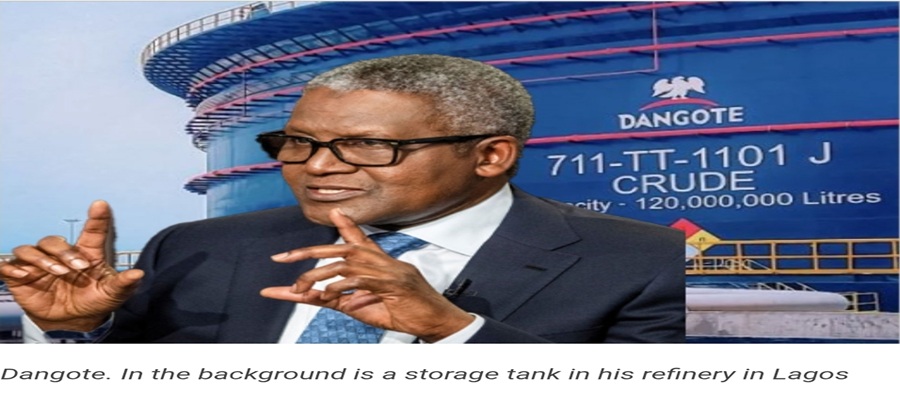
Dangote Petroleum Refinery and Petrochemicals (DPRP) has debunked recent circulation of unauthorised information regarding a potential Initial Public Offering (IPO).

In a statement, DPRP noted that several online platforms and unofficial sources have published unverified, and in some instances inaccurate, information relating to a potential offering.
“Such reports do not originate from DPRP and should be treated with caution. All official updates regarding any potential transaction will be communicated strictly through DPRP’s formal public disclosures and announcements issued by its appointed advisers, in line with applicable laws and regulatory requirements.
“Accordingly, the public, investors, and all market participants are strongly advised to disregard speculative commentary and rely solely on verified information formally issued by DPRP or its authorised representatives,” the statement said.
The firm assured stakeholders that, when appropriate, comprehensive, and accurate details regarding any proposed transaction will be made available through official channels, including regulatory filings, authorised press releases, and coordinated communications by the Enterprise and its appointed advisers.
News
Descasio Launches “Give to Gain” Leadership Insights Report, Hosts Executive Brunch for Women in Leadership

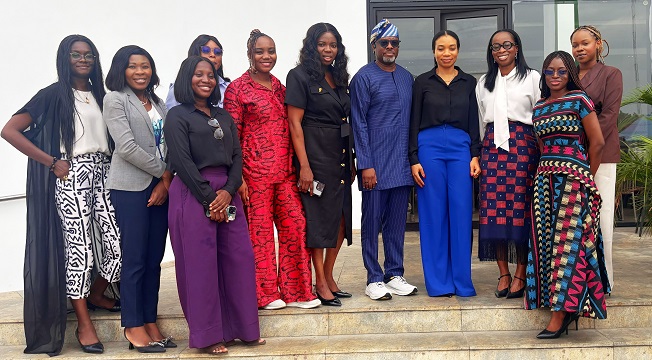
In celebration of International Women’s Day, Descasio hosted an intimate executive brunch bringing together distinguished women leaders from its customer community for a thoughtful conversation on leadership, partnership, and shared growth.

Centered around the 2026 International Women’s Day theme, “Give to Gain,” the gathering created space for accomplished women in enterprise leadership to reflect on mentorship, collaboration, and investing in people as key drivers of sustainable growth.
Held in Lagos, the event convened leaders from organizations including Honeywell Group Limited, Finchglow Travels, NGCOM, and Eroton Exploration & Production Company.
Guests were personally welcomed at the start of the gathering by Mr. Dele Nedd, CEO of Descasio; who greeted each of the women leaders and expressed his appreciation for their presence before leaving the session to allow the women lead the conversation among themselves.
The gesture reflected Descasio’s leadership culture; one where women are not only recognized, but actively supported and empowered. It also underscored the company’s belief that meaningful progress in leadership requires partnership and allyship across the organization.
Rather than a traditional panel discussion, the brunch was designed as a candid and reflective exchange among peers navigating leadership in complex industries. Throughout the conversation, participants shared perspectives shaped by experience, responsibility, and the realities of leading teams and organizations.
A recurring theme in the discussion was the role of execution and accountability in leadership. For many organizations, strategy alone is not enough; consistent delivery is what ultimately builds credibility and trust.
Reflecting on this, Josephine Adebola, Data Compliance & Process Automation Manager at Finchglow Travels, emphasized the importance of reliability in leadership and the discipline required to translate vision into results. “Get it done on time and in full.”
The conversation also explored the role of curiosity and continuous learning in shaping effective leaders. In rapidly evolving industries, the ability to ask questions, remain open to new perspectives, and keep learning is often what enables leaders to grow alongside their organizations.
Sharing her perspective, Tomi Otudeko, Chief Operating Officer at Honeywell Group Limited, reflected on how curiosity has shaped her leadership journey.
“Asking questions and continuously learning have always stood me in good stead as a leader.”
She also spoke about the importance of leading with empathy and understanding the people behind the roles within organizations.
“Everyone has multiple dimensions to who they are. Leadership has taught me to see people in their totality. That awareness doesn’t make a leader weak; it makes them more effective.”
Another important theme that emerged from the conversation was authenticity in leadership. In an environment where leaders often face pressure to conform to traditional expectations, remaining true to one’s identity while continuing to evolve is essential.
For Helen James-Eziashi, General Manager at NGCOM, authenticity and curiosity remain key guiding principles. “Be yourself, keep learning, and stay curious.”
The discussion also highlighted the role of self-awareness in sustaining leadership journeys, particularly in complex and high-responsibility environments. Understanding one’s values, motivations, and support systems often becomes the anchor that allows leaders to navigate uncertainty with confidence.
Reflecting on this, Ifeanyi Onyejekwe, IT Manager at Eroton, emphasized the importance of knowing what grounds a leader.
“Know who you are and understand what supports and sustains your leadership journey.”
According to Descasio, the event reflects its broader commitment to building strong partnerships and fostering meaningful leadership conversations across its enterprise customer community.
“For us, this was about more than marking International Women’s Day,” said Umama David-Ogebe, The HR Manager at Descasio. “It was about creating a space where leaders could learn from one another and reflect on the kind of leadership that builds strong organizations. The most meaningful partnerships grow from conversations like these.”
To extend the impact of the discussion, Descasio has published “The Give to Gain Leadership Report: Insights from Women Leading Enterprise Organizations,” a curated publication capturing key reflections and leadership lessons shared during the session.
The report highlights themes including:
- The role of curiosity and continuous learning in leadership
• Building stronger teams through empathy and accountability
• The importance of authenticity and self-awareness in navigating leadership journeys
• How investing in people drives stronger partnerships and resilient organizations
The Give to Gain Leadership Report is now available for download Here.

How Recycled SIM Card Linked to N50m Kidnapping Nearly Landed me in Jail – Businesswoman

Senate Gives Tinubu Nod to Borrow Fresh $6Bn

FG Earmarks $2Bn to Launch 2 Satellites in 2028, 2029

CBN Directs Banks, Fintechs to Complete Cybersecurity Audit Tool

FG Launches CLHEEAN to Streamline Access to Government Services

Spotify’s Loud & Clear Report Reveals Over ₦60Bn Revenue for Nigerian Artists in 2025

Madonna University Taps Tech Guru Adote for Strategic Board Role

China Threatens to Shut Nigeria’s Satellite Over $11.44m Unpaid Debt

Jumia Tech Week 2026 Begins with Tech Deals on Smartphones, Electronics, and Everyday Technology

FCCPC Bans Lagos ‘No Refund’ Policy, Vows Fines and Shutdowns for Traders




 E-Financial2 days ago
CBN bars large‑ticket loan defaulters from banking services in tough new crackdown

 General News2 days ago
ARN Rejects Medical Bill over Attempt to ‘Scrap’ Profession

 Telecom2 days ago
NIGCOMSAT Supports Startups Growth with the Launch of Accelerator 3.0

 News2 days ago
Meningitis Kills a Quarter Million People a Year -Study

 Telecom2 days ago
FG Unveils Digital Economy Research Fund Scheme

 News2 days ago
Stakeholder says AI is Crucial to Nigerian Data Centres Amid Persistent Grid Collapse
- General News2 days ago
Nigeria Advances Digital Governance as NITDA takes over NGEA Portal

 E-Financial1 day ago
NGX REGCO Fines 5 Firms N291m for Market Manipulation