

General News
Again, Gambaryan, Binance Executive Accuses 3 Lawmakers, NSA of Demanding $150m Bribe

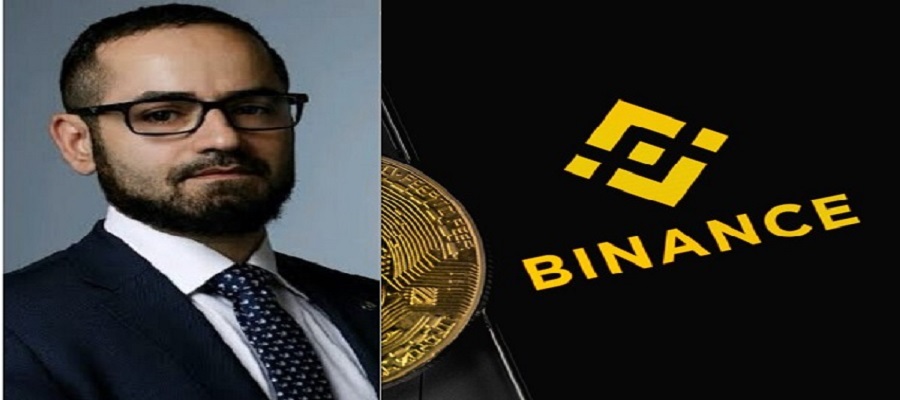
Tigran Gambaryan, head, Financial Crime Compliance Unit at Binance, cryptocurrency firm, who was detained in Nigeria for several months last year, has again alleged that three Nigerian lawmakers demanded a $150 million bribe from him.

Tigran Gambaryan, head, Financial Crime Compliance Unit at Binance
Gambaryan, also alleged that, Nuhu Ribadu, National Security Adviser (NSA) demanded billions worth of crypto accounts to fund his future political ambitions. He, however, did not say in which currency the alleged demand was made.
Tweeting on his X handle, formerly known as Twitter, with the name @TigranGambaryan on Friday, Gambaryan named two lawmakers involved in a meeting of January 5, 2024, at the National Assembly as Peter Akpanke and Philip Agbese, whom he said were working under the committee of Ginger Obinna Onwusibe, while he could not recall the name of the third lawmaker.
Narrating his alleged ordeal in Nigeria on X, Gambaryan said that the lawmakers set up fake cameras and media to make the meeting with his team official but that the cameras were not even plugged in.
Onwusibe is the chairman of the House of Representatives Committee on Financial Crimes, Akpanke is a member of the committee, and Agbese is the deputy spokesperson of the House.
The NSA’s office and the lawmakers have all denied the allegations. This is just as the federal government called on Nigerians to disregard the accusations, saying there are false and outrageous.
Gambaryan, who was detained in February 2024 on a five-count allegation of money laundering, was released on October 23, 2024, on diplomatic grounds due to ill health.
Continuing, Gambaryan said ‘@NuhuRibadu invited us to the official meeting and worked through Sa’ad Abubakar. Another key figure in this situation was Hamma Adama Belloji. Ogunjobi was just a pawn; they used him too. This was sold as a friendly meeting with the NSA, the head of the SEC (Securities and Exchange Commission), and the CBN (Central of Bank of Nigeria) governor and includes a discussion of the briber that was solicited by the House of Representatives.
‘The $26 billion figure they kept pushing publicly as some mystery money escaping Nigeria is complete BS. This information was provided in response to their request and was simply cumulative trade data for Nigerians on the platform. This money didn’t leave Nigeria-it was just people buying and selling crypto. For example, if you trade $100 a hundred times, that’s $10,000 in trade volume, but in reality, you only used $100. Again, just another example of them lying to cover up their BS investigation.
‘They lied about Nadeem escaping during mosque prayers. In reality, he returned and escaped afterwards. I don’t know exactly how he managed to flee. He emailed me in November, but we haven’t discussed the details of his escape. It’s possible he paid someone off, but I have no proof. If Belloji had simply checked his passport for a visa, he would have realized that Nadeem did not use that passport to travel to Nigeria.
‘They sent a letter to the U.S. Embassy and the British High Commission, falsely claiming that we were voluntarily participating in strategic talks. This was a blatant lie’, he said.
While noting that some Economic and Financial Crimes Commission (EFCC) officials, who were not present when Nadeem escaped, were detained, he added that: ‘Nadeem did not escape lawful detention-we were being held illegally. Belloji even admitted that he would fabricate evidence to obtain a court order to detain us for 14 days. Once the court order expired, they were unable to get an extension from the judge. At that point, they continued holding us illegally and had no justification for doing so.
‘There was a lot of noise about using Interpol to capture Nadeem. As someone who has been involved in multiple extradition cases, I can confidently say this was a joke. Extradition is a lengthy legal process, and no rational judge in Kenya or wherever would ever approve extradition for someone who escaped illegal detention at the hands of rogue law enforcement-especially when that detention involved holding employees hostage to pressure their employer. All noise’, he said.
Our company was a scapegoat’
Gambaryan stated further that Binance was made a scapegoat for the naira’s devaluation, when it was the direct result of President Bola Ahmed Tinubu’s ‘monetary policy’. According to him, the Nigerian operatives violated international privacy laws on user data on all Nigerians to target opposition members for allegedly ‘manipulating the price of the naira.’
Accusations against Ribadu
Gambaryan said Ribadu emphasised that he wanted billions in payouts to fund his future political ambition but was ‘trapped’ because any settlement would be perceived as a bribe. He added: ‘I guess he really wanted his boss’ job.’
He added: ‘Ribadu even hired a U.S. law firm to negotiate my release, but this failed due to their incompetence and greed.
‘Ribadu overstepped his authority and embarrassed Nigeria in front of U.S. National Security Advisor Jake Sullivan. Ribadu acting like… angered the White House and led to diplomatic repercussions-the U.S. limited visas to the Nigerian delegation for UNGA (United Nations General Assembly), and (President Joe) Biden refused to meet with Tinubu until my situation was resolved.
‘In the end, Ribadu overestimated his influence. They thought they could secure a quick win, but instead, they created an international incident, exposing his incompetence on a global scale,’ the Binance executive said.
The federal government has however called on Nigerians to disregard what it called falsehoods being peddled by the Binance executive.
In a statement issued last night, Mohammed Idris, the Minister of Information and National Orientation.
It noted with concern the ‘outrageous allegations, misinformation, and defamatory statements being disseminated by Tigran Gambaryan’.
He said while the federal government is hesitant to engage Mr Gambaryan, ”given the high-level diplomatic intervention that resolved his case, we are obliged to set the records straight to stop his falsehoods from gaining grounds.
‘The first visit by Mr Gambaryan and his colleagues to Nigeria was discretional on their part and government was not officially involved. However, when the attention of the government was called to an alleged bribery demand during that trip, an investigation was immediately opened into it, though there was no formal complaint by anyone.
‘Mr Gambaryan’s second visit to Nigeria was part of a wider probe into the criminal manipulation of the Nigerian currency through peer-to-peer platforms like Binance, but investigators were frustrated by the tactics deployed by Gambaryan and his team.
‘Mr Gambaryan was released by the Nigerian government in October 2024, on humanitarian grounds and following a high-level diplomatic intervention that ended with tangible benefits for Nigeria.
The government rejected Binance’s offer of a $5 million down payment in exchange for Mr Gambaryan’s freedom, in favour of a more beneficial settlement with the American government.’
The minister added, ‘we categorically deny the retaliatory claims made by Mr. Gambaryan against Nigerian officials involved in his case, and we urge the public to disregard these false accusations in their entirety.
‘It is essential to note that Mr. Gambaryan’s allegations are not only unsubstantiated but also lack credibility, given his apparent motive to discredit and intimidate those who ensured he faced justice.
‘However, we are confident that both the Nigerian and American judicial systems will provide Mr. Gambaryan with a fair opportunity to substantiate his claims in court. Until then, we advise the public to exercise caution and not be swayed by Mr. Gambaryan’s unfounded and malicious claims.’
Also speaking on the allegations, the lawmakers mentioned denied demanding bribe from Binance, asking Mr Gambaryan to provide evidence to back his allegations or be ready to face consequences.
One of the affected lawmakers and deputy spokesman of the House, Agbese, said he was ‘outraged’ by the ‘false’ allegation as he was not part of any meeting with the Binance team, but had a chance encounter with them when he visited his friend, Akpanke.
He said: ‘Let it be on record that I am not a member of the Committee on Economic and Financial Crimes. I visited my colleague, Peter Akpanke, in his office, where he was meeting with some visitors about the activity of his committee, with Peter Anekwe, a member of the committee present. We exchanged pleasantries and, in character with my person as an avid pursuer of knowledge, discussed Binance’s activities that did not include any demand from anyone.
‘It was during this visit to the office of Peter Akpanke, with Peter Anekwe present, that he told me they were interfacing with the Binance team from abroad over a referral to their committee. What transpired between the two of them and the Binance executive after I left the office is left to them. I never saw those visitors again after that chance meeting and did not afterwards attend any meeting with Binance executives, the EFCC, or the DSS (Directorate of State Services).
‘I am aware that when this issue was first raised, the chairman of the committee went to court and Binance apologised. So, all inquiries should be directed to the committee, not to Philip Agbese.
‘I have never used any cryptocurrency as I do not have a crypto wallet anywhere in the world, so I could not have asked for funds to be credited to a non-existent wallet.
‘Gambaryan and his associate, who escaped from prison, should return to the EFCC and defend themselves. Instead of trying to implicate me, they should focus on addressing the allegations against them’, he said.
Agbese demanded a retraction and an apology from Gambaryan within seven days if he failed to provide evidence or face legal action from his lawyers.
When contacted, Akpanke also denied demanding bribe from Binance executives as alleged and challenged Gambaryan to provide evidence that he (Akpanke) and other members of the committee demanded gratification from him as alleged.
Akpanke said: ‘Whatever we did with Binance was transparent; it was an open thing. Is it just to allege; how did we demand? This is the question you people should ask them as journalists. Where did we demand it? What for? Did the Nigerian government not charge them to court? If there were such a thing, why did they charge them to court? It is not true. I have not met Binance executives since we had a meeting with him in my office, in which I represented the chairman and everything was open and transparent. There was nothing hidden’.
While maintaining that he had no contact with the firm after submitting his investigation report to the chairman of the committee, Akpanke said the allegation had been made before and there is a pending court case about it and the firm had failed to show up.
Meanwhile, efforts to get the reaction of the chairman of the Financial Crimes Committee, Ginger Onwusibe, were not successful as he did not respond to calls and WhatsApp messages sent to him.
But a top government source said Gambaryan was being economical with the truth.
Efforts to speak with the NSA, Ribadu, were not successful. Also, Zakari Mijinyawa, who speaks on behalf of the office, could not be reached.
‘He (Gambaryan) contradicted himself because in one place he said Ribadu asked him for bribe to fund his future political ambition, and in another place, he said any money collected by Ribadu will be seen as bribe’, said the source.


Economic and Financial Crimes Commission (EFCC) has partnered with the National Space Research and Development Agency (NASRDA) to deploy advanced space and geospatial technologies in investigations and asset management.

Ola Olukoyede, executive chairman of the EFCC,
The move is expected to deepen transparency, strengthen asset recovery and curb economic sabotage according to a statement by Dele Oyewale, head, Media and Publicity, EFCC.
He said that the partnership was formalised through the signing of a Memorandum of Understanding (MoU) on Thursday in Abuja
The agreement is aimed at strengthening inter-agency collaboration, particularly in the areas of investigations, asset tracking and fraud risk assessment, marking a new phase of cooperation between the anti-graft agency and Nigeria’s space research and regulatory authority.
Speaking at the signing ceremony, Ola Olukoyede, executive chairman of the EFCC, described the agreement as a practical demonstration of the power of collaboration among government agencies.
He noted that closer cooperation would make it easier for institutions to effectively deliver on their statutory mandates.
According to Olukoyede, the MoU clearly defines the responsibilities of both agencies and establishes a framework for sustained cooperation.
He disclosed that a special monitoring and implementation team would be constituted to ensure the effective operationalisation of the agreement and to periodically review its impact.
“We will put a team together that will monitor the operationalisation of this MoU and also review the effectiveness of the platform from time to time.
“When agencies work together in the spirit of collaboration, it not only enhances efficiency but also encourages other ministries, departments and agencies to explore similar partnerships in the overall interest of national development”, he said.
Explaining the specifics of the partnership, the EFCC chairman said NASRDA would provide advanced technological tools to boost the Commission’s investigative capacity and asset tracking, while the EFCC would deploy its expertise to support the agency in fraud risk assessment.
“We will support you in the area of fraud risk assessment, and you will support us in promoting our investigative capacity.
“Where our eyes cannot get to, with the aid of your technology, we will be able to get there”, Olukoyede said.
He noted that the collaboration would be particularly beneficial to investigations into illegal mining activities, which have been linked to economic sabotage and rising insecurity in parts of the country.
“With the technology you are going to support us with, we will be able to identify some of these areas,” he added.
Olukoyede further expressed optimism that the partnership would significantly enhance the EFCC’s asset management processes, stressing that asset recovery remains one of the core pillars of the Commission’s mandate.
He explained that recovered assets are scattered across the country and exist under different legal statuses, including interim and final forfeiture.
“In some of these places, we may not have enough personnel to physically secure the assets. But with your support, we will be able to deploy geospatial technology and asset tagging devices to monitor both movable and immovable assets in a transparent and accountable manner”, he said
In his remarks, Matthew Adepoju, director-general and chief executive officer of NASRDA, welcomed the partnership, describing the MoU as a major milestone in the pursuit of justice and regulatory compliance within Nigeria’s space ecosystem.
Adepoju stressed that space-related activities are strictly regulated in developed economies and should be treated with similar seriousness in Nigeria, particularly in view of the potential misuse of satellite assets.
“You cannot go anywhere in Europe, continental America or the Far East and be doing business in the space ecosystem without the country ensuring that you are doing the right thing.
“We know for a fact that some satellite assets are being used negatively in driving insecurity in the country”, he said.
He also raised concerns over the use of satellite-mapped data on Nigeria’s natural resources to aid illegal activities, especially illegal mining, which he identified as one of the drivers of insecurity.

DalaHill Law Practice and the Bank of Agriculture (BoA) have signed a Mutual Accountability Framework (MAF), marking a milestone in the launch of a climate finance initiative funded by the African Climate Foundation (ACF) and valued at US$100,000.

According to a statement by the firm, the signing took place during a kickoff ceremony at the BoA headquarters in Abuja and formalised the roles, responsibilities and shared commitments of both institutions in delivering the project. The framework was signed by Ayo Sotinrin, BoA Managing Director, and Mohammed Hamza, Managing Associate at DalaHill.
The ACF-funded initiative is designed to support BoA’s institutional transition towards climate-aligned agricultural finance. Central to the programme is the establishment of a Clean Energy Delivery and Innovation Unit (CEDIU), a dedicated function that will integrate climate risk considerations, environmental data and sustainability principles into the bank’s strategy, operations and investment decision-making.
Under the initiative, BoA will also be supported to develop Clean Energy Access Systems and Climate Finance Development Frameworks, alongside a pipeline of bankable, climate-aligned agricultural projects.
These projects are expected to attract domestic and international capital into the sector, contributing to efforts to bridge Nigeria’s estimated $247.3 billion financing gap for its green energy transition.
Speaking on behalf of DalaHill, Mohammed Hamza described the initiative as a pivotal intervention in Nigeria’s agricultural and climate finance landscape. He said the firm is acting as a trusted adviser, working with institutions to deliver catalytic and transformative solutions.
According to him, DalaHill is deploying a multidisciplinary technical team to support BoA’s transition into a climate-aligned institution capable of attracting finance for scalable, investment-ready agricultural projects.
He highlighted the strategic importance of the project, noting that while ACF has traditionally focused on renewable energy, climate alignment within the agricultural sector is critical to driving Nigeria’s broader energy transition. He added that the initiative represents ACF’s first climate finance grant promoting agriculture in Nigeria.
In his remarks, Sotinrin expressed appreciation to the project partners and acknowledged longstanding gaps within Nigeria’s agricultural finance ecosystem. He reaffirmed BoA’s commitment to driving systemic change by attracting climate-aligned expertise, strategic funding and increased national and international attention to the sector.
Sotinrin also noted that the initiative aligns with the Federal Government’s climate and sustainability agenda, referencing Nigeria’s participation at an ongoing global climate sustainability conference in Abu Dhabi.
He further highlighted strong government backing for BoA’s transformation, including presidential approval in October 2024 of a US$1 billion recapitalisation plan aimed at strengthening the bank’s capacity to support national development.
DalaHill Law Practice is a full-service commercial law firm headquartered in Abuja, with a strong track record in advising on economically catalytic projects across sectors including energy, infrastructure, finance, trade and emerging markets.
The firm is known for structuring complex transactions, managing regulatory risk and supporting projects that promote sustainable growth and long-term economic impact in Nigeria and beyond.

Kaspersky’s new global research reveals that 65% of online shoppers believe they can detect fraud on their own, while only 42% actually use security software to protect their payments and block malicious links.

Experts consider this a major risk for online buyers. Over the past year Kaspersky identified nearly 6.7 million phishing attacks globally impersonating online stores, payment systems, and banks, with 55.6% targeting online shoppers.
As the post-holiday and summer sales season kicks off, Kaspersky conducted a survey to examine consumer cybersecurity practices employed during online shopping. The findings show that 97% of respondents demonstrate a substantial level of awareness of online security risks and implement at least some measures to safeguard their digital transactions.
However, the survey found that fewer than half the participants use dedicated security software to block phishing attempts and protect payment transactions. This concerning trend is particularly pronounced among the 55+ year old generation, with only 32% of respondents in this age group actually using security software when making online purchases.
The most commonly adopted security protocols include being vigilant about potential warning signs, such as suspicious hyperlinks or unusual website design (65%) and verifying seller authenticity (62%).
Kaspersky experts emphasise that while these practices are essential protective measures for online shopping, they constitute only foundational protection strategies rather than the comprehensive fraud prevention provided by a security solution.
Other steps that could protect online shoppers, like using a separate credit card for digital purchases or using a separate email address to register with unfamiliar online shops, were chosen by 33% and 26% of survey participants, respectively.
Meanwhile, 30% claimed to consult with friends and relatives before making a purchase. Interestingly, this option is highly popular among the younger generation, with 37% opting for it, while it is less common among older people (21%).
“Throughout the year, we’ve observed that online shoppers have consistently been one of the most desirable targets for scammers. During sales periods, their scams can become even more pervasive. Staying vigilant is crucial, but protecting yourself requires more than just awareness.
It is particularly concerning how scammers are now using AI to craft more sophisticated, targeted phishing attempts that are increasingly difficult for regular users to recognise,” comments Olga Altukhova, Senior Web Content Analyst at Kaspersky.
Sales seasons are peak times for scammers. To protect yourself against emerging threats, implement the following security practices:
– Don’t save your full credit card details on websites unless absolutely necessary.
– Consider using a separate debit card specifically for online purchases and set up transaction alerts on your bank and credit card accounts.
– Be extra cautious of “flash sales” that seem too good to be true. Watch out for websites that pressure you into making quick decisions, and be wary of sellers who refuse returns or exchanges.
– Use different passwords for each online account and enable two-factor authentication wherever possible.
– Apply a security solution with a strong anti-phishing component. For instance, Kaspersky Premium received the annual ‘Approved’ certification from the leading testing lab AV-Comparatives in 2025 for detecting 93% of phishing URLs, demonstrating outstanding anti-phishing capabilities, powered by AI technology.
– Scammers constantly evolve their methods, so staying informed about new phishing techniques can help you recognise and avoid them. The Kaspersky Security blog will help you keep your finger on the pulse of emerging cyberthreats.
The study was conducted by Kaspersky’s market research center in November 2025. A total of 3000 respondents from 15 countries (Argentina, Chile, China, Germany, India, Indonesia, Italy, Malaysia, Mexico, Saudi Arabia, South Africa, Spain, Turkey, the United Kingdom, and the United Arab Emirates) took part in the survey.

EFCC to Use Space Technology to Boost Asset Tracking, Investigations

SEC Partners Police in Nationwide Crackdown on Ponzi Schemes, Crypto Frauds

Paystack Expands Beyond Payments into Banking

DalaHill, BoA Partner on $100,000 ACF Climate Finance Initiative

How to Stay Safe Online During Sales Periods

Banks quietly move to enforce new ₦50 transfer levy from Jan. 1

FIRS says NIN, CAC Numbers to Serve as Tax IDs from 2026

Nigeria Takes the Lead in the Global WSIS+20 Digital Agenda

Nigeria Police Arrest Okitipi, Nigerian Allegedly Linked to Microsoft 365 Hack

PalmPay Launches N400 Million World Travel Carnival, Rewarding Users with Free Global Trips




 General News2 days ago
PalmPay, Premier Cool to Reward 10,000 Nigerians with ₦100m in “10k for 10k Campaign”

 E-Financial2 days ago
Ecobank Joins Trillion-naira Club for the First Time in 20 Years

 E-Business2 days ago
Kaspersky Warns Telecom Threats from 2025 will Carry into 2026 as New Technology Adds New Risk

 E-Business2 days ago
Nigerian Terra Industries Secures $11.8m for Expansion

 E-Financial1 day ago
Angst as FG Demands 7.5 Percent VAT on Mobile Bank Transfers, USSD

 Telecom2 days ago
SHELT Named in Prestigious 2025 MSSP 250 List for Cybersecurity Excellence

 News1 day ago
Moniepoint Launches Second Cohort of DreamDevs Initiative to Double Down on Africa’s Tech Talent Pipeline

 E-Business1 day ago
Half of Global Companies Build SOCs to Enhance Cybersecurity, with a Focus on Human Expertise