

E-Financial
Al Rajhi Bank Jordan Opts for ICS BANKS Business Suite from ICS Financial Systems

Al Rajhi Bank, Jordan, one of Al Rajhi Bank’s international branches, has selected ICS BANKS Islamic and ICS BANKS Digital Banking software solutions from ICS Financial Systems (ICSFS), the global software and services provider for banks and financial institutions.

Founded in 1957, Al Rajhi Bank is the largest Islamic bank in the world. Al Rajhi Bank has overseas branches in Kuwait, Jordan, and Malaysia. The bank has been operating in Jordan since 2011, with a network of 10 branches, and over 46 ATMs.
A signing ceremony took place in Jordan, on March 9, 2022, at the bank’s head office. The ceremony was headed by Mr. Eyad Jarrar, CEO at Al Rajhi Bank – Jordan, and Mr. Robert Hazboun, Managing Director at ICSFS.
Al Rajhi Bank – Jordan initiated its Universal & Digital Banking study and replacement project a couple of years ago, and opted for a fully-fledged Islamic banking platform and a holistic digital banking platform from ICSFS, to elevate financial services offerings to their valued customers. The study covered many international systems that participated in the international tender process.
The bank will be utilising ICS BANKS’ open banking and financial software products that are built on a fully-fledged digital ecosystem with; international standards, real-time business processing, and value-added capabilities of tailoring products, on-premises, cloud, or hybrid.
Al Rajhi Bank – Jordan, CEO; Eyad Jarrar commented: “ICSFS’ differentiation in Islamic and digital banking software solutions will pave the way to provide our customers with fully digital shari’a-compliant products and services.
“In line with Al Rajhi Bank’s strategy and with our new strategic technology partner, we will be able to leverage emerging technologies and infrastructure by providing the most sophisticated and customized solutions, and expand customer-centricity by providing the best customer experience with a differentiated and focused digital marketing approach supported by digital-ready platforms and touchpoints.”
Robert Hazboun, ICSFS, Managing Director; stated: “We are proud to be chosen by Al Rajhi Bank – Jordan as their strategic technology partner. We are committed to delivering innovative products that are constructed on a secured and agile integration.
“We assure Al Rajhi Bank – Jordan to have an enriched customer journey experience, through leveraging ICS BANKS’ fully integrated, end-to-end, future-proofed financial and banking software suites.
“The bank will also be able to utilise ICS BANKS to reduce costs, and drive productivity and efficiency. We are looking forward to a successful and solid partnership with Al Rajhi Bank – Jordan.”
ICSFS invests in its software suites by utilizing modern technology in launching new digital products, constructing a secured and agile integration, and keeping pace with new standards and regulations worldwide.
ICS BANKS software suite future-proof banking activities by providing a broad range of features and capabilities with more agility and flexibility, to enrich customers’ journey experience, hence improving the trust and confidentiality between the customer and the bank.
ICS BANKS has always been a pioneer in utilizing the latest technology to serve financial institutions. In addition to its embedded Service-Oriented-Architecture (SOA), the system can be deployed on-premises, cloud, or hybrid.


Securities and Exchange Commission (SEC) has revoked the registration of Kensington Agro Trading Limited as a capital market operator with immediate effect.

In a public notice issued by the Commission, the regulator announced that Kensington Agro Trading Limited’s registration as a Commodity Broker/Dealer and Collateral Manager has been withdrawn, effectively stripping the company of its authority to operate within Nigeria’s capital market.
According to the notice, the revocation was carried out pursuant to the powers vested in the Commission under Section 61(6) of the Investments and Securities Act, 2025, as well as Rule 34(1) of the SEC Rules and Regulations 2013, as amended.
The SEC stated that the decision takes immediate effect and urged all stakeholders to take note of the development.
“Accordingly, commodity exchanges, the investing public, commodity traders, and all capital market stakeholders are advised to discontinue capital market-related dealings with the company,” the Commission said.
The directive means that Kensington Agro Trading Limited is no longer authorised to engage in any capital market activities under the regulatory oversight of the SEC. Market participants have been cautioned to avoid entering into transactions or maintaining business relationships with the firm in its former capacity as a registered operator.
While the notice did not specify the reasons for the revocation, such regulatory actions are typically taken in line with the Commission’s mandate to ensure compliance with extant laws, protect investors, and maintain market integrity.
The SEC, headquartered in Abuja, reiterated its commitment to upholding transparency, investor protection, and strict adherence to regulatory standards in Nigeria’s capital market.
The Commission’s action underscores its continued enforcement drive aimed at sanitizing the market and ensuring that only duly registered and compliant operators are permitted to function within the ecosystem.
Stakeholders and members of the public are encouraged to verify the registration status of capital market operators through official SEC channels before engaging in investment-related transactions.
Nigerians’ commitment to paying taxes has produced historic results. In 2025, voluntary compliance propelled the Nigeria Revenue Service (NRS) to collect a record ₦28.3 trillion, exceeding its target of ₦25.2 trillion and setting the stage for an even more ambitious 2026.

Dr. Zacch Adedeji, the Executive Chairman of NRS, while hailing the development recorded in 2025, announced that the service is targeting ₦40.7 trillion in tax and royalty collections for 2026, a 44% increase over last year.
The projection reflects reforms consolidating petroleum and mineral royalties under the NRS, streamlining a process previously handled by over 60 federal agencies, including the Nigerian Upstream Petroleum Regulatory Commission and the Nigeria Customs Service.
“With legislative support, we are confident of achieving this,” Dr. Adedeji said at a stakeholders’ roundtable organized by the House of Representatives Committee on Appropriations in Abuja.
The reforms, anchored in the Nigeria Revenue Service Establishment Act, 2025, signed by President Bola Tinubu, formalized the NRS and launched the most comprehensive tax overhaul in decades. By consolidating fragmented revenue collection, the NRS has strengthened efficiency, reduced compliance burdens, and expanded the tax base, particularly in non-oil sectors.
Finance Minister Mr. Wale Edun emphasized that the reforms aim to reduce reliance on Ways and Means financing and unsustainable subsidy arrangements funded by the Nigerian National Petroleum Company Limited.
Meanwhile, Chairman of the House Committee on Appropriations, Rep. Abubakar Bichi, during the stakeholders’ roundtable organized by the House of Representatives Committee on Appropriations in Abuja, assured that legislative oversight will ensure credibility, transparency, and accountability in revenue collection and enforcement.
The NRS’s new mandate signals more consistent enforcement, reduced regulatory overlap, and closer scrutiny of non-oil sectors and mineral operators. For investors, the reforms indicate a centralized revenue administration and a broader, more reliable tax base, potentially reducing macroeconomic volatility if targets are met.
Dr. Adedeji, speaking at the Nigeria Deposit Insurance Corporation (NDIC) Annual Strategic Stakeholders Retreat, emphasized that Nigeria’s journey toward a one-trillion-dollar economy depends heavily on trust.
“Strong bank capitalization and effective enforcement give confidence to the system. When people know their funds are safe, whether one naira or billions, they are more willing to save, invest, and participate in nation-building,” he said.
The NRS has also strengthened collaboration with key stakeholders, including a courtesy visit from KPMG executives, who commended the leadership and timely implementation of new tax laws, pledging continued professional engagement in support of national economic growth.
In another strategic engagement, Dr. Adedeji and Minister of State for Finance, Dr. Doris Uzoka-Anite, met with Central Bank of Nigeria Governor, Olayemi Cardoso, to align fiscal and monetary policies, further promoting sustainable national development.
With strong momentum from 2025 and a clear vision for 2026, the NRS aims not only to boost domestic revenue but also to strengthen public trust, enhance compliance, and drive national development. As Dr. Adedeji emphasized, “Your compliance strengthens our economy and drives national development.”
Nigeria’s taxpayers can take pride in their role in this historic achievement, and in shaping the country’s economic future.

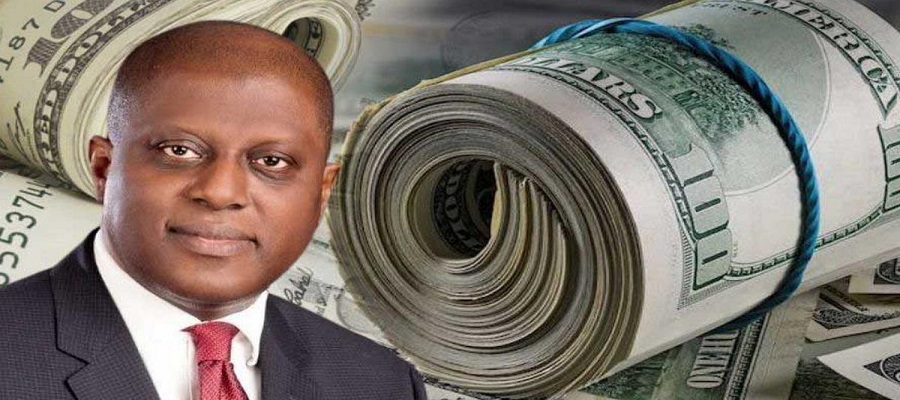
Nigeria’s net foreign exchange reserves surged to $34.80 billion by end-2025, Central Bank Governor Olayemi Cardoso disclosed, marking a 50.58 percent rise of $11.69 billion from $23.11 billion in 2024.

CBN
The figure—a 772.18 percent leap or $30.81 billion improvement from 2023’s $3.99 billion—exceeds 2023’s gross reserves of $33.22 billion, signaling robust external financial buffers after adjusting for short-term liabilities like FX swaps and forwards.
Gross external reserves simultaneously grew from $40.19 billion in 2024 to $45.71 billion in 2025, up $5.52 billion, providing a truer gauge of capacity to meet immediate obligations.
Cardoso credited stronger external fundamentals, FX management transparency, and monetary reforms boosting investor confidence and exchange rate stability.
The CBN remains focused on reserve adequacy for macroeconomic balance and seamless FX operations. Cardoso noted in February 2026 that gross reserves continued climbing amid reform momentum.

SEC Revokes Registration of Kensington Agro Trading Limited

NCDC Raises Alarm over Lassa Fever Ravaging 18 States in Nigeria

Lagos Deploys Drones, AI to Boost Traffic Response

Purple Woman 3.0 Is Back, to Empower Women in Tech this IWD 2026

NRS Targets N40trillion in Tax, Royalty Revenue in 2026

Accidental Billionaire Opts for Jail Instead of Returning Money Credited Him by Mistake

Kaspersky Brings more Transparency to Threat Detection with New Hunt Hub

Dr. Cairo Ojougboh Foundation Bolsters Nigeria’s Education Drive with ₦2.7m Student Support

NDPC Commits to Balancing Data Privacy, Protection Information

OADC Lagos Reinforces Commitment to Local Data Hosting and Digital Transformation @ NDPC’s National Privacy Week Summit




 E-Financial3 days ago
Iran-Israel-US Conflict and CBN’s FX Gains: A Stress Test for Nigeria’s Monetary Stability

 E-Financial3 days ago
Mutual Benefits Assurance Reaffirms Full Regulatory Compliance, Enhanced Governance

 General News3 days ago
JAMB Uncovers AI-Driven Fraud Targeting UTME Candidates, Warns Parents

 General News3 days ago
SERAP Asks FCCPC to Investigate Google, Meta, Others over Alleged Rights Abuses

 Telecom2 days ago
Sunil Bharti Mittal Conferred GSMA Lifetime Achievement Award for Transforming Global Telecommunications

 News3 days ago
TeamApt, Awabah Partner to Boost Pension Drive for Nigerians

 News3 days ago
FlashChange CEO, Bidemi Oke, Urges Startups to Build Strong Governance Structures Early

 Telecom2 days ago
Why Digital Trust Matters: Secure, Responsible AI for African SMEs?