

General News
Aviation Contributes $2.4tr to Global GDP, Supports 58m Jobs- Tyler


The aviation industry delivers enormous value to the global economy, contributing some $2.4 trillion to GDP, carrying over a third of world trade by value and supporting some 58 million jobs including aviation-related tourism.
Tony Tyler, director general and chief executive officer of the International Air Transport Association (IATA) made the remarks at the World Financial Symposium, Barcelona, Spain.
Tyler said that, historically, however, aviation has not had an equivalent level of success creating value for its equity investors.
Tyler highlighted four areas where industry stakeholders have opportunities to set a path toward long-term financial sustainability: Smarter Regulation; Rebalancing the Value Chain; Innovation; and Efficient Processes
According to the IATA DG, 2015 is a special year for the airline industry; seventy years ago, the leaders of 57 airlines came together in Havana, Cuba, to form IATA.
He said that the tag line for the Association’s 70th anniversary celebration is “Flying better. Together.” That reminds us of the fact that IATA was created to be a forum for industry collaboration and partnership, undertaking on a collective basis those activities that would be hugely expensive and inefficient for airlines to do individually. We would also be a vehicle to support the development of the standards and best practices necessary for the safe and efficient operation of the global air transport network.
Tyler said, “Aviation today is very different compared to when IATA was formed in April 1945. This year airlines will carry 3.5 billion passengers–or around 9.6 million each day—which is more than were carried in the entire year of 1945”.
He said over a third of global trade by value is transported through the skies; and aviation contributes some $2.4 trillion to global GDP.
And the industry has evolved into a job creation machine, supporting some 58 million jobs around the world when we include the benefits of aviation-related tourism.
“The vision to create value is being achieved. The connectivity provided by aviation enables globalized supply chains for agriculture and manufacturing. Thanks to aviation, you rarely are more than a 24-hour journey away from another population center on the globe. Additionally, we are a lifeline when disaster strikes. The earthquake in Nepal highlighted aviation’s vital role in helping to transport aid and rescue workers, as well as medical supplies and equipment, to those in need. Aviation also enriches the world in myriad non-monetary ways, reuniting friends and families, enabling journeys of discovery, and creating opportunities for greater cultural understanding.
“Aviation’s ability to make the world a richer, more connected place rests on three pillars: We must be safe, sustainable and profitable. Safety is the number one priority for everyone associated with aviation. By sharing our expertise and working together through global standards such as the IATA Operational Safety Audit, we have made it the safest form of long-distance transportation the world has ever known.
“Sustainability is our second pillar. It is our license to grow—and we have achieved remarkable progress over the decades in terms of reducing noise and emissions. The noise footprint of new aircraft is at least 15% smaller than that of the aircraft they replace and they provide fuel efficiencies that are at least 70% greater than jets produced in the 1960s. As an industry we are committed to further reducing aviation’s impact on the environment and have an aggressive target to achieve carbon neutral growth from 2020, with a 50% reduction in net CO2 emissions by 2050 compared to 2005.
“Profitability is our third pillar—and historically, it’s been our weakest— I’m sure you’ve heard the joke that the way to make a small fortune in the airline industry is to start with a large one. The good news is that after many years of hard work and restructuring, the situation is improving. For 2015, we expect an industry net profit of $29.3 billion on revenues of $727 billion, for a net profit margin of 4%. What this means is that the airline industry on average is finally earning its cost of capital.
“Let me take a moment to observe that no one needs to apologize for the fact that in 2015 this industry at long last is performing above its usual level of barely-breaking-even. If profitability is not a dirty word when Apple turns in a 23% profit margin than it should not be when airlines achieve an average 4% result.
“This result also needs to be put into perspective. Firstly, it is an average for the world, but there is a wide disparity among regions. More than half of the global profits are being made in North America. While the overall fortunes of the industry are improving, for many airlines the struggle to keep revenues ahead of costs is still a formidable challenge, as IATA Senior Economist Julie Perovic will examine in her presentation a bit later this morning.
“Furthermore, we must recognize that for any other industry, earning the cost of capital is the absolute minimum performance expected. And we will have to continue this performance for the foreseeable future in order to attract the $5 trillion of capital required to support the doubling of air travel expected over the next two decades”.
He said they are working alongside our members through the IATA Financial Committee and all of our industry committees on a critical agenda to ensure the future of this important industry by placing it on a firm financial footing. Four strategic themes guide our activities.
These are: Smarter Regulation; Rebalancing the Value Chain; Innovation; Efficient Processes and Smarter Regulation.



Goodnews Naija Podcast has been identified as one of Nigeria’s podcast platforms to watch, gaining attention for its consistent focus on positive storytelling and uplifting narratives from across the country.

Launched on 1 October 2024, the podcast spotlights inspiring stories, progress-driven conversations, and everyday Nigerian wins often overlooked in mainstream media. With a weekly release schedule and a values-led editorial approach, Goodnews Naija has built a growing audience within and outside Nigeria.
“At a time when negative headlines dominate global perceptions, we believe positive Nigerian stories deserve global visibility,” said Host, Damilola Kehinde. “Goodnews Naija exists to balance the narrative by highlighting hope, resilience, and progress.”
According to Producer, Memunat Olayemi Oladepo, the platform was intentionally created to reshape how Nigerian stories are told. “Goodnews Naija was built as a counter-narrative,” she said. “We are deliberate about amplifying stories that reflect the resilience, innovation, and optimism thriving across the country.”
As global interest in African creators grows, Goodnews Naija Podcast is positioning itself as a platform contributing to a more balanced and human narrative about Nigeria.

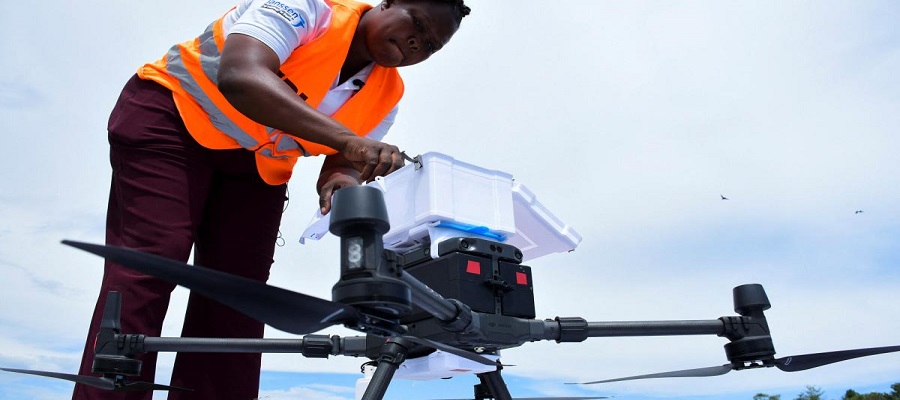
The military high command at the weekend said it has commenced a full investigation into the use of drones by terrorists to carry out attacks.

This is part of ongoing efforts to end insurgency in the country.
Major-General Michael Onoja, director of Defence Media Operations (DDMO), , disclosed this in Abuja while briefing defence correspondents on the achievements of troops of the Armed Forces of Nigeria and other security agencies across various theatres of operation nationwide.
He said the investigation is being conducted in collaboration with other relevant security agencies to identify the sources of the drones and halt their deployment by non-state actors.
According to him, concrete actions are expected to emerge in the coming days or months, as agencies with the technical capacity to counter drone deployment have been fully engaged.
“We have reached an advanced stage in taking measures, in conjunction with other federal government agencies, to trace where these drones are coming from. I believe that in the next couple of days or months, concrete action will emerge on what we intend to do,” Onoja said.
In recent months, terrorists operating in the North East have increasingly deployed sophisticated drones in attacks on civilians and security personnel, raising concerns over the evolving tactics of insurgent groups.
The development has also generated questions among security experts and the public over how the drones are being sourced and the channels through which they enter the country.
Responding to allegations circulating on social media that soldiers manning checkpoints in Bauchi State were being compelled to remit weekly sums to their commanders, Onoja said the claims remained mere allegations.
He stressed that the military is a transparent institution and assured that investigations would be conducted if verifiable details were provided.
On the return of Nigerian refugees from Cameroon, Onoja said the development reflects the success of military operations in restoring security to affected communities.
“The military, in conjunction with the Federal Government, has done everything within its capacity to ensure the necessary security in those areas. The return of refugees is a clear measure of operational success,” he said.
On operational achievements, Onoja disclosed that within the month of January 2026 under review, troops across various theatres killed several terrorists, arrested 452 suspected terrorists, kidnappers and other criminal elements, rescued about 284 kidnapped victims, while 124 terrorists and their family members surrendered to troops.
He added that troops also recorded major successes against oil theft, recovering 210,300 litres of crude oil, 66,725 litres of diesel, 660 litres of kerosene and 5,000 litres of petrol.
In addition, 53 illegal refining sites were discovered and destroyed during the period under review.
Providing updates from various theatres, Onoja said that in the North East, troops under Joint Task Force Operation HADIN KAI sustained operational momentum by denying Boko Haram, Islamic State West Africa Province (ISWAP), and Jama’atu Ahlis Sunna Lidda’awati wal-Jihad terrorists freedom of action.
He said ground troops, working alongside the Air Component, hybrid forces and local security groups, conducted aggressive operations, neutralising terrorists, arresting informants and logistics suppliers, recovering weapons, and dismantling terrorist networks.
“During the month, troops conducted operations in Gwoza, Damboa, Mobbar, Askira Uba and Konduga Local Government Areas of Borno State. Similar operations were carried out in Michika and Damaturu LGAs of Adamawa and Yobe States, respectively. During these encounters, scores of terrorists were neutralised, 17 were arrested, and 12 kidnapped victims were rescued. Recovered weapons and suspects are in custody for further action,” he said.
In Plateau State, Onoja said troops of Operation ENDURING PEACE responded to distress calls on terrorist activities, conducting offensive operations across Plateau and parts of Kaduna State.
According to him, several extremists were neutralised during firefights, 86 other criminals were arrested, and 24 kidnapped victims rescued, while arms and ammunition were recovered.
In the South-South, Onoja said troops of Operation DELTA SAFE intensified operations against crude oil theft, sea piracy and militancy.
“They dismantled 53 illegal refining sites, arrested 81 oil thieves and other criminals, and recovered assorted arms and ammunition. Air reconnaissance missions also led to the interception and destruction of vessels involved in the illegal syphoning of petroleum products across the Niger Delta,” he said.
He added that troops of Operation UDO KA recorded notable gains across Abia, Anambra, Ebonyi, Enugu and Imo States, with over 80 militants surrendering, 72 arrests made, and 11 kidnapped victims rescued.
Eight Cameroonian nationals were also rescued during cross-border patrols along the Bakassi waterways, while a significant reduction in crime was recorded across the region.
Reaffirming the Armed Forces’ resolve to sustain pressure on criminal elements, Onoja said the military would continue to strengthen inter-agency collaboration and work closely with local communities to ensure lasting peace and stability.
He reiterated the Chief of Defence Staff’s mantra, “See something, say something,” urging Nigerians to provide timely and credible information to security agencies.
“With the continued support of the media and the Nigerian public, the Armed Forces of Nigeria remain confident of defeating all threats to national security,” he said.

First Trustees, a subsidiary of First HoldCo Plc., and a leading provider of trust solutions for individuals, corporates, and government institutions, is proud to announce its 8th Islamic Estate Planning Clinic, scheduled to take place on February 7, 2026, in Abuja, Nigeria.

This highly anticipated forum is designed to educate and empower participants on structuring Islamic wealth transfer in today’s evolving world. The Clinic will provide practical guidance on how to secure and preserve legacies in accordance with Islamic principles, ensuring that wealth is managed and passed on responsibly across generations.
The event is being hosted in partnership with The Metropolitan Law Firm and will feature an esteemed lineup of speakers, including: Professor Isah Ali Pantami, Former Minister of Communications and Digital Economy; Professor Adam Abubakar, ESQ, Professor of Islamic Banking and Finance, Yobe State University; Professor Dauda Abubakar, Founder and Director, Dawood Research Institute; HE Aisha Babangida, Chairperson, Better Life Program for the African Rural Woman; Ummahani Ahmad Amin, Managing Partner, Metropolitan Law Firm; Barrister Mohammed Yunusa, Partner at The Metropolitan Law Firm; Ismail Rufai, Managing Director/CEO, One17 Financial Services Limited; Mutiat Olatunji, Al-ameen Trustees Limited; and Rotimi Obende, Head, Private Trust, First Trustees Limited.
Together, these thought leaders will share insights on the importance of Estate Planning within Islamic law, highlighting strategies for safeguarding family wealth and ensuring continuity.
First Trustees remains committed to providing innovative trust solutions that help clients preserve their legacies while staying true to their values.

SEC Warns of Potential Ponzi-style Risks in AURUM BOT, ModMount

Airtel Nigeria Commits to Boosting Nigeria’s Digital Infrastructure

Ungoverned AI is Quietly Scaling Risk in Nigeria – Dr. Naiho

Goodnews Naija Podcast Emerges as a Platform for Positive Nigerian Storytelling

First Lady Commissions Dream Centre @ OAU

19 Nigerian Banks Meet CBN Recapitalization Targets Ahead of March Deadline

Youth Talent Takes Center Stage as T2 Ignites High-Octane Rap Battles @ Carnival Calabar

Aig-Imoukhuede Foundation Wrapped Up 2025 with Real Change in Governance, Health, Media Across Africa

Showmax Unlocks Easier Payments for Nigerian Subscribers via Baxi

Nigerian Terra Industries Secures $11.8m for Expansion




 Telecom1 day ago
Telecom Operators Invest Over $1Bn on 2,850 New Sites in 2025 – NCC

 E-Financial1 day ago
If Capital is the Answer, What Exactly is the Problem with First Holdco

 General News1 day ago
First Trustees to Host 8th Islamic Estate Planning Clinic in Abuja

 E-Financial1 day ago
Amaanah Finance to Unveils Non-Interest Banking Services Today

 News1 day ago
NSCDC Hands over Fake Crypto Currency Trader to EFCC

 News1 day ago
Alakija’s Flourish Africa Provides N300m Grants for Women Entrepreneurs

 General News1 day ago
Security Forces Probe Use of Drones by Terrorists

 Broadcasting1 day ago
New Horizons Nigeria Breaks Ground: First to Fuse Mandarin into ICT Curriculum