

General News
Basel 11 is Necessary for Financial Stability – Mbama


Ethel Mbama, MD/founder of Circuit Systems and Network Communications (CSNC) a fast growing entrepreneurial ICT solutions company founded in 2011, started his career as a Network Engineer with Signal Alliance 15 years ago.
Mbama, later joined Computer Warehouse Group as head of business consulting and development.
His quest for higher challenges and opportunities led to his move to IBM as the first software sales leader (West Africa) where he turned around the performance of the group by acquiring key customer accounts in key industry sectors.
He spoke to chike onwuegbuchi on issues around implementation of ICT solutions in financial sector of the economy.
CSNC in the Nigerian IT Space
Circuit Systems and Network Communications Limited is focused mainly on software solution, implementations/Support services, and ICT training for the banking industry as priority and extending to other industries especially, public sector and SMEs.
Meanwhile, our solution is not just ‘jack of all trade and master of none’. We try to take things step by step, because we have a model we follow.
Most of our solutions are centered on solutions that will help financial industry achieve compliance with the regulatory authorities.
We try to ensure our solutions are somehow interwoven. Presently, we have the following as flagship, in the financial industry, IFRS, BASEL11, Operational Risk, Credit (loan) management, Data warehousing which encompasses Business Intelligence as well as performance management, budgeting and forecasting and Human Resources Management System (HRMS).
All of them are combined under a business decision solution which we work with global solution vendors to deliver to our clients.
We made this approach or choice because of the nature of businesses in the industry and the Nigeria at large. Critical to every bank is effective service delivery, efficiency and ease of operation (Business automation), and reduction in operational costs.
To achieve that, they need to automate certain processes that are ab-nitio manual, and comply to global standards of banking operations.
Model
The good thing about us is our understanding of the Banking business and environment, as well as the major challenges in banks during system implementation which is mostly around Data quality, knowledge gaps and understanding of the expectations, and we bring to bear, a specialized bridge to allow us to handle these challenges and expectations, together with our customers.
We have crisscrossed a lot of banks; we have about 13 banks running on our different solutions. We are controlling the market share in the IFRS solution; our loan system which entered the market two years ago has already taken over the market, replacing other default Loan systems.
Our BASEL 11 is about to be implemented in two banks in Nigeria, the first ever to implement it. We have worked and integrated with all the banking applications and source system you can see in any environment in Nigeria, thus, our understanding and knowledge of banking environment is second to none. It’s diverse and specialized.
Value of Migration to IFRS
The critical value of the new IFRS is that it brings every organization, no matter the sector, unto a particular standard of accounting.
In other words, financial reports or status of any bank or organization that is IFRS compliant can be seen to be the current health or the status of the bank based on global standard, because there are principles that will not allow companies to engage in shady practices.
Secondly, it gives the shareholders’ value from the perspective that they understand the status of the company. It creates in your partners the consciousness that you are moving on. For instance, in the production of nuts and screws, if there is no global standards different companies in different economy can produce anything which could be inapplicable. The only way you can use it is when using their product. The global standards stipulate the sizes, quality, and designs; that is why you can buy parts from China and screw from India and still use them together. So, IFRS standard signifies that every organization uses a global standard based on certain parameters which have been agreed by the International Standard Accounting team that enables you to plug in your financial data based on sectors, the system will crunch the numbers; whatever is determined becomes globally accepted.
Challenges In the Implementation of BASEL 11
It’s important to understand what Basel II/III is and why it was introduced. Basel II/III is a set of international banking regulations developed for international settlements in order to promote stability in the international financial system.
The purpose of Basel III is to reduce the ability of banks to damage the economy by taking on excess risk. Basel III is not a panacea, and will not single-handedly restore stability to the financial system and prevent future financial crisis.
One of the critical challenges we face in the banks or any organization as a consultant is managing change.
People are not eager to hands-off what they traditionally do. Secondly, in most banks, understanding BASEL 11/III and associated value it brings is a challenge.
They tend to rely, 100% on consultants while their Internal Risk and IT Team lacks the deep knowledge required for delivering and managing it.
When regulatory bodies pencil down policies, we expect that there should be consistent workshop for the members of the banking industry.
These workshops should be organized to explain to them, what these polices are intended for, why it has to come, the value it will create and how they will benefit. That is where we expect the consultants to come in also.
There are issues the workshop must address as well the implementation guidelines, how ready are we, what it will cost us to deliver. It is when you are sure that the industry is up to 90% ready for the implementation that you can go ahead to issue of implementation deadline.
Outside some few, nobody else understands what we are discussing. Nobody understands the value or the processes of deployment.
As far as they care, the credit system they are currently using does it all. That is the reason we are coming in through a different approach. We are planning to do a comprehensive workshop for chief information officers (CIOs) and CRO’s of all the banks, in conjunction with risk experts, for them to understand how they can prepare for this, what need to be done, understand how the modeling and framework is done and designed.
That will spur them to understand why you must not wait till the CBN tells you to implement before you commence. It is a way to improve your operations.
We have seen how most banks have gone under because they failed to manage the risk around their credits.
These are things we are automating, from Credit Management System to Basel II/III. 50% of the banks need consultants to design this for them, they still implement manual processes.
But the reality is, for how long will you depend on consultants to do it? It is high time they are exposed to understand the process and take full control.
These policies are not rocket science, the language is not written in incommunicable language. Thus, change is the major challenge; understanding the value is another challenge.
Assumption of cost and perceived complexity of implementation is another challenge.
Believing more in Consultants and not in a train and manage approach is another challenge. Even the top management staffs still do not comprehend why they should embrace it, but with sensitization they will get to appreciate the platform.
The Nature of Support You Give Your Clients
Most of our partnership agreement is on exclusive level. This informs why we try to invest heavily in skills and technical knowhow around our solutions and the concepts.
My team must understand what IFRS is, how it applies to banks before they start delivering the technical part, they must understand how Basel II/III is designed and what it is, same way for Loan management, HR system, data warehouse etc.
We also engage experts on long term partnership on support and delivery. It’s an ongoing process. Quarterly training is offered to my technical team by the partners, because a skilled team ensures customer happiness and more business. In this territory, we have proven this.
Some of our clients have one or two technical resources permanently in their environment and at 24 hours in seven days availability for any kind of support, and we escalate to our vendor partners for such support that is beyond us.
The training we give to our technical team is focused on first and second level support, what it entails and all the details involved.
Our target is to take full control of whatever we position and implement for our clients without much recourse to our vendor partners.
We have an arrangement with our partners to send our people, consistently, for training on how to handle first and second level supports before escalating to them. For instance, when IFRS started, we did not understand what it meant.
We sent people to Germany to understudy it. By the time they came back we started deploying on our own; we do not need partners to come to Nigeria again.
We do everything ourselves. Our customers can attest to that. In some cases, we make sure one or two members of our team become masters of a particular solution. In loan management we have three of them, in BASEL 11/III and Operational Risk, we are training four people, in HR system we have two people and in data warehousing we are training three others. Basically, we are trying to ensure it is not about selling, but making the customer satisfied.
Your Specialists Interventions
To be honest, I wouldn’t want my clients to be coming to me. It is better for them to be competent enough to handle certain issues.
Imagine if we have 50 clients, can a workforce of 25 deliver support to them satisfactorily. We try to encourage our clients to know the intricacies of the work. It is only when the technicalities become cumbersome for them that we intervene.
This is one of the major reason we designed our new Implementation Methodology, where we must do a detailed hands on training around the subject matter and our solution, two weeks intensive training outside the customers site.
We also encourage customers to make quarterly or half year training budget which will allow us, offer customized training to their team which allows them to take full control and reduce cost of support for them.
One of our clients came with a list of challenges or identified knowledge gaps, after using our system over a period of time, we organized a customized or special training based on that and today, they have better understanding in addressing their issues than before. Unfortunately, training budget tend to pose a huge challenge to organizations.
It beats me, how a customer will spend $500k to $1m or more to buy and implement software but shy away from making a budget of about $50K to $100k a year to take full control in training and skill acquisition.
They even contribute a certain amount of money to Industrial Training Fund annually for training but never recover these contributions due to lack of trainings. They want it Free.
How Expensive is IT Driven Operations In Banks?
It depends on how we define the expensive spending. Cost of anything is defined by the value attached to it.
To resolve an immediate pain, it could cost higher if it’s a want but not a need. IT solutions are Intellectual Property.
For a commodity solution, it could cost less because it is based on volume, but for specialized system which is based on standards and regulations, it will be expensive. Moreover, cost of IT solution is determined by the complexity of the scope and the required expectations. Environments can affect the cost also.
Why it sounds expensive is because of two major reasons. First, the costs of the foreign exchange; about 99% of the solutions banks use are bought abroad.
You can imagine when you pay $8,000 assuming that the exchange rate is N1 per dollar. It is not expensive then. But, today, the case is different.
You buy a solution at $1million at the exchange rate of N175, thus the price will be high. Secondly, cost of business environment in Nigeria. I don’t have to be detail in that, it affects everyone.
For you to deliver a particular IT solution, you have to have a defined scope, unfortunately when you start, the scope start changing.
At this stage, to maintain the relationship with the banks, you accept it and continue, thus, ICT providers tend to take this into consideration.
Most quotes are submitted without proper scoping, and because we do not do Time and Material, but fixed cost, you have to take this scope creeps and project delays into consideration.
Furthermore, we bring in foreign resources to deliver these solutions, you will have challenges in logistic costs, especially, for projects that can last between 6- 10 months or more. These are costs that add up.
Thirdly, the notion of expensive nature of the IT solutions sometimes comes because some customers do not understand the nature of the solution they are buying and the impact. So, they allow the vendors to take them on a wide goose chase.
The vendor would even include some items that are not needed in delivering that solution. These are marketing gimmicks.
For example, a bank may want to embark on Risk management system, before you realize it, some vendors will come and start positioning some Big Bang approach which they usually call “end to end” using common Data model.



Senate on Tuesday approved the fresh $6 billion loan request forwarded to the lawmakers by President Bola Tinubu.

Lawmakers approved the fresh loan on the same date the request letter was read by Godswill Akpabio, senate president.
The Senate approved the loans following the presentation and consideration of the report by Senator Aliyu Wamakko, chairman, Senate Committee on Local and Foreign Debts.
President Tinubu had written to the Senate seeking approval to borrow a total of $6 billion to finance key government projects and address budgetary gaps.
The requests were contained in two separate letters addressed to Godswill Akpabio, president of the Senate, and read during Tuesday’s plenary.
In the first letter, the President requested approval to obtain a $5 billion loan from Abu Dhabi Bank.
According to the President, the facility will be used to cover the nation’s budget deficit and support debt financing, among other fiscal obligations.
The request forms part of the Federal Government’s efforts to stabilise public finances and sustain ongoing government programmes.
In a separate communication, Tinubu also sought approval to secure a $1 billion UK Export Finance loan facility from London Citi Bank.
The loan is intended for the rehabilitation of key port infrastructure, including the Lagos Port Complex and Tin Can Island Port.
The President said the project aims to address critical infrastructure deficiencies in the country’s maritime sector
According to him, the rehabilitation will help improve efficiency, enhance safety standards, and support Nigeria’s efforts to diversify its economy beyond oil.
He added that the initiative would also strengthen Nigeria’s position as a regional trade hub.
Both requests have now been considered and approved by the Upper Legislative Chamber.
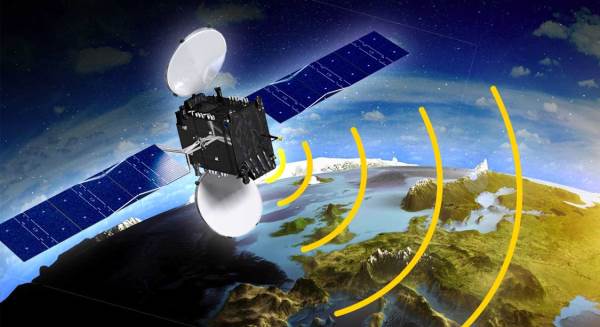
Federal government has fixed 2028 and 2029 for the launch of two communication satellites, NIGCOMSAT-2A and NIGCOMSAT-2B, as part of efforts to strengthen security and expand digital connectivity.

The government will be committing over $22 billion on the ambitious space-led growth agenda focused on new satellite launches, increased industry revenue and expanded broadband access in underserved communities.
At the opening of the 2026 Nigerian Satellite Week in Abuja, Dr Bosun Tijani, minister of Communications, Innovation and Digital Economy, confirmed the government’s approval for the acquisition of two new satellites—NigComSat 2A and 2B, describing the move as a “defining commitment” to national development, digital sovereignty and economic competitiveness.
Also, Mrs Jane Nkechi Egerton-Idehen, managing director of Nigerian Communications Satellite Limited (NigComSat), noted that the projects have moved beyond procurement to the execution stage.
She said the satellites are designed to enhance intelligence gathering, surveillance, and connectivity across Nigeria and neighbouring countries, particularly in support of security operations.
“For 2A and 2B, we have started the process. We have closed the tender and are now back into the financing and implementation stage. 2A is built to come up in 2028, and 2B for 2029.
“When they are up and running, they are expected to provide security within the borders and neighbouring countries. They will support the security agencies because data collection and intelligence in real time is important. Satellites like communication satellites allow that, irrespective of where they are,” she said.
On his part, Tijani, said the satellite programme forms part of a broader government strategy to deepen digital infrastructure nationwide.
According to him, the initiative complements ongoing investments in fibre-optic expansion and telecommunications infrastructure, while extending connectivity beyond Nigeria’s borders.
“The President’s approval of NIGCOMSAT-2A and 2B demonstrates a clear commitment to building the future. These satellites will enhance security, connect remote communities, and extend our fibre-optic network into neighbouring countries.
“Some of these neighbouring countries pay up to ten times more for internet capacity than Lagos. Extending our fibre network will not only improve connectivity but also enhance border security and regional collaboration.
“Satellite technology affects everything, from how a child in a rural community accesses the internet to how farmers make critical decisions and how businesses operate across distance,” he said.
Federal government has announced the launch of CLHEEAN, an artificial intelligence-powered mobile application designed to improve interactions between citizens and public institutions.

It is also a civic education and community engagement app.
Developed under the National Orientation Agency (NOA), the platform functions as a virtual assistant accessible via mobile devices.
It allows users to access information on public policies, ask questions, and interact directly with government services.
The app includes features such as instant messaging, voice recognition, and multilingual support, including several local languages, to reach a wider audience.
With CLHEEAN, users can also submit feedback, report concerns, and take part in discussions on public policies. The approach is intended to strengthen citizen participation and improve communication between the government and the public.
Lanre Issa-Onilu, director general of the NOA, said the initiative addresses a long-standing gap between citizens seeking to be heard and systems that do not always respond effectively, adding that the platform marks a step toward closing that gap.
The launch comes as Nigeria continues to face challenges in citizen engagement and the dissemination of public information.
By leveraging artificial intelligence, authorities aim to make public services more accessible while improving transparency and responsiveness.
The initiative also reflects a broader trend across Africa, where governments are increasingly exploring the use of AI to modernize public services and strengthen ties with citizens.

How Recycled SIM Card Linked to N50m Kidnapping Nearly Landed me in Jail – Businesswoman

Senate Gives Tinubu Nod to Borrow Fresh $6Bn

FG Earmarks $2Bn to Launch 2 Satellites in 2028, 2029

CBN Directs Banks, Fintechs to Complete Cybersecurity Audit Tool

FG Launches CLHEEAN to Streamline Access to Government Services

Spotify’s Loud & Clear Report Reveals Over ₦60Bn Revenue for Nigerian Artists in 2025

Madonna University Taps Tech Guru Adote for Strategic Board Role

China Threatens to Shut Nigeria’s Satellite Over $11.44m Unpaid Debt

Jumia Tech Week 2026 Begins with Tech Deals on Smartphones, Electronics, and Everyday Technology

FCCPC Bans Lagos ‘No Refund’ Policy, Vows Fines and Shutdowns for Traders




 E-Financial3 days ago
CBN bars large‑ticket loan defaulters from banking services in tough new crackdown

 General News3 days ago
ARN Rejects Medical Bill over Attempt to ‘Scrap’ Profession

 Telecom3 days ago
NIGCOMSAT Supports Startups Growth with the Launch of Accelerator 3.0

 News3 days ago
Meningitis Kills a Quarter Million People a Year -Study

 Telecom3 days ago
FG Unveils Digital Economy Research Fund Scheme

 News3 days ago
Stakeholder says AI is Crucial to Nigerian Data Centres Amid Persistent Grid Collapse

 E-Financial2 days ago
NGX REGCO Fines 5 Firms N291m for Market Manipulation
- General News3 days ago
Nigeria Advances Digital Governance as NITDA takes over NGEA Portal