

E-Financial
Bitcoin Rallies Above $5,000 to All-time High


Bitcoin smashed through the $5,000 barrier for the first time on yesterday, jumping as much as 8 percent on the day as investors shrugged off the latest warnings on the risks of buying into the booming cryptocurrency market.
Bitcoin, the biggest and best-known cryptocurrency, has chalked up a more than fivefold increase in price this year.
Typically for bitcoin, which at less than nine years old is still highly volatile and illiquid compared with traditional currencies and assets, the precise reason for its recent tear was unclear.
Upcoming splits in its software, reports that Goldman Sachs is considering offering bitcoin trading, rumors that China could ease restrictions, and even a political crisis in Spain’s Catalonia region were all cited by market-watchers as reasons for the rally.
But the main factor could simply be demand from investors wanting ‘in’ on a market that has provided gains exceeding those of any other currency in every year bar one since 2010.
“People are just wanting to be part of it,” said Ryan Nettles, head of FX trading and market strategy at Swiss bank Swissquote, which launched bitcoin trading two months ago. Nettles said interest had been much higher than anticipated and has come from banks, hedge funds and brokers.
“The interest really stems from the media hype,” he added.
On Wednesday Russian President Vladimir Putin warned of the “serious risks” surrounding the nascent market, while Russia’s central bank said it would ban cryptocurrency trading websites.
But that was not enough to put investors off, with bitcoin rallying around 10 percent since then.
Data released last week from SEMrush, a search engine data analytics firm, found the price had a 91 percent correlation with Google searches on bitcoin, suggesting that all news — whether negative or positive — drives up demand, even if bad news can have a temporary negative effect.
Bitcoin almost reached $5,000 at the start of September, but fell back sharply after the head of JP Morgan blasted the cryptocurrency as a “fraud” and as China forced exchanges to close down, sparking fears of a broader crackdown.
But after dipping below $3,000 in mid-September, bitcoin has leapt in value by more than 75 percent in four weeks.
“Bitcoin was designed to operate outside of the influence of governments and central banks, and is doing exactly that,” said Iqbal Gandham, Managing Director at retail trading app eToro, which has seen huge increases in cryptocurrency trading volumes.


A new ₦50 charge on electronic money transfers above ₦10,000 is to take effect from Jan. 1, 2026, following preliminary system adjustments observed across several banking platforms ahead of the New Year.

CBN
The levy, tied to government stamp duty regulations, is separate from and in addition to regular bank transfer fees already borne by customers.
Industry sources told the News Agency of Nigeria (NAN) on Friday in Lagos that while existing bank charges would remain unchanged, customers initiating qualifying transfers would now pay both their normal transfer fees and the extra ₦50 stamp duty per transaction.
In a major shift to the current practice, the ₦50 levy which was previously borne by receivers of funds will now be paid by senders.
This implies that for every electronic transfer above ₦10,000, the sender will bear the full cost of the stamp duty alongside the standard transaction fees charged by their bank.
According to the emerging charge structure sighted on some banking platforms, the new levy applies only to transactions above ₦10,000 and will be deducted on a per-transaction basis.
Transfers below ₦10,000 remain exempt, while movements of funds between accounts owned by the same individual within the same bank are also not affected.
Analysts, however, warn that for millions of Nigerians who rely on frequent small-value transfers to meet daily needs, the additional government charge, layered on existing banking costs, could deepen financial strain for households already operating on thin margins.
Customers have in recent weeks raised concern over what they describe as a steady rise in transaction-related deductions, noting that the quiet rollout of the new ₦50 levy has heightened anxiety.
They observed that January is traditionally one of the most financially challenging months for households, driven by school fees, rent renewals, food inflation and post-holiday obligations, and questioned the timing and limited public communication around a change that directly affects routine financial activity.
Digital transfers have become central to everyday life in Nigeria, underpinning business settlements, informal trade, family remittances and emergency support.
With more than 70 per cent of transfers estimated to fall below ₦20,000, financial experts say the cumulative impact of a ₦50 charge on each qualifying transaction, when combined with existing bank fees, will significantly raise monthly transaction costs for individuals and micro and small enterprises.
For many Nigerians, the concern extends beyond the levy itself to the broader pattern of rising financial pressure that has eroded household resilience over time.
They point to the combined weight of escalating food prices, high transportation costs, stagnant incomes and a range of service charges that, in their view, “pile up quietly in the background”.
Stakeholders fear that introducing an additional government-backed charge at the start of the year, and doing so with minimal public sensitisation, may reinforce perceptions that more cost-heavy policies could be introduced in 2026 without adequate engagement or clarity.
“Why is such a significant cost being quietly introduced at the start of the year? Why was there no widespread announcement or public sensitisation? And what other policy shifts might be coming that Nigerians have not yet been informed about?” one Lagos-based small business owner asked in a chat with NAN.
As Jan. 1 approaches, many households say they are bracing for yet another financial burden in an economy where, for them, every naira already feels stretched beyond its limit.
They called on relevant authorities and regulators to provide clear guidance on the new charge structure, explain its legal basis, and ensure that customers are adequately informed about how it will affect their daily transactions.
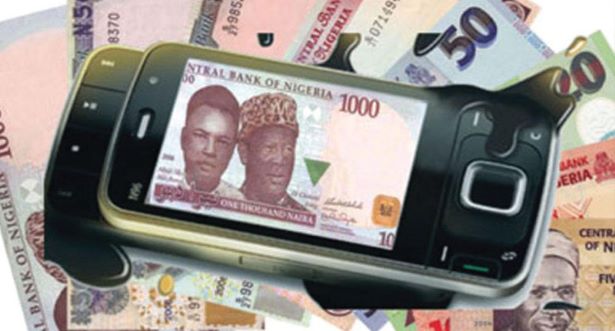
Despite being the global epicentre of mobile money innovation, Sub-Saharan Africa remains home to tens of millions of adults who do not own a mobile money account. A new World Bank report disclosed.

According to the Global Findex Database 2025, Sub-Saharan Africa is widely celebrated as the birthplace of mobile money, a technology that has transformed how people send, receive, save, and borrow money using basic mobile phones.
“Yet, the region still accounts for one of the world’s largest concentrations of adults without mobile money accounts,” it said.
The report shows that while about 40 percent of adults in Sub-Saharan Africa had a mobile money account in 2024, up sharply from 27 percent in 2021, roughly 60 percent still do not.
The reasons, the report argues, are less about lack of awareness and more about deep structural barriers that continue to exclude large segments of the population.
According to the report, a lack of money is the single most common barrier to mobile money account ownership in the region.
For many low-income households, irregular earnings, subsistence livelihoods, and dependence on cash-based transactions reduce the perceived value of maintaining an account, even when services are widely available.
This challenge is compounded by affordability issues. Transaction fees, charges for cashing out, and the cost of maintaining an active SIM card can deter the poorest adults, reinforcing the perception that mobile money is not designed for very small or infrequent transactions.
In Nigeria, the World Bank Group has announced an estimate that 139 million in 2025 will be living in poverty despite the reforms of the federal government.
Mobile phone ownership gaps persist
Mobile money cannot function without a mobile phone, yet phone ownership itself remains uneven. The report finds that 40 percent of adults now own a mobile money account, up from 27 percent in 2021.
And those who do not have a financial account also do not own a mobile phone of any kind.
This creates a double barrier: adults who are financially excluded are often also digitally excluded.
Among those without phones, the cost of the device is cited as the primary obstacle. While basic phones are more affordable than smartphones, the report notes that even these can be out of reach for the poorest households, especially in rural areas. Without addressing device affordability, efforts to expand mobile money risk leaving behind the very groups they aim to serve.
The report disclosed that even when phones and accounts are available, digital capability remains a challenge. The report finds that only about half of mobile money account owners in Sub-Saharan Africa protect their phones with passwords, compared with much higher shares in other regions.
Limited digital literacy raises concerns about fraud, mistaken transfers, and scams, which in turn undermines trust in mobile financial services.
Trust issues are further reinforced by negative user experiences. Only about half of the adults in the region who sent money to the wrong person using mobile money reported getting it back, according to the report. Such experiences can discourage first-time users and lead dormant users to abandon their accounts.
A large untapped opportunity
Despite these challenges, the report points to a significant opportunity. In Sub-Saharan Africa, about a quarter of adults without accounts already own a mobile phone, have official ID, and have a SIM card registered in their own name, meaning they have all the prerequisites for mobile money adoption.
“Closing the gap will require coordinated action: reducing the cost of devices, expanding ID coverage, strengthening consumer protection, and designing low-cost products that reflect the financial realities of poor and rural households,” the World Bank argues.
ation for Africa, turning ambition into scalable capital and risk mitigation solutions.
Building on the successful conclusion of the 17th replenishment of the African Development Fund (ADF-17), which mobilised $11 billion for Africa’s most vulnerable countries, the African Development Bank Group and the Government of the United Kingdom convened global investors and private sector leaders in London to accelerate a new phase of private capital mobilisation for Africa’s development.

The inaugural Africa Private Capital Mobilisation Day, held on 17 December at Lancaster House, brought together more than 150 senior decision-makers from private equity firms, sovereign wealth funds, pension funds, insurers, philanthropies, and development finance institutions and export credit agencies—marking a decisive shift from dialogue to execution.
The high-level event was hosted by the African Development Bank Group in partnership with UK government institutions, the Foreign Commonwealth and Development Office, UK Export Finance and British International Investment, reflecting a shared ambition to scale private capital flows into African economies.
Speaking at the opening, African Development Bank Group President Dr Sidi Ould Tah described the event as a natural continuation of the ADF-17 replenishment process and a decisive step toward addressing Africa’s estimated $402 billion annual development financing gap.
“We will build on recent engagements with development finance institutions, export credit agencies, pension funds, sovereign wealth funds, insurers, and philanthropic partners to advance concrete initiatives under our vision for a New African Financial Architecture,” said Dr Ould Tah.
The Africa Private Capital Mobilisation Day aligns with President Ould Tah’s Four Cardinal Points vision, which focuses on unlocking Africa’s capital potential, strengthening financial sovereignty, transforming demographic growth into a dividend, and delivering resilient infrastructure and value chains.
UK Minister for Development, Jenny Chapman said, “We are delighted that President Ould Tah decided to hold the first Private Capital Mobilisation Day here in London, recognising the critical role of the City of London in mobilising investment for Africa. The UK’s shifting role—from donor to investor—will support countries who want to grow their economies and ultimately ultimately exit the need for aid.”
The programme featured focused discussions on reshaping perceptions of risk in Africa, designing innovative financial platforms, and mobilising capital in fragile and frontier markets.
New analysis on the Global Emerging Markets Risk Database delivered by the Center for Global Development presented new evidence showing that long-term lending to African borrowers has historically been significantly less risky than commonly perceived.
Sector-focused discussions underscored the strategic role of healthcare and aviation in strengthening Africa’s economic resilience, productivity and integration. Participants were introduced to two flagship initiatives championed by the Bank Group and its partners:
– The Africa Medicines and Equipment Facility, developed in partnership with the Gates Foundation, will provide African countries with predictable, timely, and affordable financing to secure essential medicines and medical equipment.
– The Integrated Aviation Transformation Programme for Africa—supported by a dedicated blended-finance facility—aims to modernise and expand Africa’s aviation ecosystem—from airports and airlines to enabling services critical to trade, tourism, and regional integration.
In parallel, President Ould Tah convened a closed-door roundtable with senior executives from approximately 30 leading institutional investors to explore the launch of an Africa-focused Private Sector Innovation Lab. The proposed platform would serve as a dedicated space to co-create new financing instruments, partnership models, and risk-sharing solutions tailored to African markets.
The outcomes of the Africa Private Capital Mobilisation Day are captured in the London Communiqué, setting out clear commitments by the African Development Bank Group and its partners to scale private capital mobilisation for Africa.
Further work will go into setting out priority actions and implementation pathways to scale private capital mobilisation for Africa, turning ambition into scalable capital and risk mitigation solutions.

InsomniaQ Spotlights African Creativity in Lagos

T2 Backs Youth Excellence as NCBC Wins Bosun Tijani Foundation Basketball Tournament

Google Finally Allows Users to Change Gmail Address, Keeps Data and Services Intact

How Moniepoint’s Founders, Tosin Eniolorunda and Felix Ike are Redefining African Tech and Finance

Ecobank Guarantees Seamless Digital Banking Services Throughout the Christmas and Year-End Period

Nigeria Records Highest Weekly Cyberattacks in Africa — Report

Cyber Tsunami Hits Nigeria as Breaches Surge 1,047%, esentry Q3 Report Reveals

Financial Sector Faced AI, Blockchain and Organised Crime Threats in 2025 – Report

Minister Claims Bandits Exploit Poor Network, Bounce Calls Off Multiple Towers

GenAI Adoption Among African workers Outpace Global Peers




 E-Financial3 days ago
Banks quietly move to enforce new ₦50 transfer levy from Jan. 1
 General News3 days ago
Ecobank Guarantees Seamless Digital Banking Services Throughout the Christmas and Year-End Period
 News2 days ago
How Moniepoint’s Founders, Tosin Eniolorunda and Felix Ike are Redefining African Tech and Finance
 Telecom21 hours ago
Google Finally Allows Users to Change Gmail Address, Keeps Data and Services Intact
 General News20 hours ago
T2 Backs Youth Excellence as NCBC Wins Bosun Tijani Foundation Basketball Tournament
 News20 hours ago
InsomniaQ Spotlights African Creativity in Lagos