

General News
Cashless Policy: Disconnects Must be Fixed – Adeyemi


Adeyinka Adeyemi is a managing partner at Intermarc Consulting, an e-payment and e-banking intermediation company. The company organizes trainings, seminars, conferences and exhibitions and publishes industry journals and as well engages in consumer education through the Coalition for e-Payments. Apart from providing services, the company also produces solutions for specific client base in the market that technology companies are not catering to. Adeyemi spoke to funmi ilesanmi on review of the cashless policy by the Central Bank of Nigeria. Cashless Policy The cashless policy recently introduced by the Central Bank of Nigeria (CBN) is a long overdue development. Long over due in the sense that given the size of the Nigerian economy which is represented by the size of the market as well as the population of the people; if you take that on one hand and then you look at trends and developments in international and global economies, you will realize that Nigeria is 10 years behind with respect to this policy. However, it is a right policy in the right direction and we know that by the time the policy takes off fully, the economy will be better for it, the country will be better for, the system will be better for it as well. Assessment of Cashless Lagos Well my assessment will be based on work that we have done and that we are doing as a result of our involvement in what we call the Coalition for e-Payments. We have been to the market to talk to people, we have been to the streets to talk to user s and so on. If I am to give an assessment, my assessment will be based on feedbacks that we have gotten from the field which relates to the fact that there is still a lot of work to be done with respect to consumer education. There is still a huge gap between regulators and operators on one hand, and the market on the other hand. If regulators and operators must face facts, if they really want this initiative to succeed then that gap must be bridged. We had a conference recently, it was a Breakfast Forum where a representative of one of the Fast Moving Consumer Goods Companies (FMCGs) indicated that contrary to CBN’s claims that they went to all the markets in Lagos, feedbacks from iyalojas (market women) that they deal with show that no representative of the CBN came to explain the policy to them. That is a significant sector. To say the iyalojas who are decision makers in open markets as at February this year are saying that they still have not seen anybody to explain or to educate them on what the policy is about, that says a lot. There are still a lot of disconnects that has to be fixed. Consumer education is very important. Government needs to do a lot in that area. CBN Awareness Programme on the Policy Last Year The CBN worked with ePPAN on road shows to visit market associations and so on to educate people with respect to the policy which was again a step in the right direction but we must understand two things. One is that even in Lagos State which was the objective and the focus at the time, one agency or one association cannot cope with the enormity of what needs to be done by way of consumer education. The remarks by the representative of the FMCGs referring to iyalojas not been reached is just a classic demonstration of the fact that, yes efforts were made but it was not enough to cover grounds. On the other hand, if you are having this kind of challenge when we are doing the pilot in Lagos, can you imagine a scale of the problems we would be having when we go national, when we roll out the cashless policy on a national level? It means government as represented by the CBN must be able to engage different consultants or different agencies to push this message in the market place. It does not just stop at radio jingles or press adverts or television commercials. It has to be one-on-one engagements of the markets to be able to change the culture. That is my advice to the CBN to say look, if just for the pilot in Lagos we are having these issues, what do you think will happen on a national scale. A lot more people needs to be brought into that work to reduce the pressure. Postponement of Uptake of the Policy Nationwide The truth of the matter is that we can never tell until we get there. I mean there is nothing stopping the CBN from further postponing the start off date for enforcement because typically we lack statistics to say that by such a time we would have covered so much ground so what the CBN is doing as far as I am concerned is just what we call trial and error in terms of putting deadlines but the beauty of that is that if we say the deadline is March and you get close to March and realize that March is not realistic, there is no law that stops you from pushing it forward to June. When it is June also and you realized that it is not realistic, you shift it further until you get it right. What is important is that at the end of the day this initiative is firmly rooted and people must imbibe the culture of electronic payments in the country. Reduction in Processing Fees for Withdrawal and Lodgment of Cash Again like I said my answer is similar to what I said earlier about trial and error. There is no basis for the government to say this is the default charge if you want to lodge or withdraw more than a certain amount of money. If government today sees that the reaction indicates a lack of acceptance by the market and they are willing to bring down the charges, give it another two to three months and again go back to look at the feedbacks. If the feedback then says you probably need to drop the charges because it is not providing incentives for people to comply then you bring it down completely. My position, I need to state this clearly, my position is that it is not right for government to put a fee or a fine on deposits. If somebody wants to withdraw money from the bank, he may have to pay extra because you do not need cash out there. By the same token, you should not charge somebody bringing money into the bank because that is actually where you want the money to be. Until the period of time when you have been able to mop up cash in the system, your objective as government is for you to channel all cash into the banking system so that people can begin to use cards for transactions. What is the incentive if you are now saying somebody that is depositing money has to be charged for depositing money? The man will put the money in his house. Increase in Withdraw Limits If I was the CBN governor which I am not; I would have left it at N150,000 for individuals and N1 million for corporate bodies and then deal with issues of telling people you do not have to pay for deposits, you only need to pay penalties for withdrawing and see how that goes, rather than say I am increasing it from N150,000 to N500,000 and then from N1 million to three million. Having said that I am sure the CBN in its wisdom will have a better picture of reasons why that is in place but let’s see how it goes. Review of the Process Every Six Months I do not think this is right because already there is a fear of what is generally termed policy summersault particularly in the Nigerian setting where government will come today and say this is the policy and everybody is struggling to comply with that policy. Three months down the line, it changes and you are struggling to comply, another three months to six months down the line, it changes again. It does not show that government knows what they are doing and it leaves a lot of doubts in the minds of the citizens. We have to be very careful with the frequency of change of some of those policies. Exemption of MDAs I think it is totally wrong because one of the benefits of the policy particularly from the government point of view would be reduction in corruption if not eradication of corruption. What electronic payments and cashless initiatives like this bring to the table is transparency where transactions are transparent and seen which is audit trail. If government is exempting MDAs then you are saying you can carry on with business as usual meanwhile business as usual as far as statistics tell us is that there is a lot of corruption in the system and because of the paper nature in terms of documentation and all of that, people have a way to hide some of those things. I do not think there is any wisdom at all in exempting any government agency or MDAs from the policy, infact it should start from there. I recall in 2009 when the accountant general of the federation first mentioned the e-Payment Policy even before the CBN doctored it. His emphasis was MDAs with respect to payment of salaries, payment of contractors, pensions and so on. If government is now making a total u-turn by saying MDAs are exempted, the question is where are we going? What is the intent of government by that act of u-turn? Maybe they need to explain. Delay in Uptake of Mobile Money Services in the Country To be honest with you, I wish I knew. It is something that has given us a lot of concern because since licenses were granted, we believe that those licenses were granted based on proof of concept, based on the demonstration that they have the technology and they can demonstrate that it works. Now the question is how come not one of those mobile payment products is in the market? Of course we have seen a lot of adverts, we have seen a lot of promos and teasers going round but where are the products? I have not investigated whether this is technical or whether it is regulatory in nature in terms of what the cost may be but there would be a problem somewhere that I believe the CBN should be very interested in. Encouraging Use of Point of Sale(PoS) Terminals A lot needs to be done to encourage merchants to use PoS terminals and the most important one is education because if you are coming from a background where people shy away from technology and suddenly it has become something of relevance, you need to go all out to educate the people in terms of the culture shift that you are trying to promote. In shops for instance, if you are going to deploy PoS there must be a lot of seminars even to shop attendants, it is not just dumping the PoS with them. A lot of buy-in is required from the shop owners, from the cashiers and so on. There must be a lot of education in terms of benefits even to them because some of these cashiers do not see beyond the immediate benefit of ‘I will not be able to keep the change if I use the PoS’. I agree that they may want to frustrate that effort but for most part if education is done and there is a lot of awareness, a lot of partnership then PoS penetration will be high. Also government needs to be involved in that process either by way of providing some kind of guarantees to Providers of Point of Sale Terminals in Nigeria that have been licensed, by saying we guarantee that you obtain a loan to bring 10 million PoS terminals. I know they are doing something with NIBSS now. NIBSS is bringing in a couple of PoS terminals, I know they are working with a couple of agencies as well to bring in more PoS terminals. Intermarc’s Annual Card Expo Card Expo is one of the ways that we have tried to bring about consumer education because we know that without educating the market place, it is going to be almost impossible to achieve what government needs to achieve in terms of the objectives of government. What we have done is to bring together participants from different parts of the world to exhibit in Nigeria, bring expert speakers from all over the world to talk about some of these things. An important thing with Card Expo is that a lot of our seminars are free. Again just because of this consumer education aspect of it, we want civil servants to come, we want students to come, we want the entire market to be represented so that they can come and get information and they can get to see some of these technologies at work.



President Bola Ahmed Tinubu has directed the immediate installation of 5,000 CCTV cameras across identified flashpoints in Plateau State as part of urgent measures to address the worsening security situation in the state.

The President gave the directive during an emergency visit to Plateau on Thursday, where he held a brief stakeholders’ meeting at the Yakubu Gowon Airport following the recent killings in Angwan Rukuba, Jos, where at least 28 persons were killed by unidentified gunmen.
Tinubu also approved the formation of a delegation of key stakeholders to engage in further deliberations on lasting solutions to the security challenges in the state.
He condoled with families of the victims and directed that support be provided to cushion their losses.
President Bola Tinubu while expressing deep sympathy to families of victims said the installation of surveillance cameras was part of a deliberate move towards addressing the kind of attacks that befell residence of the recent attack in the State.
In his remarks, Governor Caleb Mutfwang appreciated the President’s visit and show of concern, but expressed worry over the recent wave of attacks in the state, describing the situation as disturbing and requiring urgent attention.
The meeting had in attendance, former Governors, serving and former National and State Assembly members, traditional rulers, government appointees as well as relatives of those killed in the Angwan Rukuba attack.


Federal Government yesterday unveiled a N12 billion investment in digital economy research, marking a strategic shift towards knowledge-driven development as Nigeria positions itself as a key player in the global digital landscape.

Declaring the launch of the National Digital Economy Research Clusters under the Building Resilient Digital Infrastructure for Growth (BRIDGE) project, Minister of Communications, Innovation and Digital Economy, Dr Bosun Tijani, said the initiative mobilises over 200 researchers from universities and research institutions nationwide to produce data-driven solutions for pressing national challenges.
Speaking at a press conference in Abuja, Tijani described the programme as an essential complement to infrastructure expansion, including the ongoing deployment of 90,000 kilometres of fibre optic cable across the country.
He stressed that sustainable growth in the digital sector now hinges on robust research, innovation and evidence-based policies rather than infrastructure alone.
“As Nigeria expands its digital economy, attention is shifting from infrastructure to the knowledge that drives it,” the minister stated, adding that the sector was emerging as a major contributor to national GDP.
The research clusters will tackle critical areas including connectivity, digital public infrastructure, skills development, job creation, online safety and emerging technologies such as artificial intelligence.
Tijani explained that the project aims to bolster Nigeria’s research capacity while ensuring local insights guide policy and technology adoption.
The Federal Ministry of Education is collaborating to synchronise academic research with national priorities and advance specialised training.
Minister of Education, Dr Tunji Alausa, underscored universities’ evolving role as hubs of innovation and problem-solving beyond traditional learning.
The BRIDGE project aligns with broader government strategies to promote digital inclusion, spur economic growth and elevate Nigeria’s competitiveness in the global digital economy.
Observers note that the programme’s impact will depend on effectively converting research findings into implementable policies across sectors.
For the administration, the message is clear: a resilient digital economy demands not just infrastructure, but the intelligence to power it.

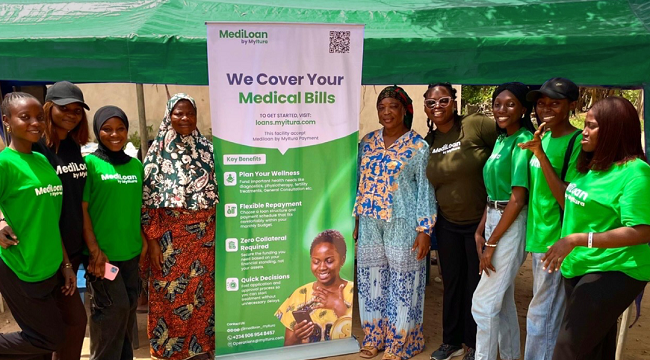
In commemoration of Women’s Month, health-tech platform Myitura has released a new white paper addressing the critical gaps in healthcare financing for women in Nigeria.

Titled “Closing the Gap: Healthcare Financing for Women in Nigeria,” the report highlights how high out-of-pocket costs, limited insurance coverage, and socio-economic factors continue to prevent women from accessing timely healthcare.
According to the report, over 70% of healthcare expenses in Nigeria are paid out-of-pocket, disproportionately affecting women who often delay care due to financial and social constraints.
“When women can afford to take care of their health early, we don’t just save lives; we strengthen families, communities, and the economy,” said Chialuka Kelechi, MyItura’s Chief of Staff.
Key Insights from the White Paper:
- Preventable conditions often escalate due to delayed care
- Women are more likely to deprioritize their own health
- Affordable, structured healthcare financing can significantly improve outcomes
Introducing a Women’s Health Initiative
As part of its commitment, Myitura is launching affordable women-focused health packages (powered by Mediloan), starting at ₦58,180, designed to encourage preventive care and early detection.
The package provides access to:
- Fasting/Random Blood Sugar
- Urinalysis
- Electrolytes
- Urea
- Creatinine
- Pap Smear Submitted slides
- HIV I & II Rapid (Qualitative)
- Hepatitis B Surface Antigen Screening (Rapid)
- Hepatitis C Virus Screening (Rapid)
- Abdominopelvic Ultrasound
- Ongoing support via the Myitura platform
Access:
Women can access these packages by downloading the Myitura app, which makes healthcare more accessible and convenient.
Myitura is a health-tech platform focused on improving access to healthcare through financing, technology, and preventive care solutions.

UBA Beefs Up Mobile App Security to Stop Fraudulent Debits, Withdrawals

Bharti Airtel Crosses 650m Users

FG Orders Installation of 5000 CCTV Cameras for Surveillance in Plateau

CBN Plans New Payment Systems Vision

Ghana Makes History as First African Country to Integrate Payment National Identity Card

Spotify’s Loud & Clear Report Reveals Over ₦60Bn Revenue for Nigerian Artists in 2025

Madonna University Taps Tech Guru Adote for Strategic Board Role

China Threatens to Shut Nigeria’s Satellite Over $11.44m Unpaid Debt

FCCPC Bans Lagos ‘No Refund’ Policy, Vows Fines and Shutdowns for Traders

Healthcare Under Attack: Why Cybersecurity is Now Critical Care




 News2 days ago
Microsoft Revamps Copilot in Workplace AI Push

 E-Business2 days ago
Kaspersky Warns of a New Phishing Technique Leveraging Bubble, a no-code AI Platform

 Telecom2 days ago
How Recycled SIM Card Linked to N50m Kidnapping Nearly Landed me in Jail – Businesswoman

 E-Financial2 days ago
CBN Directs Banks, Fintechs to Complete Cybersecurity Audit Tool

 Telecom2 days ago
Ouranos Technologies Strengthens Board with Key Leadership Appointments

 General News2 days ago
Senate Gives Tinubu Nod to Borrow Fresh $6Bn

 E-Financial1 day ago
CBN Says 33 Banks Raise Fresh N4.65 Trillion in Recapitalisation Exercise

 General News2 days ago
FG Launches CLHEEAN to Streamline Access to Government Services