

E-Financial
CBN Allows Foreign Banks to Give Loans in Dollar

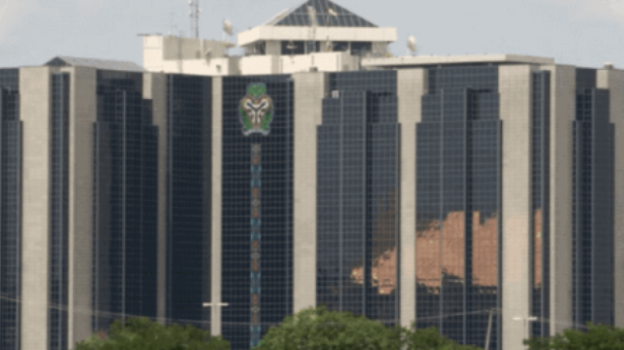
Central Bank of Nigeria on Monday authorized foreign banks in the country to work with their parent companies in availing and syndicating foreign currency-denominated loans (dollar loans) to Nigerian companies.

The apex bank said the policy aligns with its mandate to promote financial system stability. In the Guidelines for the Regulation of Representative Offices of Foreign Banks in Nigeria, signed by CBN’s Director of Financial Policy and Regulation Department, Muhammad Musa, it was stated that a bank licensed under any foreign law, whose registered head office is outside Nigeria, or any financial institution licensed under foreign law, whose primary business includes the receipt of deposits, granting of loans and/or provision of current and savings accounts, are covered by the guidelines.
This include foreign-owned operating bank/financial holding company that is foreign-based, that owns controlling interest in one or more banks or institutions whose primary business includes the receipt of deposits, granting of loans and provision of current and savings accounts.
The guidelines are backed by Sections 6(1) and 8 (1) of the Banks and Other Financial Institutions Act 2020 (BOFIA) respectively which states that “no foreign bank shall operate in Nigeria without prior approval of the CBN”.
The banks are also authorized to market the products and services of its foreign parent or an affiliate of the foreign parent licensed and domiciled outside Nigeria.
They can also carry out research activities in Nigeria on behalf of the foreign parent and also serve as a liaison between the foreign parent and local banks, private institutions within Nigeria and other customers of the foreign parent based in Nigeria.
They are also authorized to connect banks and other financial institutions to their parent firm, and assist exporters in Nigeria with information related to the laws and markets of target countries in which the foreign parent or any of the Group’s affiliates has a subsidiary.
Part of the responsibilities includes collating and distributing economic and financial information or country reports to its foreign parents for use by their customers and assisting their customers who desire to invest in Nigeria or do business with Nigerian companies subject to the extant Data Protection Regulations.
They are also authorised to connect exporters with potential customers in jurisdictions where the parent company operates; and assist Nigerian exporters with finding new markets through its international offices.
The CBN added; “Representative offices are permitted to record revenue, in so far as such revenue does not relate to non-permissible activities as set out in section 3.2 below and emanates from intra-group services rendered to the parent company with such revenue taxed in accordance with transfer-pricing regulations. Revenue in this provision is limited to line items such as staff costs and business premises leasing fees.”
The banks are not allowed to provide services designated in Nigeria as banking business and provide any commercial or trading activity that may lead to the issuance of invoices for services rendered.
In establishing a representative office in Nigeria, the CBN said a Memorandum of Understanding (MOU) between the CBN and the applicant’s home regulatory supervisor is essential. “Where such an MOU is non-existent, the CBN will work with the home regulatory agency to establish/execute an MOU as soon as possible,” it said.
“Not later than three months after obtaining the Approval-In-Principle, the promoters of a proposed office shall submit an application for the grant of a final license to the CBN,” the apex bank said.



At least 13,417 individuals linked to fraudulent activities in Nigeria’s financial system have been captured on the Person of Interest Portal jointly developed by the Nigeria Inter Bank Settlement System (NIBSS) in collaboration with the Central Bank of Nigeria (CBN), security agencies and other stakeholders.

Premier Oiwoh, managing director of NIBSS, disclosed this while speaking on ongoing efforts to curb fraud in the payments ecosystem, noting that the portal which contains names and photographs of suspects has been actively used by law enforcement agencies since it began capturing data from 2019.
Oiwoh, while noting that fraud management remains a core responsibility of NIBSS, noted that the number of reported fraud cases has declined over the past five years, the value of losses remains a key concern for regulators and operators.
According to him, actual fraud losses stood at about N17.67 billion in 2023 before rising sharply to N52.26 billion in 2024, mainly due to a single incident involving N31.1 billion by one entity. He noted, however, that losses dropped significantly in 2025, reflecting tighter controls and improved collaboration across the industry.
He explained that Lagos continues to account for the highest concentration of fraud cases due to its position as the country’s commercial hub, while Abuja has also recorded a notable rise, with other states still featuring in reported incidents.
By transaction channel, Oiwoh said fraud is most prevalent in e-commerce and internet banking, followed by POS, mobile and web platforms.
He identified social engineering as the most common technique used by fraudsters, warning that insider abuse now poses the greatest threat to the system.
“Insider involvement is high, and recent investigations have confirmed this. Many of the fraud cases we are seeing today involve insiders, including former bankers,” he stated, noting that coordinated industry action has yielded results, and that joint efforts last year alone prevented losses of about N20 billion that could have been lost to fraud.
He raised concern over non-reporting of fraud incidents revealing that fraud reporting declined by about 34 per cent in the last quarter of 2025.
He warned that failure to report allows perpetrators to move freely between institutions undetected.
“In several cases investigated last year, individuals involved in fraud simply moved to other institutions because incidents were not reported. Non-reporting is unacceptable,” he said.
He said NIBSS, working with the CBN, the Nigerian Financial Intelligence Unit, and security agencies, has integrated centralised data systems, including industry watch lists, politically exposed persons databases, and customer account repositories, into the Person of Interest Portal to strengthen monitoring, identity management, and fraud prevention.
Credit… Leadership
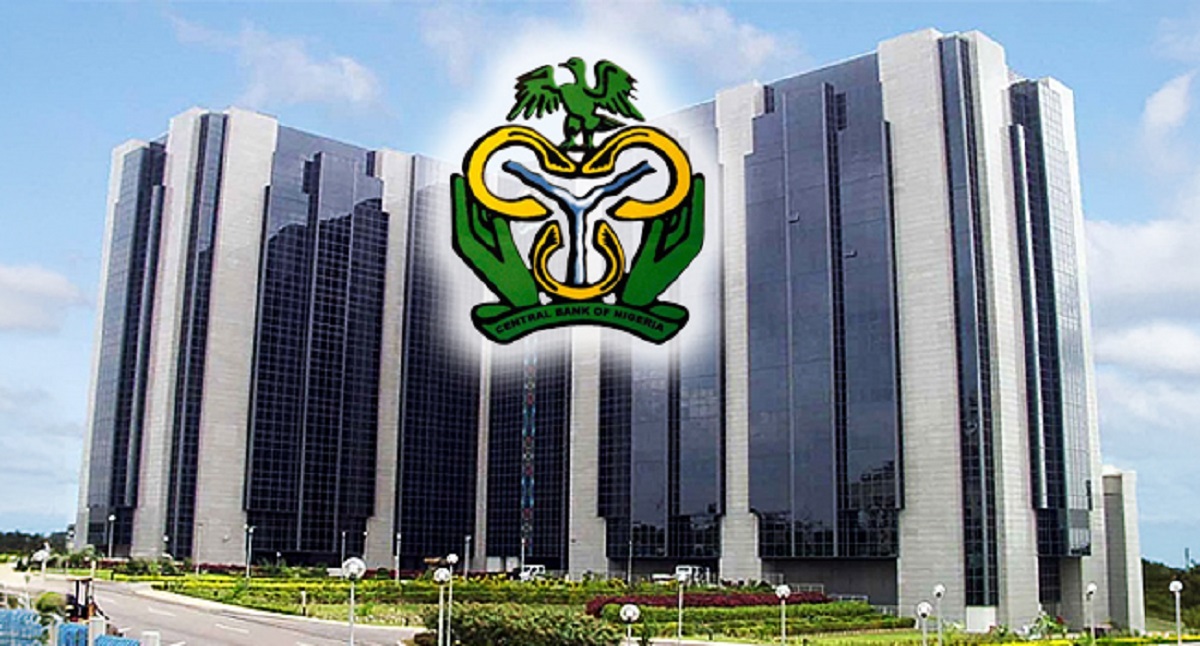
Central Bank of Nigeria (CBN) is to introduce new rules to improve how debit cards and Automated Teller Machines (ATMs) work in Nigeria, according to Olayemi Cardoso, governor of the apex bank.

Cardoso, made this known through Fatai Karim, his special adviser, at an event held over the weekend.
According to him, the new rules are meant to solve ongoing problems with cash withdrawals and to restore public trust in electronic payment systems.
The CBN explained that banks will now be required to issue debit cards based on the number of ATMs they have installed. This means a bank should not issue too many cards if it does not have enough ATMs to support them.
The policy is expected to reduce long queues at ATMs, frequent machine breakdowns, and uneven access to cash across the country.
The CBN noted that repeated ATM failures and cash shortages have made many Nigerians lose confidence in digital banking, even though electronic transactions are increasing.
The Governor said the new policy will soon be introduced to clean up the system and ensure banks properly balance the number of debit cards they issue with the ATMs they operate.

First Asset Management, a subsidiary of FirstHoldCo Plc has recorded a significant milestone as its rating was upgraded to ‘AA’ from ‘AA-’ by DataPro, reflecting the firm’s strong fundamentals and sustained resilience in Nigeria’s Asset management landscape.

The rating upgrade, issued in DataPro’s latest rating report, underscores First Asset Management’s diversified income base, high-quality investment portfolio, and experienced team, all of which continue to support the firm’s long-term stability, sound governance framework, and consistent performance.
The improved rating highlights the organisation’s ability to maintain strong operational fundamentals while effectively navigating market cycles. It further reflects First Asset Management’s disciplined investment philosophy, prudent risk management practices, and commitment to delivering value-driven solutions to its clients.
Speaking on the upgrade, Ike Onyia, Managing Director/CEO of First Asset Management, stated, “We are pleased with DataPro’s decision to upgrade our rating to ‘AA’. This recognition affirms the depth of our investment expertise, and the consistency of our governance and risk management processes. We remain focused on sustaining strong performance while delivering reliable investment outcomes for our clients.”
In a related development, Agusto & Co. has upgraded the rating of the First Asset Money Market Fund to ‘Aa-(f)’ from ‘A+(f)’, further reinforcing the strength of First Asset Management’s product offering.
According to Agusto & Co., the upgraded rating reflects the fund’s consistent low exposure to interest rates and liquidity risks, as well as the fund manager’s commendable professionalism and prudent investment approach. The rating affirms First Asset Money Market Fund’s position as a formidable investment vehicle for capital preservation and steady income generation.
First Asset Management continues to maintain a strong position within Nigeria’s asset management industry, supported by its disciplined investment framework, experienced investment professionals, and a growing suite of products designed to meet the evolving needs of retail and institutional investors.
DataPro and Agusto & Co. are both recognized leaders in ratings and investment research in Nigeria, with extensive experience providing independent assessments across multiple sectors. Their ratings are widely accepted as benchmarks for evaluating financial strength, risk management, and business sustainability.
First Asset Management is a leading Nigerian investment manager within the FirstHoldCo Group. The firm has evolved into a full service investment platform, offering integrated wealth and portfolio solutions across the Group.
First Asset Management manages diversified strategies spanning fixed income, equities, alternatives, passive and quantitative products, in multiple currencies for a variety of individual, intermediary and institutional clients.

LIRS to Invoke NTAA to Recover Unpaid Taxes from Bank Accounts, Others

NIBSS, Others Flag 13,417 Nigerian Fraudsters on Person of Interest Portal

CBN Prepares Fresh Debit Card Rules to Improve ATM Services

First Asset Management Receives Upgraded Ratings from Agusto &Co and DataPro

Nigeria Treats Religious Violence as Attack on State – NSA Ribadu

19 Nigerian Banks Meet CBN Recapitalization Targets Ahead of March Deadline

Jumia CEO says Black Friday Signals Nigeria’s E-Commerce Maturity

Galaxy Backbone Celebrates the Federal Government’s Paperless Civil Service Milestone

DStv Offers Instant Package Upgrade for Customers from January to February

Banks to Impose N50 Stamp Duty on Transfers of N10,000 and Above from January 1




 General News3 days ago
PalmPay User Shares Experience on Fintech Apps to Trust in Nigeria

 News3 days ago
Stakeholders Demand Stronger Governance and Infrastructure to Drive Tech Adoption @ Lagos AI Summit

 General News3 days ago
Nigerians Target Self-Improvement, Business Startups in 2026 Google Data

 News3 days ago
35 Million Nigerians Face Acute Hunger in 2026, UN Warns

 General News3 days ago
How Inside Jobs and Policy Shocks Trigger Nigeria’s Rising Loan Crisis
 E-Financial18 hours ago
First Asset Management Receives Upgraded Ratings from Agusto &Co and DataPro

 News18 hours ago
Anambra Cuts Monday Pay to Kill Sit-at-Home
 General News18 hours ago
Nigeria Treats Religious Violence as Attack on State – NSA Ribadu