

Broadcasting
CBN’s $1 Trn Mirage: Why Nigeria’s Real Sector Holds the Missing Key

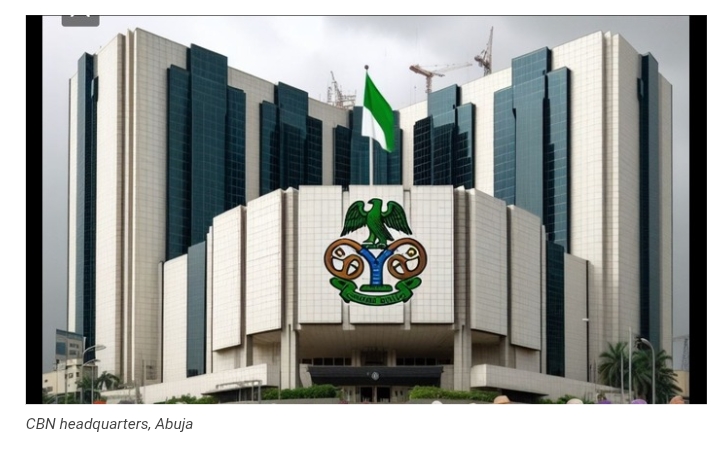
By Blaise Udunze
When the Central Bank of Nigeria (CBN) recently declared that the country was on course to becoming a $1 trillion economy through ongoing banking reforms, the statement was met with cautious optimism. To many, it sounded like a long-awaited promise of prosperity as a declaration that Nigeria’s economic renewal is finally underway. But behind the projection lies a critical question, if banking reforms alone drive the kind of broad-based, sustainable growth required to make Nigeria a trillion-dollar economy?

The truth, according to several experts and economic data, is that banking reforms though necessary are insufficient. The structure of the Nigerian economy is still too fragile, the real sector too weak, and the policy framework too inconsistent to sustain such lofty growth. Without targeted reforms that strengthen production, industry, and exports, the trillion-dollar dream risks remaining what one economist aptly described as a “mirage.”
Tilewa Adebajo, Chief Executive Officer of CFG Advisory, did not mince words when he addressed the subject on ARISE NEWS earlier this year. “We said Nigeria already has the potential of a $1 trillion economy. But $1 trillion economy is a mirage. We shouldn’t go there again,” he said. “If you do not have your policies in place, you cannot reach that $1 trillion economy.”
Adebajo’s caution strikes at the heart of the matter, saying potential is not performance. Nigeria has abundant human and natural resources, but poor policy implementation, weak governance, and persistent inflation continue to choke productivity and investment.
According to Adebajo, reforms alone cannot drive growth. “Reforms on themselves cannot be the solution or answer to growing the economy,” he explained. For him, the CBN’s focus on financial sector restructuring must be complemented by microeconomic solutions such as job creation, poverty alleviation, and social intervention policies that ease the hardship of ordinary Nigerians.
“There has to now be a human face,” he emphasized. Economic transformation, he argues, must not only be about GDP numbers but about improving the quality of life for millions trapped in poverty.
While the CBN’s recapitalisation directive aims to strengthen the banking system and attract foreign capital, many industry players insist that banking strength is meaningless without productive outlets for credit. The Group Managing Director of UBA Plc, Oliver Alawuba, made this clear at the Annual Conference of the Finance Correspondents Association of Nigeria (FICAN).
He stated that achieving the $1 trillion economy target “requires not just incremental growth, but structural shifts in how we approach banking, financial innovation, and sectoral development.”
For Alawuba, the real sector in agriculture, manufacturing, and services must become the true engine of growth.
“A vibrant real sector will drive employment, foster innovation, and strengthen the overall economy by reducing dependency on the oil sector,” he said.
Recapitalization alone, he noted, “is not enough; it must be followed by focused lending to strategic areas that promise the highest economic returns.”
This sentiment reflects a broader consensus among economists that credit must flow to where value is created. Yet, Nigerian banks often prefer the comfort of investing in risk-free government securities over financing industrial or agricultural expansion. The result is a financial system that thrives on paper profits but contributes little to real economic output.
Indeed, Nigeria’s real sector has remained under pressure for years. Manufacturing’s share of GDP still hovers around 10 to 12 percent, hampered by erratic power supply, high logistics costs, and dependence on imported inputs. Agriculture, employing over one-third of the population, remains largely subsistence-based and technologically backward. Small and Medium Enterprises (SMEs), which make up 90 percent of businesses and contribute 48 percent of GDP, continue to struggle with limited access to affordable, long-term credit.
Alawuba suggests that this is where the banking recapitalisation drive must meet fintech innovation. By creating products specifically tailored to SMEs such as flexible loan packages, digital lending tools, and market access platforms which banks can unlock exponential growth. He argues that the future of Nigeria’s economy depends on “the strategic alignment of policy, investment, technology, and, most importantly, our collective will to innovate and grow.”
However, achieving this alignment requires more than monetary engineering; it demands a complete rethink of fiscal and industrial policy. As Isa Omagu of the Bank of Industry (BoI) explained during the same forum, “The economy stands on both the monetary and fiscal sides; we need both sides to work together.” While the monetary side stabilizes prices, fiscal authorities must “come in on the issue of governance.” Nigeria’s biggest economic problem, he said, is simple: “We are not producing enough, and we cannot continue to consume imported goods and expect the economy to be robust.”
Omagu’s statement underscores the country’s most pressing contradiction as a consumption-driven economy that produces little of what it consumes. He called for deeper investment in agriculture, infrastructure, and services to minimize importation and reduce pressure on the foreign exchange market. “We cannot achieve a $1 trillion economy without focusing or boosting our production capacity,” he warned.
The Deputy Director of the Banking Examination Department at the Nigeria Deposit Insurance Corporation (NDIC), Emeka Udechukwu, echoed a similar concern. He warned that “without a vibrant real sector, the economy might not grow fast enough to hit the $1 trillion target.” He argued that while the CBN’s loan-to-deposit ratio policy was designed to compel banks to lend more to the productive sector, “fundamental infrastructural deficits” and policy inconsistencies have undermined its impact. “If there is challenge in the real sector of any economy, that economy is already challenged,” he said. “We have to go back to the real sector and do what we are supposed to do.”
This diagnosis aligns with what many analysts have long argued that Nigeria’s economic problem is not lack of money but lack of production. Trillions of naira circulate within the financial system, yet they rarely translate into new factories, expanded farms, or exportable goods. A $1 trillion GDP projection, therefore, may reflect currency devaluation or statistical rebasing more than genuine productivity gains.
The country’s overreliance on oil further complicates the path to sustainable growth. Data from the National Bureau of Statistics (NBS) shows that in the last quarter of 2023, crude oil accounted for over 81 percent of total exports, while non-oil exports amounted to just around N1 trillion. Even though non-oil exports grew by 38.5 percent in early 2024, their value remains meagre for an economy seeking diversification.
Nigeria’s non-oil export base including manufactured goods, agricultural products, and services remains underdeveloped. Experts argue that to escape this trap, Nigeria must learn from Asian success stories like Singapore and Vietnam, where industrialization, export-oriented manufacturing, and human capital investment transformed poor economies into global competitors.
Singapore, for instance, transitioned from high unemployment and poor infrastructure in the 1960s to one of the world’s richest nations through massive investment in education, manufacturing, and technology. Its top exports today include integrated circuits and machinery products that drive global industries. Similarly, Vietnam evolved from an agrarian, war-torn economy to a manufacturing hub exporting electronics, textiles, and footwear worth over $370 billion in 2022. Nigeria, by contrast, has watched its GDP fall from $400 billion in 2013 to around $250 billion by 2023.
Both countries demonstrate that industrialization, not financial speculation, drives long-term growth. As Uchenna Uzo, a marketing professor at Lagos Business School, put it, “Manufacturing and local production are the key things that can set Nigeria apart.” He added that Nigeria can also attract diaspora investment if it builds the right infrastructure and policy stability.
The lesson is clear; a trillion-dollar economy cannot be decreed from monetary policy statements or achieved through banking reforms alone. It must be earned through production, value addition, and innovation. Nigeria’s manufacturing base must expand, its agricultural productivity must rise, and its infrastructure such as power, transport, and logistics must be modernized.
Banking reforms should therefore serve as an enabler, not a substitute, for real sector development. The CBN’s recapitalization drive, while commendable, must be tied to sectoral targets. Banks that expand credit to manufacturing, agriculture, or export-oriented businesses should enjoy regulatory incentives, while speculative investments in non-productive assets should be discouraged.
Equally important is the need to tame inflation and stabilize the currency. As Adebajo noted, Nigeria can only sustain GDP growth of 8-10 percent if inflation is kept below 12 percent. Persistent inflation erodes purchasing power, deters investment, and undermines long-term planning. Without macroeconomic stability, even the best-intentioned reforms will falter.
Furthermore, there must be a coordinated industrial policy that aligns monetary, fiscal, and trade objectives. For instance, while the CBN seeks to strengthen the naira, the fiscal authorities must simultaneously support local manufacturers through tax incentives, infrastructure investment, and export facilitation. Import restrictions, when necessary, should be strategically designed to protect emerging industries without stifling competition.
Nigeria’s SME ecosystem also deserves targeted support. As the Bank of Industry’s Omagu and UBA’s Alawuba both emphasized, SMEs are the backbone of employment and innovation. Yet, they are often the most credit-starved. Government-backed credit guarantees, venture funds, and fintech-driven micro-lending could bridge this gap, helping small enterprises become the foundation of Nigeria’s industrial base.
Equally, agricultural transformation must move beyond subsistence farming to agro-industrialisation such as processing, packaging, and exporting value-added products rather than raw materials. This approach will not only increase farmers’ incomes but also create jobs and reduce pressure on foreign exchange demand. A focus on value chain development from farm to factory to market will ensure that the benefits of growth reach ordinary citizens.
At a time when 133 million Nigerians are multidimensionally poor, according to NBS data, the urgency for real sector reforms cannot be overstated. An economy that depends overwhelmingly on oil exports, consumes more than it produces, and imports most of its essential goods cannot claim to be on the path to a trillion dollars in any meaningful sense.
The government’s projection of achieving a $1 trillion economy by 2030 could still be attainable but only if the country embarks on deep structural reforms. These include ensuring reliable power supply, revamping transport infrastructure, tackling corruption that inflates project costs, and improving governance and policy consistency.
Nigeria must also invest aggressively in education and skills development, following the example of countries like Singapore, which turned human capital into its greatest economic asset. A young, skilled population can drive innovation, entrepreneurship, and technological adoption which is the real levers of modern economic power.
The road to a trillion-dollar economy will not be paved by balance sheets and banking reforms alone. It will be built by factories, farms, and entrepreneurs. It will depend on a nation’s ability to produce, innovate, and trade competitively. It will require a deliberate shift from policy announcements to policy execution, where government actions translate into measurable outcomes for citizens.
Nigeria’s trillion-dollar dream is achievable, but not on the current trajectory. Without revitalizing the real sector, ensuring macroeconomic stability, and investing in people and production, the CBN’s optimism risks sounding like rhetoric detached from reality. Banking reforms may stabilize the system, but only real sector reforms can sustain growth.
In the end, Nigeria’s economic destiny will not be determined in banking halls but in the fields, factories, and workshops where real value is created. The trillion-dollar economy will not come from financial statements, it will come from the sweat of productive Nigerians who, if properly empowered, can transform potential into prosperity.
Blaise, a journalist and PR professional writes from Lagos, can be reached via: [email protected]



Rising cost of living, currency depreciation, and competition from streaming services have all conspired to see MultiChoice lose 589,000 South African subscribers in its latest financial year.

The decline is across premium, mid-market and mass segments of its operation.
After completing its acquisition of MultiChoice, Canal+ has moved to stabilise the business.
MultiChoice’s new leadership under David Mignot, CEO, hopes to “stop the bleeding and get back to growth”.
The new leadership has scrapped DStv’s annual price increase and decided to shut down Showmax, the in-house streaming platform that struggled to compete with Netflix and Amazon Prime Video.
Canal+execs have described Showmax as unsuccessful, noting that the difficult transition to online streaming, combined with currency devaluation in Nigeria and power cuts, had hurt MultiChoice’s profitability.
MultiChoice ended 2025 with 14.4 million subscribers across Africa, down from 14.9 million a year earlier, while revenue declined 6 percent to 2.4 billion euros.

Owners of several television and radio stations have distanced themselves from a recent threat issued by the Independent Broadcast Association of Nigeria (IBAN), which called for a boycott of media engagements involving Nyesom Wike, minister of the Federal Capital Territory (FCT).

Nyesom Wike, minister of the Federal Capital Territory
IBAN had threatened to withdraw coverage of the minister’s activities unless he retracted his comment on Channels Television’s Seun Okinbaloye and issue a public apology.
However, Ambassador Yusufu Mamman, chairman and owner of JKD Television (DSTV Channel 391) and Hamada Radio Networks, has dismissed the association’s statement as baseless.
Describing Ahmed Tijjani Ramalan, chairman, IBAN, as an impostor, Mamman argued that Ramalan has no authority to speak on behalf of broadcast station owners.
Mamman, who operates a television station and four radio stations, stated that he is not affiliated with any group called IBAN and would not support any action against the Minister, especially after Wike had already clarified his remarks.
“My attention has been drawn to an organisation called IBAN led by one Dr Ahmed Tijjani Ramalan, speaking for and Independent Broadcasters threatening to boycott media briefing by the FCT Minister, Nyesom Wike, unless he makes public apology in respect of his recent banters with Channels Television Anchor, Seun Okinbaloye.
“The position of so called IBAN is at best, an opinion of Mr Ramalan, who is never a broadcaster and had no idea of laws, norms, etiquette or professional broadcasting codes.
“Most importantly, Mr Ramalan has constituted himself into a fighting vehicle in courts against many broadcasting organisations and the National Broadcasting Commission.
Therefore, I urge the Minister to ignore his ranting.
“This is more so that on the live television program, the Minister took time to clarify what he meant and his Spokesperson also issued a statement saying categorically that the Minister’s comment was figurative and didn’t mean any harm,” he said.

Federal Airports Authority of Nigeria (FAAN) says the country now ranks second in Africa for domestic passengers, hitting 10.5 million in 2025—a 10 percent jump.

FAAN
FAAN boss Olubunmi Kuku disclosed this at the Airports Council International Africa conference in Luanda, Angola.
Lagos’ Murtala Muhammed International Airport posted 11.8 percent growth in air traffic movements, one of Africa’s strongest.
Cargo surged 34.4 percent at Lagos, cementing its top-tier status.
Abuja’s Nnamdi Azikiwe and Lagos airports cracked Africa’s top 10 for domestic traffic.
Kuku stressed Nigeria’s push to host and shape African air links amid rising demand for modern, resilient airports.

Multichoice Bleeds Customers in South Africa, Loses 580,000 Subscribers

FG Asks MDAs to Halt New Policies Until Full Compliance with RIA

Broadcast Station Owners Reject IBAN’s Threat to Boycott Wike’s Media Engagements

BVN Database hits 68.6m – NIBSS

How Unethical Deals Triggered CBN Takeover of Union Bank -Forensic Report

Spotify’s Loud & Clear Report Reveals Over ₦60Bn Revenue for Nigerian Artists in 2025

Madonna University Taps Tech Guru Adote for Strategic Board Role

China Threatens to Shut Nigeria’s Satellite Over $11.44m Unpaid Debt

Healthcare Under Attack: Why Cybersecurity is Now Critical Care

Why JustMarkets Is a Strong Choice for Gold Trading




 E-Business3 days ago
FG to Strengthen Cybersecurity Coordination as NDPC Probes Alleged Data Breach

 Telecom3 days ago
Compensation for Poor Service Quality is Automatic- NCC

 E-Business3 days ago
Offset Communications Slams N50m Suit against Qore Technologies for Alleged Copyright Infringement

 Telecom3 days ago
FG Moves to Strengthen Cybersecurity Coordination as NDPC Probes Alleged Data Breach

 General News3 days ago
Tinubu Approves N3.3 Trillion Payment Plan to Boost Power Supply

 News3 days ago
Beware of Fake Cerelac Products – NAFDAC

 General News3 days ago
SERAP Sues CCB over Electoral Act, New Tax law

 E-Business2 days ago
Nigeria Cyberattacks: Stronger Collaboration as a Panacea