

General News
Chidoka Expected at AFARN Aviation Safety Summit

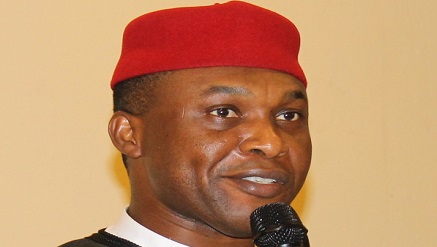
The Association of Foreign Airlines Representatives in Nigeria (AFARN) said it has concluded plans to hold yet another safety summit that would bring key players in the Aviation industry together.
The Aviation summit which will take place on 11th of Dec, 2014 at The Sheraton Hotel and Towers in Lagos, according to the organiser’s, promises to enrich the knowledge of both delegates and stakeholders in the industry.
Chief Osita Chidoka, minister of Aviation, will be the special guest of honour while Capt. Usman Muktar,Director General Nigerian Civil Aviation Authority( NCAA) will deliver the key note address. Dignitaries expected at the seminar include Engr. Saleh Dunoma, Managing Director Federal Airport Authority of Nigeria (FAAN); Engr. Abduldasalam Ibrahim, Managing Director Nigerian Airspace Management Agency (NAMA) including CEOs of Domestic, Regional and Foreign Airlines.
The theme of the summit: ‘’Aviation Safety Management In Nigeria: Evolution Or Revolution?’’ according to Mr Kingsley Nwokoma, President of AFARN would seek to x-ray the progress so far recorded and equally proffer solutions to the challenges in the Aviation industry.
Nwokoma said that theme was carefully chosen to afford stake holders the ample opportunity to deliberate on some key issues necessary for engendering safety growth and development in the sector’’.



By Blaise Udunze
Despite the fragile 2024 economy grappling with inflation, currency volatility, and weak growth, Nigeria’s banking industry was widely portrayed as successful and strong amid triumphal headlines. The figures appeared to signal strength, resilience, and superior management as the Tier-1 banks such as Access Bank, Zenith Bank, GTBank, UBA, and First Bank of Nigeria, collectively reported profits approaching, and in some cases exceeding, N1 trillion. Surprisingly, a year later, these same banks touted as sound and solid are locked in a frenetic race to the capital markets, issuing rights offers and public placements back-to-back to meet the Central Bank of Nigeria’s N500 billion recapitalisation thresholds.

The contradiction is glaring. If Nigeria’s biggest banks are so profitable, why are they unable to internally fund their new capital requirements? Why have no fewer than 27 banks tapped the capital market in quick succession despite repeated assurances of balance-sheet robustness? And more fundamentally, what do these record profits actually say about the real health of the banking system?
The recapitalisation directive announced by the CBN in 2024 was ambitious by design. Banks with international licences were required to raise minimum capital to N500 billion by March 2026, while national and regional banks faced lower but still substantial thresholds ranging from N200 billion to N50 billion, respectively. Looking at the policy, it was sold as a modern reform meant to make banks stronger, more resilient in tough times, and better able to support major long-term economic development. In theory, strong banks should welcome such reforms. In practice, the scramble that followed has exposed uncomfortable truths about the structure of bank profitability in Nigeria.
At the heart of the inconsistency is a fundamental misunderstanding often encouraged by the banks themselves between profits and capital. Unknown to many, profitability, no matter how impressive, does not automatically translate into regulatory capital. Primarily, the CBN’s recapitalisation framework actually focuses on money paid in by shareholders when buying shares, fresh equity injected by investors over retained earnings or profits that exist mainly on paper.
This distinction matters because much of the profit surge recorded in 2024 and early 2025 was neither cash-generative nor sustainably repeatable. A significant portion of those headline banks’ profits reported actually came from foreign exchange revaluation gains following the sharp fall of the naira after exchange-rate unification. The industry witnessed that banks’ holding dollar-denominated assets their books showed bigger numbers as their balance sheets swell in naira terms, creating enormous paper profits without a corresponding improvement in underlying operational strength. These gains inflated income statements but did little to strengthen core capital, especially after the CBN barred banks from using FX revaluation gains for dividends or routine operations. In effect, banks looked richer without becoming stronger.
Beyond FX effects, Nigerian banks have increasingly relied on non-interest income fees, charges, and transaction levies to drive profitability. While this model is lucrative, it does not necessarily deepen financial intermediation or expand productive lending. High profits built on customer charges rather than loan growth offer limited support for long-term balance-sheet expansion. They also leave banks vulnerable when macroeconomic conditions shift, as is now happening.
Indeed, the recapitalisation exercise coincides with a turning point in the monetary cycle. The extraordinary conditions that supported bank earnings in 2024 and 2025 are beginning to unwind. Analysts now warn that Nigerian banks are approaching earnings reset, as net interest margins the backbone of traditional banking profitability, come under sustained pressure.
Renaissance Capital, in a January note, projects that major banks including Zenith, GTCO, Access Holdings, and UBA will struggle to deliver earnings growth in 2026 comparable to recent performance.
In a real sense, the CBN is expected to lower interest rates by 400 to 500 basis points because inflation is slowing down, and this means that banks will earn less on loans and government bonds, but they may not be able to quickly lower the interest they pay on deposits or other debts. The cash reserve requirements are still elevated, which does not earn interest; banks can’t easily increase or expand lending investments to make up for lower returns. The implications are significant. Net interest margin, the difference between what banks earn on loans and investments and what they pay on deposits, is poised to contract. Deposit competition is intensifying as lenders fight to shore up liquidity ahead of recapitalisation deadlines, pushing up funding costs. At the same time, yields on treasury bills and bonds, long a safe and lucrative haven for banks are expected to soften in a lower-rate environment. The result is a narrowing profit cushion just as banks are being asked to carry far larger equity bases.
Compounding this challenge is the fading of FX revaluation windfalls. With the naira relatively more stable in early 2026, the non-cash gains that once flattered bank earnings have largely evaporated. What remains is the less glamorous reality of core banking operations: credit risk management, cost efficiency, and genuine loan growth in a sluggish economy. In this new environment, maintaining headline profits will be far harder, even before accounting for the dilutive impact of recapitalisation.
That dilution is another underappreciated consequence of the capital rush. Massive share issuances mean that even if banks manage to sustain absolute profit levels, earnings per share and return on equity are likely to decline. Zenith, Access, UBA, and others are dramatically increasing their share counts. The same earnings pie is now being divided among many more shareholders, making individual returns leaner than during the pre-recapitalisation boom. For investors, the optics of strong profits may soon give way to the reality of weaker per-share performance.
Yet banks have pressed ahead, not only out of regulatory necessity but also strategic calculation.
During this period of recapitalization, investors are interested in the stock market with optimism, especially about bank shares, as banks are raising fresh capital, and this makes it easier to attract investments. This has become a season for the management teams to seize the moment to raise funds at relatively attractive valuations, strengthen ownership positions, and position themselves for post-recapitalisation dominance. In several cases, major shareholders and insiders have increased their stakes, as projected in the media, signalling confidence in long-term prospects even as near-term returns face pressure.
There is also a broader structural ambition at play. Well-capitalised banks can take on larger single obligor exposures, finance infrastructure projects, expand regionally, and compete more credibly with pan-African and global peers. From this perspective, recapitalisation is not merely about compliance but about reshaping the competitive hierarchy of Nigerian banking. What will be witnessed in the industry is that those who succeed will emerge larger, fewer, and more powerful. Those that fail will be forced into consolidation, retreat, or irrelevance.
For the wider economy, the outcome is ambiguous. Stronger banks with deeper capital buffers could improve systemic stability and enhance Nigeria’s ability to fund long-term development. The point is that while merging or consolidating banks may make them safer, it can also harm the market and the economy because it will reduce competition, let a few banks dominate, and encourage them to earn easy money from bonds and fees instead of funding real businesses. The truth be told, injecting more capital into the banks without complementary reforms in credit infrastructure, risk-sharing mechanisms, and fiscal discipline, isn’t enough as the aforementioned reforms are also needed.
The rush as exposed in this period, is that the moment Nigerian banks started raising new capital, the glaring reality behind their reported profits became clearer, that profits weren’t purely from good management, while the financial industry is not as sound and strong as its headline figures. The fact that trillion-naira profit banks must return repeatedly to shareholders for fresh capital is not a sign of excess strength, but of structural imbalance.
With the deadline for banks to raise new capital coming soon, by 31 March 2026, the focus has shifted from just raising N500 billion. N200 billion or N50 billion to think about the future shape and quality of Nigeria’s financial industry, or what it will actually look like afterward. Will recapitalisation mark a turning point toward deeper intermediation, lower dependence on speculative gains, and stronger support for economic growth? Or will it simply reset the numbers while leaving underlying incentives unchanged?
The answer will define the next chapter of Nigerian banking long after the capital market roadshows have ended and the profit headlines have faded.
Blaise, a journalist and PR professional, writes from Lagos and can be reached via: [email protected]
General News
WEBINAR: Techeconomy Business Series Hosts Experts from MTN, Interswitch, BusinessPlus, others this Wednesday


Techeconomy, Africa’s leading technology, business and digital economy publication, has announced an upcoming edition of its Techeconomy Business Series, a virtual webinar.

Techeconomy
This month’s edition focused on “Navigating a Career in Tech Sales”, is scheduled for Wednesday, January 28, 2026, from 5:00 PM to 6:00 PM (WAT)
Register here: https://shorturl.at/mMvLu),
It will bring together seasoned professionals from across Africa’s technology ecosystem to share practical insights, real-life experiences, and career guidance for individuals looking to build or transition into successful careers in tech sales.
“As Africa’s digital economy continues to expand, tech sales has emerged as a critical growth driver, bridging innovation, customer adoption, and revenue generation,” said Joan Aimuengheuwa, managing editor at Techeconomy.
“The session is designed to equip professionals, young talents, and business leaders with a clearer understanding of the skills, mindset, and career pathways required to succeed in this fast-evolving field”, she added.
The panel features accomplished industry experts including, divisional head, Growth Marketing (Enterprise), Interswitch Group; Ekundayo Ayeni, co-founder, BusinessPlus; Adepeju Ajayi, manager, Mobile Advertising, MTN Nigeria; and Bukayo Ewuoso, Business Growth Consultant.
The session will be hosted by Imoh Anselem, an IT Project Manager and Customer Success Specialist.
Participants will gain insights into: Ogechi Okwechime
· Breaking into tech sales and identifying entry opportunities
· Key skills and competencies employers look for
· Career growth strategies within Africa’s digital economy
· Lessons from real-world sales and growth experiences
Webinar Details:
Date: Wednesday, January 28, 2026 | Time: 5:00 PM – 6:00 PM (WAT) | Format: Virtual (Zoom)
Registration/Access Link: https://shorturl.at/mMvLu
Attendance is free, but registration is required.
“The Techeconomy Business Series is part of Techeconomy’s ongoing commitment to fostering informed conversations, capacity building, and talent development across Africa’s technology and business landscape”, the managing editor added.
TAGS: #TechSales, #Techeconomy, #Techeconomy, #TechSales, #CareerInTech, #DigitalEconomy, #BusinessSeries, #AfricaTech, #TBS #TecheconomyBusinessSeries
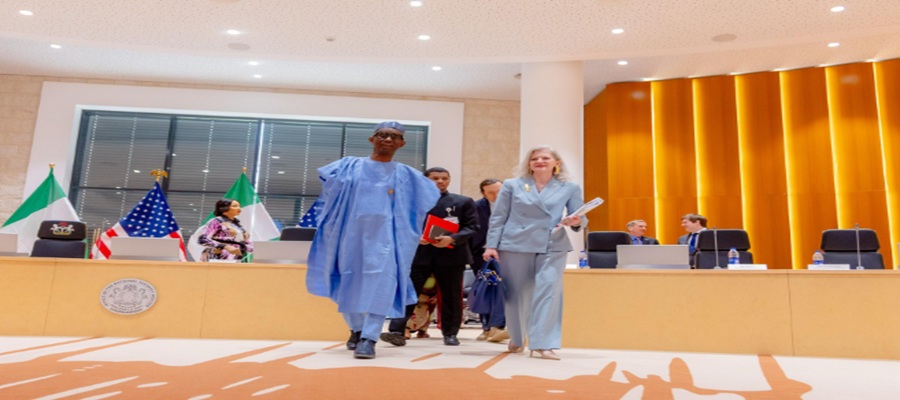
National Security Adviser Nuhu Ribadu has said the federal government considers religious violence an attack on the Nigerian state, stressing that the protection of all citizens, regardless of faith, is non-negotiable.

According to presidential spokesperson Bayo Onanuga, Ribadu made the remarks in Abuja at the close of a US–Nigeria Joint Working Group session.
“Nigeria is a deeply plural society, and the protection of all citizens, Christians, Muslims, and those of other beliefs, is non-negotiable,” Ribadu said.
“Violence framed along religious lines is treated as an attack on the Nigerian state itself.”
In a follow-up post on X, Ribadu said the joint working group has recorded “tangible operational gains” in the fight against terrorism.
The working group was set up following Nigeria’s designation as a Country of Particular Concern (CPC) by US President Donald Trump, a label that often triggers policy actions aimed at ending severe violations of religious freedom.
At the meeting, Ribadu led Nigeria’s delegation, which included representatives from 10 ministries and agencies, while the US delegation, made up of eight federal agencies, was led by Allison Hooker, US under-secretary of state.
Ribadu said Nigeria-US security cooperation has moved from dialogue to action, resulting in the disruption of terrorist networks and transnational criminal groups. He also praised the US for supplying drones, helicopters, platforms, spare parts, and other support systems over the past five years.
Speaking at the session, Hooker said the US was committed to expanding its partnership with Nigeria, particularly on deterring violence against Christian communities.
“Today, we are here to discuss how we can work together to deter violence against Christian communities, prioritising counter-terrorism, insecurity, investigation of attacks, and holding perpetrators accountable,” she said.
She added that efforts would focus on reducing killings, forced displacement, and abductions of Christians, especially in Nigeria’s north-central states

DHQ Indicts Brigadier General Abubakar Sadiq, 15 Others in Alleged Coup Plot againt Tinubu

Court Fines Airtel N210m for Unauthorised Use of ‘Nigeria Go Survive’ Song

Tech Executives Double Down on AI, Talent and Adaptive Strategies to Lead in the Intelligence Age

Firm Identifies AI as Common Denominator in Entertainment Industry’s 2026 Security Threats

NIBBS to Boost Financial Inclusion with Offline Payment Solutions

19 Nigerian Banks Meet CBN Recapitalization Targets Ahead of March Deadline

Jumia CEO says Black Friday Signals Nigeria’s E-Commerce Maturity

Galaxy Backbone Celebrates the Federal Government’s Paperless Civil Service Milestone

DStv Offers Instant Package Upgrade for Customers from January to February

Banks to Impose N50 Stamp Duty on Transfers of N10,000 and Above from January 1




 E-Financial2 days ago
First Asset Management Receives Upgraded Ratings from Agusto &Co and DataPro

 News2 days ago
Anambra Cuts Monday Pay to Kill Sit-at-Home

 General News2 days ago
Nigeria Treats Religious Violence as Attack on State – NSA Ribadu

 E-Financial2 days ago
CBN Prepares Fresh Debit Card Rules to Improve ATM Services

 E-Financial2 days ago
NIBSS, Others Flag 13,417 Nigerian Fraudsters on Person of Interest Portal

 News2 days ago
LIRS to Invoke NTAA to Recover Unpaid Taxes from Bank Accounts, Others
 News13 hours ago
Tech Executives Double Down on AI, Talent and Adaptive Strategies to Lead in the Intelligence Age
 E-Financial13 hours ago
NIBBS to Boost Financial Inclusion with Offline Payment Solutions