

General News
Corruption: Arrest Deziani, Okonjo-Iweala, Sahara Reporters Urge GMB

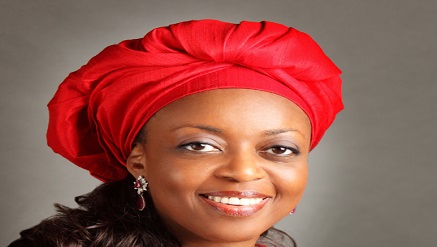
Sahara Reporters, the vocal online community of international reporters and social advocates dedicated has urged Mohamadu Buhari, President elect, to start his war against corruption immediately after concluding his swearing-in ceremony.
In an article by one Illesanmi Omabomi, the news portal said that there is no better way and place to start that fight than the arrest Allison Deziani Madueke and Ngozi Okonjo-Iweala before the end of day on May 29.
According to Sahara Reporters, both women are currently serving as minister for Petroleum and Finance respectively.
“They both represent some of the biggest fishes, yes fishes, in the pond” it claimed
The full article read:
I can afford to take the risk of concluding that the majority of Nigerians would like to see brought to justice, and swiftly so, the people who brought Nigeria to her knees through the looting of our commonwealth.
Many Nigerians are afraid that some, if not most of these looters, may flee the country after May 29, 2015, before investigations are commenced/concluded.
The purpose of this article is to advocate that the President elect, Mohamadu Buhari, should start the blitzkrieg against corruption immediately after concluding his swearing-in ceremony at Eagle Square on May 29, 2015.
Based on readily available public information, there is no better way and place to start that fight than the arrest Allison Deziani Madueke and Ngozi Okonjo-Iweala before the end of day on May 29, 2015.
Both women are currently serving as minister for Petroleum and Finance respectively. They both represent some of the biggest fishes, yes fishes, in the pond.
These two individuals are not the most corrupt members of the now infamous Goodluck Jonathan led presidency—and it will take a very long time before the full extent of the damage done to our economy can be fully established, if at all possible!
However, in the case of Deziani and Okonjo-Iweala, the information gleaned from the several House of Representatives investigations into the 10 Billion Naira NNPC plane maintenance contracts, and oil subsidy payments that were not budgeted for provide the incoming President with enough information to order their immediate arrests and have them charged with the appropriate offences the same day.
The new president should demonstrate his commitment to the rule of law and the time limit requirement for charging arrested persons with offences known to law and having such persons presented before a court of law by ensuring that both women appear in the court on Monday June 1, 2015 to enter pleas and apply for bail. (May 29, 2015 being a Friday).
Like many other Nigerians, I believe that both women are surely guilty of more heinous offenses than the ones mentioned above. However, arresting and charging them will send a clear and unambiguous message about the ferocity of the incoming President’s war against corruption, yield valuable information into the more complicated investigations and encourage others to step forward and make voluntary disclosures, thereby reducing the time and resources needed for the fight against corruption.
The President-Elect can then offer leniency on the basis of voluntary disclosures, have a hiatus of a few days and wait to see if there will be takers of the offer.
The majority of Nigerian politicians are cowards and trust me, seeing the powerful Deziani and Okonjo-Iweala charged before the court, they will be lining up to confess.
This approach will be cheaper, point you to previously unknown and maybe otherwise never possible to find stolen resources. I believe it will also yield more of the stolen resources. This topic will be fleshed out in full in another article.
For me, calling for the arrest and trial of Okonjo-Iweala is personal anguish for me but the nation’s interest must be the over-riding consideration.
It is anguish for me because at the tail end of Obasanjo’s presidency she was one of those I sincerely considered worthy of becoming the President or Vice President at the very minimum. How she allowed herself to be sucked into the bowels of Goodluck Jonathan’s rampaging corruption whale is an examination that would have commenced inside her head by now.
Let PDP supporters call me what they want and I am not a member of APC. The party I support is the one I believe has the interest of Nigeria at heart.
I believe Mohamadu Buhari of APC does at this point in time. Nigerians, including me are eager to see these corrupt and arrogant politicians from all parties who bestrode our political landscape in the recent past like Colossus, feeding fat on our collective inheritance brought to justice and swiftly so.
The stoppage or reduction of corruption and the recovery of our stolen resources is critical the efforts to build a sustainable society in which we all have a reasonable chance of achieving our legitimate aspirations.
Illesanmi Omabomi


Federal Competition and Consumer Protection Commission (FCCPC) has warned Lagos traders against enforcing the unlawful “no return, no refund” policy, declaring it illegal under the Federal Competition and Consumer Protection Act (FCCPA) 2018.

FCCPC
Dr Olubunmi Otti, FCCPC Southwest Zonal Coordinator, issued the directive during the inauguration of new executives of the Phone and Allied Products Dealers Association (PAPDA) on Wednesday, stressing consumer education as the strongest defence against market exploitation.
“There is no such thing as ‘no return, no refund’. If a product does not fulfil its intended purpose, the consumer has the right to return it,” Otti declared, adding the commission mediates complaints for refunds, replacements, or exchanges.
Non-compliant businesses face fines, product withdrawals, seizures, prosecutions, or shutdowns. Otti noted thousands of monthly complaints via the FCCPC portal in the Southwest alone, with sensitisation expanding to Alaba Market and Trade Fair Complex.
She urged consumers: “When your rights are violated, do not just say, ‘You give it to God.’ Bring your complaints to the FCCPC. The law empowers us to protect you,” while calling for traders’ collective responsibility to ensure quality products and services.


African Development Bank Group (AfDB) has approved a €6.5 million investment in the Saviu II venture capital fund to boost technology start-ups across Francophone West and Central Africa.

The Bank Group will contribute €4.5 million as equity investment and an additional €2 million as a first-loss hedging tranche on behalf of the European Commission under the Boost Africa Programme.
The investment is expected to strengthen early-stage financing for innovative businesses with strong technological and digital components, particularly in French-speaking countries.
Saviu II, the second investment vehicle managed by Saviu Partners, plans to invest between €500,000 and €3 million in about 20 seed-stage or early institutional fundraising start-ups. The fund will primarily target B2B technology-oriented companies with scalable models.
At least 60 per cent of the fund’s commitments will focus on French-speaking countries in West and Central Africa, including Côte d’Ivoire, Cameroon, Benin, Senegal, Togo, Burkina Faso and Mali.
The fund may also co-invest in promising East African technology firms seeking expansion into Francophone markets.
In addition, Saviu II will dedicate a special funding envelope for pre-seed investments, mainly through minority equity stakes, often in collaboration with incubators, venture studios and other ecosystem partners.
Industry observers say the AfDB’s backing is expected to de-risk early-stage investment and crowd in more private capital into Africa’s growing digital economy.
Saviu Partners previously launched Saviu I in 2018 with a capitalization of €10 million.
The first fund invested in 12 start-ups, mainly based in French-speaking West Africa, offering not just funding but hands-on support in business development, recruitment, international expansion and fundraising.
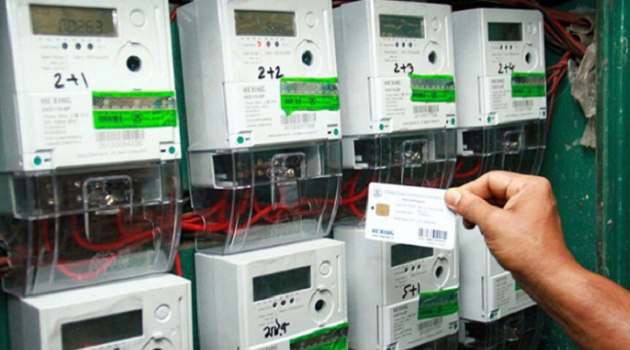
Nigerian Electricity Regulatory Commission (NERC) has ruled in favor of electricity consumers, directing distribution companies (DisCos) to refund ₦20.33 billion in outstanding costs for meters bought under the Meter Asset Provider (MAP) framework.

NERC
Signed on February 27, 2026, by Musiliu Oseni, chairman,NERC and Dafe Akpeneye, commissioner Order No. NERC/2026/025 amends a 2023 directive.
It requires DisCos to disburse the funds via energy credits over 12 months starting March 1, 2026, addressing years of slow refunds.
As of December 31, 2025, DisCos owed this amount due to delays in reimbursing prepaid customers who funded their own meters.
DisCos must automate credits for the full MAP meter cost upon activation, disbursed monthly over 120 months based on the customer’s tariff—credits cannot offset legacy debts.
Prepaid customers will receive a monthly token by the 4th day equivalent to the reimbursement value; for arrears, they’ll get two tokens per month.
Postpaid customers will see a distinct credit line on bills subtracted from totals, with two line items monthly for arrears.
NERC mandates monthly reports on reimbursement values using an approved template, plus dedicated email channels for complaints with resolution status included.
The order aims to end delays, improve notifications, and boost sector trust. DisCos must accelerate arrears recovery over 12 months without further excuses.
This follows NERC’s February 2026 compliance review, amid ongoing power sector challenges highlighted by Power Minister Adebayo Adelabu.

MultiChoice to Discontinue Showmax Streaming Platform

GCR Affirms Afreximbank’s International Scale Ratings of A, A2

SmartCash Launches ‘No Be Cho Cho Cho’ Campaign to Boost Digital Banking in Nigeria

MTN Nigeria Non-Executive Director Mazen Mroue Quits to Focus on Group Role

Google Adds Yorùbá, Hausa to AI Search, Boosting Access for Millions of Nigerians

Dr. Cairo Ojougboh Foundation Bolsters Nigeria’s Education Drive with ₦2.7m Student Support

Kaspersky Brings more Transparency to Threat Detection with New Hunt Hub

NDPC Commits to Balancing Data Privacy, Protection Information

PwC Reveals AI Scaling Gap Slows Africa’s Digital Transformation

Firm Reviews the Evolution of Phishing Threats in 2025




 E-Financial2 days ago
NRS Targets N40trillion in Tax, Royalty Revenue in 2026

 E-Financial2 days ago
SEC Revokes Registration of Kensington Agro Trading Limited

 General News2 days ago
Purple Woman 3.0 Is Back, to Empower Women in Tech this IWD 2026

 News2 days ago
EFCC Arraigns Two FSDH Bank Officials Over $307k, €50k Fraud

 Telecom2 days ago
Konga Launches ‘Berekete Sales’ with Up to 50% Discounts Across Major Categories
 E-Business2 days ago
NDPC, 60 DPAs Collaborate on Enforcing Privacy Rights in the Use of Al

 General News2 days ago
NCDC Raises Alarm over Lassa Fever Ravaging 18 States in Nigeria

 E-Financial2 days ago
Nigeria’s Net Reserves Surge 50% to $34.8bn in 2025 – CBN Governor