

Telecom
Danbatta Calls for Women Empowerment in ICT Sector

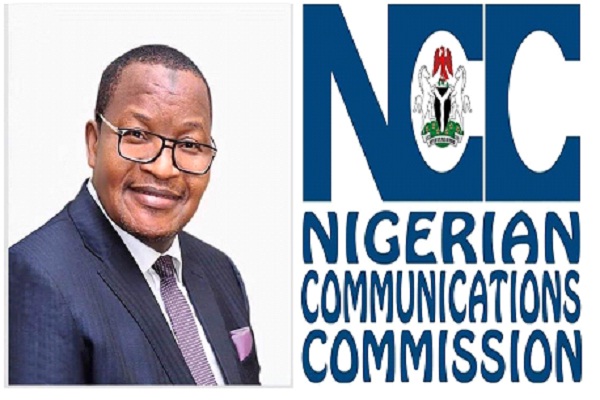
Prof. Umar Garba Danbatta, executive vice chairman (EVC) of the Nigerian Communications Commission (NCC), has emphasized the important role played by women in the country’s socio-economic and political space while underscoring the need to empower them in Information and Communication Technology (ICT) as an enabler for social change.

Prof Umar Danbatta, EVC, NCC
Danbatta stated this while delivering a goodwill message at a webinar organised by Zinari Communications Limited with the theme: “Mainstreaming Rural Women Enterprise Development into Digital Economy Initiative: The Opportunities, Strategies and Constraints,” which held on Tuesday, February 16, 2021.
According to Danbatta, who was represented by Grace Ojougboh, head, Online Media and Special Publication, NCC, there is no doubt that women have been historically central to socio-economic and political development of any nation and stressed the need for nations to focus more on how ICT can be leveraged for increased empowerment for women.
He said: “There has been a general concern that unless the gender divide between men and women is specifically addressed, there is a risk that ICT may worsen existing inequalities between women and men which could create new forms of inequality.
“However, if the gender dimensions of ICT in terms of access and use, capacity-building opportunities, employment and potential for empowerment are explicitly identified and addressed, ICT can be a powerful catalyst for political, economic and social empowerment of women, and the promotion of gender equality.”
He advocated increased collaboration between public and private-sector stakeholders toward advancing gender equality and women empowerment, notably by encouraging young women and girls to pursue studies and careers in science, technology, engineering and mathematics (STEM).
The EVC said the Commission will continue to play a front-seat role in driving the implementation of the National Digital Economy Policy and Strategy document (NDEPS), 2020-2030; the Nigeria National Broadband Plan (NNBP), 2020-2025 and similar policies aimed at increased connectivity to all the citizens to bridge gender digital disparity.
Danbatta said the Commission constantly provides the necessary infrastructure that will guarantee ubiquitous access to telecoms services through the implementation of these policies while listing other initiatives undertaken by the Universal Service Provision Fund (USPF), all aimed at boosting connectivity and provision of ICT tools among citizens, regardless of gender, across the length and breadth of Nigeria. He listed the initiatives to include the Community Resource centers (CRS), School Knowledge Centers (SKC), E-accessibility projects, among others.
“There is no doubt that these efforts will facilitate development of a vibrant digital ecosystem where rural women can play very important roles in our socio-economic and political space,” he added.


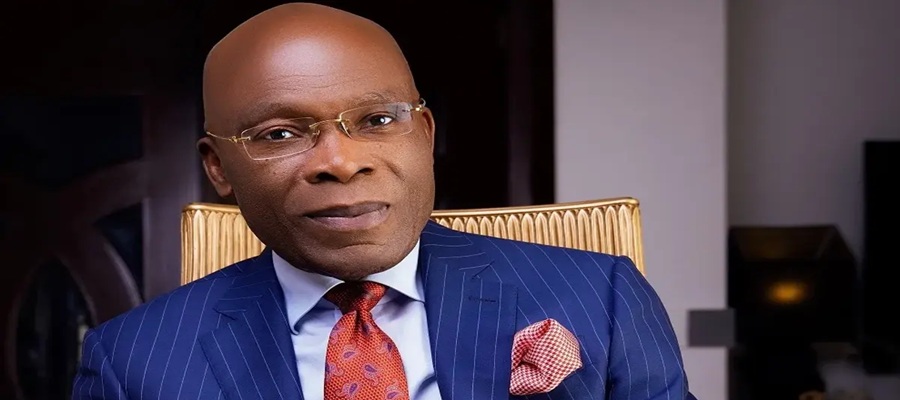
Africa’s foremost serial digital entrepreneur, Leo Stan Ekeh, has explained why he has stayed away from politics even when he had the opportunity to make a success out of it. He also expressed overflowing gratitude to Nigeria, a country he said has “boosted and blessed me.”

Leo Stan Ekeh, Zinox Founder
On whether he would join politics after a successful run in entrepreneurship, he said: “Me, politics? No. I would have been governor of my state long, long ago, but politics is not my calling. However, I support progressive, ideas-driven politicians across the country,” he said.
Ekeh who is the Chairman of Zinox Group was responding to questions during a forum of select mentees of young entrepreneurs which ended late Thursday. He recalled his early beginning in the nation’s Information Communication Technology (ICT) marketplace after returning to Nigeria from the United Kingdom.
The Zinox chief who turns 70 on February 22 took the mentees down memory lane, recalling how he introduced desktop publishing and switching the nation’s publishing landscape from analogue to digital as well as scaling up his business into what has become a conglomerate today.
“I returned to Nigeria from the United Kingdom after quitting my post-graduate programme because I believed so much in this country and the opportunities it presents. Though the country has blessed and bruised me, my dream was unambiguous: to propagate what I called ‘digital democracy’ in a country that in those days was wholly analogue. Today, I will say to a large extent that Nigeria has helped me to actualize my dream, though there is still work to be done.
“Once we were done with digitizing the media, we moved strongly into oil and gas, financial sector, and public sector where we impacted heavily on e-governance. Our ambitious Computerise Nigeria initiative ensured that homes, educational institutions, and ministries, parastatals and agencies (MDAs) which had no access to computers had access. We did not just dump computers on the people, we ensured they were skilled-up to effectively use the systems for enhanced productivity. Nigeria offered me the opportunity to do all this for which I am grateful,” he told the mentees.
Ekeh, an Imo state indigene, was in Owerri at the weekend with other dignitaries including Vice President Kashim Shettima and many governors, politicians and captains of industry at the grand finale of the Imo at 50 celebrations, where he was honoured with the Distinguished Star of Imo State (DSI) award.
While responding to questions on the state of the economy, Ekeh commended President Tinubu for the courage to start the reforms from the day he assumed office, arguing that any delay would have shrank the economy further and completely wiped out investors’ confidence in the Nigerian economy.
He referenced the recent verdicts from the World Bank and the Dr. Ngozi Okonjo-Iweala of the World Trade Organisation (WTO) as evidence that what indigenous entrepreneurs have been saying about the Tinubu reforms as truly progressive is not a farce.
“As a major player in Africa’s ICT ecosystem, I can assure you that major multinationals in this sector are not only investing more in Nigeria, they are collaborating with indigenous players and this is evident in the contribution of the ICT sector to the GDP.
“You will recall that the World Bank Managing Director, Anna Bjerde, who was in Nigeria recently, said Nigeria is now frequently cited globally as an example of steady, credible reform leadership. That says a lot about what entrepreneurs and employers of labour like me have continued to say about the Tinubu government.
“Sentiments aside, President Tinubu is a well exposed visionary leader. He is investment-friendly, he is courageous and he is a good team player. This has impacted the brave decisions he has taken and I am happy that global bodies like the World Bank, and the WTO are talking about it. I have known the President for many years and he has remained consistent to his commitment to national development. I speak here as an entrepreneur, not a politician. I don’t play politics. I am not a politician and I will not be one. I play in the digital space which is the enabler of development and I am happy doing what I’m doing,” Ekeh said.
He recalled Tinubu’s role when he launched the Zinox range of digital products in 2001 when Tinubu was governor of Lagos State, stressing that he has no reason not to support him the way he supports his governor.
“As host governor, he took over the show, owned it and drove it. And that’s because he was futuristic and driven by the vision of a digitally-driven economy. Tinubu is driven by pragmatism,” he said.
He charged the mentees to stay focused on their track and be intentional in their commitment to keep forging ahead even when the tide seems against them; adding that “entrepreneurship anywhere in the world is tough but with patience, perseverance and commitment, you will push through the veil.”
Telecom
QNET unveils ‘Energize Everyday’ theme, intensifies consumer protection, media partnership in 2026


QNET, a global direct-selling company specialising in wellness and lifestyle products, has unveiled its 2026 strategic theme, “Energize Everyday,” built on three core pillars: ethical entrepreneurship, strengthened compliance and consumer protection, and wellness product innovation across Nigeria and Sub-Saharan Africa.

QNET
The company made this known during its New Year Media Webinar titled “Setting the Narrative for the Year,” where executives outlined plans to rebuild public trust and counter persistent misconceptions surrounding its operations.
Speaking at the webinar, the Nigeria General Manager of QNET, Mr Ayokunmi Solesi, said the direct-selling model was designed to empower individuals, particularly in limited-job markets such as Nigeria, by enabling them to earn commissions through product referrals.
“Direct selling is about referring quality, science-backed products for commissions. It is not a job offer, nor is it a promise of instant wealth or instant cures,” he said.
According to him, QNET currently has over 100,000 Independent Representatives (IRs) in Nigeria and continues to operate within regulatory and tax compliance frameworks.
He noted that the company had also invested in grassroots social impact initiatives, including its FinGreen financial literacy programme, which has trained more than 600 Nigerian youths.
On product innovation, Solesi said QNET’s wellness offerings are backed by research and development conducted in Hong Kong and Malaysia, with regional testing to meet consumer needs in African markets.
Also speaking, the company’s Legal Counsel, Mr Kwasi Danso, reaffirmed QNET’s zero tolerance for fraud, brand misuse, fake job scams and policy violations.
Danso disclosed that the company had secured over 70 prosecutions against brand violators and had terminated distributors found guilty of misconduct.
“We collaborate with the Economic and Financial Crimes Commission (EFCC), the National Agency for the Prohibition of Trafficking in Persons (NAPTIP), and the Police.
“We conduct proactive audits of distributor team offices and, in jurisdictions like Ghana, publish details of errant distributors in national dailies as part of our enforcement transparency,” he said.
He explained that some violations involved transnational offenders operating across multiple jurisdictions, including Nigeria and Ghana, often outside QNET’s official network.
According to him, the company will expand distributor audits in 2026 and increase public disclosure of enforcement actions, subject to data privacy regulations, as part of efforts to rebuild trust in Nigeria’s direct-selling sector.
On public perception and media engagement, QNET’s Public Relations Manager for Sub-Saharan Africa, Mr Francis Kojo Sam, described the media as the company’s “amplifier and launchpad.”
Kojo said that since entering the Nigerian market in 2021, QNET had faced significant misinformation and would deepen long-term partnerships with credible media organisations in 2026.
“Our strategy includes regular briefings, state radio tours, journalist participation in key events such as V-Africa in Ghana, product expos and thought-leadership interviews,” she said.
She also announced the revival of the company’s “Say No” public awareness campaign through billboards, advertisements and educational outreach aimed at dispelling myths linking QNET to rituals or fraudulent schemes.
The executives reiterated that QNET’s business model centres on product sales and commissions rather than recruitment-based income structures associated with Ponzi schemes.
Under the “Energize Everyday” theme, the company said it would continue to promote its corporate philosophy, Raise Yourself to Help Mankind (RYTHM), while prioritising transparency, innovation and sustained regulatory engagement in 2026.

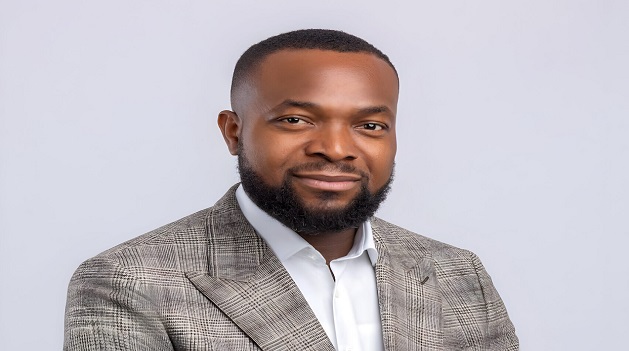
The Federal Government yesterday called on private-sector players to partner with it to close Nigeria’s last-mile broadband gap, saying that massive public investment in digital infrastructure must now be matched by device affordability, service innovation, and targeted connectivity for critical institutions.

The Minister of Communications, Innovation and Digital Economy, Dr Bosun Tijani, made the call while speaking with journalists on the sidelines of the Flagship Nigeria: Electrification + Connectivity Convening held in Abuja.
Tijani said Nigeria was currently leading Africa in deep digital infrastructure investments, stressing that improved access to quality internet would become visible over the next year as projects begin to come on stream.
“As a government, we’re very aware of our responsibility and the need to deepen access,” he said. “There is no country in Africa today that is investing in deepening its digital infrastructure as deeply as Nigeria is doing.”
According to him, Nigeria is the only African country investing in a 90,000-kilometre fibre-optic network project led by the World Bank, while also committing resources to two new communications satellites.
He added, “We’re the only country in Africa that is currently doing that, but also investing in two communication satellites. The only country that is also investing in an additional 3,700 towers for rural areas, which means we can now bring online about 20 million Nigerians that are currently unconnected at all.”
The minister recalled that when the present administration assumed office, the telecommunications sector was under strain.
He said the decision to allow a modest tariff increase had restored profitability and unlocked fresh capital inflows.
“When the telecommunication sector was struggling when we came in, we allowed for tariffs to go up a bit, which means they are now profitable. And on their own, we’ve seen that they’ve invested over $1bn into our economy as well,” he stated.
Tijani noted that infrastructure quality directly determines service quality, arguing that years of underinvestment had constrained broadband expansion.
“In the next couple of years or months, you will start to see improved access because the quality of access is dependent on the quality and investment in infrastructure, which, as a country, we’ve not done in many years in digital infrastructure. You’re about to see that change. In about a year, you start to see great changes because these infrastructures will start to come alive,” he said.
Beyond infrastructure, the minister emphasised that connectivity without skills would limit impact.
He said the ministry had separated digital skills for technology professionals from basic digital literacy for everyday users. He referenced the ongoing Three Million Technical Talent programme, which aims to train three million young Nigerians in advanced digital skills.
“This is a project that we started in 2023 that has trained over 150,000 people already. But we’re not stopping there,” he added.
For ordinary Nigerians, including traders and market women, Tijani said the government was preparing to launch a nationwide digital literacy programme delivered via mobile phones and local languages.
He disclosed that the initiative would leverage a government-backed large language model designed to understand and communicate in Nigerian languages.
On questions linking digital infrastructure to electronic transmission of election results, the minister declined to comment directly on electoral matters, insisting that his mandate was infrastructure development.
“Our role as a ministry, I will not speak to the elections, but my role is to deepen digital infrastructure. And we’ve been very clear about the fact that this is what the President has asked us to do,” he said.
He stressed that all ongoing projects had presidential backing and were aligned with the administration’s ambition to grow the economy to $1tn.
Every one of our digital infrastructure projects is a project that the President has approved. The President has a thorough understanding of the role of the digital economy in driving this agenda of the $1tn economy. And without our investment, the President knows that we can’t get there,” Tijani stated.
Speaking on the purpose of the convening, Tijani said that even with expanded fibre and satellite capacity, affordability and institutional connectivity remained major hurdles.
“If the internet is now ubiquitous and affordable, can every Nigerian also afford the right mobile phones, tablets, or laptops that they need to enjoy the internet? It’s not something you enjoy without those things,” he said.
He said bridging the last mile would require collaboration with private-sector players to connect schools, hospitals, security agencies, and other public institutions.
“How do we ensure that when we invest in the infrastructure, it gets into schools, not only universities, but also secondary schools across the country? That’s the last mile work that we need the private sector to do,” he noted.
He added that internet service providers must also design tailored packages for critical sectors.
“How do we ensure that we can support ISPs to make sure they have the right bundles and packages for hospitals, for police stations? These are things that we have to work with the private sector to achieve,” he said.
On the planned satellites, Tijani said Nigeria had been a regional pioneer since it first procured a communications satellite under former President Olusegun Obasanjo, noting that no other West African country currently operates one.
However, he acknowledged that the existing satellite had aged and required replacement.
“Our satellite is now old, and we need to procure new ones. President Bola Tinubu has approved that we should procure new ones. Satellite is one of the ways in which you can connect difficult-to-reach locations and rural areas. Also, the security agencies use our communications satellite deeply as well. So if we don’t have modern ones that can support all these efforts, it weakens our digital economy,” Tijani explained.
Providing timelines, the minister said the deployment of the fibre project was targeted for the second or third quarter of the year, while the new satellite was expected to become operational next year.
“We’re always very clear through our strategic blueprints that a fibre project, for instance, will get to the point where we’re deploying either by Q2 to Q3 this year, which is what we’re still working towards. That project is moving forward. We’ve been able to secure the bulk part of the funding,” he said.
“The satellite in itself, we expect, should come alive. We’ve now been able to select the companies that will provide it. We expect that it should be coming alive sometime next year.”
Also speaking, the Chief Executive Officer of the Partnership for Digital Access in Africa, Ibrahima Guimba-Saidou, said the convening aligns with Africa’s broader ambition to connect one billion people to the internet by 2030.
He commended Nigeria for what he described as a clear policy direction and significant investments in connectivity infrastructure, digital devices and skills development.
However, he warned that electricity remains a fundamental gap in the continent’s push for meaningful digital inclusion.
Guimba-Saidou explained that the organisation’s Mission 300 initiative is designed to expand electricity access in underserved and remote communities, enabling schools, health centres, markets and households to take full advantage of digital services.
“This is about making connectivity relevant to the people who need it the most, not just those in major cities,” he said, urging deeper collaboration between government and private sector players to narrow the digital divide in a faster and more sustainable manner.
In his remarks, the World Bank Country Director for Nigeria, Mathew Verghis, noted that while Nigeria faces some of the most significant electricity access and backbone infrastructure shortfalls globally, it also possesses vast growth prospects anchored on its large and youthful population.
He stressed that digital inclusion rests on three interdependent pillars: reliable electricity, broadband infrastructure and affordable devices.
According to him, progress in one area without the others would limit impact.
He called for better coordination in the planning, construction and financing of power and fibre networks, arguing that integrated investment would lower costs and accelerate universal access.
Verghis added that the World Bank remains prepared to work with federal and state governments, alongside private sector stakeholders, to translate the vision of combined power and broadband expansion into tangible benefits for millions of Nigerians.

Why I Stayed Away From Politics – Leo Stan Ekeh, Zinox Founder

Identy.io Targets Nigeria, Kenya in Its Africa Expansion Strategy

NDIC Moves to Boost Customers’ Confidence in Nigerian Banks

Adedeji, NRS Boss says Technology is Crucial to Tax Reform’s Success

Kaspersky Reports 15% Growth in Malicious email Attacks in 2025
Firm Detected a Fivefold Surge in QR Code Phishing Attacks in the Second Half of 2025

Nigeria Targeted with 4,622 Cyber-attacks Per Week in December 2025
Nigeria’s 9 Top FinTech Firms Valued at $10.6Bn in January 2026

Firm Detected a Scam Exploiting OpenAI’s Teamwork Features

DG NCC Tasks University Dons on Research Commercialization, IP Management to Build Global Competitive Ecosystems




 Telecom3 days ago
Inside Nigeria’s Telecom Exploitation Crisis Draining Household Budgets

 News3 days ago
NITDA Supports CAC AI Driven Transformation

 Telecom3 days ago
Sophos Expands AI Capabilities with Arco Cyber Acquisition
 E-Financial2 days ago
NDIC Intensifies Failed Banks Debt Recovery to Accelerate Depositors Payout

 News3 days ago
CAC Pushes Single National Register to Curb Corruption Loopholes

 News3 days ago
U.S. Slams Nigerians: Overstays Jeopardize All Visas

 E-Business3 days ago
Kaspersky Gives Advice on How to Make AI for Children Safer @ Safer Internet Day

 News3 days ago
NAFDAC Seizes N3Bn Fake Malaria Drugs, Cosmetics in Lagos Raid