

News
#EndSARS: Angst as CBN Blocks Flutterwave Account

Central Bank of Nigeria (CBN) has temporarily blocked the account of Flutterwave, reason being that the platform was being used to receive donations for the ongoing ENDSARS Protest in the country.

Mr. Tunde Lemo, chairman of Flutterwave, however claimed he personally directed the suspension of the fintech firm’s payment platform.
Lemo, a former deputy governor of the CBN, said the decision was taken to prevent illicit flow of fund through the payment channel.
“I was the one that instructed them to shut down their system yesterday when the bad guys were moving money through them,” Lemo explained.
Lemo’s explanation is coming following reports that the account of the fintech firm and that of Feminist Coalition, a pro-#EndSARS women group, were frozen.
The organisers of the ENDSARS protest have been using the donations to fund medical supplies, food, drinks, legal aids, and others to sustain the protest.
As of Tuesday, a total of N16,706, 635.9 had been donated into the account, according to a post on Flutterwaves’ official Twitter handle.
This includes donation in foreign currencies.
A Twitter User, while reacting to the issue said;
“I hear @cenbank put restrictions on @theflutterwave for being the platform for #EndSARS donations.
The government thinks by shutting down flutterwave, they can shut down the protests. These people have no brains”. He concluded.



Lagos Internal Revenue Service (LIRS) pursuant to Section 60 of the Nigeria Tax Administration Act (NTAA), plans to ask Nigerian banks to debit bank accounts of employers who failed to remit tax liability.

This was disclosed in a recent notice on Sunday.
LIRS stressed that the move was in line with the implementation of the country’s NTAA and other new tax laws, which took effect on January 1, 2026.
“Where a taxpayer fails, neglects, or refuses to settle any established outstanding tax liability when due, LIRS may exercise its power under Section 60 to direct any of the following persons to pay the amount owed by the taxpayer:
“Banks and other financial institutions; Employers; tenants, debtors, or customers of the taxpayer; Agents, business partners, and any person holding money on behalf of the taxpayer; Any person owing money to the taxpayer, whether presently due or accruing. Once a substitution notice is issued, the person served is statutorily required to remit to LIRS the amount. Specified in the notice from funds belonging to, or payable to, the defaulting taxpayer,” the LIRS notice partly read.
Meanwhile, Taiwo Oyedele, chairman of the Presidential Committee on Fiscal Policy and Tax Reforms, weeks ago ruled out claims that the government would debit personal accounts over tax remittances.

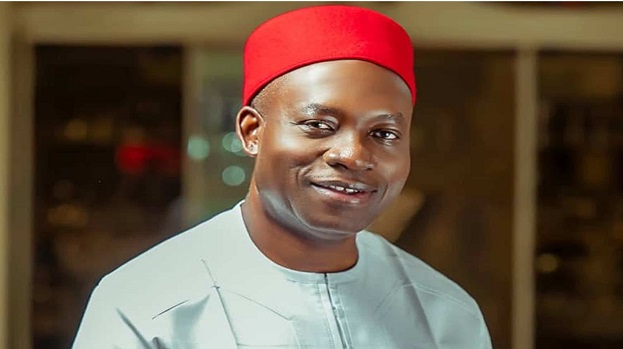
Anambra State will implement pro-rata salary payments for civil servants starting February 2026, targeting chronic Monday absenteeism from the long-running sit-at-home order, Information Commissioner Dr. Law Mefor announced Saturday.

Soludo
Speaking at an Awka briefing after the Executive Council’s end-of-tenure retreat, Mefor said improved security and transport have eliminated excuses for the four-year disruption, which cost the state trillions in lost revenue. “Workers enjoyed full pay despite staying away; now, no work means no pay for that day, calculated over 24 working days,” he stated.
Compliance measures include mandatory Monday clock-in forms, with markets urged to reopen fully amid bolstered security. This builds on a January 22 executive order docking 20% pay from teachers absent on Mondays.
Mefor warned that lost Mondays cripple revenue collection and productivity, rejecting alternatives like Saturday shifts as capitulation to agitators.
News
Stakeholders Demand Stronger Governance and Infrastructure to Drive Tech Adoption @ Lagos AI Summit


As AI adoption accelerates across Nigeria, leaders at the “AI in Action Now” conference 2026 have called for a balance between rapid innovation and strict regulatory governance. The event, held at the Lagos Oriental Hotel, highlighted both the doggedness of Nigerian builders and the risks of unregulated data usage.

Dotun Adeoye, Co-Founder of AI Nigeria, raised alarms over “Shadow AI”, a trend where employees upload sensitive official documents to public AI platforms. He praised the Nigerian Data Protection Commission (NDPC) for its recent aggressive stance, including multi-million-dollar fines against major banks and social media brands.
“Innovation without governance is dangerous. The regulator now has the job of educating players. We are working in partnership with them to ensure players don’t just get fined, but actually understand how to protect data locally rather than storing it abroad, ” Adeoye noted.
Addressing issues of lack of infrastructure to carry AI adoption, Conference Convener Debola Ibiyode admitted that while Nigeria lacks the traditional foundation for AI adoption, the tech community cannot afford to wait.

“The simple answer is we don’t have the infrastructure, but Nigeria has never really had infrastructure to drive anything, and we still thrive, ” Iboyode said, encouraging students and builders to look beyond current limitations. “Once we start to build based on what we have now, it will encourage those who need to provide the infrastructure to do their part. The world will not wait for us,” she insisted.
To bridge this gap, she highlighted the AI Foundry Africa, an incubator designed to mentor ideas into market-ready products.
Meanwhile, speaking to journalists on the sidelines, Biodun Ogunleye, the Lagos State Commissioner of Energy and Mineral Resources, echoed the sentiment that the government’s role is to facilitate the right environment through partnership. He emphasized that data generated from interactions with the government must have long-term value.
“We must ensure that in all facets from production to interaction with government, the tools required to ensure data has value are appreciated,” Ogunleye stated.
He concluded that through private-sector collaboration, the government can focus on its primary functions while leveraging AI to ensure the nation aspires for the future.

LIRS to Invoke NTAA to Recover Unpaid Taxes from Bank Accounts, Others

NIBSS, Others Flag 13,417 Nigerian Fraudsters on Person of Interest Portal

CBN Prepares Fresh Debit Card Rules to Improve ATM Services

First Asset Management Receives Upgraded Ratings from Agusto &Co and DataPro

Nigeria Treats Religious Violence as Attack on State – NSA Ribadu

19 Nigerian Banks Meet CBN Recapitalization Targets Ahead of March Deadline

Jumia CEO says Black Friday Signals Nigeria’s E-Commerce Maturity

Galaxy Backbone Celebrates the Federal Government’s Paperless Civil Service Milestone

DStv Offers Instant Package Upgrade for Customers from January to February

Banks to Impose N50 Stamp Duty on Transfers of N10,000 and Above from January 1




 General News3 days ago
PalmPay User Shares Experience on Fintech Apps to Trust in Nigeria

 News3 days ago
Stakeholders Demand Stronger Governance and Infrastructure to Drive Tech Adoption @ Lagos AI Summit

 General News3 days ago
Nigerians Target Self-Improvement, Business Startups in 2026 Google Data

 News3 days ago
35 Million Nigerians Face Acute Hunger in 2026, UN Warns

 General News3 days ago
How Inside Jobs and Policy Shocks Trigger Nigeria’s Rising Loan Crisis
 E-Financial19 hours ago
First Asset Management Receives Upgraded Ratings from Agusto &Co and DataPro

 News19 hours ago
Anambra Cuts Monday Pay to Kill Sit-at-Home
 General News19 hours ago
Nigeria Treats Religious Violence as Attack on State – NSA Ribadu