

General News
Evolve Restates Commitment to Tackling Global Climate Change by Educating the Girlchild


Evolve, a non-profit organization that focuses on girl-child education, and its lead partner, Polaris Bank have restated their commitment to curbing global warming through intervention in the girl-child education in Nigeria.

The Evolve programme, which was launched in 2020 to address the global challenge of climate change through the education of underprivileged girls, is designed to impact over 50,000 direct beneficiaries and 200,000 indirect beneficiaries in the next five years.
Speaking on the impact of the project, The Managing Director, Pacegate Limited, Mr. Umesh Amarnani, said “The Evolve CSR program aims to ensure girl-child education and empowerment to help curb global warming and make an impact in the community.
“At Pacegate, we are committed to building a more sustainable and responsible environment where every girlchild feels valued, empowered, and can contribute to the society at large.
“We strongly believe that through the schools’ supplies provided, value-based education being taught to school teachers and support received from our sponsors, the girlchild will have access to a higher level of educational opportunities,” Mr. Amarnani added.
Also commenting on the initiative, Polaris Bank’s Group Head, Customer Experience Management & Sustainability, Bukola Oluyadi, said “We recognize that education and youth empowerment are the most significant indicators of social progress.
“Our commitment to these has been the drive for the empowerment of the girl-child and thus the partnership with Evolve. Since 2021, we have partnered with Evolve and adopted several schools across Nigeria to cater for the needs of the girl child.”
Evolve has a clear mandate using S-connect approaches adapted from Heartfulness Institute Hyderabad. Through the S-connect, Evolve initiative reaches out to educational institutions mostly secondary schools across the country by providing their female students with basic school supplies in fulfillment of Evolve’s mission to tackle Climate Change by empowering the girl-child.
Since its inception, Evolve in collaboration with all of its partners has donated school supplies including school uniforms, sandals, notebooks, pens, and bags to over 10,000 female students in 32 schools across 9 states in the country.
In 2022, Evolve also launched Inspire program to specifically impact teachers. Inspire is a value-based education enrichment program that assists educators to develop a heart-centered approach to teaching.
The focus is to enable teachers to take a holistic approach towards student growth using 21st-century styles of learning such as the Heartfulness Way.
Evolve is the CSR arm of ADIPRO Chemicals, executed through Pacegate Limited and PEARL in Nigeria. The Girl Child Education Initiative was launched based on the Project Drawdown Report to address global warming by focusing on educating the girl child.
In the past twenty-five years, the global community has learned that nurturing the ambition of each girl can shape the future of all. Women with more years of education have fewer and healthier children and actively manage their productive health. Education also helps to equip women to face the most dramatic climatic changes.
Asides Polaris Bank, Evolve has received support from other partners to achieve its mission of empowering girls to eventually reduce global warming. These partners include OVH Energy Marketing now NNPC Retail Ltd, Bic and Crownstar who have supported Evolve with school supplies as well as Hill and Knowlton strategies, an international PR consultancy supporting the project with media and publicity.



Nigeria Centre for Disease Control and Prevention (NCDC) has raised alarm over ravage of Lassa fever cases across 18 states and 67 Local Government Areas (LGAs) of the country.

Dr Jide Idris, director-general of NCDC, in statement yesterday, said that Bauchi, Ondo, Taraba, Edo and Benue accounted for more than 80 per cent of confirmed cases recorded during the 2026 peak transmission season.
Idris, described as particularly worrisome the growing infections among healthcare workers, with 28 confirmed cases and three deaths reported so far this season.
NCDC attributed the sustained transmission and rising fatalities to operational gaps at the state level, urging urgent action to strengthen outbreak response and control measures.
According to Idris, field investigations showed most transmissions were occurring in known endemic areas, but weak implementation of established response frameworks had contributed to the continued spread and higher case fatality rate.
He said that gaps identified include infections in general outpatient and maternity settings, poor adherence to Infection Prevention and Control (IPC) protocols, and inadequate pre-positioning of Personal Protective Equipment (PPE).
He added that delayed patient presentation due to financial barriers, inconsistent activation of State Incident Management Systems, weak contact tracing, persistent stigma and poor isolation centre standards were also driving transmission.
Idris emphasised that outbreak response implementation and health service delivery fell primarily under state governments within Nigeria’s federal structure, urging them to strengthen accountability and resource allocation.
He called on affected and high-risk states to urgently activate and closely monitor their Incident Management Systems, ensuring timely coordination and efficient outbreak response at all levels of healthcare delivery.
He also urged the immediate release of response funds, strict enforcement of Infection Prevention and Control (IPC) compliance in public and private health facilities, and continuous availability of PPE and other critical supplies.
The NCDC boss also advocated accelerated financial protection mechanisms to reduce late presentation and high fatality rates, alongside institutionalised rodent control and environmental sanitation measures under a One Health approach.
He advised healthcare workers to maintain a high index of suspicion and adhere strictly to IPC guidelines.
He also urged the public to keep environments clean, prevent rodent entry into homes, store food safely and seek early medical care when symptoms appeared.
Idris noted that Lassa fever was treatable, with improved outcomes when detected early, adding that Nigeria was also responding to other epidemic-prone diseases including Cerebrospinal Meningitis, Diphtheria, Mpox and Cholera.
He reiterated NCDC’s toll-free emergency line, 6232, for reporting suspected cases and obtaining further information
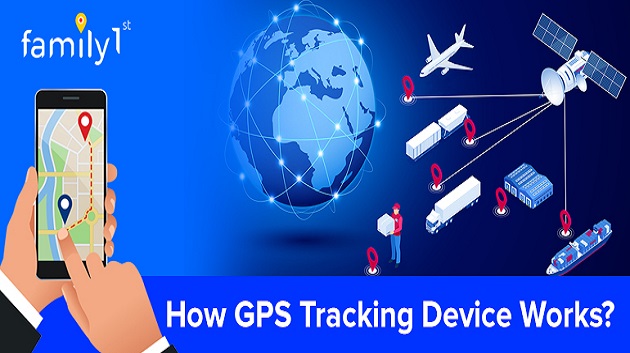
The Lagos State Traffic Management Authority (LASTMA) has deployed a number of real-time digital solutions, including surveillance drones, GPS-enabled patrol vehicles, and automatic incident detection software.

The agency has also established a central command and control centre to reduce emergency response times and improve traffic safety throughout Lagos.
According to the agency, the digital transition will replace manual reporting and fragmented coordination with an integrated, data-driven platform capable of instantaneously detecting, verifying, and dispatching responders to crashes and breakdowns.
According to general manager Olalekan Bakare-Oki, LASTMA, body cameras, mobile data terminals, and toll-free hotlines now feed into a unified operations hub that gives real-time visibility of traffic situations across the state.
Incidents detected by digital surveillance are validated in real time and dispatched to the nearest patrol team using GPS tracking, while officers are instructed via modern communication devices.
According to the agency, the system has eliminated delays caused by poor event reporting and logistical constraints, enabling faster diversions, quicker clearance of accident scenes, and better coordination with medical and security agencies.
Field commanders and rescue teams now operate on synchronised data networks, allowing immediate decisions that reduce secondary crashes and prolonged congestion.
According to LASTMA’s 2025 operational summary, the agency rescued 1,075 people from crash scenes, and impounded 17,169 vehicles for various traffic violations across Lagos through its toll-free hotline.
These figures reflect how timely reporting and coordinated response have already reduced secondary accidents and eased congestion, according to the agency.
It went on to it achieved this with the toll-free reporting system, body cameras, and field coordination networks but with the newly deployed suite of smart technologies, the agency’s impact is poised to multiply.
Bakare-Oki said the upgrade aligns with the state’s smart-city agenda, positioning LASTMA as a technology-enabled public safety agency and laying the groundwork for faster, more reliable mobility management on Lagos roads.

This International Women’s Day 2026, the world is saying “Give to Gain.” PalmPay is turning this message into action by empowering young women with the skills and resources to thrive in today’s fast evolving economy.

The PalmPay Purple Woman 3.0 is a 3-Day Digital Financial & Technology Masterclass created to bridge the gender gap in tech. The program is designed to equip women with practical, job ready skills while also providing job opportunities for career growth.
Launched in 2024, the Purple Woman initiative has impacted 150 women in specialized fields, including Data Analysis, Software Engineering, and Product Management, with learning resources and hands-on skills to launch them into the competitive job market.
From March 5–7, 2026, 100 women aged 18–30 will be selected through a competitive application process to participate in this year’s cohort. Over three immersive days, participants will receive hands-on training from industry experts in digital finance and technology.
And it doesn’t end there.
Ten outstanding participants will secure a 3-6month internship with PalmPay, gaining practical fintech experience that can shape their professional journey.
For participants of this initiative, the Purple Woman Program isn’t just about learning new skills, it’s about building networks, gaining confidence and unlocking bigger opportunities that will positively impact the trajectory of their careers.
For more information about the Purple Woman initiative, visit @PalmPayappng

SEC Revokes Registration of Kensington Agro Trading Limited

NCDC Raises Alarm over Lassa Fever Ravaging 18 States in Nigeria

Lagos Deploys Drones, AI to Boost Traffic Response

Purple Woman 3.0 Is Back, to Empower Women in Tech this IWD 2026

NRS Targets N40trillion in Tax, Royalty Revenue in 2026

Accidental Billionaire Opts for Jail Instead of Returning Money Credited Him by Mistake

Kaspersky Brings more Transparency to Threat Detection with New Hunt Hub

Dr. Cairo Ojougboh Foundation Bolsters Nigeria’s Education Drive with ₦2.7m Student Support

NDPC Commits to Balancing Data Privacy, Protection Information

OADC Lagos Reinforces Commitment to Local Data Hosting and Digital Transformation @ NDPC’s National Privacy Week Summit




 E-Financial3 days ago
Iran-Israel-US Conflict and CBN’s FX Gains: A Stress Test for Nigeria’s Monetary Stability

 E-Financial3 days ago
Mutual Benefits Assurance Reaffirms Full Regulatory Compliance, Enhanced Governance

 General News3 days ago
JAMB Uncovers AI-Driven Fraud Targeting UTME Candidates, Warns Parents

 Telecom2 days ago
Sunil Bharti Mittal Conferred GSMA Lifetime Achievement Award for Transforming Global Telecommunications

 General News3 days ago
SERAP Asks FCCPC to Investigate Google, Meta, Others over Alleged Rights Abuses

 News3 days ago
TeamApt, Awabah Partner to Boost Pension Drive for Nigerians

 News3 days ago
FlashChange CEO, Bidemi Oke, Urges Startups to Build Strong Governance Structures Early

 Telecom2 days ago
Why Digital Trust Matters: Secure, Responsible AI for African SMEs?