

General News
Ex-Governors Have N172Bn Cases of Fraud- Punch

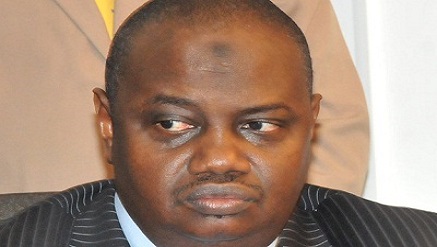
Saturday Punch has revealed that over N172 billion fraud cases are pending against some senators-elect who were formerly governors.
Over 15 ex-governors won senate seats in the March 28 election with many of them having cases of corruption ranging from misappropriation of public funds to money laundering hanging over their necks.
Some ex-governors have been in the senate before the last elections while a fresh set of former governors will be joining them when the new legislature is inaugurated on June 6, 2015 by the President-elect, Gen. Muhammadu Buhari (retd).
According to Saturday Punch, the list of the ex-governors elected as senators, who allegedly have fraud cases against them, whether old or new, include Bukola Saraki, Theodore Orji, Adamu Aliero, Sam Egwu, Joshua Dariye, Danjuma Goje and Abdullahi Adamu.
The immunity clause in Nigeria’s constitution protects the President, vice-president, governors and their deputies from prosecution while in office but even after these public office holders leave office, findings show that anti-graft agencies including the Economic and Financial Crimes Commission(EFCC) have failed to pursue their cases to logical conclusions.
Former Ebonyi State Governor, Dr. Sam Egwu, recently won the parliamentary election to represent Ebonyi North Senatorial District in spite of the corruption charges levelled against him.
Egwu allegedly misappropriated close to N80bn while in office as governor between 1999 and 2007.
He was also said to have left a debt profile of N10bn for his successor.
Also, the former Governor of Nasarawa State, Senator Abdullahi Adamu, who was in office between 1999 and 2007, became a senator four years later. Since that time, Adamu has been returned to the position after subsequent elections.
However, his record with the EFCC is also allegedly unclean but that is as far as it goes.
In February, 2010, Adamu was arrested by the EFCC for alleged embezzlement of public funds. On March 3 of the same year, he was arraigned in court alongside 18 others on a 149-count charge of fraud involving over N15bn, but the case has continued to drag in court with no headway.
Interestingly, in an interview in February 2011, as the Peoples Democratic Party’s candidate for Nasarawa West Senatorial seat, Adamu dismissed the EFCC case against him, describing it as “mere allegations.”
He boasted that the EFFC case would not affect his candidature and truly after the poll, Adamu emerged winner, beating his closest rival, Gen. Ahmed Aboki (retd).
Similarly, the former Gombe State Governor, Senator Danjuma Goje, and four others, were first arraigned in court on October 17, 2011 on conspiracy, fraud and money laundering charges. He allegedly embezzled N52bn public fund.
Senator Bukola Saraki, who is currently vying for the seat of the Senate president, has been a subject of investigations by the Special Fraud Unit of the Police following allegations of an N11bn loans scam preferred against him.
The said loans were allegedly secured by Saraki between 2004 and 2009 when he was the governor of Kwara State.
The SFU said the loans were used to purchase shares of blue chip companies and choice property in Lagos and Abuja, some of which were used to secure the loans.
In addition, Saraki has allegedly been receiving N100m monthly as an illegal pension from the current government of Kwara State.
Adamu Aliero was the Governor of Kebbi State between May 1999 and May 2007. Between December 2006 and August 2008, the EFCC and the Independent Corrupt Practices and Other Related Offences Commission received three petitions asking the anti-graft agencies to investigate Alierio over N10.2bn fraud. It was, however, learnt that the allegations were not investigated.
But following an ex-parte application by an indigene of the state, Alhaji Sani Dododo, for an order of mandamus compelling EFCC and ICPC to investigate the allegations, Justice Adamu Bello summoned Aliero to appear before it. The judge also summoned the two anti-graft agencies to explain why they failed in their statutory duties to investigate Aliero for alleged fraud.
Aliero will be one of the 109 senators that will be inaugurated on June 6.
On July 13, 2007, the EFCC arraigned a former Plateau State governor, Joshua Dariye, on a 23-count charge bordering on money laundering and other corruption charges.
The EFCC accused Dariye of diverting about N1.2bn of the state’s ecological funds into the account of Ebenezer Ratnen Venture, one of the companies through which the former governor allegedly siphoned public funds.
In spite of the allegations against Dariye, he won a senatorial seat in the 2011 polls. He also pleaded not guilty to the charges and went ahead to challenge the competence of the charges instituted against him and the jurisdiction of the Federal Capital Territory High Court to entertain the suit.
But in a unanimous judgement by a five-man Supreme Court panel on February 27, 2015, the court ordered the accused to return to the FCT High Court in Gudu, Abuja, to face his trial. Dariye’s interlocutory appeal had stalled the trial for eight years.
Justice Sylvester Ngwuta, who delivered the lead judgement, described the scenario played out in the entire case as a “sad commentary” on the nation’s fight against corruption.
The outgoing Governor of Abia State, Theodore Orji, was elected on May 29, 2007 and re-elected on April 26, 2011. He was formerly a career civil servant, serving as the Chief of Staff to his predecessor, Chief Orji Uzor Kalu.
Meanwhile, during his first tenure as governor, there were petitions to the ICPC to investigate Orji for money laundering allegations brought against him.
Since Orji could not be prosecuted at the time, ICPC detained the Accountant-General of the state, Mrs. Bridget Onyema, for two days and later granted her administrative bail.
The arrest was in connection with a series of petitions sent to the commission to investigate the whereabouts of about N1.9632bn allegedly transferred under the guise of travel estacodes to the governor, his deputy, their wives and families, as well as 23 other persons who swelled the governor’s entourage to the World Igbo Congress held in Tampa Bay, Florida, the United States, in 2008.
In 2015, the Budget office approved a sum of about N9.4bn for the EFCC for the year.
The agency’s Chairman, Ibrahim Lamorde, according to reports, lamented that the budget was a decline from the about N12.2bn appropriated for the agency in 2014.
The budget covers capital expenditures, personnel cost and overhead cost.
In 2014, the agency allocated N284.6m to hire competent and reputable lawyers to pursue the trial of former governors being prosecuted to a logical conclusion.
It will be recalled that an Ijaw leader, Chief Edwin Clark, recently said the EFCC had lost focus in its fight against corruption in the country.
The former Federal Commissioner for Information stated this against the background of the claim by the President-elect, Gen. Muhammadu Buhari (retd.), that his fight against corruption would start from May 29, 2015 when he would have been sworn-in as the President.
Clark said the implication of Buhari’s statement was that those who were facing corrupt charges or accused of corruption before May 29 would be pardoned.
When one of our correspondents contacted the Head of Media and Publicity of the Economic and Financial Crimes Commission, Mr. Wilson Uwujaren, on Thursday, he said that it was not the practice of the commission to give notification to those to be investigated.
He said only those who are entitled to enjoy immunity as provided for in the constitution would be excluded from prosecution.
Uwujaren said, “It is not the commission’s practice to give public notice ahead of investigation of persons, alleged to have committed financial crimes.
“Be assured that only persons that are constitutionally vested with immunity from prosecution by virtue of the office which they hold are excluded from prosecution by the EFCC for the period they are in such offices.”
Orji, however, said he was not afraid of any anti-graft agency “whether the EFCC or the ICPC”.
Orji, who spoke through his Special Adviser on Political Matters, Chief Ama Abraham, said he was not losing sleep over petitions of money laundering allegations against him during his first tenure.
Abraham said, “The governor is not afraid to render account of his stewardship as the governor of Abia State. The governor believes in the rule of law.”
In a telephone interview with one of our correspondents, Egwu also denied that he misappropriated N80bn during his time as Ebonyi State governor. He also denied that he left a debt profile of N10bn for his successor.
The former governor said, “Whoever is making that allegation must be suffering from a mental problem, he must be suffering from malaria that has refused to be cured.
“Instead of making allegations in the media, they should know the appropriate places to go to. They should go to the police, or the EFCC, (or) to the ICPC.”
Asked if the allegations will affect his duties as a senator, Egwu said, “Let them go ahead – constitutionally I am not under immunity as a senator.”
The Special Assistant to Saraki on Media Affairs, Mr. Bankole Omishore, said on Friday that the police and the office of the Solicitor-General of the Federation had since 2012 absolved his boss of any criminal allegation.
He also said that there was no case currently involving Saraki and any anti -graft agency.
Omishore told one of our correspondents in Abuja that the allegation of financial fraud was being played up against Saraki by his detractors.
Efforts to reach other elected senators like Aliero, Dariye, Goje and Adamu mentioned in the report on their telephones were not successful. Text messages sent to their telephones were also not replied.
Meanwhile, some Senior Advocates of Nigeria on Friday urged the anti-corruption agencies and the incoming Muhammadu Buhari administration to follow through the pending corruption charges instituted against the former governors who are now senators-elect.
The SANs – Prof. Itse Sagay, Dr. Joseph Nwobike, Messrs Femi Falana and Yusuf Ali- said the anti-corruption agencies, particularly, the EFCC, had no excuse for failing to ensure that the cases were brought to logical conclusion.
Sagay said with the election of Buhari as President, EFCC should be encouraged to perform its duties without any fear of victimisation.
He said, “They (the corruption cases against the former governors) are EFCC matters. There are institutions set up to do certain jobs. So EFCC should do its job.
“Buhari cannot be doing everything. The election of Buhari should encourage them that when they are doing their job, nobody will victimise them.”
Falana said alleged impunity which was responsible for indefinite adjournment of the corruption cases against the former governors must stop.
On his part, Ali said the election of the former governors into the Senate did not confer any immunity on them.
He said the anti-graft agencies had no excuse not to proceed with the cases against such senators-elect.
Ali said, “A criminal offence does not die until the person accused dies. An allegation that you have committed a crime is going to be there until the person that is accused dies.”
According to Nwobike, the former governors now senators-elect with pending criminal charges against them deserve no special treatment from the anti-corruption agencies.
He said, “They do not deserve any special consideration. Being elected into the senate does not confer any immunity on them.”
The Publicity Secretary of the Pan-Yoruba organisation, Afenifere Renewal Group, Kunle Famoriyo, said nobody should be above the law.
He said, “It is only in Nigeria that we belabour things like this; once you run foul of the law in a modern society, you have to face the consequences. So, there is nothing special about this if we really want a corruption-free country.
“After all, they are no longer protected by immunity; it’s over. They should face the consequences like every other Nigerian. Nobody should be regarded as being more superior than the law of the land.”
He called for accelerated hearings on cases by the judiciary, saying, “It’s when cases are delayed for so long that people come to try to influence the law, knowing the African society where we see one another as brothers and sisters. Everything is in the hands of the judiciary.”


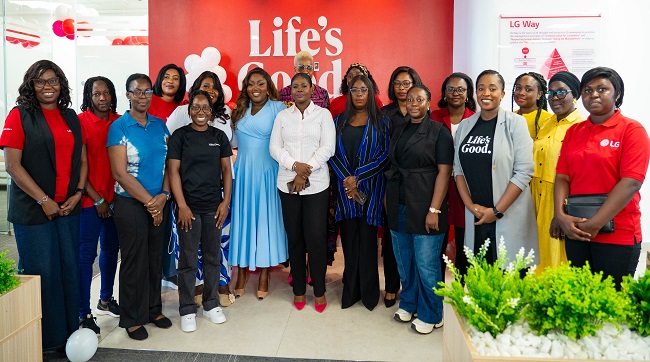
LG Electronics has reinforced its commitment to gender inclusion and women’s empowerment with the successful hosting of its 2026 Women’s Month event, themed “Women Who Power Progress,” at its Lagos office.

The event brought together accomplished women from diverse industries for a thought‑provoking panel discussion that explored their personal journeys, career-defining moments, and the inspiration behind their success in traditionally male-dominated and highly competitive fields.
The distinguished panel featured award‑winning filmmaker Mrs. Biodun Stephen, Mechanical Engineer Engr. Adeola A. Adeleke, Interior Design Leader Dr. Jennifer Chukwujekwe, and MEP Engineer Engr. Moyosore Onabolu. The session was expertly moderated by actress and entrepreneur Blessing Obasi‑Nze, who guided candid conversations around ambition, resilience, and purpose.
Throughout the discussion, panelists shared compelling stories of perseverance, the challenges they overcame, and the values that shaped their professional paths. They also offered practical advice to women navigating their careers, emphasizing the importance of resilience, continuous learning, self-belief, and mentorship as key drivers of long-term success.
A major highlight of the event was the keynote address delivered by Engr. Dr. Funmilade Akingbagbohun, the first female National Chairman of the Nigerian Institution of Mechanical Engineers (NIMechE), Mechanical Engineer, and STEM Advocate. Her keynote address tagged “Women Building, Fixing, Innovating, and Powering the Future of Technology,” delivered a compelling call to action for women, organisations, and society at large.
“Women are building, fixing, innovating, and powering the future of technology. As we mark International Women’s Day, my call to action is simple but urgent: rise, build, break barriers, and lift others along the way,” she said.
“To organisations like LG Electronics, continue to foster inclusive environments where women can thrive, lead, and innovate. To every woman here, be bold, pursue excellence, and never underestimate your potential. To the next generation, embrace STEM careers with confidence and courage. And to all of us, support one another because success is more meaningful when it is shared.”
“While we celebrate progress, we must acknowledge the challenges that still exist, from gender stereotypes and underrepresentation in leadership to the pressure of balancing multiple roles. Yet today’s woman is competent, resilient, and visionary. We are no longer waiting for opportunities; we are creating them, claiming them, and excelling in them. When women rise, organisations grow, and society progresses. There is no limit to what we, as women, can accomplish.”
Speaking at the event, the Managing Director of LG Electronics, Mr. Hyoung Sub Ji, underscored the company’s belief in the transformative power of inclusion.
“At LG Electronics, we believe that empowering women is not just a social responsibility, it is a catalyst for innovation, growth, and sustainable progress. Creating platforms where women’s voices and experiences are celebrated is essential to building a more inclusive future,” he said.
Held in a vibrant and engaging atmosphere, the event also provided a valuable networking platform for attendees to connect, celebrate achievements, and exchange ideas in a relaxed and inspiring environment.
In line with the broader International Women’s Day theme, “Give to Gain,” LG Electronics used the occasion to reaffirm its belief that investing in women strengthens communities, organisations, and society at large.
Through initiatives like “Women Who Power Progress,” LG Electronics continues to champion diversity and inclusion, celebrating women who are not only breaking barriers but actively shaping the future and powering progress across industries.

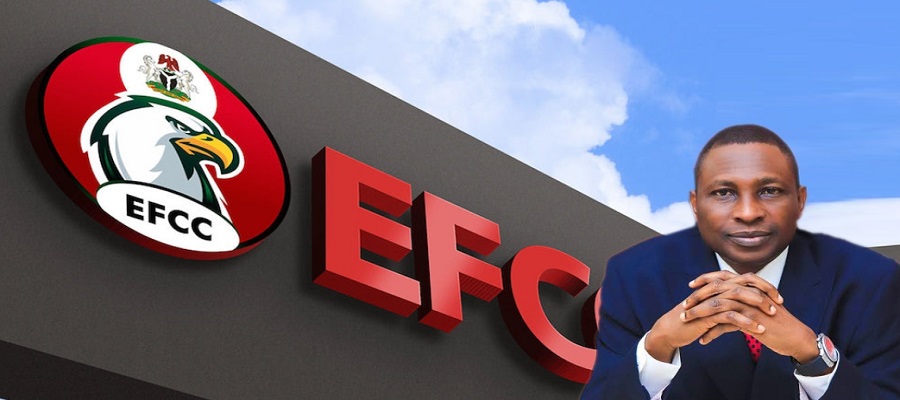
Economic and Financial Crimes Commission (EFCC) has warned of rising cryptocurrency-related crimes, revealing that illicit digital currency transactions exceeded $160 billion globally in 2025.

Ola Olukoyede, chairman, raised the concern during the inauguration of the United Nations Office on Drugs and Crime Country Programme for Nigeria (2026–2030) in Abuja.
Olukoyede, warned that digital currencies such as Bitcoin are increasingly being exploited by criminal networks to move funds across borders undetected.
According to him, advances in technology, weak regulatory frameworks, and gaps in global financial systems have created fertile ground for cyber-enabled financial crimes.
The anti-graft agency boss stressed that tackling cryptocurrency crime required coordinated national strategies, stronger institutions, and intelligence-driven enforcement.
According to him, the new UNODC programme comes at a critical time when Nigeria and the global community are facing growing threats from organised crime, cybercrime, and illicit financial flows.
Olukoyede described the initiative as a strategic platform to strengthen the rule of law, improve the criminal justice system, and protect citizens from financial and violent crimes.
Musa Aliyu, chairman of the Independent Corrupt Practices and Other Related Offences Commission (ICPC), in his comments, called for stronger inter-agency cooperation.
Aliyu said Nigeria faced interconnected threats, including violent extremism, smuggling, organised crime, and illicit financial flows, warning that no single agency could address them alone.

Federal government has awarded N50 million each to 45 students selected from 65 finalists drawn from public and private tertiary institutions nationwide under the Student Venture Capital Grant (S-VCG).

Tunji Alausa, minister of Education, unveiled the initiative at the weekend at the United Nations Development Programme Innovation Hub in Ikoyi, Lagos, describing it as a bold step toward positioning Nigerian youth as drivers of global innovation.
Alausa said the programme marked a significant shift in education policy, aimed at empowering students through innovation, entrepreneurship, and skills development. He noted that the grant offers equity-free funding, mentorship, incubation, and access to digital tools.
He explained that the beneficiaries emerged after a rigorous selection process involving over 30,000 applicants from more than 400 tertiary institutions across the country, culminating in a three-day bootcamp and pitch session before industry experts.
According to the minister, the initiative is designed to transform tertiary institutions into hubs of innovation and economic development, enabling students to move from ideation to commercialisation and become job creators.
“Today is not just another programme event. We are activating a new future for Nigerian students where great ideas are nurtured into impactful solutions,” he said.
Also speaking, Suwaiba Ahmad, minister of State for Education, described student entrepreneurship as a critical national strategy for job creation and economic growth. She emphasised the need for institutions to move beyond theory and support students in translating ideas into viable enterprises.
Similarly, Bosun Tijani, minister of Communications and Digital Economy, commended the initiative, urging beneficiaries to focus on building sustainable and impactful solutions rather than pursuing short-term gains.
He advised students to adopt consistency and long-term thinking, noting that small, sustained efforts could lead to meaningful innovation and societal impact.
In her goodwill message, Elsie Attafuah reaffirmed the commitment of the United Nations to supporting Nigeria’s innovation ecosystem.
She encouraged beneficiaries to refine their ideas, respond to market needs, and contribute meaningfully to national development through innovative solutions.
The minister acknowledged key partners, including the UNDP, Google, and the Bank of Industry, for their support in implementing the initiative and expanding opportunities for young innovators across Nigeria.

LG Electronics Celebrates Women Who Power Progress @ 2026 Women’s Month Event

EFCC Waxes Worriedly over $160Bn Crypto Crime Losses

Dangote Refinery Debunks Speculations on IPO

FG Awards N50m Each to 45 Students under S-VCG

NGX REGCO Fines 5 Firms N291m for Market Manipulation

Spotify’s Loud & Clear Report Reveals Over ₦60Bn Revenue for Nigerian Artists in 2025

Madonna University Taps Tech Guru Adote for Strategic Board Role

China Threatens to Shut Nigeria’s Satellite Over $11.44m Unpaid Debt

Jumia Tech Week 2026 Begins with Tech Deals on Smartphones, Electronics, and Everyday Technology

FCCPC Bans Lagos ‘No Refund’ Policy, Vows Fines and Shutdowns for Traders




 E-Financial2 days ago
CBN bars large‑ticket loan defaulters from banking services in tough new crackdown

 General News2 days ago
ARN Rejects Medical Bill over Attempt to ‘Scrap’ Profession

 Telecom2 days ago
NIGCOMSAT Supports Startups Growth with the Launch of Accelerator 3.0

 Telecom2 days ago
FG Unveils Digital Economy Research Fund Scheme

 News2 days ago
Meningitis Kills a Quarter Million People a Year -Study

 News2 days ago
Stakeholder says AI is Crucial to Nigerian Data Centres Amid Persistent Grid Collapse
- General News2 days ago
Nigeria Advances Digital Governance as NITDA takes over NGEA Portal

 General News2 days ago
Zarttech Reflects on Its Role in Changing Global Perceptions of Africa