

General News
FG says 4m MSMEs Benefited from N150bn Funding

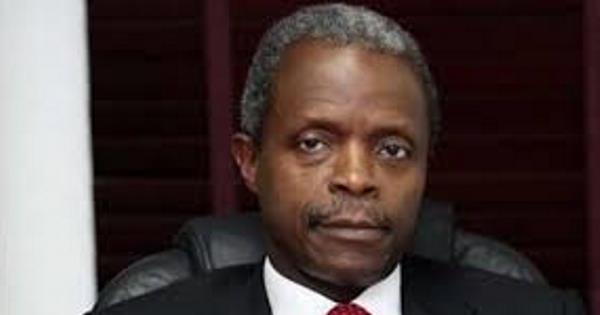
More than four million Micro, Small and Medium Enterprises have benefitted from various schemes of the Federal Government, amounting N150 billion, targeted at uplifting the sub-sector in the country.

Mr. Laolu Akande, Senior Special Assistant to the Vice President on Media and Publicity, in a statement, said beyond providing interest-free microcredit loans to petty traders, the various social intervention schemes of the Buhari administration have made significant impact in the lives of millions of ordinary Nigerians.
He quoted Professor Osinbajo, as saying: “This is a shining case study of what President Muhammadu Buhari strongly believes: that Nigerians will solve Nigeria’s problems. This is an example of what we can achieve when we unleash the best of our people – especially our young – on the toughest of our challenges, and give them the free-hand to deliver results.”
Osinbajo spoke at the launch of a Bank of Industry Business Growth Platform.
The BOI Growth Platform includes interventions schemes such as the renowned Government Enterprise and Empowerment Programme (GEEP) loans (MarketMoni, FarmerMoni and TraderMoni) – regarded as Africa’s largest fully-digitized micro-credit scheme, the MSME Survival Fund under the Economic Sustanaibility Plan (ESP), the North-East Rehabilitation Fund, the recently launched World Bank $750million NG-CARES programme, and state-based interventions, among others.
He said: “This demographic was far too important to ignore. We had to start solving for them, especially having been left far behind historically,” a reason he noted led to the implementation of intervention schemes through the BOI’s Growth Platform for MSMEs.
“What might also not be obvious is the sheer scale of impact that has been achieved with these programmes, as over four million Micro, Small and Medium Enterprises have been direct beneficiaries of the over N150billion deployed in the past five years.
“57 percent of these MSMEs are owned by Nigerians below 35 years of age, and close to 60 percent of the beneficiaries are women. What is even less glaring is that the team of Nigerian professionals behind this work is largely young, with an average age of 28 years old.”
Highlighting the transparency and impact of these microcredit schemes, particularly the Government Enterprise and Empowerment Programme (GEEP loans – MarketMoni, FarmerMoni and TraderMoni) under the SIPs, Prof. Osinbajo recalled his interaction in 2018 with a petty trader, Jafar Abubakar, one of the Tradermoni beneficiaries at Abubakar Gumi Market in Kaduna when he visited to launch the scheme in the State.
He narrated: “Jafar Abubakar, who trades in ginger and garlic was one of 5,000 or so traders who had just received N10,000 to advance his business in that market. What struck me was what he said about how he was selected to get the credit.
“He said ‘I just applied. I didn’t know anybody. They came here and captured my data last week and I got the alert yesterday.’”
The VP added that Jafar then “showed me the alert on his phone. Stories like Jafar’s have become all too familiar to me over these years. It is a consistent tune I hear as I engage thousands of beneficiaries of our intervention programmes.”
Indeed, the TraderMoni scheme, which provides N10,000 interest-free & collateral free loans to petty traders, mostly with an inventory of less than N5,000, had made huge positive impact nationwide. This includes enhancing the small businesses of beneficiaries, improving their families and contributing to the informal economy.
“This is perhaps for me one of the most satisfying things about the way our social intervention schemes are deployed. That there is a platform that can process applications from potential beneficiaries, pay out credits or other benefits, maintain auditable records seamlessly. It is those people and infrastructure that make this happen that we are celebrating today,” Prof. Osinbajo noted.
Osinbajo further highlighted the nationwide impact of the Administration’s Social Investment Programmes, which he noted was the “most ambitious social intervention project in Nigeria’s recent history, with a series of people-centric programmes.”
“This is a journey that only began as an idea six years ago: that we can build systems that will serve everybody fairly and justly and bring credibility to government programmes. One of the biggest barriers we identified was the ability to reach people directly, capture and digitize their information (even if they are illiterate) and process a benefit to them directly in a way that is transparent to all. Our vision set out to solve this.
“For some programmes, the everyday Nigerians were young graduates who would benefit from a direct stipend and employment placement from the government. For others, it would be pupils for whom a reliable meal per day would make the difference between staying enrolled in school or skipping school to earn money for that meal.”
Prof. Osinbajo also praised the infrastructure and transparency behind the BOI Growth Platform schemes. For instance, he recalled his visit to the Growth Platform’s Command Centre, which now has “22,000 agents, living across all LGAs in Nigeria and equipped with its proprietary mobile technologies, receive mandates to capture and digitize businesses eligible for its growing suite of programmes.
“Every detail of each business is trackable centrally at the Bank of Industry, down to biodata, geolocation, images and facial IDs of every micro, small and medium entrepreneur where applicable. This has greatly simplified the profiling and decision-making processes that have allowed for direct outreach and impact on Nigerian MSMEs at tremendous scale. And this is being done with entirely home-grown solutions and an ecosystem of institutions, donor partners, service providers and technology companies in Nigeria.”
The Vice President also commended the Managing Director of the Bank of Industry, Mr. Olukayode Pitan; as well as the BOI Growth Platform team led by its Executive Director, BOI, Toyin Adeniji; with Uzoma Nwagba as its Chief Operating Officer.
According to the VP, “they have brought to bear the best of experience and bold thinking, the depths of innovation and youth, and a detailed understanding of the Nigerian spirit, to build an operation and impact that have become a national pride. The over four million micro, small and medium enterprises impacted till date, and the several more to come, are a direct testament to their hard work.”
Adeniji and Nwagba are the co-authors of the “Aid for Productivity” report, which they formally presented at the launch.
The VP also applauded pioneering partners, particularly the Bill and Melinda Gates Foundation for providing the much-needed early support to the Bank of Industry to build this operation to the large scale it is now.
In his remarks, the BOI Managing Director, Mr. Olukayode Pitan, restated the impact of its programmes, noting how programmes such as GEEP have won several local and international awards, including the award at the 2019 African Bankers’ Awards as the most impactful Financial Inclusion program in Africa.
The event also featured closing remarks by representatives of BOI partners: including Mr. Ahmed Rostom, Senior Financial Sector Specialist, World Bank; and the country director, Bill and Melinda Gates foundation, Dr Jeremie Zoungrana.
Prof. Osinbajo also commended the commitment of Nigerian financial institutions, technology companies, service providers and programme partners who he said “have given the best of their expertise to this work over the years.”


Kashifu Inuwa, the Director General of the National Information Technology Development Agency (NITDA), has called for a fundamental shift in Kano State’s economic strategy, urging stakeholders to embrace innovation, technology and collaboration as the drivers of growth in the 21st century.

Speaking at the Kano Startup Weekend, Inuwa acknowledge Kano’s long-standing reputation as the commercial nerve centre of Northern Nigeria and the wider Sahelian region, noting that its history of trade, enterprise and human capital provides a solid foundation for future growth.
He emphasised that while these strengths powered Kano’s success for centuries, the modern economy now offers even greater opportunities through innovation and technology.
He described innovation as the process of transforming ideas into impactful solutions through commercialization, stressing that when ideas are effectively deployed, they create value, solve societal challenges and generate sustainable economic growth. He noted that Kano’s large market, strategic location and vibrant entrepreneurial culture place it in a strong position to take advantage of innovation-driven opportunities.
According to him, “Innovation is the process of taking an idea from inception to impact. Invention on its own is a cost centre, but when you commercialise an idea, when you turn it into a product or service that solves a real problem and creates value, that is when you begin to drive economic growth and inclusion.”
He noted that the state hosts numerous degree-awarding institutions across federal, state and private ownership, providing a strong base for human capital development. However, he expressed concern that these institutions often operate in isolation from industry, with research outputs rarely translating into commercial or industrial applications.
He explained that innovation does not happen in silos and stressed the need for a strong, interconnected ecosystem that brings together academia, industry, startups, entrepreneurs and government.
According to him, universities should conduct research informed by industry needs, industries should leverage research to improve productivity and competitiveness, and startups should serve as the bridge that converts ideas into market-ready solutions.
He further encouraged entrepreneurs to leverage technology to build businesses that can grow beyond local markets, explaining that innovation-driven enterprises have the power to scale rapidly, create jobs and position Kano competitively at both national and global levels. According to him, digital platforms and emerging technologies now make it easier for startups to reach wider markets and develop solutions that were previously unimaginable.
“You can start your business here in Kano, but your thinking must be global from day one. Technology has removed barriers. With the right skills and platforms, a startup in Kano can build solutions that serve not just Nigeria, but the world,” he noted.
Highlighting NITDA’s ongoing interventions, the Director General outlined the Agency’s commitment to building national innovation capacity through targeted human capital development programmes. He cited the Digital Literacy for All (DL4ALL) initiative, which aims to equip Nigerians across all segments of society with essential digital skills, and the 3 Million Technical Talents (3MTT) programme, designed to produce a pipeline of globally competitive technical professionals in areas such as software development, data analysis and emerging technologies.
He said, “Through DL4ALL, we are ensuring that Nigerians at all levels have the basic digital skills needed to participate in the digital economy, while 3MTT is deliberately building a pipeline of globally competitive technical talents who can drive innovation, create jobs and attract investment.”
He explained that these programmes are key pillars of President Bola Ahmed Tinubu’s Renewed Hope Agenda, which prioritises skills development, innovation, job creation and inclusive economic growth as pathways to national prosperity. According to him, empowering Nigerians with digital and technical skills is essential for building a resilient economy capable of competing in the global digital landscape.
“President Tinubu’s Renewed Hope Agenda is about investing in people, empowering them with relevant skills and creating opportunities for inclusive growth. At NITDA, we are using digital skills and innovation as tools to translate that vision into real economic impact for Nigerians,” he said.
Inuwa urged all stakeholders in Kano to work together to build a functional innovation ecosystem that can unlock the state’s vast potential. He expressed confidence that with the right mindset, strong collaboration and sustained investment in digital skills and innovation, Kano can reclaim its historic leadership role and emerge as a major innovation and entrepreneurship hub in Nigeria and beyond.
General News
Sterling Bank Renewable Energy Colloquium Urges Stakeholders to Unlock Nigeria’s Clean Energy Potential


Sterling Bank Limited on Monday convened stakeholders in the renewable energy industry to explore strategies for accelerating Nigeria’s transition to clean energy and boosting economic growth.

L-R: Mr. Ayo Ademilua, President, Renewable Energy Association of Nigeria; Dr. Jekwu Ozoemene, Group Executive, The Alternative Bank; Mr. Biodun Ogunleye, The Honourable Commissioner, Lagos State Ministry of Energy and Mineral Resources; Mr. Dele Faseemo, Group Executive, Coprporate and Investment Banking, Sterling Bank; Engr. Bem Samuel Anyangeuor, Representative, Honorable Minister of Power and Mr. Oluwaseyi Okunnuga, Group Head, Renewable Energy & Sustainability Finance, Sterling Bank at the just concluded Renewable Energy Colloquium held in Lagos recently.
The colloquium, themed “Beyond the Grid: Unlocking New Frontiers in Renewable Energy”, was held in Lagos and brought together policymakers, financiers, and industry leaders to deliberate on priority areas for action.
In his opening address, Managing Director and Chief Executive Officer of Sterling Bank, Mr. Abubakar Suleiman, represented by Mr. Dele Faseemo, Group Executive, Corporate and Investment Banking, said the bank would focus on regulation and financing to expand access to energy.
He noted that energy access remained critical to supporting economic growth and achieving Nigeria’s ambition of building a one trillion-dollar economy.
Delivering a keynote address titled “Scaling Electrification in Nigeria: The REA Impact”, Managing Director of the Rural Electrification Agency (REA), Dr. Abba Aliyu, represented by Mr. Abba Hayatudden, said Nigeria required about 26 billion dollars to bridge its energy deficit.
Aliyu explained that the energy transition strategy integrates grid, mini-grid and off-grid technologies to achieve universal, reliable and sustainable energy access while aligning with national development and climate goals.
Minister of Power, Mr. Adebayo Adelabu, represented by Engineer Samuel Ayangeaor, commended Sterling Bank for convening the dialogue.
He said renewable energy and rural electrification were central to the Federal Government’s Renewed Hope Agenda.
“The Ministry of Power has continued to expand electricity access to underserved communities to drive economic growth, foster industrial activity and create jobs across the nation,” Adelabu said.
Lagos State Commissioner for Energy and Mineral Resources, Mr. Biodun Ogunleye, highlighted the state’s efforts in renewable energy, including the ongoing two-gigawatt grid-scale solar project.
He described it as the most ambitious energy transformation ever undertaken by the state.
Chief Executive Officer of Sterling One Foundation, Mrs. Olapeju Ibekwe, urged participants to move beyond communiqués and act with intention to deliver meaningful impact.
The colloquium featured panel sessions on financing and scaling green energy solutions in Africa, among other discussions.

Cellulant, a leading Pan-African payments company enabling seamless digital transactions across Africa, has appointed Mr. Freddie Oduro as its new Country Manager for Ghana.

Mr. Freddie Oduro, New Country Manager for Ghana.
Freddie’s appointment is a key step in Cellulant’s broader strategy to deepen its presence in priority markets by accelerating the acquisition of in-country enterprise businesses and strengthening its position as the payments partner of choice in Africa.
Freddie brings over a decade of commercial and strategic leadership experience in the telecommunications and financial services sectors, with expertise in sales, business operations, and market expansion.
In his new role, he will drive merchant acquisition, strengthening partnerships, oversee collections and payout operations, while ensuring strong internal controls and regulatory compliance.
He joins Cellulant from Payaza and previously served as Sales Director at Cellulant, where he helped significantly expand the company’s footprint in Ghana.
Cellulant has been powering payments in Ghana for leading brands in sectors like e-commerce, utilities, oil and gas and retail, helping them offer their customers a wide range of secure digital payment options.
“We are happy to welcome Freddie back to the Cellulant family,” says Richard Gesimba, Chief Revenue Officer at Cellulant. “Ghana remains a critical market for us, with immense potential driven by rising digital payments adoption.
“As we sharpen our focus on in-country enterprise customers, Freddie’s leadership and industry insight make him the ideal person to steer our Ghana operations.”
The appointment comes at a transformative time for the company. Following a strategic shift between late 2023 and early 2024, focused on streamlining operations, doubling down on enterprise payments, and strengthening customer intimacy, Cellulant achieved profitability in 2024 and continues to build on this momentum.
The company now processes close to 4.5 million transactions daily for businesses across Africa, reinforcing its position as a fintech leader.
“I am honoured to return to Cellulant and lead the Ghana team at such a defining moment,” says Freddie, Country Manager for Cellulant Ghana. “Ghana presents a tremendous opportunity.
“We will ramp up our efforts to sign on more local merchants, strengthen our compliance and control frameworks, and introduce innovative solutions like Tingg Edupay, our automated school fee management solution that eliminates reconciliation delays by validating payments in real time and instantly updating student accounts.
“We will build on Cellulant’s strong foundation to deliver real value, reliability, and economic impact.”
Ghana’s digital payments sector continues to grow steadily, supported by increased mobile money usage and a progressive regulatory environment. Between January and October 2025, the value of mobile money transactions hit about GH¢ 3.6 trillion, up sharply from GH¢ 2.37 trillion in the same period of 2024.
Registered mobile money accounts now exceed 79 million, demonstrating strong consumer and business confidence in digital financial services and in turn creating many opportunities for payment innovation.
This leadership appointment underscores Cellulant’s commitment to building a resilient, high-performance organisation geared towards playing a pivotal role in the next era of Africa’s digital economy.
Looking ahead to 2026, Cellulant plans to further enhance the user experience on its payment platform, Tingg, and expand its footprint across Ghana.

SiBAN New Executive Council to Champion Vision for Nigeria’s Digital Economy

NITDA DG Calls for Innovation-Led Economic Rebirth @ Kano Startup Weekend

Sterling Bank Renewable Energy Colloquium Urges Stakeholders to Unlock Nigeria’s Clean Energy Potential

Tax Reform or Financial Exclusion? The Trouble with Mandatory TINs

APC National Chairman Appoints Mr. Abimbola Tooki as Special Adviser on Media

Nigeria Records Highest Weekly Cyberattacks in Africa — Report

Hackers Breach Phones of Dangote and Otedola, Demand Ransom

Cyber Tsunami Hits Nigeria as Breaches Surge 1,047%, esentry Q3 Report Reveals

MTN Nigeria Has Invested Over ₦32.23 Billion in National Priorities Through Its Foundation

FG Lists Bank Charges Nigerians Will Stop Paying from January 2026




 E-Financial2 days ago
Supreme Court Clears Fidelity Bank in ₦225bn Sagecom Saga

 E-Financial2 days ago
Preventing Financial Crimes Amid Mounting Insecurity: Why Following the Money is Now a Survival Imperative

 E-Financial2 days ago
Union Bank Clinches Top Workplace Practice Honour at Sustainability Awards

 Broadcasting1 day ago
Davido, Babajide Sanwo-Olu, Karl Toriola, Others To Be Honoured At The Most Influential People of African Descent Awards In Lagos

 Telecom2 days ago
NITDA Charts Path for Kano as Innovation Hub

 General News2 days ago
Cellulant Taps Freddie Oduro to Lead Enterprise Payments Expansion in Ghana
 News13 hours ago
SiBAN New Executive Council to Champion Vision for Nigeria’s Digital Economy
 E-Financial13 hours ago
Tax Reform or Financial Exclusion? The Trouble with Mandatory TINs