

E-Financial
Fidelity Bank Gets Shareholders’ Approval to Increase Share Capital

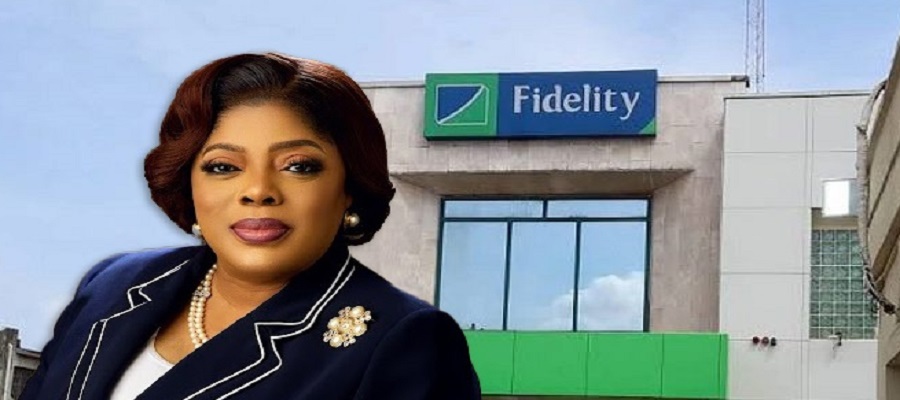
Fidelity Bank Plc has secured shareholders’ approval to proceed with the second phase of its capital-raising initiatives, following the successful completion of the first phase, which saw its Public Offer and Rights Issue significantly oversubscribed.

Nneka Onyeali-Ikpe, managing director and chief executive officer, Fidelity Bank,
This development also includes an increase in the bank’s issued share capital from N26.7 billion to N36.7 billion, reinforcing its financial base as it progresses toward meeting the Central Bank of Nigeria’s (CBN) N500 billion minimum regulatory capital requirement for banks with international authorisation by March 31, 2026.
In a notice filed with the Nigerian Exchange Limited (NGX), Fidelity Bank disclosed that the approvals were granted during an Extraordinary General Meeting (EGM) held on February 6, 2025.
Shareholders unanimously endorsed the creation of an additional 20 billion ordinary shares of N0.50 kobo each, increasing the bank’s issued share capital to N36.7 billion.
They also authorised the Board of Directors to raise additional equity capital through various means, including private placements, rights issues, or public offers, in tranches and on terms deemed suitable by the Board, subject to regulatory approvals.
Nneka Onyeali-Ikpe, managing director and chief executive officer, Fidelity Bank, expressed gratitude to investors for their confidence in the bank’s long-term strategy.
“We are delighted to announce the successful completion of the first phase of our capital-raising initiatives through a Public Offer and Rights Issue, which were 237.92 per cent and 137.73 per cent oversubscribed, respectively. The positive result is a testament to the strength of the bank’s franchise in the capital market,” she said.
She further emphasised that the next phase of capital raising would position the bank for sustainable growth and improved service delivery. “As we go into the next phase of capital raising, we reaffirm our commitment to providing cutting-edge financial solutions to our customers and delivering sustainable returns to our stakeholders,” she said.
The first phase of the capital-raising exercise, which included a Public Offer and Rights Issue, demonstrated strong investor confidence.
The Public Offer was oversubscribed by 237.92 per cent, attracting 107,588 valid applications for 23,768,724,000 ordinary shares valued at N231.7 billion.
Similarly, the Rights Issue was oversubscribed by 137.73 per cent, with 6,903 valid applications for 4,407,252,795 ordinary shares amounting to N40.7 billion.
As part of its long-term expansion strategy, Fidelity Bank stated that the increase in share capital and additional fundraising initiatives would provide the necessary financial flexibility to deepen its digital transformation efforts, explore new growth opportunities, and expand its market reach.
“This capital raise is a strategic move to strengthen our balance sheet, enhance our competitive position, and ensure we can continue to deliver exceptional value to our customers and stakeholders,” the bank noted.
The resolutions passed at the EGM also allow the Board to underwrite the capital-raising exercise, if necessary, to ensure full subscription.
The newly issued shares will be listed on the NGX and will rank pari passu with existing shares.
Additionally, shareholders approved amendments to the bank’s Memorandum and Articles of Association to reflect the increased issued share capital and ensure compliance with regulatory requirements.
Fidelity Bank reaffirmed its commitment to executing the next phase of its capital-raising plan in compliance with the Securities and Exchange Commission (SEC), the Central Bank of Nigeria (CBN), and the Corporate Affairs Commission (CAC) regulations.



Banks in the country have agreed to reduce fraud response times to under 30 minutes, a move expected to significantly improve recovery outcomes and limit systemic risk, according to the Central Bank of Nigeria (CBN).

This disclosure was made on Wednesday by Philip Ikeazor, deputy governor, Financial System Stability, at the 2026 Nigeria Electronic Fraud Forum (NeFF) Technical Kick-Off Session held in Lagos.
Represented by Ibrahim Hassan, Ikeazor said fraud mitigation efforts within the banking industry have continued to evolve in response to increasingly sophisticated threat vectors. While legacy forms of fraud such as ATM card cloning have largely been neutralised, newer risks including online fraud, social engineering, SIM-swap abuse, insider compromise and authorised push payment (APP) scams have emerged as major challenges.
According to him, NeFF has played a pivotal role in coordinating timely and industry-wide responses to these emerging risks. These interventions include the introduction of mandatory two-factor authentication, issuance of industry advisories, sustained public awareness campaigns, the establishment of 24/7 bank fraud desks and, more recently, the development of a Standardised APP Scam Framework.
“Importantly, the industry has agreed to reduce fraud response times to under 30 minutes, a decisive step that materially improves recovery outcomes and limits systemic exposure,” Ikeazor said.
He noted that a major enabler of fraud reduction in Nigeria has been the country’s progress in identity management. The introduction of the Bank Verification Number (BVN), alongside its ongoing integration with the National Identification Number (NIN), has significantly constrained impersonation and synthetic identity fraud.
According to him, enhanced identity verification across banking channels, agent networks and high-risk digital platforms is steadily closing loopholes previously exploited by criminals. He added that this development reinforces the importance of identity infrastructure as a foundational control for payment system integrity, with the National Identity Management Commission (NIMC) remaining a key partner in strengthening fraud prevention efforts.
“Equally transformative is the industry’s migration to ISO 20022. Beyond compliance, ISO 20022 provides richer, structured transaction data that enhances traceability, analytics and early fraud detection,” Ikeazor said.
He explained that as banks, payment service providers and financial infrastructure operators complete implementation across real-time gross settlement (RTGS) and instant payment systems, data quality and transparency are expected to improve materially. This, he said, would enable faster investigations, better fraud pattern recognition and more effective cross-border cooperation.
“This alignment with global standards positions Nigeria to confront increasingly sophisticated fraud schemes with modern, data-driven tools,” he added.
Ikeazor further noted that over the past decade, Nigeria’s electronic payments ecosystem has recorded substantial progress in resilience, security and public confidence. Despite rapid expansion across ATM, POS, mobile and interbank payment channels, system uptime, operational stability and fraud controls have improved markedly.
He attributed this progress to early regulatory interventions, industry-wide adoption of EMV standards, stronger cybersecurity frameworks, enhanced consumer protection measures and sustained collaboration through NeFF. As a result, he said Nigeria’s payments system now compares favourably with global peers in cyber-fraud management, despite exponential growth in digital transaction volumes.
Looking ahead to 2026, Ikeazor warned that electronic fraud losses have risen sharply in recent years and must be decisively reversed. He stressed the need for the industry to commit to bold and measurable fraud-reduction targets, supported by clear strategic priorities.
These include full exploitation of ISO 20022 data, universal and real-time identity verification, enhanced round-the-clock fraud monitoring and response, structured liability-sharing and consumer reimbursement frameworks, deeper engagement with payment service providers and telecoms operators, as well as rigorous performance measurement through transparent scorecards.
“What gets measured must be improved,” he said.
In her opening remarks, Rakiya O. Yusuf, director, Payments System Supervision Department and Chairman, Nigeria Electronic Fraud Forum (NeFF), said that over the past decade, NeFF has provided a trusted platform for regulators and industry stakeholders to jointly strengthen the resilience, security and credibility of Nigeria’s payments system.
Yusuf said sustained collaboration among financial institutions, payment service providers, infrastructure operators, identity management agencies, law enforcement and other partners has delivered meaningful progress in fraud mitigation, even as electronic transactions have expanded rapidly under the cashless policy.
She said key milestones achieved include the migration to EMV chip-and-PIN cards, the introduction of two-factor authentication across electronic channels, enhanced consumer protection measures and the institutionalisation of industry-wide fraud information sharing.
According to her, these interventions led to measurable reductions in fraud losses in earlier years and helped preserve public confidence in digital payments during periods of rapid growth. More recently, she added, improvements in identity management, particularly the rollout of the BVN and its integration with the NIN, have significantly reduced impersonation and the use of false identities for fraud, closing long-standing gaps exploited by criminals across both banking and agent networks.


MoMo Payment Service Bank (MoMo PSB), the financial subsidiary of MTN Nigeria, has expanded its cross-border transfer service, extending outbound coverage to additional African markets (including Kenya and South Sudan), while also deepening inbound remittance capabilities from the United Kingdom, United States, Canada, and Europe.

MoMo PSB
With the latest expansion, MoMo PSB customers in Nigeria can now send money to a wider network of African countries, including Ghana, Benin Republic, Rwanda, Togo, Cameroon, DR Congo, Congo Brazzaville, The Gambia, Côte d’Ivoire, Liberia, Malawi, Zambia, Sierra Leone, Uganda, and now Kenya and South Sudan.
On the inbound corridor, customers can conveniently receive international transfers directly into their MoMo wallets from senders across the UK, US, Canada, and Europe. This development reinforces MoMo PSB’s growing role in enabling fast, secure, and inclusive cross-border payments for Nigerians at home and in the diaspora.
The enhanced service offering reflects MoMo PSB’s ongoing commitment to advancing financial inclusion by simplifying the process of moving money across borders. Customers benefit from swift transaction processing, competitive exchange rates, secure transfers, and the ease of receiving funds directly into their MoMo wallets, removing many of the delays and frictions traditionally associated with cross-border remittances.
The expansion is driven by strategic partnerships with Brij, Lightway Finance, and Thunes, leveraging their global payments infrastructure to deliver reliable, efficient, and compliant cross-border transfer experiences.
Speaking on the development, Usoro Usoro, Executive Director, Strategy and Stakeholder Management, MoMo PSB, said: “Through our partnerships with Lightway Finance and Thunes, we have strengthened our international payments infrastructure to support both outbound and inbound remittances across key corridors. This expansion reflects our commitment to building secure, scalable, and inclusive financial solutions that meet the evolving needs of our customers.”
By widening both its sending and receiving corridors, MoMo PSB continues to deepen access to financial services and strengthen Nigeria’s connection to the global economy—making international payments more accessible, affordable, and seamless for individuals and businesses alike. For more information, visit www.momo.ng/internationaltransfers.

Debt Management Office (DMO) has moved to raise N900 billion from the domestic debt market with the offer of three Federal Government of Nigeria (FGN) bonds carrying interest rates of up to 22.6 per cent.

The bond offer, which will be sold by auction on January 26, 2026, comprises N300 billion worth of 18.50 per cent FGN February 2031 (7-year) bonds, N400 billion of 19.00 per cent FGN February 2034 (10-year) bonds and N200 billion of 22.60 per cent FGN January 2035 (10-year) bonds.
Settlement is scheduled for January 28, 2026.
According to a notice issued by DMO, the bonds are re-openings of previously issued instruments and are being offered on behalf of the Federal Government in line with the Debt Management Office (Establishment) Act 2003 and the Local Loans (Registered Stock and Securities) Act.
The bonds are priced based on the yield-to-maturity bids submitted by successful investors at the auction, in addition to accrued interest, with interest payments made semi-annually.
The bonds will be redeemed through bullet repayment at maturity.
Units of sale are priced at N1,000 per unit, with a minimum subscription of N50.001 million and multiples of N1,000thereafter, making the offer largely targeted at institutional investors.
The DMO said the bonds qualify as approved securities for trustees under the Trustee Investment Act and are recognised as government securities under the Company Income Tax Act and Personal Income Tax Act, making them tax-exempt for pension funds and other eligible investors.
They are also listed on the Nigerian Exchange Limited and the FMDQ OTC Securities Exchange, and qualify as liquid assets for banks’ liquidity ratio calculations.
“FGN Bonds are backed by the full faith and credit of the Federal Government of Nigeria and are charged upon the general assets of Nigeria,” the notice stated.
Interested investors are advised to channel their applications through authorised Primary Dealer Market Makers, including major commercial and merchant banks across the country.
Market analysts say the high yields attached to the offer reflect current tight liquidity conditions and elevated interest rates, while providing investors with an opportunity to lock in attractive long-term returns from government-backed securities.
The January bond auction forms part of the Federal Government’s domestic borrowing plan to fund budget needs, while offering investors safe, long-term returns and deepening the local debt market.

DG NCC Tasks University Dons on Research Commercialization, IP Management to Build Global Competitive Ecosystems

FG Expands 3MTT Programme Across the Country

Banks to Cut Fraud Response Times to Under 30 Minutes

Firms Face Gaps Between AI Ambition and Execution

Firm Detected a Scam Exploiting OpenAI’s Teamwork Features

Banks quietly move to enforce new ₦50 transfer levy from Jan. 1

FIRS says NIN, CAC Numbers to Serve as Tax IDs from 2026

FIRS Declares NIN, CAC Numbers as Tax IDs from 2026

Jumia CEO says Black Friday Signals Nigeria’s E-Commerce Maturity

Galaxy Backbone Celebrates the Federal Government’s Paperless Civil Service Milestone




 General News2 days ago
Cybersecurity Firm Detects a Wave of Crypto Phishing Following BlockFi Bankruptcy

 News2 days ago
IMF Upgrades Nigeria’s 2026 Growth Projection to 4.4%

 Telecom2 days ago
NCC Unveils Spectrum Roadmap to Power Nigeria’s $1tr Digital Economy
- Telecom2 days ago
NCC Gives Amazon’s Kuiper, BeetleSat Nod to Provide Satellite Broadband Services in Nigeria

 General News2 days ago
FG Rejects Northern Elders’ Gold Refinery Siting Claim

 News2 days ago
New Horizons Invests N50m to Empower Almajiris with Skills

 General News2 days ago
Universal Insurance to Raise N15bn to Meet Capital Rules

 E-Financial2 days ago
KongaPay K-Save Users Save over N3.2Bn