

E-Financial
Foreign Banks aid $18Bn Corruption in Nigeria Annually- TI

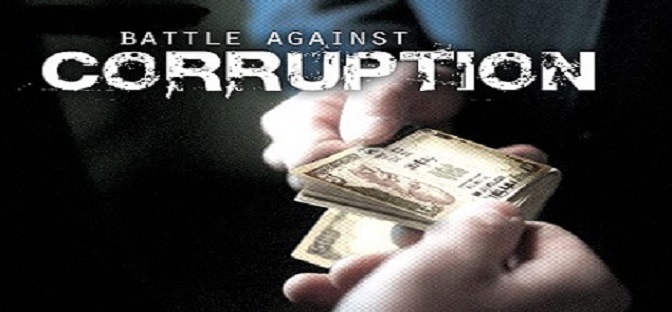
Transparency International (TI) has alleged that international enablers headquartered in Beijing, Dubai, London and New York are parts of every single illicit transaction perpetrated in Nigeria, costing the country $18 billion per annum in tax evasion.

TI, also, observed that Nigeria had witnessed significant recovery of stolen assets from different countries worldwide, though lamented that absence of a harmonised stolen asset recovery regime had led to the re-looting of the recovered assets.
Mr. Auwal Rafsanjani, head of Nigeria Office, TI, made this allegation during a virtual special session of the United Nations General Assembly against corruption, which ended on Friday.
At the session, Rafsanjani lamented that corruption in Africa, especially Nigeria, “is aided by legitimate enablers that are only seldom held accountable and punished.”
He noted that Nigeria yearly “loses around $18 billion, most of it on tax evasion. International enablers headquartered in London, New York, Dubai and Beijing are part of every single illicit or corrupt transaction of significant proportion.
“The current situation is very bad. Putting things into perspective, Nigeria loses about $15bn to $18bn annually to illicit financial outflows like money laundering and the likes.
“Financial institutions, lawyers and other notaries help to facilitate Illicit Financial Flows (IFFs) and Money Laundering (ML). International jurisdictions that have become tax havens and allowed shell and shelf companies exist are also vehicles and destinations for moving these illicit funds out of developing countries.
“We also have cases of big companies finding loopholes in tax laws to prevent themselves from paying their fair share of taxes,” TI’s country representative alleged.
He said Nigeria had witnessed in recent years significant recoveries of stolen assets from abroad, noting that stolen assets recovered from the late tyrant, Gen. Sani Abacha was almost $2billion from the UK, New Jersey and Switzerland.
Despite what had been recovered from the late tyrant, Rafsanjani alleged that Abacha might have stolen “close to $6 billion. He inflicted incalculable social damage on the entire Nigerian population. Nigeria has experimented with a number of modalities on the management of international asset return.”
TI’s country representative, equally, lamented that some early recoveries were re-looted due to the lack of domestic management recovery framework and also due to incompetence of the international oversight.
“More recent recoveries reflect the growing realisation that civil society needs to be part of the monitoring of the management of the disbursement of recovered assets and they should be part of the entire asset recovery process from pre-investigation to the stage of disbursement of the recovered assets.”
Rafsanjani lamented that the victims of corruption “are not part of any stage of asset recovery in Nigeria. International asset recoveries follow bilateral agreement, which oversee and neglect the issue of identification of victims.”
In some cases, he explained that some attempts “have been made to prefer SDG financing or pro-poor allocation of compensation. However, no real standard is in place.”
Instead, according to Rafsanjani, countries of origin prefer ‘tangible mementos’ such as infrastructure projects, etc. that have nothing to do with the compensation of the real victims of corruption in the majority of asset returns;
In principle, he said there was a growing recognition in the Nigerian criminal law that there was a need to go beyond the notion of punitive justice, towards a solution that was more inclusive and encouraged the participation of victims and recognised the need to provide effective remedies for victims of crimes.
In practice, however, he explained that the courts were operating under the myth that corruption “is a victimless crime, partly because of the narrowed conception of corruption and the perceived legal challenges such as causation, legal standing, and evidence-gathering, victims of corruption are not identified.”
According to him, those who are economically and socially disadvantaged are the biggest victims of corruption, but have no access to the representation about their economic and social damages.
He said: “But it may be difficult to quantify the cost of corruption in most cases. This does not make the harms less real and deadly for Nigerians.”
He, therefore, challenged the UK, Dubai and other Island nations “to ensure that their financial institutions conduct proper Know Your Customer (KYC) measures or Enhance Due Diligence (EDD) as required by the Financial Action Task Force (FATF) and other global standards to combat money laundering.
“Having a beneficial ownership register that is accessible to the public is also very important in combating money laundering and illicit financial flows. The countries should ensure that companies who conduct businesses in developing countries pay their fair share of taxes in the countries where those profits are made.”


Kuda Microfinance Bank (Kuda MFB) has increased total grants on offer in the Kuda For Her Pitch Challenge to ₦10 million after receiving an overwhelming number of pitches from women entrepreneurs in the food and hospitality sectors.

Kuda MFB
The initiative, which launched on March 10 as part of Kuda’s Women’s Month activities and closed on March 16, was designed to award four women-led businesses a grant of ₦1 million each.
In acknowledgement of the number and quality of pitches for grants received, Kuda MFB will now give ten Lagos-based entrepreneurs ₦1 million each to fund the growth of their businesses.
According to the Small and Medium Enterprises Development Agency of Nigeria (SMEDAN) and the National Bureau of Statistics (NBS), women own about 43 percent of micro and small enterprises in Nigeria, many of which operate in the food and hospitality sectors.
But despite their strong presence in those sectors, women entrepreneurs continue to face challenges getting the funding they need to grow their businesses, with only about 23 percent of women-owned businesses currently able to access formal credit.
Insights from Kuda Business’ soon-to-be-released SME Outlook report also reinforces this trend. In a survey of 86 Lagos-based small businesses using Kuda Business, 47.5 percent of respondents identified lack of financing as the biggest barrier to expanding their operations, far ahead of other challenges such as rising operating costs (26.2 percent) and access to customers (14.8 per cent). Logistics constraints and regulatory hurdles were cited by 6.6 per cent and 4.9 per cent of respondents, respectively.
The survey also found that when choosing a banking partner, access to credit ranked as the most important feature for small businesses, cited by 38.5 percent of respondents. This was followed by easy payment tools (27.7 percent), low fees (26.2 percent), and customer support (7.7 percent).
Funding to increase the grants came from money that Kuda MFB had earmarked for a Kuda for Her seminar, which it has now cancelled.
Emmanuel Femi-Adejobi, Senior Brand Manager at Kuda, said: “The pitches we received made it very clear that women building businesses in Nigeria’s food and hospitality sectors urgently need capital to grow.
We cancelled our planned seminar and diverted some of the budget for it to give six more grants so that more women entrepreneurs will have extra financial support to grow and contribute more to Nigeria’s economic growth. At this time, that money means more to the entrepreneurs we serve than a seminar.”
Kuda MFB will announce the ten grant recipients on March 27.


Securities and Exchange Commission (SEC) has warned that unregistered schemes pose serious risks for investors.

This is coming after the commission announced that it has shut down more than 400 fraudulent investment schemes across Nigeria, in intensified regulatory crackdown on illegal investment activities and a stronger push to protect investors.
SEC also said that several suspects linked to these schemes are currently under prosecution.
The disclosure was made by Bola Ajomale, executive commissioner for Operations, SEC, during the financial literacy forum “The Money Fair,” organized by Nairametrics in Lagos.
Ajomale, who represented Dr. Emomotimi Agama, director-general, SEC, emphasized the regulator’s commitment to safeguarding market confidence amid a surge in unregulated investment platforms.
“Over the last three years, we have investigated and shut down at least 400 of these so-called schemes,” Ajomale said.
“We saw a tremendous increase in them last year, and a number of those involved have been arrested and prosecuted.”
If the investment product or the operator is not registered with the SEC, they have no business asking you to put your money there.”
The SEC has intensified its enforcement measures alongside public awareness campaigns to curb the proliferation of illegal investment platforms.
Initiatives such as the “See It, Snap It” campaign and the “SEC Scam Alert” platform have been introduced to enable Nigerians to report suspicious schemes quickly, allowing regulators to act before these operations expand.
Ajomale noted that the regulator has adopted a multi-pronged strategy combining investigations, arrests, and investor education to enhance market integrity.
“We are not just shutting down illegal schemes; we are also empowering investors with the knowledge to identify and avoid fraudulent operators,” he said.
The crackdown comes as unregulated investment products continue to pose significant risks to Nigerian investors, particularly amid rising interest in digital and alternative investment platforms.

By Matthew Anthony, Senior Market Analyst- Africa
Tensions in the Middle East are sending shockwaves through global markets, stoking fresh inflation concerns as oil prices climb.

As these tensions escalate, mounting fears of inflationary shocks could force central banks to rethink their 2026 playbooks.
Against this backdrop, Nigeria’s inflation eased to 15.06% in February, just before the Iran conflict erupted. Since then, gasoline prices have soared by more than 30% for Africa’s leading crude exporter, pushing transportation costs higher for everyday Nigerians.
Nigeria’s oil production has helped shield it from the war’s fallout. The currency has only dipped 0.3% against the dollar in the past two weeks.
However, these shifts may challenge the CBN’s plans to keep lowering interest rates. The Naira now trades at NGN1,385 per US dollar, up from NGN1,360 before tensions flared in the Middle East.
Outside of Nigeria, risk aversion returned to global markets on Tuesday as tensions in the Middle East sapped risk appetite.
The brief tech rally in the previous session merely served as a small distraction with equities on the back foot amid the overall caution.
All eyes remain on the ship traffic through the Strait of Hormuz as Trump calls for other nations to secure the critical waterway.
Ultimately, this has injected oil prices with monstrous levels of volatility with Brent rallying above $103 a barrel on Tuesday. Iran’s attacks on energy infrastructure around the Middle East have intensified fears around supply shocks, injecting oil bulls with renewed vigour.
To counter such shocks, the IEA launched its largest ever oil release amounting to 400million barrels of oil from their emergency stocks. In addition, the US issued its second temporary waiver for the purchase of Russian oil. Despite all of this, Brent is finding comfort at triple digits and could extend gains on geopolitical risk.
Gold remains on the backfoot despite the growing risk aversion.
A broadly stronger dollar and dwindling bets around lower US interest rates have dealt gold a double blow. Traders are only pricing in just one Fed cut in 2026 thanks to concerns around conflict-induced inflation.
Gold’s near-term outlook may be influenced by the Fed decision on Wednesday. No changes are expected but the Fed may be forced to reassess its policy strategy for 2026. Looking at the charts, gold is wobbling above $5000 as of writing. Weakness below this point may open a path toward $4900 while a rebound could see prices retest resistance at $5100.
Speaking of central banks, the RBA raised interest rates on Tuesday for a second consecutive meeting.
Growing concerns around conflict-induced inflation shocks may prompt central banks to reassess their policy strategies for 2026.
The Federal Reserve (Fed), European Central Bank (ECB) and Bank of England (BoE), among many others will be under the spotlight this week.
Market expectations have rapidly evaporated over the Fed cutting rates anytime while the BoE/ECB are seen potentially hiking rates by the end of the year if inflation persists. These sharp shifts in policy expectations may translate to heightened levels of volatility.

UBA, NiDCOM Deepen Collaboration to Unlock Diaspora Capital for Nigeria’s Growth

Vitel Wireless Lures Subscribers with “Data that Never Expires” Campaign

FG Deploys Technology, Approves $54m Drugs to Tackle Tuberculosis

BoI, MTN Foundation Launch N1Bn Fund for Women Entrepreneurs

Luno Launches First Crypto Prediction Market in Nigeria

Kaspersky Discovers New Phishing Campaign Exploiting Google Tasks Notifications to Steal Corporate Credentials

esentry 2025 Report Shows Healthcare, Financial Services and Telecoms as Staging Grounds for Increased Cyberattacks in Africa

AfDB, UNDP Launch $10Bn AI Initiative for Africa

Mutual Benefits Assurance Settles ₦5.9bn Claims in January 2026

MultiChoice Suspends Yearly DStv Price Hike as Canal+ Pushes Growth




 Broadcasting2 days ago
Spotify’s Loud & Clear Report Reveals Over ₦60Bn Revenue for Nigerian Artists in 2025

 Telecom2 days ago
PwC Warns Nigeria Telcos of AI Fraud Risks

 E-Financial2 days ago
CBN Relaxes Dormant Account Rules with Removal of Affidavit Requirement

 News2 days ago
Elumelu Tags Elon Musk, Disowns AI-Generated Scam Video

 E-Financial2 days ago
Crypto Transactions Hit $96Bn in Nigeria -SEC

 E-Business2 days ago
FG Determined to Protect Rights, Privacy Online- NITDA

 E-Business2 days ago
Firm Warns of Malware Aiming to Steal Data from Individuals, Organisations in Nigeria

 News2 days ago
NITDA DG Appraised the Role of Teachers as Key to Nigeria’s Digital Transformation