

/home/kenneth/web/nigeriacommunicationsweek.com.ng/public_html/wp-content/themes/zox-news/parts/post-single.php on line 153
">
Warning: Undefined array key 0 in /home/kenneth/web/nigeriacommunicationsweek.com.ng/public_html/wp-content/themes/zox-news/parts/post-single.php on line 153
Warning: Attempt to read property "cat_name" on null in /home/kenneth/web/nigeriacommunicationsweek.com.ng/public_html/wp-content/themes/zox-news/parts/post-single.php on line 153
Freight Forwarders Fight Corruption with Multi-User Card

The wind of ePayment system is blowing across the length and breadth of Nigeria’s economic courses with the maritime sector not left behind as the Council for the Regulation of Freight Forwarding in Nigeria (CRFFN) will by March 2012 unveil a multi-user payment card for her members Nigeria CommunicationsWeek can reveal.
CRFFN Act No. 16 of 2007 was enacted into law on 30th of April, 2007. The council was formally inaugurated on 18th of August, 2008 and charged with, among other responsibilities, to regulate and control the practice of freight forwarding, and to promote the highest standard of competence, practice and conduct among members of the profession.
The regulatory body is also responsible for determining the standards of knowledge and skill to be attained by persons seeking to be registered as freight forwarders in the country and raising those standards from time to time in accordance with international practice.
Mr. Olayiwola Shittu, member, CRFFN Governing Council, at a stakeholders meeting on ePayment put together by Intermarc Consulting limited, exclusively told Nigeria ComunicationsWeek that the multi-user card “works as an identity card for our members. It also works as an ATM card for transaction including payments of charges through PoS terminal.”
Apart from serving as a-cash-less economic tool, Shittu affirmed that the card operates as a data bank for the holder, “where the identity of the individual can be downloaded. And it also works as a Pass-ID into the control areas in the customs terminals.”
The role of operators in the maritime sector in raising the stake of corrupt practices in Nigeria following the United Nations/World Bank reports that with corruption, Nigeria’s economy as a nation has been wasted and drained to the tune of $350 billion or more through fraud and mismanagement since independence, Shittu, was optimistic that the introduction of multi-user card fort the freight forwarders would not only reduce movement of cash in the nation’s ports but would help track fraud in the system.
“If we get it right in the maritime industry through ePayment other sector in Nigeria will feel the impact, because people do not know the volume of cash that moves in the maritime industry. Our international frontiers via cargo clearance, is indeed a major contributor, as evidenced in the Corrupt Index study by Transparency International, 2008.
Speaking on measures adopted by the council to checkmate breaches of ethical conduct by practitioners, he said CRFFN set up an investigating panel last year as appropriate sanctions would soon be enforced on defaulters.
“Freight forwarding is a noble profession; nevertheless, there is a need to ensure compliance with standards in the freight forwarding business in the country. Before now, touting had been the order of the day at the ports. But owing to the fact that freight forwarding is an international business, there is the need for practitioners to imbibe international best practices in their respective businesses.”
“With the inauguration of the investigating panel, we have laid a solid foundation to re-position the freight forwarding business and profession in Nigeria,” he said.
Shittu also opined that freight forwarding could be used to boost employment and wealth creation in the country.


Warning: Undefined array key 0 in /home/kenneth/web/nigeriacommunicationsweek.com.ng/public_html/wp-content/themes/zox-news/parts/post-single.php on line 493
Warning: Attempt to read property "cat_ID" on null in /home/kenneth/web/nigeriacommunicationsweek.com.ng/public_html/wp-content/themes/zox-news/parts/post-single.php on line 493

Securities and Exchange Commission (SEC) has revoked the registration of Kensington Agro Trading Limited as a capital market operator with immediate effect.

In a public notice issued by the Commission, the regulator announced that Kensington Agro Trading Limited’s registration as a Commodity Broker/Dealer and Collateral Manager has been withdrawn, effectively stripping the company of its authority to operate within Nigeria’s capital market.
According to the notice, the revocation was carried out pursuant to the powers vested in the Commission under Section 61(6) of the Investments and Securities Act, 2025, as well as Rule 34(1) of the SEC Rules and Regulations 2013, as amended.
The SEC stated that the decision takes immediate effect and urged all stakeholders to take note of the development.
“Accordingly, commodity exchanges, the investing public, commodity traders, and all capital market stakeholders are advised to discontinue capital market-related dealings with the company,” the Commission said.
The directive means that Kensington Agro Trading Limited is no longer authorised to engage in any capital market activities under the regulatory oversight of the SEC. Market participants have been cautioned to avoid entering into transactions or maintaining business relationships with the firm in its former capacity as a registered operator.
While the notice did not specify the reasons for the revocation, such regulatory actions are typically taken in line with the Commission’s mandate to ensure compliance with extant laws, protect investors, and maintain market integrity.
The SEC, headquartered in Abuja, reiterated its commitment to upholding transparency, investor protection, and strict adherence to regulatory standards in Nigeria’s capital market.
The Commission’s action underscores its continued enforcement drive aimed at sanitizing the market and ensuring that only duly registered and compliant operators are permitted to function within the ecosystem.
Stakeholders and members of the public are encouraged to verify the registration status of capital market operators through official SEC channels before engaging in investment-related transactions.
Nigeria Centre for Disease Control and Prevention (NCDC) has raised alarm over ravage of Lassa fever cases across 18 states and 67 Local Government Areas (LGAs) of the country.

Dr Jide Idris, director-general of NCDC, in statement yesterday, said that Bauchi, Ondo, Taraba, Edo and Benue accounted for more than 80 per cent of confirmed cases recorded during the 2026 peak transmission season.
Idris, described as particularly worrisome the growing infections among healthcare workers, with 28 confirmed cases and three deaths reported so far this season.
NCDC attributed the sustained transmission and rising fatalities to operational gaps at the state level, urging urgent action to strengthen outbreak response and control measures.
According to Idris, field investigations showed most transmissions were occurring in known endemic areas, but weak implementation of established response frameworks had contributed to the continued spread and higher case fatality rate.
He said that gaps identified include infections in general outpatient and maternity settings, poor adherence to Infection Prevention and Control (IPC) protocols, and inadequate pre-positioning of Personal Protective Equipment (PPE).
He added that delayed patient presentation due to financial barriers, inconsistent activation of State Incident Management Systems, weak contact tracing, persistent stigma and poor isolation centre standards were also driving transmission.
Idris emphasised that outbreak response implementation and health service delivery fell primarily under state governments within Nigeria’s federal structure, urging them to strengthen accountability and resource allocation.
He called on affected and high-risk states to urgently activate and closely monitor their Incident Management Systems, ensuring timely coordination and efficient outbreak response at all levels of healthcare delivery.
He also urged the immediate release of response funds, strict enforcement of Infection Prevention and Control (IPC) compliance in public and private health facilities, and continuous availability of PPE and other critical supplies.
The NCDC boss also advocated accelerated financial protection mechanisms to reduce late presentation and high fatality rates, alongside institutionalised rodent control and environmental sanitation measures under a One Health approach.
He advised healthcare workers to maintain a high index of suspicion and adhere strictly to IPC guidelines.
He also urged the public to keep environments clean, prevent rodent entry into homes, store food safely and seek early medical care when symptoms appeared.
Idris noted that Lassa fever was treatable, with improved outcomes when detected early, adding that Nigeria was also responding to other epidemic-prone diseases including Cerebrospinal Meningitis, Diphtheria, Mpox and Cholera.
He reiterated NCDC’s toll-free emergency line, 6232, for reporting suspected cases and obtaining further information

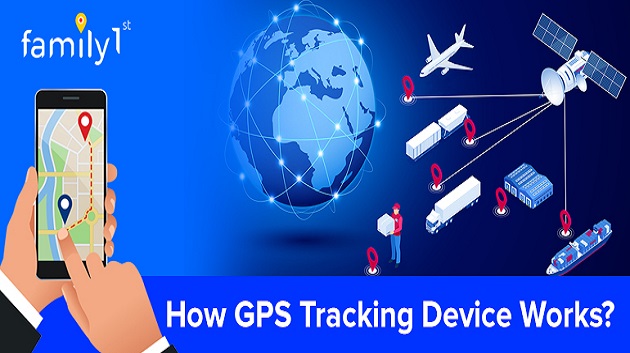
The Lagos State Traffic Management Authority (LASTMA) has deployed a number of real-time digital solutions, including surveillance drones, GPS-enabled patrol vehicles, and automatic incident detection software.

The agency has also established a central command and control centre to reduce emergency response times and improve traffic safety throughout Lagos.
According to the agency, the digital transition will replace manual reporting and fragmented coordination with an integrated, data-driven platform capable of instantaneously detecting, verifying, and dispatching responders to crashes and breakdowns.
According to general manager Olalekan Bakare-Oki, LASTMA, body cameras, mobile data terminals, and toll-free hotlines now feed into a unified operations hub that gives real-time visibility of traffic situations across the state.
Incidents detected by digital surveillance are validated in real time and dispatched to the nearest patrol team using GPS tracking, while officers are instructed via modern communication devices.
According to the agency, the system has eliminated delays caused by poor event reporting and logistical constraints, enabling faster diversions, quicker clearance of accident scenes, and better coordination with medical and security agencies.
Field commanders and rescue teams now operate on synchronised data networks, allowing immediate decisions that reduce secondary crashes and prolonged congestion.
According to LASTMA’s 2025 operational summary, the agency rescued 1,075 people from crash scenes, and impounded 17,169 vehicles for various traffic violations across Lagos through its toll-free hotline.
These figures reflect how timely reporting and coordinated response have already reduced secondary accidents and eased congestion, according to the agency.
It went on to it achieved this with the toll-free reporting system, body cameras, and field coordination networks but with the newly deployed suite of smart technologies, the agency’s impact is poised to multiply.
Bakare-Oki said the upgrade aligns with the state’s smart-city agenda, positioning LASTMA as a technology-enabled public safety agency and laying the groundwork for faster, more reliable mobility management on Lagos roads.

SEC Revokes Registration of Kensington Agro Trading Limited

NCDC Raises Alarm over Lassa Fever Ravaging 18 States in Nigeria

Lagos Deploys Drones, AI to Boost Traffic Response

Purple Woman 3.0 Is Back, to Empower Women in Tech this IWD 2026

NRS Targets N40trillion in Tax, Royalty Revenue in 2026

Accidental Billionaire Opts for Jail Instead of Returning Money Credited Him by Mistake

Kaspersky Brings more Transparency to Threat Detection with New Hunt Hub

Dr. Cairo Ojougboh Foundation Bolsters Nigeria’s Education Drive with ₦2.7m Student Support

NDPC Commits to Balancing Data Privacy, Protection Information

OADC Lagos Reinforces Commitment to Local Data Hosting and Digital Transformation @ NDPC’s National Privacy Week Summit




 E-Financial2 days ago
Iran-Israel-US Conflict and CBN’s FX Gains: A Stress Test for Nigeria’s Monetary Stability

 E-Financial2 days ago
Mutual Benefits Assurance Reaffirms Full Regulatory Compliance, Enhanced Governance

 General News2 days ago
JAMB Uncovers AI-Driven Fraud Targeting UTME Candidates, Warns Parents

 General News2 days ago
SERAP Asks FCCPC to Investigate Google, Meta, Others over Alleged Rights Abuses

 News2 days ago
TeamApt, Awabah Partner to Boost Pension Drive for Nigerians

 News2 days ago
FlashChange CEO, Bidemi Oke, Urges Startups to Build Strong Governance Structures Early

 Telecom1 day ago
Sunil Bharti Mittal Conferred GSMA Lifetime Achievement Award for Transforming Global Telecommunications

 Telecom1 day ago
Why Digital Trust Matters: Secure, Responsible AI for African SMEs?