

Telecom
Global Broadband Adoption Rate Hits 60%, More Reports- Akamai


Akamai Technologies Third Quarter, 2014 ‘State of the Internet’ Report shows that global broadband adoption rate has reached 60 per cent.
The report also indicated that global average and average peak connection speeds drop by 2.8% and 2.3%, respectively, as South Korea maintains highest level of 4K readiness, with two-thirds of connections to Akamai at or above 15 Mbps.
Akamai Technologies, Inc., the leading provider of cloud services for delivering, optimizing and securing online content and business applications, released Report based on data gathered from the Akamai Intelligent Platform™.
The report provides insight into key global statistics such as connection speeds and broadband adoption across fixed and mobile networks, overall attack traffic, global 4K readiness, and IPv4 exhaustion and IPv6 implementation.
It also includes security insights into Shellshock and OpenSSL vulnerabilities, Blackshades RAT and Spike DDoS toolkits, as well as attacks observed during the FIFA 2014 World Cup.
Data and graphics from the Third Quarter, 2014 State of the Internet Report can be found on the Akamai State of the Internet site and through the Akamai State of the Internet app for iOS and Android devices.
“One need only look to the sheer number of connected device- and smart home-related announcements that came out of the 2015 International CES to see that consumers are continuing to adopt and expect more from connected technology and services,” said David Belson, editor of the report. “The strong year-over-year growth trends illustrated in this quarter’s report show that the Internet is evolving and expanding to meet the growing demands of our increasingly connected lifestyles.”
Highlights from Akamai’s Third Quarter, 2014 State of the Internet Report:
Global Average Connection Speeds And Global Broadband Connectivity
For the second consecutive quarter, the global average connection speed remained above the 4 Mbps “broadband” threshold; however, it saw a slight decline in the third quarter of 2014, dropping 2.8% to 4.5 Mbps.
Six of the top 10 countries saw increases in global average connection speeds, and all of the top 10 remained well above the 10 Mbps “high broadband” threshold.
Among those increasing in average connection speed quarter-over-quarter, Singapore experienced the largest rise (12.2 Mbps), an 18% improvement.
The smallest growth was in Japan (15 Mbps), which was only up 0.8% from the second quarter. In addition, Ireland (13.9 Mbps) joined Singapore in seeing an increase of 10% or more from the previous quarter.
Yearly increases were seen in 129 qualifying countries/regions, with rates ranging from 150% in Jersey (9.7 Mbps) down to a modest 0.2% in Ecuador (3.6 Mbps).
Similar to the average connection speed metric, the global average peak connection speed also saw a slight decline in the third quarter, dropping 2.3% to 24.8 Mbps.
Hong Kong once again had the highest average peak connection speed at 84.6 Mbps, followed closely by Singapore (83 Mbps).
All 10 countries/regions saw significant increases in average peak connection speeds compared to the previous year.
Uruguay (58.6 Mbps) led the group with a year-over-year change of 334%, and Luxembourg (54.4 Mbps) saw speeds more than double, up 130%.
A total of 135 qualifying countries/regions saw average peak connection speeds increase from the third quarter of 2013.
Global high broadband (>10 Mbps) adoption rates fell 0.5% in the third quarter, after seeing strong quarterly growth earlier in the year.
In contrast to previous quarters, changes among the top 10 countries/regions were limited, with increases ranging from a half a percent in Japan (55% adoption) to 8.4% in Sweden (44% adoption). Among the 63 qualifying countries/regions for this metric, just 28 saw quarter-over-quarter increases. The global high broadband adoption rate was up 22%, which was lower than the 65% increases seen in both the first and second quarters of this year.
Among the top 10 countries/regions, Japan was the only one to see a year-over-year change below 10%, while both Romania (49% adoption) and Israel (44% adoption) saw adoption rates more than double.
Across the other 62 geographies, yearly increases ranged from 6.3% in Japan to a massive 3,015% in Uruguay (7.3% adoption).
The global broadband (>4 Mbps) adoption rate reached 60%, an increase of 1% quarter-over-quarter.
Ninety-nine countries/regions qualified for inclusion for this metric, 55 of which saw quarterly growth in broadband adoption rates.
Israel (92% adoption) was the only country in the top 10 country/regions to see its adoption rate increase more than 1%.
South Korea remained the country with the highest level of broadband adoption at 96%, with Bulgaria following at 95%.
The global broadband adoption rate increased 12% from the third quarter of 2013.
While still positive, the yearly growth rate has continued to decline over the last several quarters. Broadband adoption rates were also up-year-over-year across all of the top 10 countries/regions, with increases ranging from 1.3% in Curacao to 18% in Bulgaria.
All but nine qualifying countries saw broadband adoption levels increase over the past year with growth rates ranging from 0.7% in the Czech Republic (83% adoption) to 1,884% in Indonesia (35% adoption).
4K Readiness
Following the introduction of “4K Readiness” in the First Quarter, 2014 State of the Internet Report, Akamai has again identified candidate geographies that are most likely to sustain connection speeds above 15 Mbps, as Ultra HD adaptive bitrate streams typically require bandwidth between 10 and 20 Mbps.
The findings do not account for other “readiness” factors, including availability of 4K-encoded content or 4K-capable televisions and media players.
In total, 52 countries/regions qualified for inclusion this quarter, and 12% of the global connections were at or above the 15 Mbps threshold. While down 2.8% quarter-over-quarter, readiness increased 32% year-over-year.
South Korea remained the country with the highest level of 4K readiness, with two-thirds of its connections to Akamai at or above 15 Mbps.
Attack Traffic And Security
In the third quarter of 2014, Akamai observed attack traffic originating from 201 unique countries/regions, which was up significantly from 161 in the second quarter, and more in line with the 194 seen in the first quarter.
As demonstrated in past reports, the highest concentration of attacks (50%) came from China, nearly three times more than the United States, which saw observed traffic grow by approximately 25% quarter-over-quarter.
China and the United States were the only two countries to originate more than 10% of observed global attack traffic. Indonesia was the only country among the top 10 to see observed attack traffic decline, dropping from 15% of global attack traffic in the second quarter to 1.9% in the third.
The overall concentration of observed attack traffic decreased slightly in the third quarter, with the top 10 countries/regions originating 82% of observed attacks, down from 84% last quarter.
Furthermore, 64% of attack traffic originated from the Asia Pacific region, down from 70% last quarter, while the lowest volume (1%) originated from Africa.
The volume of observed traffic targeting Ports 80 (HTTP/WWW), 443 (HTTPS/SSL) and 880 (HTTP Alternate) dropped significantly in the third quarter, with all three ports seeing a fraction of the attack volume seen in previous quarters.
Port 23 remained the most popular target of attacks observed to be originating in China, accounting for more than three times more volume than Port 80, the second-most attacked port within the country.
Reported Distributed Denial of Service (DDoS) Attack Traffic
In addition to observations on attack traffic, the State of the Internet Report includes insight into DDoS attacks based on reports from Akamai’s customers.
Akamai customers reported 270 DDoS attacks for the second quarter in a row. Overall, this represents a 4.5% reduction in attacks since the beginning of 2014 and a 4% decrease in comparison to the third quarter of 2013.
In contrast to the second quarter’s report, the number of attacks fell in both of the Americas, with 142 attacks, and in the Europe, Middle East and Africa (EMEA) region, with 44 attacks.
However, the number of attacks in the Asia Pacific (APAC) region rose by 25% from the previous quarter to 84.
The distribution of industries did not change in comparison to the previous quarter; commerce, enterprise, high tech, media and entertainment, and the public sector all saw the same number of attacks as the previous quarter, even though the actual targets of these attacks changed.
Compared with the same quarter of 2013, enterprise attacks have fallen by more than a third from 127 to 80. At the same time, attacks against high tech companies have tripled from 14 to 42.
Akamai saw an increase in the number of repeated attacks against the same target in the third quarter, returning to the 25% chance of a subsequent attack targeting the same organization. This represents a drop in unique targets from 184 in the second quarter to 174 in the third.
IPv4 and IPv6
In the third quarter of 2014, more than 790 million IPv4 addresses connected to the Akamai Intelligent Platform from more than 246 unique countries/regions.
The global number of unique IPv4 addresses making requests to Akamai grew by nearly two million quarter-over-quarter, a nominal increase after a loss of seven million in the second quarter.
Looking at the top 10 countries in the third quarter, the unique IP count in the United States saw a small gain of approximately 20,000 addresses.
In addition to the United States, Brazil, France and Russia saw nominal increases in unique IPv4 address counts, while the remaining six countries saw unique IPv4 address counts slightly decline from the second quarter.
Fifty-eight percent of countries saw a quarter-over-quarter increase in unique IPv4 address counts, with 28 countries/regions growing by 10% or more.
Cable and wireless providers continued to drive the number of IPv6 requests made to Akamai, many of which are leading the way for IPv6 adoption in their respective countries.
Verizon Wireless and Brutele saw more than half of their requests to Akamai made over IPv6, with Telenet close behind.
Mobile Connectivity
In the Third Quarter, 2014 State of the Internet Report, 54 countries/regions qualified in the mobile section.
South Korea continued to have the highest average mobile connection speed, growing from 15.2 Mbps to 18.2 Mbps in the third quarter.
Iran had the lowest average mobile connection speed at 0.9 Mbps, and was the only qualifying country with an average speed below 1 Mbps. Slovakia joined South Korea above the 10 Mbps “high broadband” threshold at 10.9 Mbps.
Average peak mobile connection speeds again spanned an extremely broad range in the third quarter, from 98 Mbps in Singapore down to 3.3 Mbps in Iran.
Nine countries/regions had average peak mobile connection speeds above 50 Mbps, while another 40 saw speeds above 10 Mbps.
The report also examines the percentage of connections to Akamai from mobile network providers at “broadband” speeds (more than 4 Mbps).
In the third quarter, Sweden moved ahead of Denmark for the top position at an adoption rate of 94%, whereas Iran, Paraguay, Croatia, and Vietnam all had mobile broadband adoption rates below 1% in the third quarter.
Each quarter, Akamai publishes a “State of the Internet” report. This report includes data gathered from across the Akamai Intelligent Platform about attack traffic, broadband adoption, mobile connectivity and other relevant topics concerning the Internet and its usage, as well as trends seen in this data over time.


Telecom
VDT Communications Achieves Two Prestigious Certifications ISO /IEC 27001:2022, ISO/IEC 27032:2023 Reinforcing its Leadership in Broadband Service Provision


VDT Communications Limited, a provider of Enterprise communication solutions, is proud to announce that it has been awarded the ISO/IEC 27001:2022 Information Security Management System (ISMS) and ISO/IEC 27032:2023 Cybersecurity Management System certifications.

These prestigious certifications demonstrate VDT’s commitment to maintaining the highest standards of information security and cybersecurity, ensuring the protection of sensitive customer data and maintaining the trust of its clients.
These certifications are a testament to VDT’s dedication to implementing robust information security and cybersecurity measures, aligning with international best practices.
The ISO/IEC 27001:2022 certification recognizes VDT’s ability to establish, implement, maintain, and continually improve its ISMS, ensuring the confidentiality, integrity, and availability of customer information. The ISO/IEC 27032:2023 certification highlights its commitment to protecting its customers’ information assets and preventing Cyber threats.
VDT Communications Limited has consistently demonstrated its commitment to excellence, previously earning and maintaining ISO 9001:2015 Quality Management System and ISO 20000-1:2018 IT Service Management certifications. These certifications have enabled the company to deliver high-quality services, ensuring customer satisfaction and loyalty.
“We are thrilled to receive these two prestigious certifications, which reinforce our commitment to information security and cybersecurity. These certifications demonstrate our dedication to implementing robust security measures that ensure confidentiality, integrity and availability of customer data” said Engr. Abiodun Omoniyi, GMD of VDT Communications Limited.
The ISO/IEC 27001:2022 and ISO/IEC 27032:2023 certifications bring numerous benefits to VDT’s customers, including:
- Enhanced information security and cybersecurity posture
- Protection of sensitive customer data
- Compliance with international standards and regulations
- Improved risk management and incident response
- Increased trust and confidence in VDT’s services
“We are proud to serve our customers with the highest level of security and quality,” Bimbo Ikumariegbe, Chief Operating Officer (COO) of VDT. “These certifications demonstrate our commitment to excellence and our dedication to delivering innovative communication solutions that meet the evolving needs of our customers” – Olufemi Akinola, Head, Information Technology.

Nigeria Data Protection Commission (NDPC) has issued a stern warning to content creators filming and sharing videos of unsuspecting citizens on social media, describing such practices as direct violations of citizens’ rights to informational self-determination.

NDPC
The Commission drew attention to individuals capturing pictures and footage of the general public without consent, breaching Section 37 of the 1999 Constitution of the Federal Republic of Nigeria (as amended) and the Nigeria Data Protection Act, 2023 (NDP Act).
NDPC specifically flagged a content creator in Lagos State who films unsuspecting passersby at roadsides for a “reality show”. The Commission stressed that processing personal images in this manner demands explicit consent or a justifiable lawful basis under the NDP Act.
Preliminary investigations revealed no public or legitimate interest served by this “wilful invasion of privacy”. Data subjects, the Commission noted, have no reasonable expectation that their images would be captured and broadcast globally by an unknown individual.
National Commissioner/CEO Dr Vincent Olatunji has instructed social media platform owners—including TikTok, X (formerly Twitter), and Meta—to intensify enforcement of community guidelines to prevent harm from unlawful and unfair personal data processing.
Platforms failing to act promptly face sanctions under the NDP Act. Individual creators remain personally liable for violations, potentially facing criminal prosecution for infringing citizens’ and data subjects’ privacy rights.
The advisory was signed by Babatunde Bamigboye, Esq. CDPRP, Head of Legal, Enforcement and Regulations.
NDPC emphasised that abuse of rights under the guise of entertainment will not be tolerated, urging compliance to safeguard Nigerians’ data privacy in the digital age.
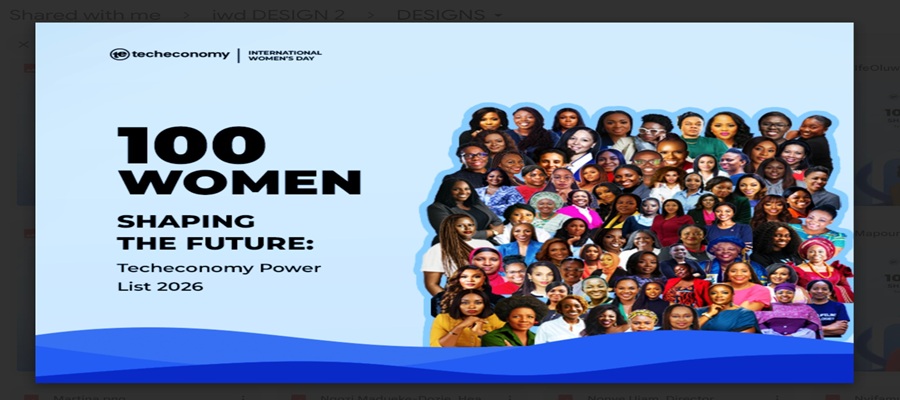
In celebration of International Women’s Day (IWD) 2026, Techeconomy, a leading business news platform in Nigeria, has unveiled its “100 Women Shaping the Future: Techeconomy Power List 2026,” recognizing exceptional women driving innovation, leadership, and impact across technology and the broader digital economy.

Techeconomy
The annual recognition spotlights women who are transforming industries through entrepreneurship, policy leadership, digital innovation, financial inclusion, media, education, and emerging technologies.
The initiative is part of Techeconomy’s commitment to promoting gender inclusion and highlighting female leadership shaping Africa’s technology ecosystem.
The Techeconomy IWD Power List features a diverse group of women, from corporate executives and startup founders to policymakers, ecosystem builders, and social innovators, whose work continues to influence the future of technology, business, and digital transformation in Nigeria and across Africa.
Speaking on the initiative, Joan Aimuengheuwa, the Managing Editor at Techeconomy, noted that the recognition goes beyond celebrating titles, focusing instead on impact, resilience, and the ability to shape the future through innovation and leadership.
According to her, “the women on the list represent different sectors including fintech, banking, healthcare, agriculture, education, communications, and the creative economy, demonstrating the growing role of women in advancing technology-driven development.
The unveiling aligns with the global celebration of International Women’s Day, which highlights the achievements of women and calls for accelerated progress toward gender equality. Across the world, the technology sector continues to push for greater female representation and leadership as part of efforts to build more inclusive digital economies.
Also speaking, Oluwatosin Aloba, the Brand Manager at Techeconomy, said: “Techeconomy IWD 2026 Power List is specially designed to inspire the next generation of female innovators and leaders by showcasing role models who are breaking barriers and redefining possibilities in the technology landscape.
“Techeconomy encouraged industry stakeholders, institutions, and the broader public to celebrate the achievements of these women while continuing to support policies, programs, and investments that expand opportunities for women in technology”, she added.
The full list of the “100 Women Shaping the Future: Techeconomy Power List 2026” is available on the Techeconomy website or visit: https://techeconomy.ng/techeconomy-iwd-2026-power-list-celebrates-100-women-shaping-the-future-of-tech/.

VDT Communications Achieves Two Prestigious Certifications ISO /IEC 27001:2022, ISO/IEC 27032:2023 Reinforcing its Leadership in Broadband Service Provision

CBN Orders Banks to Restrict Access to Banking Services for Loan Defaulters

NLNG Advances Media Excellence with Change Your Story Workshop

Interswitch Advocates Trust-Driven Infrastructure as Cornerstones of Africa’s Cross-Border Capital Future

Why JustMarkets Is a Strong Choice for Gold Trading

Kaspersky Discovers New Phishing Campaign Exploiting Google Tasks Notifications to Steal Corporate Credentials

esentry 2025 Report Shows Healthcare, Financial Services and Telecoms as Staging Grounds for Increased Cyberattacks in Africa

AfDB, UNDP Launch $10Bn AI Initiative for Africa

Pheelz Shares His Journey on Glo-Sponsored African Voices

Mutual Benefits Assurance Settles ₦5.9bn Claims in January 2026




 General News3 days ago
Court Freezes Bank Accounts of Petrocam, Founder over Alleged N9Bn Zenith Bank Debt

 Telecom3 days ago
Techeconomy Unveils IWD 2026 Power List Celebrating 100 Women Shaping the Future

 General News3 days ago
FCCPC Says Telcos, Energy Firms Lead Consumer Complaints in Nigeria

 E-Business3 days ago
Kaspersky Uncovers a New Android Malware Campaign Disguised as Starlink Application
 General News2 days ago
Interswitch Advocates Trust-Driven Infrastructure as Cornerstones of Africa’s Cross-Border Capital Future
 News2 days ago
NLNG Advances Media Excellence with Change Your Story Workshop
 E-Business2 days ago
Why JustMarkets Is a Strong Choice for Gold Trading

 News3 days ago
Easybuy Sales Talent Program to Empower 10,000 Nigerians to Become Millionaires