

General News
GMB Says He’ll be Ruthless against Corruption, B/Haram


Muhammadu Buhari, Nigeria’s president-elect, did not smile while making his acceptance speech on Wednesday — understandably, as terrorism and corruption were his main talking points.
A day after piling up substantial vote totals against the incumbent president, Mr. Buhari, a former general who once rose to power in a military coup, further consolidated something extraordinary for Nigeria: the peaceful passing of power from one political party to another through the ballot box, according to New York Times.
The country is now a democratic nation like others, Mr. Buhari suggested Wednesday, both in his words and in the fact that the democratic process had worked well enough that he could give the speech at all.
But in his remarks in the Nigerian capital, Abuja, Mr. Buhari also bluntly enumerated two scourges in this giant democracy: the ruthless onslaught of the Boko Haram militant group and the “evil of corruption,” as he put it.

In pairing them so prominently, he appeared to be setting his agenda for the coming months. And in lieu of a detailed policy platform from Mr. Buhari, who was short on specifics during his campaign, his vow to defeat Boko Haram amounts to a national security strategy, while fighting corruption has become an economic one.
President-elect Muhammadu Buhari, a former military leader, vowed to fight the scourges of corruption and Boko Haram militants.
On Wednesday, he focused more on the challenges posed by corruption than on the dangers of Boko Haram, perhaps indicating a veteran soldier’s disdain for the group as a true military threat.
Though Boko Haram has killed thousands of civilians and stormed across big stretches of territory, Mr. Buhari was bluntly dismissive of the insurgents in a January interview on the campaign trail, characterizing their fighting abilities in disparaging terms.
“Boko Haram will soon know the strength of our collective will,” he said Wednesday. “We shall spare no effort until we defeat terrorism.”
As a practical matter, Boko Haram, despite having pledged allegiance to the Islamic State terrorist group, is now less of a menace on the ground in Nigeria than it was in January.
A coalition of foreign and domestic troops has substantially reduced Boko Haram’s footprint in the northeastern territory it had been holding for much of the past few years. Troops from Chad have taken the handful of border towns once held by the militants, and the Nigerians, backed by South African mercenaries, have taken others.
It is impossible to verify the Nigerian military’s claim that nearly all the previously Islamist-occupied towns in the northeast — “local government areas,” as they are called in Nigeria — have now been reclaimed from Boko Haram. But many have been, and the latest, Gwoza, had been a Boko Haram stronghold for months.
More challenging for Mr. Buhari will be the rot in the army that led to Boko Haram’s ascendance in the first place: corruption at high levels, poor morale, and troops underequipped because much of the $6 billion military budget has apparently been diverted.
“What they have is such an institutional problem, it’s going to take a long time to fix it,” said a diplomat in Abuja, who was not authorized to speak publicly. The hiring of mercenaries to defeat Boko Haram is a “short- to mid-term solution until they can address the other thing,” the diplomat said.
In interviews, Mr. Buhari has spoken of his anger at seeing foreign troops play a leading role in solving Nigeria’s Boko Haram problem. But he may not have much choice for now.
Most difficult for him will be how to handle the command deficiencies that put frightened, lightly armed soldiers in the field against Boko Haram, leading to many losses and retreats in Nigeria’s nearly six-year battle with the militants.
Human rights abuses against civilians by the Nigerian military have also been disturbingly common, with soldiers killing and detaining residents en masse.
“What has been consistently lacking is the required leadership in our battle against insurgency,” Mr. Buhari said in a speech at the London think tank Chatham House in late February.
Here, he will tread gingerly, Mr. Buhari has suggested, seeking to determine responsibilities before proceeding to, say, firing the top chiefs whom many blame for Nigeria’s military failures.
Boko Haram led Mr. Buhari on Wednesday to segue immediately into Nigeria’s corruption problem, which “attacks our national character” and “distorts the economy,” he said.
He made it clear that, falling oil prices aside, he sees this as the country’s top economic problem, telling the audience at Abuja’s International Conference Center that “such an illegal yet powerful force soon comes to undermine democracy.” He promised to “end this threat to our economic development and democratic survival.”
At Chatham House, Mr. Buhari suggested that what he called a “war waged on corruption” would be the first step in tackling the country’s pressing economic problems.
The price of oil, on which the government depends for over 70 percent of its revenue, has tumbled. Nigeria’s currency has fallen some 20 percent against the dollar over six months. Foreign currency reserves are dwindling, and an oil-revenue rainy day fund has been ransacked.
“In the face of dwindling revenues, a good place to start the repositioning of Nigeria’s economy is to swiftly tackle two ills that have ballooned under the present administration: waste and corruption,” Mr. Buhari said at Chatham House.
Several Nigerian economists suggested that Mr. Buhari’s strategy was plausible as a first step.
“The first thing to do is to recognize that there is so much waste in government,” said a leading Lagos economist, Pat Utomi.
“If you cut the graft, you can do things,” he said. “We have a new presidential jet in this budget. Most airlines in Nigeria don’t have as many jets as the presidential fleet.”
Another economist also suggested that Mr. Buhari’s anticorruption stance was critical in a country with, as a recent World Bank paper put it, a “deeply embedded culture of corruption.”
With the new president’s emphasis on “accountability, integrity and transparency,” one economist, Bismarck Rewane, said the “missing piece in the Nigerian economy” would be filled in.
Of course, other Nigerian politicians have promised to end corruption, only to fail or even steal with abandon afterward. But there is some reason to think Mr. Buhari may hew more closely to his promises. As military ruler in 1984 and 1985, he did not enrich himself. And he ruthlessly pursued those whom he accused of corruption.
“Corruption will not be tolerated by this administration, and it shall no longer be allowed to stand as if it is a respected monument in this nation,” he said Wednesday.


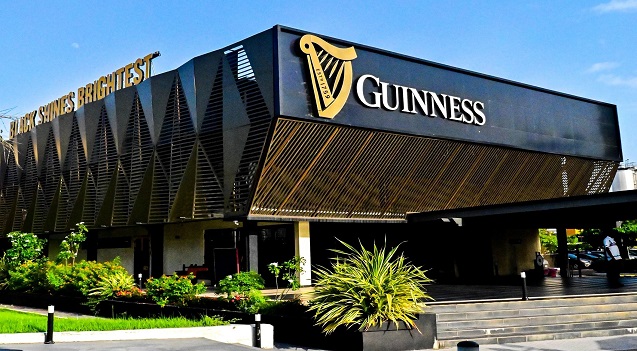
Guinness Nigeria has officially begun rewarding consumers under its nationwide ‘Open For More’ National Consumer Promotion (NCP), with an impressive ₦17 million in rewards to 107 winners during the campaign’s first live draw held on July 31, 2026.

The inaugural draw instantly transformed the fortunes of consumers across the country, producing seven new millionaires, who each received ₦1 million, alongside 100 additional winners, who each walked away with ₦100,000. The milestone marks the beginning of a series of weekly live draws that will see hundreds more Nigerians rewarded throughout the promotion.
The seven ₦1 million winners are Marcus Barieepie, Ani Valentine Ogochukwu, Okafor Sochima, Taiwo Adebola, Zubair Rukayat, Oluwatobi Femi, and Ebubechukwu Okolo.
The live draw was conducted under the supervision of the Federal Competition and Consumer Protection Commission (FCCPC) to ensure transparency and fairness. Representatives of the commission present included Dr. Olubunmi Otti, Zonal Coordinator, FCCPC Southwest, and Mrs. Abosede Ogundeji, Surveillance and Investigation Officer.
Speaking during the draw, Ramanathan S, representing Guinness, said the promotion reflects the brand’s enduring commitment to celebrating and rewarding the consumers who have supported Guinness over the years.
“For decades, Nigerians have made Guinness a part of their milestones and celebrations. Today, we are proud to give back by putting ₦17 million directly into the hands of 107 consumers in our very first draw. This is only the beginning. Over the coming weeks, many more Nigerians will experience life-changing rewards as we continue to celebrate the loyalty of the people who have made Guinness part of their stories.”
He added that all weekly draws will continue to be streamed live across Guinness Nigeria’s official platforms, enabling consumers to witness the winner-selection process in real time and reinforcing the transparency and credibility of the promotion. He also encouraged eligible consumers nationwide to participate, noting that every valid entry presents another opportunity to win.
The ‘Open For More’ National Consumer Promotion offers consumers the chance to win ₦1 million every day, ₦100,000 cash prizes for 1,000 winners, and a Toyota Land Cruiser Prado as the grand prize. Altogether, the promotion will reward consumers with more than ₦400 million in cash and prizes.
To participate, consumers simply need to purchase specially marked bottles of Guinness Foreign Extra Stout or Guinness Smooth, locate the unique code beneath the crown cork or can lid, and enter the code via the designated campaign platform.
With ₦17 million already won in its opening draw, the campaign is off to a remarkable start, reinforcing Guinness Nigeria’s commitment to rewarding consumer loyalty through transparent processes and unforgettable experiences that go beyond the product. Consumers are encouraged to look out for specially marked promotional packs and follow Guinness Nigeria’s official communication channels for updates, winner announcements, and details of upcoming draws.

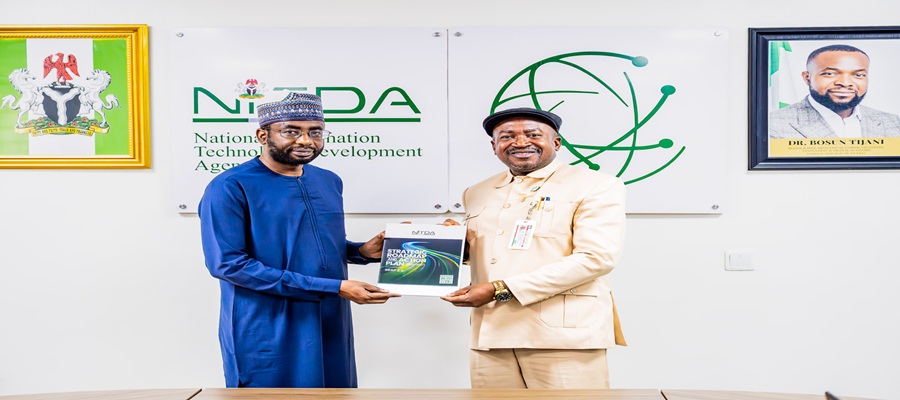
National Information Technology Development Agency (NITDA) has expressed readiness to deepen collaboration with Nigerian universities to promote research, innovation and technology-driven solutions to local challenges.

NITDA, UniAbuja
NITDA’s Director-General, Kashifu Inuwa Abdullahi, stated this when the management of Yakubu Gowon University, formerly the University of Abuja (UniAbuja), led by its Vice-Chancellor, Prof. Hakeem Fawehinmi, paid a familiarisation visit to the agency’s headquarters in Abuja.
Abdullahi said stronger collaboration between NITDA and tertiary institutions was essential to building a robust innovation ecosystem, developing practical skills and positioning Nigeria for technology-driven economic growth.
He stressed the need for increased investment in research, particularly in emerging technologies such as Artificial Intelligence (AI), Internet of Things (IoT), blockchain, cybersecurity and cloud computing.
“We need to invest more in in-depth research with universities to build a robust research ecosystem that will help us develop solutions.
“Research will focus on harnessing AI, IoT, blockchain, cybersecurity and cloud technology, among other emerging technologies, to improve our lives and grow our digital economy,” he said.
The DG described universities as critical talent factories required to achieve Nigeria’s digital transformation aspirations.
“NITDA has a vision to make Nigeria a digitally empowered nation. You (UniAbuja) are the talent factory, and we cannot achieve our vision without talented Nigerians.
“The only way to achieve that is by working with institutions like yours. So, we need to build talent,” he said.
Abdullahi also advocated the integration of AI education across disciplines in tertiary institutions, saying students needed practical digital skills to remain relevant in the evolving world of work.
“We can work together to explore ways of introducing AI across the board as a general study course in tertiary institutions.
“Elements of AI should be included in every field of study to equip our students with the hands-on skills for navigating the real world,” he said.
According to him, NITDA is already collaborating with key education sector stakeholders, including the Federal Ministry of Education, National Universities Commission (NUC), National Board for Technical Education (NBTE) and National Commission for Colleges of Education.
He said the agency was also working to promote digital literacy programmes across all levels of education to ensure that graduates acquire skills relevant to industry requirements.
Earlier, Fawehinmi said the university’s visit was aimed at seeking NITDA’s partnership and support in strengthening digital infrastructure and technology-based training at the institution.
He expressed appreciation for NITDA’s contributions to the Digital Geoscience Centre at the university.
The Vice-Chancellor said the university was willing to collaborate with NITDA on joint research, capacity-building initiatives and innovation programmes capable of contributing to Nigeria’s socio-economic development.
“We could go into partnership with you to provide data, collaborative engagements, staff exchanges and joint research hubs, so that we can produce high-level human resources.
“The university is committed to serving as a strategic academic partner to NITDA by providing academic expertise required to advance your national digital transformation initiatives,” he said.
The proposed collaboration is expected to strengthen the link between academic research and industry needs while creating opportunities for technology innovation, skills development and practical solutions to Nigeria’s socio-economic challenges.

A New Mexico court has ordered Meta, the parent company of Facebook and Instagram, to pay $567 million to address the alleged harms caused to young people by its social media platforms.

Meta
The ruling by Judge Bryan Biedscheid came in the second phase of a landmark trial concerning the impact of Meta’s platforms on children and teenagers.
The judge said $420 million of the amount would be dedicated to treatment services for young people, while the remaining funds would support awareness and prevention programmes, screening services and other related costs over the next five years.
The latest financial order comes on top of $375 million in civil penalties awarded against Meta in March after a jury found that the company knowingly harmed children’s mental health and concealed information about child sexual exploitation on its platforms.
During the second phase of the trial, prosecutors asked the court to order fundamental changes to Meta’s platforms, including measures to reduce addictive features, improve age verification and prevent child sexual exploitation through stronger privacy settings and increased oversight.
The court subsequently ordered Facebook and Instagram to introduce banner notifications and informational screens explaining their safety features, recommended practices and tools for addressing inappropriate comments.
The platforms must also regularly display the information, while an educational campaign in New Mexico will be subject to review by the state.
New Mexico Attorney General Raúl Torrez said the ruling sent a clear message that technology companies could be held accountable when their product designs knowingly exposed children to risks.
“Today’s decision is a victory for every parent who has worried about what social media is doing to their child and every child who deserves to grow up safer online,” Torrez said in a statement.
Meta said it would appeal the ruling.
“We work hard to keep people safe on our platforms and have been transparent about the challenges of identifying and removing bad actors and harmful content,” the company said.
The company said it remained confident in its record of protecting teenagers online and would continue to defend itself against what it described as claims that misrepresented the facts.
On age verification, the court said federal children’s privacy laws restricted Meta’s ability to apply certain verification tools to children under 13.
The court cited the Children’s Online Privacy Protection Act (COPPA), which limits the collection of personal information from children under 13.
Rather than imposing a blanket age-verification requirement exclusively on Meta, the judge ordered the company to continue improving its age-assurance tools in New Mexico.
The tools include the use of artificial intelligence to estimate users’ ages based on signals such as their social connections and the type of content they post and consume.
Meta was also ordered to attempt to develop a dedicated model for predicting whether users are under 13 within the next two years.
Additionally, the company must request proof of age from Facebook and Instagram users in New Mexico whom it estimates to be under 13.
Where Meta determines that a user is under 13, or under 18 but cannot determine a specific age, it must treat the user as being under the applicable age threshold until the user verifies their age.
The court further ordered Meta to partner with schools or a child-safety organisation to establish a reporting portal through which school officials can flag users suspected to be under 13.
Meta must also delete personal information it has collected from users under 13 and submit progress reports twice a year detailing its compliance with the court-ordered measures.
The ruling comes as Meta faces thousands of lawsuits from families alleging that children have been harmed by social media use.
The company is also preparing for another trial in California amid the growing litigation over the impact of social media platforms on young people.

World Bank Debars United Aviation Services, Owner over Fraudulent Activities

NITDA Introduces Cloud Certification Boost Data Localisation Compliance

Enugu State Approves Land for ITF’s Digital Fabrication Centre

BOI Opens N250Bn Bond Offer to Fund Businesses

Guinness Rewards Consumers with ₦17 Million in First Week of ‘Open for More’ Promo Draw

From Scarcity to Scale: What Africa Can Learn from India’s Agricultural Transformation

EFCC Busts NIS Visa Overstay Racket, Uncovers N700m in an Account

Fact-Check: Elon Musk’s “Tesla Pi Phone” is Internet Rumor

NBC Tasks Broadcasting Stations over 2028 DSO Global Deadline

Police Busts Syndicate Who Allegedly Stole N3Bn from Financial Institution




 News2 days ago
Fleeing Southeast Asia Scam Syndicates Find New Homes in Nigeria, Kenya- Report
 General News1 day ago
Guinness Rewards Consumers with ₦17 Million in First Week of ‘Open for More’ Promo Draw

 News2 days ago
Glovo Pioneers AI Quick-Commerce

 Telecom2 days ago
NCC Asks Telcos to Make Budgetary Provisions for Cybersecurity

 Telecom2 days ago
MTN Paid 600Bn in Taxes in H1 2026 – Kadri, MTN CFO

 News2 days ago
DSS Arraigns Eze for Allegedly Hacking, Stealing N800m from SunTrust Bank

 Telecom2 days ago
Glo Leads Internet Growth Figures in Nigeria for May

 News2 days ago
Liquid Intelligent Uses Light Beam Technology to Bridge Lagos Fibre Gaps