

Telecom
How Infinix Mobility Rules African Smartphone Market with Online Strategy

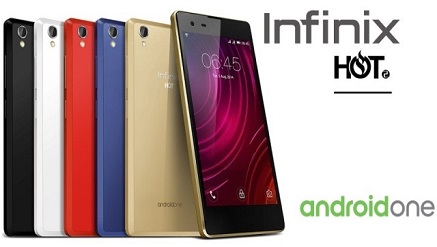
After the huge success of Infinix HOT, the fastest selling device launched last year, Infinix Mobility, the 3 years old smartphone company which is the No.1 Online smartphone brand in Africa.
Increasing its online presence, Infinix Mobility has moved to another level by reaching more hands in Nigeria and globally all around Africa.
The Products
Controlling the market with two powerful series
Infinix product range is not as large as its competitors; two series are covering the market: ZERO and HOT series. Infinix HOT product line as entry level smartphones.
Under the HOT series, Infinix NOTE product are more likely mid-range devices focused on entrepreneurs who need smartphones as working tool. While the ZERO series offer higher ends devices targeting the developing Nigerian middle class.
Nevertheless, the manufacturer manages to reach its target audience.
The smaller product range allows the manufacturer to focus its attention on the research and development of each product.
Impact of Online Presence
Infinix Mobility the No.1 online smartphone brand in Africa sold 157,860 units of HOT 2.
The smartphone manufacturer has sold over 150,000 units of its latest device.
About 70% of its sales are driven by E-commerce by passing the need for costly physical distribution networks.
While 30% are achieved through traditional channel including operator’s retail stores.
The HOT series offers affordable device below USD100. Infinix HOT series smartphones are designed for youths with a restricted budget.
Infinix HOT 2 is the proof that entry level gadgets can provide interesting specs and perfectly fit end users needs.
To even more enlarge its audience, Infinix Mobility released two versions of Infinix HOT 2. 1GB RAM at ₦ 17,500 and 2GB RAM at ₦ 19,500.
Software Impact
Software speaking, HOT 2 is coming with the latest operating system in the market, Android Lollipop 5.1. As technology is moving fast, Infinix is following.
The smartphone also manages your power and data usage. The device will receive an automatic and free update of Android Marshmallow 6.0 this month.
Recently, Infinix mobility developed its own User Interface (XUI): better design, faster screen responsiveness and energy efficiency.
When you have a look at the smartphone market, all manufacturers provide the pretty same user interface, that’s where Infinix Mobility stands out of the crowd, delivering customized interface that suits consumer needs.
Company’s Approach to e-Commerce
The company’s approach to e-commerce has really set it apart
Infinix devices come with pre-installed e-commerce applications such as Jumia.com and Konga.com.
Mobile applications are popular ways to experiment online shopping.
One of the most important factors is that mobile applications consume 3 to 5 times less data than directly browsing.
Moreover, access to content is easier and it appears that users spend in average 9 minutes against 6 minutes from mobile version or PC.
Bruno Li Infinix Mobility country manager stated: “Youths are always connected looking for the latest trends. Using the right channel is the key of success, the demand is online.”
Infinix Mobility provides smartphones that come with high specifications at affordable prices. Smartphones are available on traditional retail stores and also on e-commerce platform.
Online channel offer up to 10% difference with traditional channel. Products are also supported by service centers across Nigeria.
Retail Outlets
Retail stores such as SLOT and YUDALA are also investing the online space.
Online, Infinix smartphones are often sold out few hours after the official product launch. This scarcity brings on a lot of excitement on social media.
An active and efficient use of social and online media
Infinix Mobility has a great understanding of how fans use their smartphones. Social media is extremely important to consumers.
Recently, Benjamin Jiang, CEO of Infinix Mobility opens up his page to the public https://www.facebook.com/Benjamin-Jiang .
In only few weeks, his profile gathers over 3000 fans.
Benjamin Jiang said:”We talk to our fans as they are our close friends. Infinix fans are much more than users, they are our main concern. The most important thing for us is to understand what consumers need, to provide smartphones that fit their needs”.
The success of the No.1 online smartphone brand in Africa is build around online end-users feedbacks.
The loyalty of fans is cultivated through a BBS forum owned by the company.
Users are welcome to share their suggestions about products through a loyalty program.
Sometimes suggestions can be transferred to market facing product improvements. Infinix Mobility is not buying the loyalty of its fan base but definitely earning it.
“How Infinix become the No.1 Online smartphone brand in Africa?”
Bruno Li country Manager said: “My answer is customer’s participation. Infinix is not only selling devices, but the desire for its fans to build and be part of High-tech improvement”



Onafriq Nigeria Payments Ltd, a CBN licenced payment service provider, partners with The Pan-African Payment and Settlement System (PAPSS) to pilot the continent’s first wallet-based outbound payments from Nigeria to Ghana – fully in Naira and instant, without relying on hard currency conversion, in partnership with Banks and Mobile Money Operators.

The pilot service, approved by the Central Bank of Nigeria (CBN), enables cross-border intra-Africa payments for individuals, merchants, and traders.
In particular, the service will benefit SMEs, the real engine of intra-African trade; all now have access to a faster, cheaper way to reach customers and suppliers across the border.
By reducing barriers to cross-border trade, the new service will allow these businesses to grow their addressable markets and activity. From the 1st of December, this service will be fully operational for a 6-month period.
Through the partnership with PAPSS, Onafriq is supporting the operationalization of the AfCFTA (Africa Continental Free Trade Area) mandate.
The mandate itself is driving tariff-free trade for the 54 member states of AfCFTA. Within the partnership itself, Onafriq provides the mobile money rails, with an ecosystem consisting of over 1 billion mobile wallets.
Meanwhile, PAPSS brings a network of over 160 commercial banks, representing an ecosystem of more than 400 million bank accounts across its 19 African countries of operation.
The two partners are essentially seamlessly connecting two worlds: mobile money and banking. As a consequence, intra-African trade transactions will take place more easily and opportunities will be created.
Currently, Africa is made up of bank and mobile-led markets, with siloes often inhibiting transactions between these economies. However, this partnership will remove these boundaries. With over one billion mobile wallets and 500 million bank wallets across Africa, this partnership will allow for cross-border collaboration at scale.
This partnership builds on Onafriq and PAPSS’ existing partnership for payments into Ghana, announced earlier this year.
Mxolisi Msutwana, Managing Director Anglophone West Africa said, “Our work with PAPSS shows what collaboration at scale can unlock—seamless, secure connections between banking systems and mobile money ecosystems.
“This is how we open bi-directional trade corridors, reduce costs for businesses, and give African enterprises the rails they need to trade with confidence in their own currencies. The vision is continental, but it starts with practical steps like this one.”
Ositadimma Ugwu, Chief Information Officer, PAPSS, added “Too often, African businesses and individuals see borders as roadblocks instead of opportunities. With this step, we’re challenging that mindset, giving Nigerians the ability to send value next door with the same ease as sending a text message.
“Our vision is simple: make Africa’s borders invisible to payments. This pilot makes that a reality, moving us closer to a continent where payments don’t pause at the border.”
This new Nigeria-to-Ghana outbound capability builds on the successful Ghana-to-Nigeria instant payments corridor launched earlier this year – further proof that Africa’s payments future is local, instant, and inclusive.

MTN Foundation has kicked off the year with its five-week Digital Skills Training programme, upskilling 6,000 young Nigerians. The programme, which is in its fifth week commenced in January 2026.

MTN
The seventh phase of the project is focused on supporting Nigeria’s microbusiness to embrace digital transformation, at a time when SMEs remain the backbone of the Nigerian economy.
According to the National Bureau of Statistics (NBS), SMEs account for over 90 per cent of businesses in Nigeria and employ a significant portion of the country’s workforce, underscoring the importance of initiatives that strengthen their productivity and sustainability.
Following a one-month call for applications in September 2025, which saw almost 64,000 entries from Nigerians between the ages of 18 and 35, the 6,000 selected microbusiness owners have embarked on a five-week training that will end in February 2026.
The virtual training programme began with a general onboarding session that brought together participants across four business tracks and set the foundation for a four-week programme focused on practical digital strategies for business growth.
Microbusiness owners from sectors including circular economy, agriculture, food services, fashion, retail, logistics, beauty, and printing attended the training.
At the heart of the training is the principle that digital transformation has the capacity to enable small businesses scale and become more efficient. Participants were encouraged to start small, digitise repetitive tasks, and scale gradually using the Kaizen approach of continuous improvement.
This mindset allows them to see technology as a practical enabler of growth rather than a barrier. As the training progressed, the participants also learned about telesales and cybersecurity.
Speaking on the importance of the initiative, Odunayo Sanya, Executive Director of the MTN Foundation, said the programme is designed to equip young microbusiness owners with skills that directly address real business challenges.
“Small businesses are the backbone of our economy, and enabling young people adopt simple digital tools can make a real difference in productivity, sustainability, and long-term growth,” she said.
She also mentioned that the top-performing 600 participants will receive equipment grants of N600,000 each at the end of the programme.
Participants will continue to access learning materials and session recordings for the 5-week course, ensuring that digital adoption extends beyond the classroom. By combining practical guidance, relatable case studies, and continued support, the programme reinforces the message that digital growth for SMEs is achievable leveraging on technology.

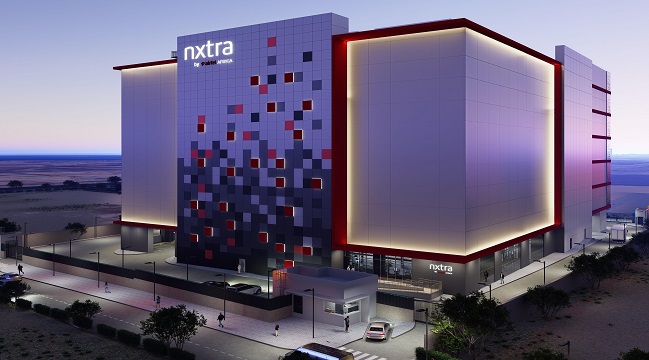
Airtel Nigeria has reaffirmed its long-term commitment to strengthening Nigeria’s digital infrastructure and data access to bridge gaps in connectivity and unlock new opportunities in the country.

The company restated this commitment during a recent high-level inspection tour of the Nxtra Data Centre that is being developed through Nxtra by Airtel Africa at Eko Atlantic, Lagos, the highly rated smart city with ambition to become the Data Centre hub of Nigeria.
The inspection tour was led by the Chief Executive Officer of Airtel Nigeria, Dinesh Balsingh and the Chief Executive Officer of Nxtra by Airtel Africa, Yashnath Issur, with the esteemed chairman of Eko Atlantic Mr. Gabbi Massoud, the CEO of the lead Engineering firm Design Group Limited, Mr. Bayo Odunlami and tech journalists.
The Nxtra Data Centre went through a stringent design validation process and cleared the approval to proceed construction from Eko Atlantic.
Commenting on the developments, Mr Issur said the site visit was a milestone marker and an indication of the company’s commitment to delivering the world-class digital facility on time and ensure that, ultimately, the investments deliver reliable, secure, world-class services for Nigeria and the rest of the continent.
“This Nxtra Data Centre in Lagos represents a critical part of our long-term vision for Nigeria’s digital ecosystem. Today’s visit allows us to review progress, engage our stakeholders, and ensure that our infrastructure investments continue to meet global standards and local needs.
“This data centre will deliver critical high multi megawatt capacity in line with hyperscale customers and enable high density environment. We are putting the infra to bring the cloud to Nigeria,” he said.
The data centre, set to be the largest in Nigeria, is being established to deliver hyperscale and edge facilities across key African markets. With a load of 38 Megawatts, the Lagos facility is expected to serve as a major hub for data hosting, cloud services, content distribution, artificial intelligence, and enterprise solutions in West Africa.
In his remarks, Mr Balsingh reiterated that the data centre was progressing steadily towards the previously announced 2028 go live date.
“Since the announcement of this project, our focus has been on building a world-class facility that supports Africa’s digital transformation agenda. We are encouraged by the progress recorded so far and remain committed to delivering a secure, energy-efficient, and future-ready data centre for Nigeria,” he said.
During the tour, stakeholders were ushered through key sections of the site, including piling zones, where required structural requirements have been tested. Technical teams provided briefings on infrastructure design, security architecture, redundancy systems, and sustainability measures being implemented to ensure reliability and operational excellence.
Strategically located close to major fibre routes and undersea cable landing stations, the Eko Atlantic data centre is designed to enhance Nigeria’s data sovereignty, reduce latency, and improve access to reliable digital services for private and enterprise customers, significantly boosting the country’s data hosting capacity and supporting emerging technologies such as artificial intelligence and cloud computing.
Mr. Massoud noted that the inspection tour underscored the city’s dedication to infrastructure of global relevance.
“Eko Atlantic as a city with high quality infrastructure will contribute positively to boost the economy of Nigeria and is a perfect place for the development of the digital infrastructure of Nigeria. The Nxtra data centre reflects the calibre of projects we seek to attract — long-term, technology-driven investments built to the highest global standards.
Today’s visit affirms the rigour of the planning and execution process by Nxtra, and the commitment of Eko Atlantic to facilitate and promote the Nigeria’s evolving digital ecosystem,” he said.
Through this ongoing investment, Airtel Nigeria and Nxtra continue to demonstrate their commitment to building infrastructure that enables innovation, supports economic development, and accelerates Nigeria’s digital transformation.
Nxtra by Airtel is developing a network of hyperscale data centres across the continent. Besides Lagos, construction of a new data centre has also commenced in Nairobi, Kenya and the Democratic Republic of Congo.

OADC Lagos Reinforces Commitment to Local Data Hosting and Digital Transformation @ NDPC’s National Privacy Week Summit

Firm Gives Advice on How to Stay Secure as AI, robots and VR are Redefining Family Life

FG Signs MoU with ICAN, CIBN, Others to Train 10m Nigerians in Financial Literacy

Corporate Comms in the Age of Crypto: Why Nigeria’s Digital Finance Future Depends on Trust

Senate confirms Oyewole as Supreme Court justice

19 Nigerian Banks Meet CBN Recapitalization Targets Ahead of March Deadline

Youth Talent Takes Center Stage as T2 Ignites High-Octane Rap Battles @ Carnival Calabar

Aig-Imoukhuede Foundation Wrapped Up 2025 with Real Change in Governance, Health, Media Across Africa

Showmax Unlocks Easier Payments for Nigerian Subscribers via Baxi

Nigerian Terra Industries Secures $11.8m for Expansion




 Telecom2 days ago
Telecom Operators Invest Over $1Bn on 2,850 New Sites in 2025 – NCC

 E-Financial2 days ago
If Capital is the Answer, What Exactly is the Problem with First Holdco

 E-Financial2 days ago
Amaanah Finance to Unveils Non-Interest Banking Services Today

 General News2 days ago
First Trustees to Host 8th Islamic Estate Planning Clinic in Abuja

 News2 days ago
NSCDC Hands over Fake Crypto Currency Trader to EFCC

 News2 days ago
Alakija’s Flourish Africa Provides N300m Grants for Women Entrepreneurs

 General News2 days ago
Security Forces Probe Use of Drones by Terrorists

 E-Financial1 day ago
Accidental Billionaire Opts for Jail Instead of Returning Money Credited Him by Mistake