

Telecom
Huawei Releases Innovation, Intellectual Property White Paper

Huawei has published a new white paper focused on innovation and intellectual property at its Forum on Innovation and IP Prospects in 2021.

The white paper focuses on how Huawei has been a leader in innovation and intellectual property (IP) management since the 1990s.
This has been key to Huawei rising as one of the world’s most influential technology powerhouses.
African consumers have benefited particularly from this, as Huawei has brought numerous impressive technologies to previously underserved areas on the continent.
These range from mobile network technologies that are affordable and reliable, to smartphones that offer incredible value for their price.
Song Liuping, chief legal officer, Huawei while speaking about the white paper release, said: “We want to show the history of our innovation over the past 30 years and our long-term commitment to respecting, protecting, and contributing to IP.”
According to him, Huawei is one of the world’s largest patent holders, and as of the end of 2020 it held over 100,00 active patents in more than 40,000 patent families worldwide.
Huawei first topped the World Intellectual Property Organisation’s (WIPO’s) list of patent filers in 2008.
Since then, it has finished first on this list for all but one of these years.
This has been key to the company repeatedly dominating the market in developing important technologies, with the most notable example of this being 5G.
Huawei’s innovation has been key to several African mobile networks developing high-quality networks that offer tremendous benefits for businesses – both now and in the future.
The white paper also focuses on how Huawei’s priority on intellectual property and Research and Development (R&D) did not appear out of nowhere.
Jason Ding, head of Intellectual Property Rights, Huawei said: “Innovation has been at the core of Huawei’s business since the company was founded. Our white paper lists the number of patent applications Huawei filed, or our R&D and innovation activities, in the late 90s and early 2000s.”
The company also announced that for multi-mode 5G smartphones, it would be providing a reasonable percentage royalty rate of the handset’s selling price and a per unit royalty cap of $2.50.
This, it said in a statement, would drive the adoption of 5G by making the cost structure for 5G implementers transparent and affordable.
This certainty and affordable licence fee structure goes a long way to ensuring that 5G smartphones are attainable to African consumers.
Huawei is therefore supporting African countries embrace future technologies that drive economic growth, improved education, and a better quality of life, Ding said.



Spacecoin, US-based, has announced the signing of recent agreements with local authorities and operators to launch satellite connectivity pilot projects in Africa.

The initiatives, focused on Kenya and Nigeria, aim to serve areas where terrestrial networks remain limited or unavailable.
n Kenya, Spacecoin has obtained a transmission license from the Communications Authority, allowing it to test satellite-based solutions for connectivity and Internet of Things (IoT) monitoring, particularly in rural and peri-urban areas with limited internet access.
According to the Kenyan regulator, internet penetration remains below 50% of the population, despite mobile penetration exceeding 130%.
In parallel, the company is continuing operations in Nigeria under an existing license issued by the Nigerian Communications Commission (NCC).
This authorization supports initiatives aimed at delivering affordable broadband connectivity to isolated and underserved communities.
Spacecoin’s approach is based on a decentralized satellite network using nanosatellites in low Earth orbit (LEO).
Combined with blockchain-based protocols, this architecture is intended to offer more flexible and cost-effective connectivity services than traditional networks, while also enabling the integration of IoT solutions for a range of uses, from smart agriculture to infrastructure monitoring.
These projects are part of a broader strategy to help narrow Africa’s digital divide, where a significant share of the population still lacks access to reliable internet services.
Satellite technology is increasingly viewed as a complement to terrestrial infrastructure, particularly in hard-to-reach areas where deployment costs and geographic constraints remain high.
Beyond Africa, Spacecoin is also running pilot projects in Asia, working with local partners to test the viability of its model across different regulatory and geographic environments.
According to the company’s management, growing interest from regulators reflects a shift toward solutions capable of reaching populations that have long been excluded from internet access.

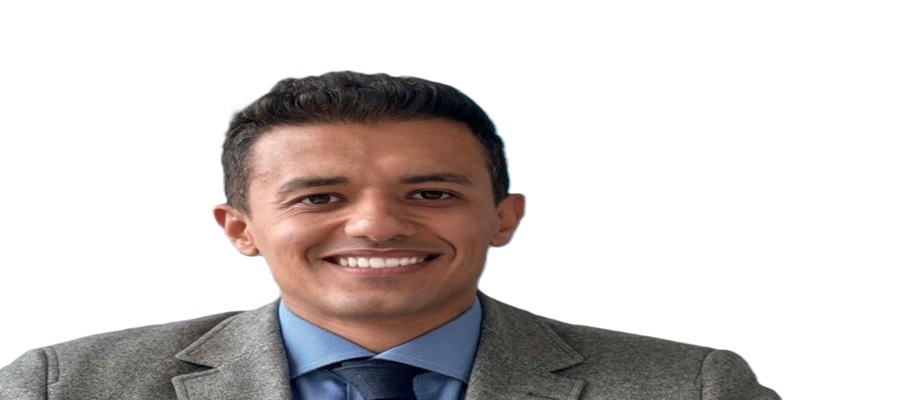
AVEVA, a global leader in industrial software, driving digital transformation and sustainability, today announces the appointment of Khaled Salah, 37 years old, as Vice President of Africa.

Khaled Salah
In this new role, he will be responsible for about 30 employees to ensure the successful implementation of AVEVA’s growth strategy. Khaled Salah will report directly to Jesus Hernandez, SVP of the EMEA region.
A 15-years + career across different industries and domains
With a MBA in management from the Warwick business school, UK, and a master’s degree in engineering from Ain Shams university in Egypt, Khaled Salah is an active advocate for driving sustainable progress in the industrial sector. With Sustainability in mind, Khaled is keen on making a positive business impact, while fostering progress for people and the planet.
He started his career at Schneider Electric, in 2013 in the global supply chain and evolved through various roles such as Europe procurement and supply chain strategy Manager, and Global Commercial strategy Director for the industrial automation business. Khaled Salah has developed a strategic understanding of all those fields.
After 12 years in Schneider Electric, Khaled joined AVEVA in 2022 to lead AVEVA and Schneider Electric global strategic partnership, across all industries managing a team of 30 people.
He has led the introduction of new AVEVA software solutions to initiate and develop significant growth areas across all Schneider Electric verticals.
Ambitious plans for AVEVA in Africa
In addition to his current role as AVEVA and Schneider Electric partnership Vice-President, Khaled now takes over the management of AVEVA’s activities in Africa.
Jesus Hernandez, SVP of the EMEA region says: “Africa is a strategic region for AVEVA. In this major industrial market, customers, world leaders in the fields of Energy, Metal & Mining, Chemicals, and Water, are looking for AVEVA’s expertise to accelerate and drive their digital transformation and sustainability strategies, as well as their energy transition projects.
“Khaled Salah’s qualities of leadership in a global environment will benefit his team spread across 12 countries including Algeria, Morocco, Egypt, Kenya, Nigeria, and South Africa.”
Motivated by the prospect of capitalizing on the talent of his team to strengthen AVEVA’s presence in Africa in the years to come, Khaled Salah says: “Helping my team realize their professional potential is close to my heart.
“We will work together to support and accelerate the digital transformation of industries in Africa, in particular through CONNECT, our industrial intelligence platform, with the support of our ecosystem of partners. »

A Google-Ipsos report reveals Nigerians topping global AI usage at 88%, surpassing the 62% worldwide average, with sharp rises in education and business applications.

“Our Life with AI: Helpfulness in the hands of more people” shows 93% of Nigerians using AI for learning complex topics versus 74% globally, 91% for work assistance, and 80% for new ventures—nearly double the 42% global rate.
Taiwo Kola-Ogunlade, Google’s West Africa Communications Manager, stated: “Nigerians are creatively using AI to unlock opportunities for learning, growth, and economic empowerment, shaping their future with technology.”
Key findings highlight 91% viewing AI positively for learning access, 95% expecting benefits for students and educators, and strong optimism—80% excited versus 20% concerned, compared to global 53%-46% split. Frequent users show 90% excitement

Spacecoin Secures Licenses to Roll Out Satellite Connectivity in Nigeria, Kenya

What the Retail and E-commerce Sector Should Expect in 2026 in Era of AI-driven Shopping and Privacy

Taraba Adopts Electronic Case Management System

AVEVA Names Khaled Salah Vice President for Africa to Drive Growth

Google Report: Nigeria Leads Global AI Adoption in Learning, Entrepreneurship

Banks quietly move to enforce new ₦50 transfer levy from Jan. 1

FIRS says NIN, CAC Numbers to Serve as Tax IDs from 2026

FIRS Declares NIN, CAC Numbers as Tax IDs from 2026

US Begins Partial Visa Ban on Nigerians January 1

Galaxy Backbone Tops FG’s Website Performance Ranking




 E-Financial2 days ago
Here Are Nigerian Banks That Have Secured Their Licences

 Telecom2 days ago
MTN CEO Toriola Hails Nigeria’s Telecom Transformation at MIPAD

 E-Financial2 days ago
Zenith Bank Top Nigerian Bank Pick Ahead of GTCO, AccessCorp

 News2 days ago
ICPC Charges Ozekhome with Forgery, Corruption Over London Property

 E-Financial2 days ago
Nigeria Processed $92.1Bn Crypto Transactions in 12 Months — PwC

 E-Financial2 days ago
How Crypto Criminals Stole $700m from People – often Using Age-Old Tricks

 Telecom2 days ago
Lebara Launches Agent Registration Portal

 General News1 day ago
Cybersecurity Firm Detects a Wave of Crypto Phishing Following BlockFi Bankruptcy