

E-Business
Huawei Wearable TalkBand B2: Perfect Combination of Bluetooth Headset & Health Tracker

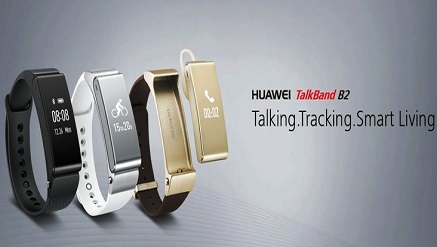
Huawei now ranked 70th on BrandZ’s Top Global 100 brand has witnessed a successful year for its global ICT market especially in consumer business, from successful launches of innovative mobile devices in the premium users segment.
There is no doubt that Huawei is surely a world class brand.
In Nigeria, the brand is steadily extending its success and this time it is on mobile wearable devices with its Huawei Talkband 2, a follow up version to Talkband 1.
Huawei’s Dream
Speaking at a media parley held recently in Lagos, Mr. Olaonipekun Okunowo, senior marketing manager, Huawei Consumer BG, revealed that Huawei’s Next-Generation factor has high pedigree in the global mobile device market.
“It’s also set to replicate this market leadership stance in Nigeria”, he said “Huawei brand’s vision is ‘Dreams Inspire Creativity’ and our wearable devices are meant to offer the best all-around smart solutions to consumers”.
“No doubt, wearable devices will remain one of the most significant trends in the device industry, and by leveraging Huawei’s technology and innovation, Huawei aims to be a leader in the wearable global space and Nigeria is not exempted.”
Huawei TalkBand B2
Huawei TalkBand B2 showcases a more business-like professional design, has smarter fitness tracking functionalities with higher accuracy, and enhanced synchronization with mobile devices. Inheriting a more superior Bluetooth connectivity than its predecessor, Huawei TalkBand B2 is not only a convenient health management device, but also the perfect combination of Bluetooth headset and sports bracelet.
Equipped with an advanced 6-axis sensor, TalkBand B2’s smart detection can automatically identify and record motions accurately, detect the duration of deep sleep and light sleep, and provide consumers with health tips on sleep pattern.
The perfect companion to consumers’ mobile devices, TalkBand B2 is equipped with dual-microphone, noise reduction technology and quality Bluetooth connectivity.
It also includes smart detection to understand whether the Bluetooth earpiece is on the wristband or not, allowing it to automatically push audio (music/call) to the smartphone or B2 bracelet.
TalkBand B2 is also equipped with a pager to locate your smartphone, through vibration or ring tone alerts.
Designed with fashion in mind by the Huawei Aesthetics Center team in Paris, the minimalist design of Huawei TalkBand B2 embraces simplicity; it’s made of high strength, light weight aviation aluminum.
With an intuitive and user-friendly HD touch screen, TalkBand B2 comes in two watchband styles, the environmentally professional TPU material or luxurious leather, which caters to different occasions.
TalkBand B2 has superb battery performance allowing it to operate for up to 5 days, and supports continuous call time for up to 6 hours, and 12 days’ standby time.
TalkBand B2 supports devices with any Android operating system and iPhones with IOS 7.0 or above.
The TalkBand B2 is available in champagne Gold colour and the recommended retail price of the premium version (with leather strap) is N35,000.00
Huawei Consumer BG
With 16 R&D centers in countries that include Germany, Sweden, the US, France, Italy, Russia, India, and China, Huawei’s products and services extend to over 170 countries, serving one third of the world’s population.
In 2014, Huawei’s smartphone global shipment ranked 3rd in the world.
As one of Huawei’s three business groups, Huawei Consumer BG offers mobile phones, mobile broadband (MBB) devices and home devices.
With more than 20 years of rich expertise in the information and communications technology (ICT) sector, an extensive global network, vast global business operations and network of partners, Huawei Consumer BG is dedicated to bringing the latest technology to consumers, offering a world of possibilities, creating extraordinary experiences and realizing dreams for people everywhere.



Over the past four years, gold has risen by more than 400%. The precious metal has long been one of the most traded assets in global financial markets. From its role as a traditional store of value to its sensitivity to inflation, interest rates, and geopolitical uncertainty, gold continues to attract traders seeking efficient and predictable trading opportunities during a period of global uncertainty and high volatility.

JustMarkets
For traders looking to effectively access gold markets, choosing the right trading environment is as important as timing their entry. One of the most popular and effective gold trading platforms is JustMarkets, offering the tools, conditions, and infrastructure to enable traders to achieve their most ambitious gold trading goals.
Tight Spreads on XAU/USD
Cost efficiency is a critical factor in gold trading, especially for active day traders. JustMarkets offers extremely competitive XAU/USD spreads, allowing traders to open and close positions with reduced transaction costs. Lower spreads can significantly impact short-term strategies, where precision and timing are key to effectively entering a trade. By minimizing trading costs, JustMarkets helps traders focus more on market analysis and finding the ideal entry point, and less on overhead.
Fast and Reliable Execution
Gold is recognized for its volatility, especially during the day, especially with economic announcements or geopolitical events. Speed is of the essence in volatile markets. JustMarkets provides high-speed execution of orders, which helps minimize the risks of delays, especially during periods of high volatility. This ensures that traders are able to respond better to market conditions, thereby having better control over trade management.
Flexible Trading Conditions
Each trader has their own approach to gold, ranging from intraday trading to position trading. JustMarkets offers flexible leverage and account types, enabling traders to adjust their exposure based on their risk tolerance and trading style. This flexibility is suitable for both conservative and aggressive traders while still allowing them to access the same global gold market.
Advanced Platforms and Tools
Successful gold trading is based on thorough technical and fundamental analysis. JustMarkets provides access to industry-standard trading platforms equipped with advanced charting tools, multiple timeframes, and a wide range of indicators for recognizing divergences and clear entry points. These features help traders analyze price trends, identify key levels, and plan their trades with greater confidence.
Accessibility via mobile devices and computers via the JustMarkets Mobile Trading app also ensures traders can monitor positions and market movements from anywhere and at any time.
Education and Market Support
Gold is also affected by factors such as inflation rates, central bank policies, and currency fluctuations. Understanding these factors is important for developing a structured trading strategy.
JustMarkets offers resources for traders, which provide information on how global events can impact the price of gold like case studies, daily, bank and weekly analysis. This is a knowledge-based system, which enables the trader to make more informed decisions rather than relying on the price movements of gold.
Trading Activities That Keep Gold Traders Engaged
In addition to the competitive trading environment, JustMarkets also runs various special activities and campaigns that aim to make the trading experience more interesting. At certain intervals, the special activities may include trading contests on specific trading instruments, such as gold, which are highly sought after by traders. This will give the traders an added impetus to keep trading.
The special activities are designed to encourage trading, consistency, and skill-building among the traders, along with the additional motivation for the trading strategies. This is also in line with the overall philosophy of JustMarkets to create a dynamic trading environment where trading, learning, and motivation are linked together.
A Trading Environment Built for Gold Traders
Gold is still one of the most dynamic markets with the greatest number of opportunities in the world. With tight spreads on XAU/USD, fast execution, flexible trading terms, and access to advanced analytical tools, JustMarkets creates an optimal trading environment for those who want to trade gold efficiently.
In addition to the comprehensive educational assistance, JustMarkets continues to position itself as a strong competitor for traders who are looking for professional trading conditions combined with growth opportunities.

Microsoft is stepping up its push to expand artificial-intelligence adoption across Africa as competition intensifies with Chinas DeepSeek for influence in one of the worlds youngest and fastest-growing digital markets.

The company plans to train 3 million Africans on its AI technologies this year through partnerships with schools, universities and other institutions, with a focus on South Africa, Kenya, Nigeria and Morocco.
The effort reflects Microsofts broader attempt to accelerate adoption of its AI ecosystem across emerging markets where developers and enterprises are increasingly experimenting with generative AI tools.
Alongside the training initiative, Microsoft is working with MTN Group (MTNOY), Africas largest telecommunications company, to distribute Microsoft 365 and its Copilot digital assistant to about 300 million subscribers.
The Elevate program is designed to expand AI literacy and reduce cost barriers that might otherwise limit adoption, according to regional leadership.
The push comes as Chinese technology firms expand their footprint across the continent, with DeepSeeks open-source models accounting for roughly 11% to 14% of chatbot use in several African markets and reaching about 20% in countries such as Ethiopia and Zimbabwe following investments tied to digital infrastructure and telecom networks.
Microsoft is also increasing its infrastructure investment in the region.
In South Africa, the company plans to invest 5.4 billion rand, or about $330 million, to expand its cloud and AI capacity by the end of next year, while it is also exploring plans for a geothermal-powered data center in Kenya.
Early corporate adoption is emerging across the continent, with South African grocer Spar Group using Copilot in ways that save more than 700 employee hours annually and Nigerias Access Holdings integrating AI into daily workflows.
Regional leadership has suggested broader AI adoption could potentially contribute up to $1.5 trillion to Africas gross domestic product by 2030 if governments and businesses continue investing in digital infrastructure and AI skills.


Kaspersky Global Research and Analysis Team (GReAT) has uncovered a new Android malware campaign in which cybercriminals distributed the BeatBanker Trojan under the guise of the Starlink application for Android.

Threat actors primarily target users from Brazil; nevertheless, Kaspersky experts don’t rule out that users from other countries may also face this threat.
The Trojan employs a Monero cryptocurrency miner and additionally installs a BTMOB remote administration tool (RAT) on the infected devices. To maintain its persistence, BeatBanker uses an uncommon mechanism involving a nearly inaudible looped audio file.
“At first we saw BeatBanker being distributed under the guise of a public services app; it installed a banking Trojan in addition to a cryptocurrency miner. However, our recent detection efforts uncovered a new campaign with another BeatBanker variant that deploys the BTMOB RAT instead of the banker module.
The attackers appear to be using a fresh lure with the Starlink app to reach more victims from different countries. Therefore, it is important for users to stay vigilant and use advanced solutions to protect their smartphones,” comments Fabio Assolini, Head of the Americas & Europe units at Kaspersky GReAT.
Initial vector of infection
Kaspersky experts believe that cybercriminals distribute a fake Starlink application containing the BeatBanker Trojan through phishing pages that mimic the Google Play Store. After execution on a compromised device, the Trojan displays a user interface that also mimics Google Play. Cybercriminals trick victims into granting installation permissions, thus allowing the download of additional hidden malicious payloads.
Crypto mining and BTMOB RAT module
When a user clicks UPDATE on the fake Google Play page, a Monero cryptocurrency miner deploys. BeatBanker monitors battery percentage and the temperature of an infected smartphone, as well as user activity after which a hidden cryptocurrency miner is started or stopped.
The Android Trojan also installs a BTMOB RAT on the compromised device. BTMOB enables full remote control and is sold as Malware-as-a-Service.
It is capable of automatic granting of permissions, hide system notifications and has mechanisms designed to capture screen lock credentials, including PINs, patterns and passwords on compromised devices. The malware also gives cybercriminals access to the front and rear cameras, GPS location monitoring and constant collection of sensitive data.
To ensure persistence and hinder uninstallation, BeatBanker maintains a fixed notification in the foreground and activates a foreground service with silent media playback. This tactic is designed to prevent the operating system from removing the malicious process.
Kaspersky’s products detect this threat as HEUR:Trojan-Dropper.AndroidOS.BeatBanker and HEUR:Trojan-Dropper.AndroidOS.Banker.*.

VDT Communications Achieves Two Prestigious Certifications ISO /IEC 27001:2022, ISO/IEC 27032:2023 Reinforcing its Leadership in Broadband Service Provision

CBN Orders Banks to Restrict Access to Banking Services for Loan Defaulters

NLNG Advances Media Excellence with Change Your Story Workshop

Interswitch Advocates Trust-Driven Infrastructure as Cornerstones of Africa’s Cross-Border Capital Future

Why JustMarkets Is a Strong Choice for Gold Trading

Kaspersky Discovers New Phishing Campaign Exploiting Google Tasks Notifications to Steal Corporate Credentials

esentry 2025 Report Shows Healthcare, Financial Services and Telecoms as Staging Grounds for Increased Cyberattacks in Africa

AfDB, UNDP Launch $10Bn AI Initiative for Africa

Pheelz Shares His Journey on Glo-Sponsored African Voices

Mutual Benefits Assurance Settles ₦5.9bn Claims in January 2026




 General News2 days ago
Court Freezes Bank Accounts of Petrocam, Founder over Alleged N9Bn Zenith Bank Debt

 General News2 days ago
FCCPC Says Telcos, Energy Firms Lead Consumer Complaints in Nigeria

 Telecom2 days ago
Techeconomy Unveils IWD 2026 Power List Celebrating 100 Women Shaping the Future

 E-Business2 days ago
Kaspersky Uncovers a New Android Malware Campaign Disguised as Starlink Application

 News2 days ago
Easybuy Sales Talent Program to Empower 10,000 Nigerians to Become Millionaires

 News2 days ago
FG Approves First National Policy on Cosmetic Safety, Health

 News2 days ago
Mobile Phones Used by Food Vendors Could Spread Infections- Experts

 E-Business2 days ago
Microsoft Expands Africa AI Push while DeepSeek Gains Users