

Broadcasting
Humans + Machines: Building the workforce of the future

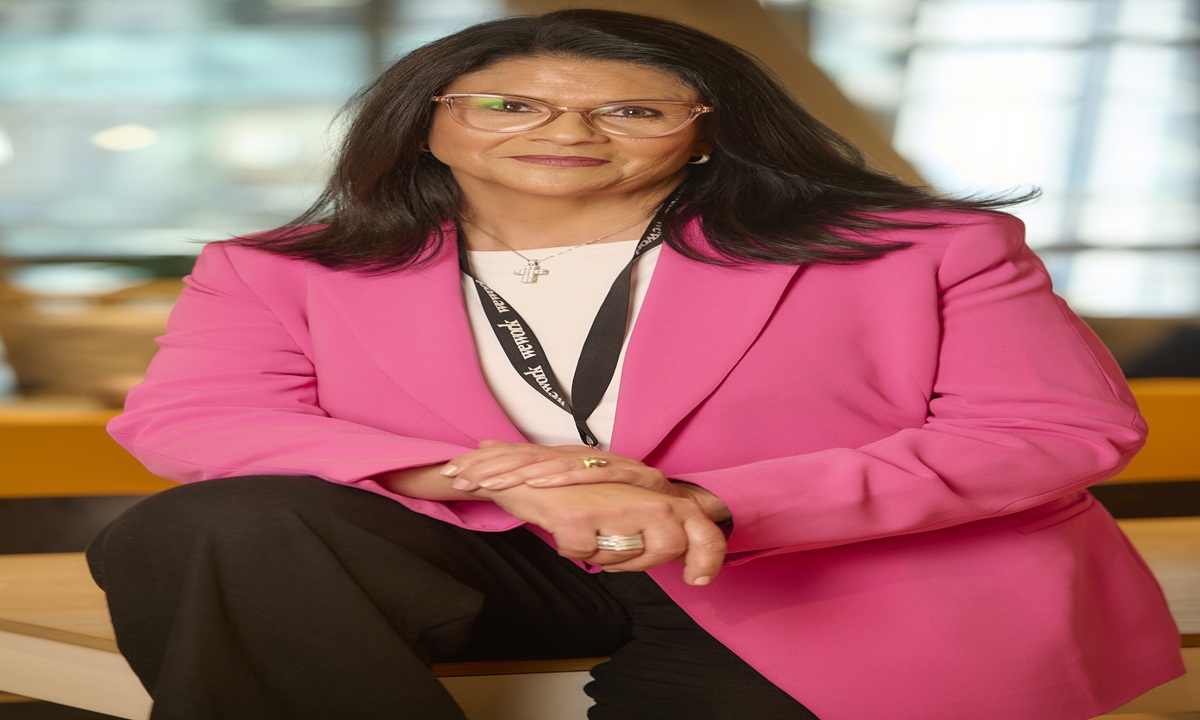
By Ursula Fear, Senior Talent Programme Manager | Salesforce
Is AI coming for your job, or is it already working beside you? As its use becomes more routine, artificial intelligence is looking less like a threat and more like a teammate: answering queries, making decisions, chasing leads, processing invoices, and drafting content around the clock.

Ursula Fear, Senior Talent Program Manager, Salesforce
This new class of digital labour is changing how teams function, how targets are met, and how people spend their time at work. From now on, almost every job, team, and company will involve AI agents – systems that can analyse vast datasets, apply human-like reasoning, and act independently. Their presence is set to influence workflows, increase productivity, support innovation, and redefine roles across the organisation.
Rather than replacing people, AI is tilting the workload. Salesforce research shows that 23% of HR teams plan to redeploy employees into roles that make better use of their uniquely human strengths. At the same time, agentic AI adoption is projected to surge by 327% over the next two years (from roughly 15% adoption today to about 64% by 2027).
This shift is tied to anticipated productivity gains of 30% per employee and labour cost reductions of 19%, equating to about $11,000 in savings per employee annually, based on Organisation for Economic Co-operation and Development (OECD) wage averages. Rather than replacing people, organisations are preparing to reskill and redeploy workers, enabling humans to focus on higher-value roles that emphasise creativity, strategy, and interpersonal skills.
A recent Gartner poll further found that 95% of customer service teams intend to retain human agents to help define and guide the role of AI, reinforcing the value of a “digital first, not digital only” approach. Gartner further says that by 2027, half of the organisations that planned to significantly reduce their customer service workforce will abandon those plans, highlighting the limits of going fully “agentless”.
For African countries, the rise of digital labour presents an opportunity to build modern, inclusive workforces without being bound by outdated development models. But realising this potential depends on sustained investment in skills training, digital infrastructure, and equitable access to AI tools.
Train for tomorrow
Africa has the world’s youngest population. It’s bursting with entrepreneurial energy. But many young people still don’t have access to the tools and skills that will define the next era of work. If the continent wants to lead in the digital labour revolution, it should act now by investing in digital infrastructure, prioritising skills development, and forging partnerships that make future-focused training widely accessible.
Yes, the skills gap is real and broadband internet is still a luxury in many communities. But on the upside, AI training doesn’t require a university degree. Much of it is free, online, and accessible to anyone with a smartphone and a curious mind.
That opens the door to governments, educators, businesses, and civil society to step up to update school curricula, expand digital infrastructure, and support public-private training partnerships. All of this matters: not just for economic growth, but for social inclusion, too.
If these foundations are put in place, African countries could not only meet the needs of their growing population but also leapfrog outdated development models.
From entry-level to in-demand
When AI begins to handle the simpler tasks, it’s easy to worry about what’s left for those starting out. Entry-level jobs aren’t disappearing though. Instead of doing routine work, newcomers will now need to build skills in oversight, collaboration, and using AI tools effectively from day one. The ladder still exists; it just starts in a different place.
This will require a different kind of training – not just technical know-how, but in soft skills like empathy, adaptability, ethical judgement, and communication, which are all human traits that help teams thrive.
AI’s presence in the workplace may be concerning, with reports of job cuts due to its adoption (here, here, here, and here), but all is not as it seems.
Research suggests a more balanced perspective: One of the most comprehensive studies, from the National Bureau of Economic Research, tracked 25,000 workers across 7,000 Danish firms using AI chatbots. It found no significant changes to jobs, wages, or working hours. Productivity rose by around 3%, without leading to layoffs.
The St. Louis Fed found something similar. Based on large-scale surveys in the US, researchers reported one in four workers now use generative AI weekly, saving on average just over two hours a week. Spread across the entire labour market, that translated into a 1.1% productivity gain. Crucially, there was no sign this efficiency came at the cost of jobs.
Adding to this, a 2024 study by Mäkelä and Stephany analysed over 12 million US job listings and revealed that demand is surging for “AI-complementary” skills such as resilience, teamwork, digital literacy, and analytical thinking. These are the very human capabilities that help people work effectively with AI. The study found AI-focused roles are nearly twice as likely to list these skills, and they command wage premiums of 5–10%. Even more telling: the positive impact of these complementary skills outweighs the substitution effects of AI by up to 70%.
These findings all suggest that AI isn’t replacing workers; it’s helping them work smarter and more efficiently. To thrive in this blended future, we need to prepare today, by building the right skills, expanding access, and embracing AI not as a threat, but as a partner in progress.
Because the future of work won’t be entirely human, nor entirely automated – it will be a blend of both.



Mr. Charles Ebuebu, director General of the National Broadcasting Commission (NBC), has called on Nigerian content creators to actively participate in the country’s Digital Switchover (DSO), describing the transition as a major opportunity for visibility, revenue growth, and industry collaboration.

Mr. Charles Ebuebu, DG, NBC
Speaking as Special Guest of Honour at the induction ceremony of the Electronic Media Content Owners Association of Nigeria (EMCOAN) in Lagos, Ebuebu stressed that the success of the DSO depends on engaging content to populate the nation’s new digital channels.
“Without content, the DSO’s success would be incomplete. We are urging content owners to collaborate with the Commission to ensure Nigeria’s digital future is rich, diverse, and sustainable,” he said.
The NBC boss highlighted that the upcoming FreeTV Direct-to-Home (DTH) platform, along with its mobile applications, would provide content creators with nationwide reach, advanced analytics, and brand partnership opportunities.
Nigeria’s DSO, which marks the shift from analogue to digital broadcasting, is being implemented by the NBC using the Nigcomsat satellite infrastructure. The programme aims to deliver over 100 nationwide channels and expand access to Nigerians in remote areas via hybrid decoders, addressing long-standing infrastructure and funding challenges. The project, which has experienced delays since 2012, now has strong government backing and is scheduled for launch in April 2026.
Ebuebu commended EMCOAN members for their contributions to strengthening Nigeria’s creative economy and encouraged them to leverage the opportunities offered by the DSO to promote local stories, culture, and creativity on both national and global stages.
During the ceremony, EMCOAN honoured its distinguished members, naming Wale Adenuga, MFR, as Grand Patron and Mr. Yinka Adebayo as Patron.
Prominent figures in the broadcasting content industry, including Wale Adenuga, Opa Williams, Agatha Amata, Jibe Ologeh, High Chief Emeka Ossai, Debbie Odetayo, Amina Mohammed, and Frank Elaboya, attended the event.
Representing the NBC at the event was Mr. Ralph Akpan, director of the Lagos Zone, while EMCOAN president, Mr. Adeniji Omirin, MD of ADNOM Media, urged members to fully engage in the digital switchover.

Canal+ is to cut jobs at MultiChoice as part of a sweeping restructuring plan aimed at stabilising the African pay-TV operator, following years of operational and financial pressure.

The move comes alongside a planned $115 million capital injection, underscoring the urgency of efforts to revive the business after the French media group took control.
The planned layoffs are expected to form a core element of a broader cost-cutting and efficiency drive, as Canal+ seeks to streamline MultiChoice’s operations and improve profitability.
The restructuring signals a shift toward leaner operations, with a focus on eliminating redundancies and optimising the company’s cost base.
MultiChoice has struggled in recent years with declining subscriber numbers across key African markets, weighed down by macroeconomic pressures, currency volatility, and changing consumer behaviour.
The rise of global streaming platforms has intensified competition, chipping away at the company’s traditional pay-TV dominance.
Canal+’s intervention marks a pivotal moment for MultiChoice, reflecting a more aggressive approach to repositioning the business.
By combining fresh capital with structural reforms, the new owners are aiming to both stabilise short-term performance and lay the groundwork for longer-term growth.
The $115 million injection is expected to provide immediate financial relief, supporting operations and potential strategic initiatives.
However, the accompanying job cuts highlight the depth of the challenges facing the company and the scale of transformation required to restore competitiveness.

Nigeria has ranked first globally in the ownership of the two largest stablecoins, Tether (USDT) and USD Coin (USDC), reflecting the country’s growing reliance on dollar-linked digital assets.

USDT, USDC
Stablecoins such as USDT and USDC are designed to maintain a fixed value against the U.S. dollar, allowing users to store money digitally while avoiding the price volatility associated with cryptocurrencies like Bitcoin.
According to the 2026 Stablecoin Utility Report released by BVNK, about 59 percent of Nigerian crypto users hold USDT, while 48 percent own USDC, giving the country the highest combined ownership rate among all nations surveyed.
The report placed Nigeria ahead of several major economies, including Australia and India, highlighting the country’s strong adoption of dollar-denominated digital assets. Australia ranked second with 34 percent USDT ownership and 29 percent USDC, while India placed third with 30 percent USDT and 27 percent USDC holdings.
The study also examined adoption levels across other regions. Countries such as Colombia and Singapore showed strong usage of both stablecoins, while adoption levels were also notable in South Africa and the United States.
Other markets included in the analysis were Philippines, Thailand and Argentina, where stablecoin ownership has also increased significantly. Among European economies, the report said France and Germany showed moderate levels of adoption, while Latin American markets such as Mexico and Brazil recorded smaller but growing usage rates.
The United Kingdom also appeared in the ranking with modest levels of stablecoin ownership. The report noted that USDT ownership exceeds USDC in many countries, including Nigeria, Australia, India, Singapore, the Philippines, Thailand, Argentina and France.
However, USDC is often viewed as a more compliance-focused stablecoin because of its stronger transparency and regulatory alignment. In some markets, including South Africa, Colombia, Germany and Brazil, the report found that USDC adoption slightly exceeds USDT.
More broadly, the data suggests that stablecoin adoption is being driven largely by emerging economies rather than advanced financial markets. According to the report, countries such as Nigeria, Argentina and the Philippines are among the biggest users of stablecoins, where people increasingly rely on dollar-pegged digital assets to protect savings from currency volatility and facilitate cross-border payments.

Breaking…..Kuda Lays Off Many Employees in Broad Restructuring

NCC to Curb SIM Fraud, Strengthen Digital Security with New Platform

NBC Boss Urges Content Ceators to Participate in DSO

Kidnappers Now Use Banks to Collect Ransoms — Expert

CBN Says Bank Customers Won’t Lose Deposits because of Recapitalisation

Kaspersky Discovers New Phishing Campaign Exploiting Google Tasks Notifications to Steal Corporate Credentials

esentry 2025 Report Shows Healthcare, Financial Services and Telecoms as Staging Grounds for Increased Cyberattacks in Africa

Spotify’s Loud & Clear Report Reveals Over ₦60Bn Revenue for Nigerian Artists in 2025

China Threatens to Shut Nigeria’s Satellite Over $11.44m Unpaid Debt

MTN Nigeria Posts Record N1.70 Trillion Pre‑Tax Profit, Declares N20 Dividend for 2025




 E-Financial3 days ago
CBN Directs IMTOs to Open Naira Settlement Accounts

 Telecom3 days ago
Nigerians Lose N12.5Bn to AI-Driven Scams- PwC

 General News3 days ago
Court Remands Hacker for Allegedly Stealing N3.09Bn from FCMB

 Telecom3 days ago
Airtel Africa, Starlink Mobile Data and Messaging Testing Take off in Kenya

 E-Financial3 days ago
DLM Capital Group’s AAA-Rated Sovereign Bond-Backed Composite Notes (“SBCNS”) Strengthens Investor Confidence with Successful First Principal & Interest Payment

 E-Business3 days ago
AU Sees AI Adoption Evolving to Boost Economic Growth in Africa

 Telecom3 days ago
GATEWAY Programme Opens Doors for 340,000 Nigerian Youths to Tap into $1.85trn Global Gig Economy

 News3 days ago
Kaspersky, AFRIPOL Conduct Joint Cybersecurity Training for African law Enforcement