

Broadcasting
Hybrid Working is the Way Forward, Here’s How to Get it Right for Your Business

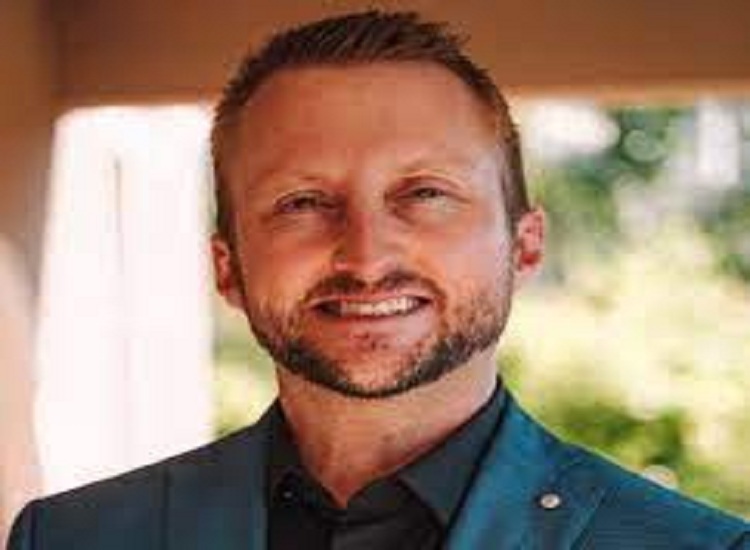
By Andrew Bourne, Regional Manager, Africa, Zoho Corp.
As Nigeria enters its third wave of COVID-19 with cases of the Delta variant increasing in several states, companies are urged to take precautions for their employees. With both the COVID risk and changing employee preferences in mind, businesses should, if they have not already, consider implementing sustainable hybrid work approaches as a core part of their business continuity strategies.

Andrew Bourne, Regional Manager, Africa, Zoho Corp
Here are a few general tips to keep in mind for any organization that wants to embrace the hybrid work model:
● Improve Communication
With employees scattered in different locations, communication breakdowns are common. To overcome this issue, different communication channels can be utilised. For instance, a secure internal chat system allows employees to communicate easily and respond at their own pace. Leveraging mediums such as virtual company forums to post announcements also ensures that employees are well-informed of all the important developments in their organisation. While setting up team meetings, managers can check in personally with remote employees to settle on a time that’s convenient for everybody involved. Having a Poll feature in your chat system will also make it easier to get vote-ins from staff on various topics.
● Practise Empathy

This is a time of great uncertainty and employees will find solace in an empathetic work environment. It’s important for managers to check in with the employees often to understand the challenges they face and offer the best possible support. For instance, if an employee has to take care of a sick family member, consider allowing them to check out as soon as they complete their work, irrespective of working hours.
● Make It Equal
Equality and inclusion are necessary to make a hybrid workplace model successful. One reason the hybrid model is well-received among employees is because it gives them the option to choose and decide. If the hybrid work policy allows for two days of office and three days of remote work, organizations can consider letting the employees decide each week’s schedule individually or among their own teams. In order to make the process bias-free, it is better to establish guidelines for both in-office and remote work, and let employees make the final decision. Organisations should treat all employees equally no matter where they work.
● Focus On The Output
One of the key business aspects that has changed considerably by remote work is performance management. Remote work provides a chance for organisations to start measuring what matters: output quality instead of hours worked, and missions accomplished instead of tasks completed. Businesses should replace micromanagement with continuous, interactive performance feedback to help employees clearly navigate their job responsibilities and expectations when they work remotely. This will help employees set realistic goals and work towards achieving them, further enabling employees to complete tasks quicker and maintain a healthy work-life balance.
● Use Technology
Technology that is well-designed, modern, easy to use, and flexible can bring remote teams together and enhance productivity. For instance, digital signature tools empower employees to sign and share documents from wherever they are, without having to waste time behind manual document signing. Similarly, implementing online meeting software helps employees organize and participate in meetings on the go. This way, employees can meet, discuss, and make decisions wherever and whenever. Overall, technology should empower employees to work at their own convenience.
● Hub-and-Spoke Offices
The hub-and-spoke model is a potential game-changer that could take hybrid workforce management to the next level. The hub-and-spoke model enables employees to either work from their organisation’s central headquarters (hub) or other smaller offices (spokes), spread across a country, often closer to places where employees reside. This way, employees can alternate between remote and on-site work with ease. It allows them to occasionally meet their peers face to face for brainstorming or even a catch-up lunch and then go back to the safety of their home offices.
● Leverage The Potential Of The Gig Economy
Hiring gig workers like independent contractors and freelancers can be very beneficial to organisations adopting the hybrid workforce model. Unlike full-time employees, gig workers are given the freedom to choose when, where and how to work. Also, these workers are paid based on the work they do and not on the processes involved.


Broadcasting
NBC Files Fresh Appeal against Judgment Barring it from Imposing Fines on Broadcast Stations

National Broadcasting Commission (NBC) has filed an application seeking the permission of the court of appeal to file a fresh appeal against the judgement of the federal high court in Abuja barring it from imposing fines on erring broadcast stations.

In the application filed at the court of appeal in Abuja by Dapo Akinosun, counsel to the NBC, the commission argued sanity in Nigeria’s broadcasting sector is under threat and that the public interest would be better served if the court grants the application.
On January 17, 2024, Rita Ofili-Ajumogobia, a judge at the federal high court in Abuja, restrained the NBC from imposing a N5 million fine on broadcast stations sanctioned in 2022 over allegations of “undermining Nigeria’s national security by broadcasting documentaries on banditry in Nigeria”.
The affected broadcast stations were Multichoice Nigeria Limited, owners of DSTV; TelCom Satellite Limited (TSTV); Trust-TV Network Limited; and NTA StarTimes Limited.
The suit was filed by Media Rights Agenda (MRA).
Dissatisfied with the ruling, the NBC appealed the judgement filed an appeal at the court of appeal in Abuja.
In June, the court of appeal dismissed the commission’s appeal, holding that it was “fundamentally defective” and incompetent.
Jane Inyang, lead judge of the panel, held that the parties before the lower court were identified as “Incorporated Trustees of Media Rights Agenda (as applicant) and National Broadcasting Commission (as respondent)” but in the notice of appeal the purported appellant was described as the “Nigerian Broadcasting Commission”,
The judge held that the discrepancy was significant and that the court lacked jurisdiction to entertain the commission’s appeal.
In the application, the NBC urged the court to grant it leave to raise and argue a fresh issue on appeal relating to the legal capacity of MRA to institute and maintain the original suit before the lower court.
The commission argued that the defect in the earlier notice of appeal, which resulted in the dismissal of its appeal, arose “solely from an inadvertent misdescription” of its name by its lawyer.
The NBC told the court that the subsisting judgement raises questions on the commission’s statutory powers to regulate broadcasting and enforce compliance with broadcasting standards in Nigeria.
The commission argued that the subsisting judgment is capable of creating uncertainty regarding its regulatory powers if it is allowed to stand.
The NBC also argued that without the pronouncement by the appellate court on the issues raised in the appeal, its regulatory framework would be weakened.
“A weakened regulatory framework may embolden non-compliance with established broadcasting standards, thereby increasing the dissemination of false, misleading and unverified information capable of causing unnecessary public anxiety, panic and social unrest,” the NBC said.
“Absence of effective regulatory oversight may further encourage irresponsible broadcasting practices and the misuse of broadcast and digital media platforms by persons who deliberately publish sensational, inaccurate or inflammatory content to intimidate, harass or unduly influence individuals, institutions and public discourse.”

David Adedeji Adeleke, known professionally as Davido, has shared his past suicidal thoughts as he dropped Oriadé, his sixth studio album yesterday.

Davido
Davido said he chose the date on purpose as it marks exactly 15 years since he began his professional music career.
Oriadé is a Yoruba word combining “Ori,” meaning destiny, and “Adé,” meaning crown.
It translates to “the crowned head.” The album has 13 tracks and features Black Sherif, Aya Nakamura, Leon Thomas, Mayorkun, and Llona.
It follows his 2025 project, 5ive, which reached number two on the Billboard World Albums chart.
Davido also announced an international tour to support the new record.
In the days leading up to the release, Davido gave interviews that revealed personal details about his past and his current life.
Speaking to Vibe Magazine on Thursday, he described a 2014 incident in Ghana that left him feeling suicidal.
He said he invited a woman back to his hotel room after a show, and she later posted a photo of him sleeping online.
He said the fallout overwhelmed him.
“My daddy was calling me. My sisters were calling me. If I saw the balcony that day, I would have jumped,” he said.
He said he was young at the time and did not fully understand the consequences of his actions.
He described the experience as a turning point that changed how he thinks about privacy and fame.
In the same interview, he explained why he often dresses down in public despite his wealth.
He recalled a trip to the South of France where he went out in shorts and slippers without his watch.
“I’ve been on jets, I’ve been flying, I’ve been in all these places since I was a baby. I’ve been seeing money since I was a baby. So all these things don’t really excite me,” he said.
He added that he sometimes prefers to drive a Toyota to the supermarket in Atlanta instead of one of his luxury cars.
In a separate livestream with Davrel, Davido spoke about how his life has changed since marrying his wife, Chioma, and becoming a father.
He said his home no longer holds the large crowds it once did.
“I can no longer have 100 people in my house like before,” he said.
He said he speaks to Chioma every day regardless of his schedule.
He also disclosed that he spends between $200,000 and $300,000 a month on himself, not including costs for his wife, children, jewelry and cars.
He said the amount is lower when he is in the United States, where he described his lifestyle as quieter.
Africa Prudential Plc has reaffirmed its commitment to digital transformation, revenue diversification and sustainable growth after reporting a strong financial performance for the first half of 2026.

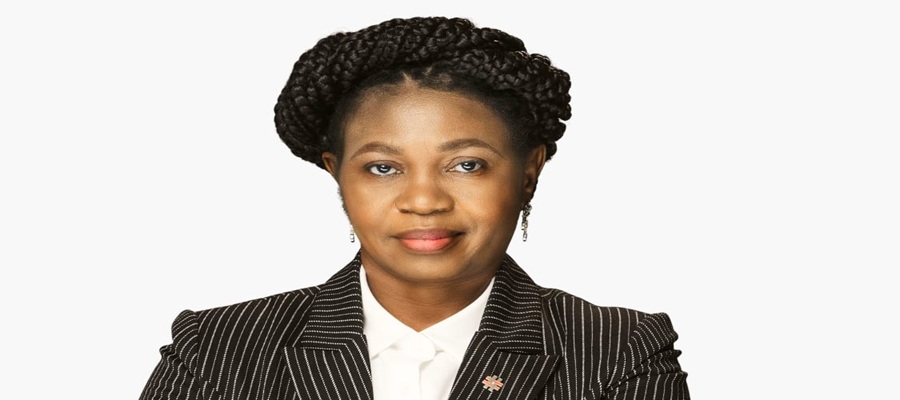
Dr Catherine Nwosu
The company made this known during its H1 2026 Investor Call, which brought together institutional investors, shareholders, investment analysts, regulators and other stakeholders to review its financial performance and strategic outlook.
Dr Catherine Nwosu, managing director and Chief Executive Officer of Africa Prudential, said the company’s performance reflected the resilience of its business model and the effectiveness of its long-term growth strategy despite prevailing macroeconomic challenges.
According to the company’s financial results, gross earnings rose by 27 per cent year-on-year to N4.28 billion, from N3.34 billion recorded in the corresponding period of 2025.
Profit before tax increased by 22 per cent to N2.41 billion, while profit after tax grew by 18 per cent to N1.59 billion.
The company also reported a 27 per cent rise in net operating income to N4.21 billion, while total assets increased by 13 per cent to N46.53 billion.
Shareholders’ funds equally rose by 13 per cent to N12.52 billion, reflecting continued financial strength.
Management attributed the performance to sustained growth in its core registrar business, increased corporate action activities in the Nigerian capital market, improved treasury earnings and rising adoption of its technology-driven solutions.
The company said it was steadily transforming from a traditional share registrar into a broader technology and business solutions provider serving Nigeria’s capital market ecosystem.
During the interactive session, investors sought clarification on the sustainability of earnings, particularly as interest rates are expected to moderate.
Responding, Nwosu said the company was deliberately expanding its recurring fee-based revenue streams to reduce dependence on treasury income.
“Interest rates influence our treasury income positively, but that is why we are deliberately diversifying our revenue streams.
“Our strategy is to grow recurring fee-based business lines such as our digital solutions, Know Your Customer (KYC) services, Annual General Meeting (AGM) technology, probate services and the SabiVest mobile app.
“Over time, this will reduce our reliance on interest income and create a more balanced and resilient earnings mix,” she said.
Nwosu noted that increasing capital market activities had created stronger demand for seamless digital investor experiences, improved operational efficiency and enhanced compliance solutions.
She said the company would continue investing in technology-enabled products capable of delivering long-term value to shareholders while strengthening its competitive position.
According to her, Africa Prudential has identified five strategic priorities for the second half of 2026.
The priorities include driving sustainable growth across its core registrar and emerging business lines, accelerating technology-led product innovation, strengthening brand leadership, investing in talent development and deepening corporate governance.
She said the investor engagement demonstrated the company’s commitment to transparency, accountability and regular engagement with shareholders and the investment community.
Africa Prudential reaffirmed its commitment to leveraging innovation, operational excellence and sound financial management to sustain growth and strengthen its leadership position in Nigeria’s capital market.

World Bank Debars United Aviation Services, Owner over Fraudulent Activities

NITDA Introduces Cloud Certification Boost Data Localisation Compliance

Enugu State Approves Land for ITF’s Digital Fabrication Centre

BOI Opens N250Bn Bond Offer to Fund Businesses

Guinness Rewards Consumers with ₦17 Million in First Week of ‘Open for More’ Promo Draw

From Scarcity to Scale: What Africa Can Learn from India’s Agricultural Transformation

BON Establishes Six Ad Hoc Committees to Modernize Broadcasting

EFCC Busts NIS Visa Overstay Racket, Uncovers N700m in an Account

Fact-Check: Elon Musk’s “Tesla Pi Phone” is Internet Rumor

NBC Tasks Broadcasting Stations over 2028 DSO Global Deadline




 E-Financial3 days ago
Access Holdings Deepens Sustainable Finance Impact, Expanding Green Assets to ₦92.14 Billion

 News3 days ago
Ogbaga, Abuja Lawyer to Sue Telcos, DStv over Alleged Unfair Practices

 Telecom3 days ago
MTN Moves Closer to Full IHS Takeover

 Telecom3 days ago
Airtel Nigeria Unveils Hundreds of Retail Shops in Wide Expansion of Customer Touch Points

 News3 days ago
NAICOM Issues New Licences to 43 Recapitalized Insurers

 E-Financial3 days ago
NAICOM Revokes Nigeria Reinsurance’s Licence over Failure to Meet MCR

 E-Financial3 days ago
SEC Begins Full e-Registration for Capital Market Services

 E-Financial3 days ago
TeamApt, Awabah Partner to Bring Micro-Pension Contributions to POS Terminals Nationwide