

E-Business
Intel Buys Mobileye for $15.3Bn

Intel, computing giant, has moved from partnering to acquiring the Mobileye, a leader in computer vision for autonomous driving technology, for $15.3 billion — the biggest-ever acquisition of an Israeli tech company.
Specifically, “Under the terms of the agreement, a subsidiary of Intel will commence a tender offer to acquire all of the issued and outstanding ordinary shares of Mobileye for $63.54 per share in cash, representing a fully-diluted equity value of approximately $15.3 billion and an enterprise value of $14.7 billion,” the company noted in a statement. The deal is expected to close in about nine months, Intel said.
Mobileye today covers a range of technology and services including sensor fusion, mapping, front- and rear-facing camera tech, and beginning in 2018, crowdsourcing data for high definition maps, as well as driving policy intelligence underlying driving decisions.
This deal will bring under Intel’s umbrella not only a much bigger range of the different pieces that go into autonomous driving systems, but also a number of relationships with automakers. In the call today, Mobileye’s CTO and co-founder Amnon Shashua said the company is working with 27 car manufacturers, including 10 production programs with Audi, BMW and others going into 2016.
“This acquisition is a great step forward for our shareholders, the automotive industry and consumers,” said Brian Krzanich, Intel CEO, in a statement. “Intel provides critical foundational technologies for autonomous driving including plotting the car’s path and making real-time driving decisions. Mobileye brings the industry’s best automotive-grade computer vision and strong momentum with automakers and suppliers. Together, we can accelerate the future of autonomous driving with improved performance in a cloud-to-car solution at a lower cost for automakers.”
“We expect the growth towards autonomous driving to be transformative. It will provide consumers with safer, more flexible, and less costly transportation options, and provide incremental business model opportunities for our automaker customers,” Ziv Aviram, Mobileye Co-Founder, President and CEO, added. “By pooling together our infrastructure and resources, we can enhance and accelerate our combined know-how in the areas of mapping, virtual driving, simulators, development tool chains, hardware, data centers and high-performance computing platforms. Together, we will provide an attractive value proposition for the automotive industry.”
Confirming our earlier report, Intel said that Mobileye’s CTO and co-founder, Prof. Amnon Shashua, will lead Intel’s autonomous driving division, which will be based in Israel. Doug Davis, Intel’s SVP, will oversee how Mobileye and Intel work together across the whole company and will report to Shashua.
The negotiations about what stays where for Mobileye and Intel are reminiscent of one of the other big M&A deals in Israel’s tech history, concerning Waze. Originally, Waze was being courted by Facebook, although there were disagreements over where Waze’s staff would be centered: engineering wanted to stay in Israel while Facebook was keen to get the to Facebook’s HQ in Menlo Park. Ultimately that delay led to Google swooping in, agreeing to Waze’s terms, and closing the deal.
Intel has been working officially with Mobileye since last year.
Intel had been a leader in processors at the peak of the PC era, although it has competed hard (and often lost) as smartphones overtook the larger devices as consumers’ computers of choice.
Moving deeper into self-driving technology is part of Intel’s bigger strategy to build up its position in emerging areas of computing. Other verticals that Intel has focused on include connected “objects” (IoT) and virtual and augmented reality. It has been following through on this strategy with acquisitions as well as organic growth.
“The combination is expected to accelerate innovation for the automotive industry and position Intel as a leading technology provider in the fast-growing market for highly and fully autonomous vehicles,” the company continued. “Intel estimates the vehicle systems, data and services market opportunity to be up to $70 billion by 2030. The transaction extends Intel’s strategy to invest in data-intensive market opportunities that build on the company’s strengths in computing and connectivity from the cloud, through the network, to the device.”
Intel has disclosed several other acquisitions in Israel to fill out that strategy, including buying a personal assistant platform from Ginger Software; Omek Interactive for gesture-based technologies; and Replay Technologies for 3D video.


E-Business
Kaspersky Discovers Vulnerability in Qualcomm Snapdragon Chips that can Lead to Data Loss & Device Compromise


Kaspersky ICS CERT discovered a hardware-level vulnerability affecting Qualcomm chipsets that are widely used in a range of consumer and industrial devices, including smartphones and tablets, car components, IoT devices and more.

The vulnerability resides in the BootROM – firmware embedded at the hardware level. Attackers could potentially get access to any data stored on the device or device sensors like camera and microphone, implement complicated attack scenarios and in some circumstances get full control of the device. The results of the research were presented at Black Hat Asia 2026.
The vulnerability affects Qualcomm MDM9x07, MDM9x45, MDM9x65, MSM8909, MSM8916, MSM8952 and SDX50 series and was reported to Qualcomm in March 2025. Qualcomm formally acknowledged the vulnerability in April 2025. It has been assigned a CVE-2026-25262. Other Qualcomm-based chips may be affected as well.
Kaspersky researchers explored the Sahara protocol, a low-level communication system used when a Qualcomm chip enters Emergency Download Mode (EDL) – a special recovery mode designed for repairing or restoring smartphones or other devices. Sahara acts as the first step that allows a computer to connect to the device and load software before the operating system on the device starts.
Kaspersky demonstrated that a security flaw in this process could allow an attacker with physical access to the target device to bypass key security protections in the chip, compromise the secure boot chain and, in some cases, deploy malicious applications and backdoors to the chip’s Application Processor, thus fully compromising the entire device.
For example, in cases when the target device is a smartphone or a tablet, the attacker can potentially get access to entered user passwords, and subsequently this opens further access to multiple types of sensitive user data, such as files, contacts, location, access to the devices’ camera and microphone, etc.
A potential attacker only needs a few minutes of physical access to a device to compromise it. Therefore, if a smartphone has been sent for repair or left unattended for a short time, one can no longer be sure it is not infected. Researchers warn that the threat extends beyond end-user scenarios to include potential compromise during the supply chain phase.
“Vulnerabilities like this may allow attackers to deploy malware that is difficult to detect and remove. In practice, this could enable covert data collection or influence device behaviour over extended periods of time.
“While a reboot might seem like an effective way to remove such malware, it cannot always be relied upon: compromised systems may simulate a reboot without actually resetting. In such cases, only a complete loss of power – including battery depletion – guarantees a clean restart,” comments Sergey Anufrienko, security expert at Kaspersky ICS CERT.
Kaspersky advises organisations and individual users to exercise strict physical security control over devices including at the supply, maintenance and decommissioning phases. A reboot of the device by cutting off the power supply to the affected chip (if available) or full battery discharge may help to get rid of the malware if it was installed.
E-Business
Survey Shows Gaps in Cybersecurity Policies and Employee Commitment Leave Organisations Vulnerable

A recent Kaspersky survey entitled “Cybersecurity in the workplace: Employee knowledge and behaviour”, showed that 39% of professionals in the Middle East, Turkiye and Africa (META) region, consider cybersecurity rules in their company to be excessive or not fully appropriate.

While 7% noted that their organisations do not have cybersecurity rules or that they are not aware of them. These results show a disconnect between corporate cybersecurity policies and employee commitment to these rules, underscoring the risks associated with shadow IT and unmanaged device usage in the workplace.
Shadow IT is defined as the use of unauthorised software, devices, or services without IT oversight, and it has evolved into a critical business risk. While often driven by employee productivity needs, it creates blind spots for IT departments.
The rise of hybrid work environments, increased reliance on cloud-based tools and the spread of AI tools have accelerated this trend. Without robust cybersecurity management and oversight, organisations face heightened exposure to ransomware attacks, data leaks, and regulatory penalties.
19% of survey respondents in the META region said there are no policies regarding the use of non-corporate devices in their company. 35% of employees admitted that they can use their own devices to access business information, provided they have some type of cybersecurity protection, even consumer-grade software.
On the positive side, 21% said they can use their own device, but these must first pass more stringent corporate IT security checks; while 25% of respondents indicated that only devices provided by the IT function can be used for work purposes.
The situation is significantly better with permissions for employees to install software on corporate devices without IT department’s approval. 50% reported that only IT specialists in their company are allowed to install software, while in 31% of organisations only top management or designated users can do so. 11% of employees can install software that is approved by the IT team. However, 8% of respondents said that all users can install any software they need without IT agreement in their organisation.
At the same time 21% of professionals surveyed acknowledged that within the past year they installed software on their work devices without IT supervision. That highlights a persistent shadow IT challenge that continues to expose organisations to security vulnerabilities, compliance risks, and data breaches.
“Shadow IT is now a mainstream operational risk. When one in five employees installs software without IT oversight, it signals a policy gap. Many organisations already have security policies in place, but employee perception must also be considered.
Organisations should move beyond restrictive controls and instead implement intelligent, user-centric cybersecurity strategies that combine strategies that integrate technology with employee awareness and responsible use,” said Toufic Derbass, Managing Director for the META region at Kaspersky.

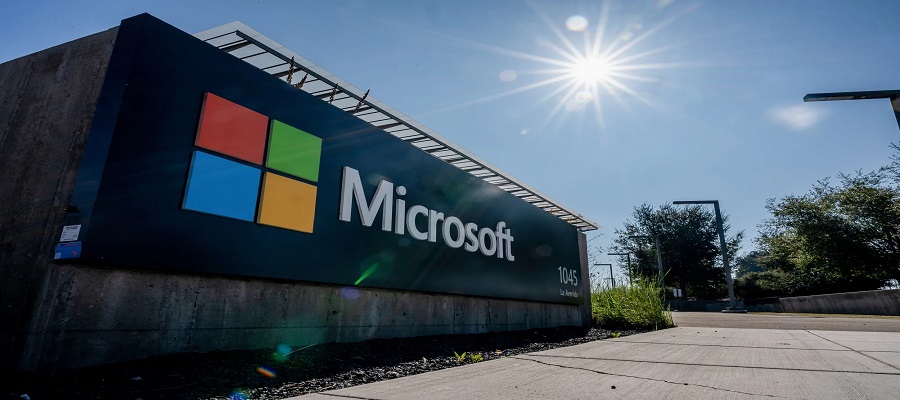
Microsoft is facing a £1.7 billion ($2.3 billion) class action lawsuit in the United Kingdom over allegations that it abused its dominant market position in cloud computing.

Microsoft
The case, filed before the Competition Appeal Tribunal, was brought by Maria Luisa Stasi on behalf of about 59,000 British businesses and organisations. It alleges that Microsoft unfairly imposed higher costs on customers running its Windows Server software on rival cloud platforms.
Stasi said the company’s practices have had a significant financial impact on both public and private sector organisations over several years.
In allowing the case to proceed, the tribunal ruled that it has a “reasonable prospect of success.” The judges noted that Microsoft is alleged to have abused its dominance in the paid server operating system market to undermine competition in the cloud services space.
If the claim succeeds, compensation for affected organisations is estimated to range between £1.7 billion and £2.1 billion.
Microsoft has rejected the allegations and confirmed it will appeal the ruling. A company spokesperson said the decision does not represent a final judgment on the claims and that it disputes the substance of the case.
The lawsuit comes as regulators in the UK and the European Union intensify scrutiny of Microsoft’s cloud business practices. UK authorities are currently assessing whether the company should be designated as having “strategic market status,” a move that would subject it to stricter competition rules.

SERAP, NGE Sue NBC over Threat to Sanction Broadcasters

CRMI Backs CBN’s New Measures to Curb Fraud

NRS Debunks Viral Claim of New Tax on Vehicle

NCC to Intensify Crackdown on Illicit Network to Protect Copyrights

Elon Musk Launches XChat with Video Calling to Take on WhatsApp, Messenger

NITDA Takes Over National Digital Architecture System

FG to Gift Nigerians over 100 Free TV Channels from May 15

Microsoft Revamps Copilot in Workplace AI Push

Dangote Refinery Debunks Speculations on IPO

What Adekunle Gold’s Support Means for ‘The Gathering on 100




 Telecom2 days ago
NCC Blames Growing Data Demand Network Quality Issues

 E-Financial2 days ago
Bank Customers to Pay N1,500 for ATM Card Issuance, Replacement – CBN

 E-Business2 days ago
Kaspersky Discovers Vulnerability in Qualcomm Snapdragon Chips that can Lead to Data Loss & Device Compromise

 E-Financial2 days ago
ATM Card Fees Jump to ₦1,500 as CBN Scraps Maintenance Charges

 News2 days ago
CADEF, Stakeholders Push for Zero Added Sugar Standards in Infant Foods

 E-Financial2 days ago
ProvidusBank Launches Ado-Ekiti Branch, Eyes Nationwide Rollout

 Telecom2 days ago
How Nigerians Are Secretly Using AI to Master Creative Skills Fast

 General News2 days ago
Summit Factory Opens in Ogun, Targets Hygiene Market Expansion