

E-Business
IPV6 Council Nigeria @ Internet Solutions Harps on Early Migration

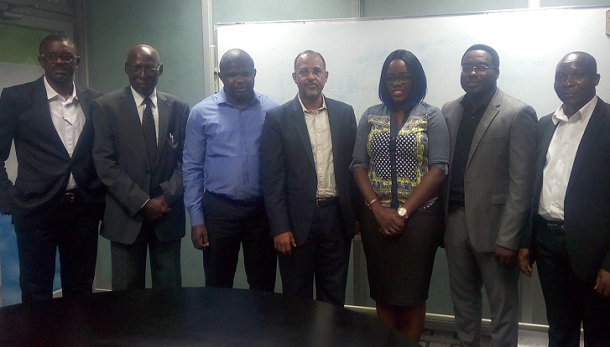
Internet Protocol Version Six (IPv6) Council in Nigeria has harped on the need for early migration and adoption, as part of its mandate and effort in creating awareness among service providers in the nation Information and Communication Technology (ICT) sector.
Speaking during a courtesy visit to Internet Solution Nigeria, a leading Internet Service Provider in the country, Mr. Muhammed Rudman, council chairman, noted that the visit was designed to interact with Internet Solutions Nigeria, which the Council believes could be paving the way towards the realization of IPV6 migration, which is seen globally to provide enhanced Internet service experience.
Rudman decried the low level of IPv6 ready networks, as well as usage in Nigeria, despite the fact that the country occupied first and eight positions in internet usage in Africa and the world respectively.
“We are worried that some countries in Africa have started migrating to IPv6 networks, yet Nigeria that prides itself as number one in terms of Internet usage in Africa is not making a serious move,” he said.
He commended Internet Solutions for deploying IPv6 on its network and urged other service providers in the country to consider migrating to IPv6 for Nigeria to maintain its position in Africa and move higher in the global ranking.
He also said that migrating to IPV6 would create more robust and realtime end-to-end Internet connectivity and avert the possible blockade from the exhaustion of Internet Protocol Version Four (IPv4) addresses.
Responding, Mr. George Olunwa, head, Network Operations at Internet Solutions, said that Internet Solutions, has since deployed and advertised IPv6 block on the Internet, but the challenge is largely apathy from the enterprise customers, who are yet to see a pressing need for the implementation of IPV6 on their networks.
While thanking the IPV6 Council Nigeria for the advocacy visit and efforts so far, Olunwa assured that Internet Solutions would continue to push the idea of implementing IPv6 to its customers, admitting that the cost of migrating from IPv4 to IPv6 is next to nothing.
“What we have seen is that most of the clients are still going for IPV4, even though the cost of getting IPv6 is minimal. But, we believe that with this sort of advocacy being carried out by the IPv6 Council Nigeria, service providers as well as enterprise networks will begin to see a need for the deployment.
He also suggested a possibility of providing virtual lab for IPv6 within country, saying that will assist towards capacity building which can help to upscale the deployment and adoption of IPV6.
IPv6 is the most recent version of IP, the communications protocol that provides an identification and location system for computers on networks and routes traffic across the internet.
An Internet Protocol (IP) address is essentially a postal address for each and every Internet-connected device. Without one, websites will not know where to send the information each time a person performs a search or try to access a website.


Kashifu Inuwa, CCIE, the Director General of the National Information Technology Development Agency (NITDA), has emphasised that integrating intelligence, security, and sustainability is critical to driving Nigeria’s digital transformation and global competitiveness.

Inuwa made the remarks on Tuesday in Kano while delivering a goodwill message at the opening of the 19th International Conference (CONNOVATE 2025) of the Nigerian Computer Society (NCS), themed “Intelligent, Secure, and Sustainable Innovations for a Connected World.”
Represented by Engr. Salisu Kaka, Director of E-Government and Digital Economy Development, Inuwa said the three elements were now indispensable drivers of national progress. He highlighted the need for their convergence to unlock new opportunities in Nigeria’s technology sector, citing Estonia’s X-Road platform — which enables 99% of government services online — as a global model.
“In Nigeria, trust is the ultimate currency in our high-stakes digital environment, where scams and cybercrime are prevalent. Security builds and protects this trust,” Abdullahi said.
He stressed that while security provides the foundation, intelligence builds the structure, pointing to Artificial Intelligence (AI), Machine Learning (ML), and data analytics as tools for addressing Nigeria’s complex challenges. Warning that “innovation without security is unsustainable,” he likened it to “a high-performance race car without brakes.”
The DG urged the next wave of Nigerian startups to go beyond digitising existing processes to creating new value, citing AI-powered wealth management and ML-driven remote diagnostics as examples.
He further highlighted the various Federal Ministry of Communications, Innovation and Digital Economy (FMCIDE) initiatives supporting this vision, including the National Centre for Artificial Intelligence and Robotics (NCAIR), the Computer Emergency Readiness and Response Team (CERRT), the Nigeria Data Protection Act (NDPA) 2023, the national digital identity programme, interoperable payments, and human capital initiatives such as the 3 Million Technical Talent (3MTT) and Digital Literacy for All (DL4ALL) programmes.
Inuwa cited example with International Federation for Information Processing (IFIP) President, Antony Wong, that called for stronger protection and strategic use of data in the Global South to safeguard indigenous knowledge. He stressed the importance of legal clarity on data ownership as Nigeria’s cultural heritage in medicine, ecology, and art is digitised and incorporated into AI systems. Wong praised Nigeria’s role in the recent World Intellectual Property Organization (WIPO) treaty protecting genetic resources and traditional knowledge.
Delivering his welcome address, the NCS President, Dr. Muhammad Sirajo, said the conference would serve as a platform for IT professionals to address critical issues, including intelligent systems, fintech, sustainable energy, and innovations in agriculture, health, education, and national planning.
“This conference will provide an interdisciplinary platform for researchers, practitioners, and educators to present and discuss recent innovations, trends, and solutions for improving technological systems,” Sirajo said.
The week-long event includes plenary sessions, a doctoral consortium, a youth and entrepreneurship forum, the Fellows Forum, the Annual General Meeting, an IT quiz competition for students, and an induction ceremony for new members. It will conclude with the election of new national executives, a dinner, and an awards night honouring contributions to the ICT sector.

The African Development Bank (AfDB) is betting big on Artificial Intelligence (AI) as a catalyst for delivering Africa’s ambitious Agenda 2063.

With hands-on training in tools like ChatGPT and Google Gemini, the Bank believes the results could redefine how the continent plans, measures, and delivers its development goals.
Through its Joint Secretariat Support Office, the AfDB has provided technical and financial support to the 5th annual training workshop for African Union member states, focusing on the use of AI to track and implement the second ten-year plan (2024–2033) of Agenda 2063.
The five-day workshop, held in Lusaka, Zambia, was co-organised by the African Union Commission and the African Capacity Building Foundation.
Participants from across the continent rolled up their sleeves for hands-on training with emerging AI platforms like Ailyse, Google AI Studio, and Perplexity.
The goal of Africa’s multilateral development finance institution is to turn complex development data into actionable insights that can drive smarter decisions, faster interventions, and more accountable governance.
AbibuTamu, lead programme co-ordinator at the AfDB, said AI was now an indispensable tool for Africa’s future.
“These tools are not only revolutionizing how data is collected, analysed, and reported, they are also enabling more targeted policy interventions and efficient resource allocation,” Tamu told delegates.
Agenda 2063, dubbed “The Africa We Want,” is the African Union’s 50-year blueprint for inclusive growth and sustainable development. The second 10-year plan prioritises industrialisation, digital transformation, and sustainable livelihoods.
With AI now in the mix, African policymakers can track progress in real-time, spot bottlenecks before they choke projects, and reallocate resources where they are needed most.
The AfDB’s backing underscores a broader strategy of boosting both human and institutional capacity that propels African states to harness the digital revolution.
Beyond technical skills, the Lusaka workshop doubled as a peer-learning platform, with countries sharing real-world success stories on integrating AI into national planning and reporting.
“If Agenda 2063 is Africa’s long-term roadmap, this AI training is about upgrading the continent’s GPS that ensures leaders not only know the destination, but also have the intelligence to navigate every twist and turn on the way,” said Tamu.

It is holiday season in many parts of the world. These days though, going on holiday does not always mean turning your back on office life – hybrid work cuts both ways.

Today’s widespread connectivity—available at airports, train stations, restaurants, hotels, and most indoor public spaces—makes staying connected easier than ever, with free Wi-Fi in many locations and reliable 4G or 5G coverage elsewhere, helping to facilitate a seamless blend of work and leisure even while on holiday.
This increase in connectivity among travellers has not gone unnoticed by cyber criminals. Kaspersky experts analysed nearly 25,000 free Wi-Fi spots in Paris ahead of the Summer Olympic Games and Paralympic Games. The analysis revealed that almost 25% of these networks had weak or no encryption, making users vulnerable to personal and banking data theft.
Travellers often have their guard down. The unfamiliar surroundings of a new location or a different language can throw up a useful smokescreen for a cyberattack, meaning additional care needs to be taken when logging on. Fortunately, a few smart tools and habits can help you stay protected while enjoying the flexibility of remote work.
Use a VPN for secure connections
A VPN is one of the most effective ways to safeguard users’ online activity, especially when working from unfamiliar locations. By encrypting Internet traffic, a VPN ensures that hackers can’t intercept sensitive data like login credentials or financial details. This is particularly important when accessing work emails or company files on public Wi-Fi, where cybercriminals often lurk.
Switch to an eSIM for reliable, secure mobile data
Another useful digital tool that provides a seamless way to stay connected using local mobile networks with no physical SIM card required is the eSIM. This is a game-changer for international travellers who want to avoid sky-high roaming charges or the hassle of hunting down temporary SIM cards in foreign countries.
With an eSIM, a user can download a local data plan before you even arrive at your destination, ensuring instant connectivity the moment you land. This eliminates the need to rely on unsecured Wi-Fi hotspots, significantly reducing your exposure to cyber threats.
Plus, many eSIM providers allow you to manage multiple profiles on a single device, making it easy to switch between work and personal data plans without juggling multiple phones.
Services like Kaspersky eSIM Store enables users to purchase and activate data plans in advance, track usage and top up as needed, all from a single app.
Enable two-factor authentication (2FA)
When travelling, people often leave devices unattended. To protect against unwanted people logging in, travellers should ensure two-factor authentication (2FA) is enabled on all critical accounts and that passwords are used on all devices.
Final tips for a secure workation
Even with a VPN, eSIM and 2FA in place, your devices still need strong defenses against malware, phishing scams and ransomware. Cybercriminals often target remote workers who may let their guard down while travelling, making real-time protection essential.
Modern antivirus software does more than just scan for viruses, it actively blocks malicious downloads, warns you about phishing attempts and even secures your passwords and financial data.
For the most robust security, consider a solution like Kaspersky Premium, which combines antivirus protection, a VPN and password management into a single, easy-to-use package.
By combining a VPN, eSIM and strong antivirus, you can work from anywhere with confidence, whether you’re sending emails from a poolside or joining a video call from a festival tent.

NACCIMA, TETFund Forge Alliance to Boost Innovation, Skills, Economic Growth

IHS Nigeria, Osun State partner to transform technical education

Passengers Must Switch Off Phones during Flights — NCAA

FG Scraps 5 Percent Telecom Excise Duty Under New Tax Law

TETFUND Tasks Tertiary Institutions on Use of ICT for Teaching





 Telecom2 days ago
NCC Launches Nationwide Campaign to Defend Nigeria’s Digital Lifelines

 News2 days ago
CAC Delists 247 Firms Over Invalid Registration Claims

 General News2 days ago
NCC Moves to Protect Consumers, Enforce Accountability in Telecoms

 General News2 days ago
Samsung Launches the Sleek and Durable Galaxy A07 in Nigeria

 Telecom2 days ago
Gufwan Commends NCC for Sensitisation Workshop on Digital Citizenship for Persons with Disabilities

 General News2 days ago
NGF Plans Investopedia to Showcase Investments in 36 States

 Telecom1 day ago
NCC Claims to Have Eliminated Unregistered SIMs from Telecoms Networks

 Telecom1 day ago
MTN Group Restructures Executive Team, Appoints Toriola VP for Francophone Africa