

E-Business
Microsoft Appoints First African Female Country Manager

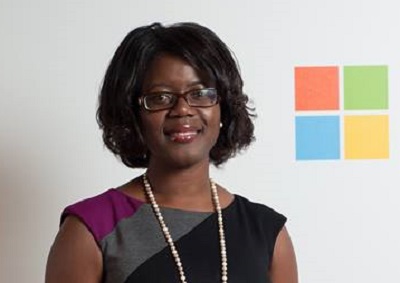
Microsoft on Monday announced the appointment of Otema Yirenkyi as the company’s first country manager for Ghana.
As the company shifts its global focus to a devices and services offering, Ghana remains one of Microsoft’s critical investment markets in Africa.
Otema, a native Ghanaian with over 14 years of ICT experience, will take the helm of its increasing investment in the country.
Otema is Microsoft’s first female country manager on the African continent and holds a BSc degree in Industrial and Labour Relations, as well as an MA in Development Studies.
“We have seen tremendous growth in broadband availability and internet penetration in Ghana, as well as the introduction of newer devices such as tablets and smartphones, which have fundamentally changed how consumers experience and use technology,” said Otema.
Ghana’s current mobile penetration rate is at an estimated 112%, after the country hit the 100% mark at the end of 2012.
These numbers are the highest in Africa, placing Ghana 49th in the world, according to the International Telecommunications Union (ITU).
“This always-on, always-connected era that we find ourselves in holds new promise for what technology can bring to people’s lives and to businesses. And it gives us an opportunity to use our technology, talent, time and money to help create sustainable growth in the country and across the African continent.”
Microsoft has been operating in Ghana through its partner ecosystem for 10 years and continues to recognise the country’s long-term growth opportunities. Otema’s appointment is an investment in Ghana’s future growth and Microsoft’s vision to establish a robust presence in the country.
Over the years and through a number of programmes, Microsoft has trained 15, 000 teachers, impacted over one million students, created over 1, 800 jobs, and supported 35 successful startups in Ghana.
The company’s flagship African investment and growth initiative, Microsoft 4Afrika, was launched in February this year to actively engage in Africa’s economic development, and has further entrenched the company’s commitment to Ghana and its people, ensuring that technology plays a key role in the developing economy.
“This is an exciting time when the country is rapidly transforming, both economically and socially,” Otema said.
“I hope to inspire a culture of innovation driven by technology and I am excited to be leading Microsoft’s era of expansion in Ghana.”
“We are delighted to have Otema on board in this critically important role,” said Hennie Loubser, general manager of West, East, Central Africa and Indian Ocean Islands.
“She has the track record and credentials to help grow this dynamic market, and she is deeply committed to Africa’s economic development.”
Otema’s focus in Ghana is on continuing to improve access to technology, skills development opportunities and resources.
“I think once African entrepreneurs have increased access, affordable technologies and the ability to monetise innovative ideas, they will create solutions that solve many of the economic and social challenges confronting Africa,” she said.
One of Microsoft’s core projects in the country is its partnership with the Ghanaian Ministry of Education and the British Council, to set up ICT hubs in local schools and communities to accelerate digital literacy across the country.
Falling under a regional project called Badiliko, 17 digital hubs have been created in Ghana and Microsoft has trained 26 local Master Trainers who are serving as Digital Ambassadors and School Leader Facilitators in the hubs, helping over 1,700 people in Ghana become trained to date.
Building on the success of its programmes and initiatives in Africa, Microsoft continues its commitment to a strong, successful history on the continent and strategic economic hubs like Ghana will become more integral partners to its African business strategy.


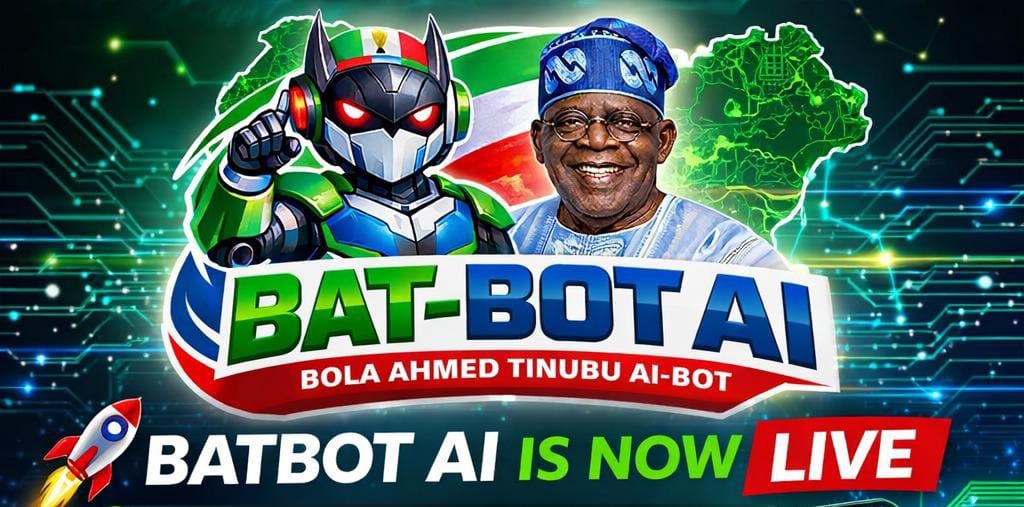
An artificial intelligence (AI) application has been developed to help combat the spread of fake news, misinformation and political propaganda as political activities gradually build toward the 2027 general elections in Nigeria.

The app, known as BAT-BOT AI, was unveiled in Abuja by Mr. Gunu Usman, its founder, who said the platform is designed to assist the federal government in addressing the growing challenge of false information within nation’s digital space.
Mr Usman explained that the new platform was created to ensure that factual information circulates faster than falsehood.
He noted that the rapid spread of misinformation, disinformation, hate speech and manipulated narratives targeting the administration of Bola Tinubu, the ruling All Progressives Congress, and national institutions poses risks to democratic stability and public trust.
According to Mr. Usman, BAT-BOT AI was developed to support public access to verified information while countering misleading narratives online.
The Technology expert described the system as a sovereign AI-powered civic information and fact-verification platform designed to strengthen Nigeria’s digital information ecosystem ahead of the 2027 general election.
He added that the initiative aligns with the government’s policy direction under the Renewed Hope Agenda of President Tinubu, which seeks to promote transparency and encourage informed civic participation.
The founder further explained that the platform is currently accessible to Nigerians through multiple digital channels, enabling users to verify claims, seek clarification on government policies and obtain information on national development initiatives.
Mr. Usman expressed optimism that the tool would help curb the spread of false information and contribute to a more credible digital environment as the country prepares for the next electoral cycle.


Over the past four years, gold has risen by more than 400%. The precious metal has long been one of the most traded assets in global financial markets. From its role as a traditional store of value to its sensitivity to inflation, interest rates, and geopolitical uncertainty, gold continues to attract traders seeking efficient and predictable trading opportunities during a period of global uncertainty and high volatility.

JustMarkets
For traders looking to effectively access gold markets, choosing the right trading environment is as important as timing their entry. One of the most popular and effective gold trading platforms is JustMarkets, offering the tools, conditions, and infrastructure to enable traders to achieve their most ambitious gold trading goals.
Tight Spreads on XAU/USD
Cost efficiency is a critical factor in gold trading, especially for active day traders. JustMarkets offers extremely competitive XAU/USD spreads, allowing traders to open and close positions with reduced transaction costs. Lower spreads can significantly impact short-term strategies, where precision and timing are key to effectively entering a trade. By minimizing trading costs, JustMarkets helps traders focus more on market analysis and finding the ideal entry point, and less on overhead.
Fast and Reliable Execution
Gold is recognized for its volatility, especially during the day, especially with economic announcements or geopolitical events. Speed is of the essence in volatile markets. JustMarkets provides high-speed execution of orders, which helps minimize the risks of delays, especially during periods of high volatility. This ensures that traders are able to respond better to market conditions, thereby having better control over trade management.
Flexible Trading Conditions
Each trader has their own approach to gold, ranging from intraday trading to position trading. JustMarkets offers flexible leverage and account types, enabling traders to adjust their exposure based on their risk tolerance and trading style. This flexibility is suitable for both conservative and aggressive traders while still allowing them to access the same global gold market.
Advanced Platforms and Tools
Successful gold trading is based on thorough technical and fundamental analysis. JustMarkets provides access to industry-standard trading platforms equipped with advanced charting tools, multiple timeframes, and a wide range of indicators for recognizing divergences and clear entry points. These features help traders analyze price trends, identify key levels, and plan their trades with greater confidence.
Accessibility via mobile devices and computers via the JustMarkets Mobile Trading app also ensures traders can monitor positions and market movements from anywhere and at any time.
Education and Market Support
Gold is also affected by factors such as inflation rates, central bank policies, and currency fluctuations. Understanding these factors is important for developing a structured trading strategy.
JustMarkets offers resources for traders, which provide information on how global events can impact the price of gold like case studies, daily, bank and weekly analysis. This is a knowledge-based system, which enables the trader to make more informed decisions rather than relying on the price movements of gold.
Trading Activities That Keep Gold Traders Engaged
In addition to the competitive trading environment, JustMarkets also runs various special activities and campaigns that aim to make the trading experience more interesting. At certain intervals, the special activities may include trading contests on specific trading instruments, such as gold, which are highly sought after by traders. This will give the traders an added impetus to keep trading.
The special activities are designed to encourage trading, consistency, and skill-building among the traders, along with the additional motivation for the trading strategies. This is also in line with the overall philosophy of JustMarkets to create a dynamic trading environment where trading, learning, and motivation are linked together.
A Trading Environment Built for Gold Traders
Gold is still one of the most dynamic markets with the greatest number of opportunities in the world. With tight spreads on XAU/USD, fast execution, flexible trading terms, and access to advanced analytical tools, JustMarkets creates an optimal trading environment for those who want to trade gold efficiently.
In addition to the comprehensive educational assistance, JustMarkets continues to position itself as a strong competitor for traders who are looking for professional trading conditions combined with growth opportunities.
Microsoft is stepping up its push to expand artificial-intelligence adoption across Africa as competition intensifies with Chinas DeepSeek for influence in one of the worlds youngest and fastest-growing digital markets.

The company plans to train 3 million Africans on its AI technologies this year through partnerships with schools, universities and other institutions, with a focus on South Africa, Kenya, Nigeria and Morocco.
The effort reflects Microsofts broader attempt to accelerate adoption of its AI ecosystem across emerging markets where developers and enterprises are increasingly experimenting with generative AI tools.
Alongside the training initiative, Microsoft is working with MTN Group (MTNOY), Africas largest telecommunications company, to distribute Microsoft 365 and its Copilot digital assistant to about 300 million subscribers.
The Elevate program is designed to expand AI literacy and reduce cost barriers that might otherwise limit adoption, according to regional leadership.
The push comes as Chinese technology firms expand their footprint across the continent, with DeepSeeks open-source models accounting for roughly 11% to 14% of chatbot use in several African markets and reaching about 20% in countries such as Ethiopia and Zimbabwe following investments tied to digital infrastructure and telecom networks.
Microsoft is also increasing its infrastructure investment in the region.
In South Africa, the company plans to invest 5.4 billion rand, or about $330 million, to expand its cloud and AI capacity by the end of next year, while it is also exploring plans for a geothermal-powered data center in Kenya.
Early corporate adoption is emerging across the continent, with South African grocer Spar Group using Copilot in ways that save more than 700 employee hours annually and Nigerias Access Holdings integrating AI into daily workflows.
Regional leadership has suggested broader AI adoption could potentially contribute up to $1.5 trillion to Africas gross domestic product by 2030 if governments and businesses continue investing in digital infrastructure and AI skills.

Tech Expert Unveils BAT-BOT AI App to Curb Fake News ahead of 2027 Elections

MTN Nigeria Races Ahead in Fibre Broadband Market

CBN Tightens BVN Rules to Curb Fraudulent Banking Transactions

Nova Bank Appoints Jude Anele as Managing Director/CEO

VDT Communications Achieves Two Prestigious Certifications ISO /IEC 27001:2022, ISO/IEC 27032:2023 Reinforcing its Leadership in Broadband Service Provision

Kaspersky Discovers New Phishing Campaign Exploiting Google Tasks Notifications to Steal Corporate Credentials

esentry 2025 Report Shows Healthcare, Financial Services and Telecoms as Staging Grounds for Increased Cyberattacks in Africa

AfDB, UNDP Launch $10Bn AI Initiative for Africa

Mutual Benefits Assurance Settles ₦5.9bn Claims in January 2026

Pheelz Shares His Journey on Glo-Sponsored African Voices




 General News2 days ago
Interswitch Advocates Trust-Driven Infrastructure as Cornerstones of Africa’s Cross-Border Capital Future

 News2 days ago
NLNG Advances Media Excellence with Change Your Story Workshop

 E-Business2 days ago
Why JustMarkets Is a Strong Choice for Gold Trading

 E-Financial2 days ago
CBN Orders Banks to Restrict Access to Banking Services for Loan Defaulters

 E-Financial2 days ago
UBA Business Series Celebrates ‘Gen.W: The Evolved Woman’ in Push for Female Empowerment

 Telecom2 days ago
NDPC Warns Content Creators Against Privacy Violations in Viral Videos

 General News2 days ago
FCCPC Launches Fuel Price Surveillance, Probes Airline Price Gouging, Resolves N10bn Complaints

 E-Financial2 days ago
Recapitalisation Without Transformation is a Risk Nigeria Cannot Afford