

Broadcasting
MultiChoice Nigeria Has Almost 100 Per Cent Local Workforce, Huge Investments- Ogunsanya

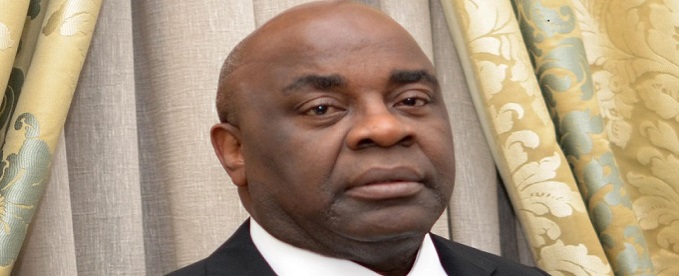
Mr. Adewunmi Ogunsanya (SAN), chairman, MultiChoice Nigeria, owners of DStv and GOtv, in a recent interview with Thisday, explains that MultiChoice is a Nigerian company.

Mr. Adewunmi Ogunsanya (SAN), chairman, MultiChoice Nigeria
He also speaks of how the company has survived difficulties of Nigerian business environment while explaining that why the Paytv operator is not a monopoly, but a dominant player.
You’re a Senior Advocate of Nigeria, evidence of accomplishment in your field, but you’re also known for your association with MultiChoice, which launched in Nigeria over 25 years ago. What exactly informed the vision of bringing MultiChoice to Nigeria?
Twenty-seven years actually. Multichoice has been in Nigeria 27 years. Mine has always been a family of lawyers. My father was a lawyer. Law is my life.
MultiChoice is a passion for investment that has gone well and from strength to strength. Again, the circumstances surrounding my initial involvement with MultiChoice had to do with law, as I came into contact with other initial investors in my capacity as a lawyer.
But then I also saw the business opportunity that existed and I took it since it did not require my day-to-day involvement.
But as my passion for growing things became apparent over the years, so also has my involvement with the company.
We’d like you to take us through the various stages of the company’s evolution from a novelty, which attracted very little attention to the behemoth it has become.
A lot of hard work has gone into what you see today. People forget that bringing a business, any business, into Nigeria was not exactly an inviting thing when MultiChoice came to Nigeria.
It was bang in the middle of the military era. It was not exactly a rosy period for the economy. Our journey has been challenging on many fronts. From a small MMDS operation in Lagos and Port-Harcourt, we have grown to a major player today.
But then, and now we still are enmeshed in constant regulatory somersaults. We still struggle with piracy, overreaching government regulations and changing subscriber demands.
The pay television sector is a mausoleum of dreams; a sector with a very high mortality rate. How has MultiChoice escaped the fate that regularly befalls operators?
This is true. We have survived because we have kept our eyes on multiple balls. There are many balls to keep the eyes on when it comes to pay TV business.
There is that of business and then the need to prioritize quality content for different demographics. In addition, we never forget that ours is a technology business; one that thrives on innovation.
We have benefited a great deal from being part of a multinational that pays a great deal of attention to seeking, adopting and deploying only the most current and state-of-the-art technology for our business. MultiChoice, lest we forget, pioneered Dual View in the pay TV industry globally.
We also pioneered Box Office for movie rentals. We also hire only the best people. In the 27 years of our existence as a company in Nigeria, we must have employed, directly and indirectly, about 200, 000 Nigerians. Many of them have been top notch. Many of them continue to work for us.
We keep evolving and paying a lot of attention to what the customer wants. We keep trying to balance the need to survive as a business and giving our customers what they desire and require. This is not always easy. It is tough.
Very challenging. Pay TV business is very challenging, as things keep changing. Consumer demands keep evolving. Put this side by side with the challenging business environment we face in Nigeria. But we keep trudging on as a business.
Despite having almost 100 per cent Nigerian workforce and huge investments in the country, MultiChoice is still viewed as a South African company, a state of affairs that fuels the belief that it cares less about Nigeria and seeks to charge Nigerians more for its services…
This is based on little or no knowledge of how international business works. It’s borne out of a misunderstanding of what it means to be a Nigerian company.
MultiChoice Nigeria is a Nigerian company, registered in Nigeria with shareholders from around the globe, including Nigeria.
I am one of the shareholders and I am Nigerian. Of course, everything has its roots and the roots of this particular company, MultiChoice, is from outside Nigeria-South Africa.
But a company must originally come from somewhere. All multi nationals are like that. But this company, the one that I am Chairman of, is a Nigerian company and operates as one. Go across our operations and tell me how many non-Nigerians work there. Almost zero.
In fact, I believe we may have more Nigerians working for MultiChoice in other countries than non-Nigerians working for MultiChoice here in Nigeria.
Those who make such allusions certainly do not understand the benefits of foreign direct investments. They have no understanding of how international business operates.
Some do, but for their own benefit, wish to play to the gallery and take advantage of fellow Nigerians who do not understand, by twisting the facts for their own selfish end.
I hope that someday soon, Nigerians will see through the fiction they keep feeding them about our business and how it runs. Just a little investigation on the internet will show the truth.
Nigerian companies are expanding to other parts of Africa and are doing well in some of those places. Should they not be patronized simply because they have Nigerian roots?
I usually shy away from talking about the operations of our company, as I believe it is the duty of the many brilliant young men and women who work daily there to earn a good living and serve fellow Nigerians and fellow Africans to the best of their capacity.
But I will make an exception here and boldly say that the Nigerian operations are the most pocket-friendly across MultiChoice operations and across the world.
I love this country and the idea that I will be part of an operation that is unfair to my fellow countrymen is truly painful.
The facts are there for all to see. Afterall, we live in the age of the internet. The truth is becoming more and more difficult to hide.
Aside the issues around its South African heritage, there is also the prevalent view that MultiChoice is a monopoly, a position attained by suffocating competitors. How would you react to this?
This, again, is worrisome. But sometimes I understand. We have become a victim of our own success. We may be referred to as a dominant player perhaps, but a monopoly is not a fit and proper way to refer to us.
We are the biggest player in our sector because we have always invested the most resources over a long period. We have stayed the course over years of investing and getting nothing or very little.
That gives us an edge like it should, but we are certainly not a monopoly. Some of the content we have rights over now, other pay TV concerns have also won and lost just as we have won and lost in the past. The content market is an open international market open to competitive bidding. Nothing is done in secret.
We all go there, MultiChoice and the other companies which operate in the sector. We all bid. Sometimes, we lose, but some of the time, we win. Should we lose just so that we do not get referred to as a monopoly?
Pay TV business is one that demands long term investment. You cannot invest today and expect returns tomorrow. If you invest with a short-term view, you will fail. Simple.
We had a long-term view and that is why we have survived. When we started, we made huge investments in equipment and we had very few subscribers. We were making huge losses, but we stayed the course until our number of subscribers began to rise.
How exactly is it that we suffocate our competitors? By denying them the airwaves? By denying them their license? By blocking their offices? Or is it by stopping them from coming up with ideas? Or do we own the banks and stop them accessing funds? Some of these allegations will make deep-thinking people laugh.
The business space is quite large and can accommodate as many as possible. We welcome competition; it makes us better. We have competition in Nigeria and while I will prefer not to mention names, we have had occasions where we lost important rights to competition.
Even very recently, we lost some content rights to some other companies in the market. We don’t sulk and call competition names; our people return to the proverbial drawing board and try to work out how not to lose next time.
Is it inaccurate to say the two MultiChoice platforms, DStv and GOtv, owe their dominant positions to having live sport, notably football?
To an extent, that is correct. But as I said before this is from years and years of building the brand. We don’t have all the live sports.
Some are owned by competitors. We have become a victim of our own success. I have friends and family who call me in anger when they can’t watch some football games or other sports events on our channels. When I explain that we don’t have the rights because we can’t afford them, they sound unforgiving.
We have maintained our dominance because our customers push us to get them the best.
And we also have Allah’s grace to thank for the fact that we have been successful.
MultiChoice has done a lot for Nigerian sports, especially football, basketball and for six years now, boxing through GOtv Boxing Night, which is estimated to have gulped about a billion naira since it debuted in 2014. Why boxing of all sports?
I was in a conversation some day with some of my closest friends and it became rather nostalgic. We remembered the days when all our superstars were Nigerians like us. We remembered Dick Tiger and Hogan ‘Kid’ Bassey.
We remembered Thunder Balogun and Victor Oduah and Baba Otu Mohammed and all the superstars of our childhood and young adult years.
As we spent the evening reminiscing over the glory days of Nigerian sports and the joy the likes of Christian Chukwu and Segun Odegbami brought us, I decided that we needed to bring those glory days back. Boxing happens to be the first step in that direction.
Boxing because it was a sport I loved as a young boy and one that I have followed all my life. In fact, as a boy, I fancied myself a boxer. Very soon, we plan to begin building other sports like we are building boxing.
The plan is that soon we can replicate what we have done in boxing in other sports like athletics, basketball, volleyball and even handball. We are a large country with many young people able and willing to excel in these and many more sports.
We tried the same thing for football in the past and spent quite a lot of money on the Nigerian League. We stopped, but we hope to be back even stronger soon.
My personal desire is to see a situation where my fellow countrymen and women pay less attention to these foreign leagues and focus more on our own local sports, our own local football. It is possible and we must do it.
We are glad with the impact we have had on boxing, especially the impact we have had on the lives of the boxers. I was very excited to see a video of a boxer on social media saying GOtv Boxing has fired and given life to his entrepreneurial spirit and how he has started a small transport company and owns a number of tricycles. It made me so glad that we are impacting lives so positively. That’s what we want to achieve.
In specific terms, backed by figures, we’d like you to give us a picture of MultiChoice’s socio-economic impact in Nigeria.
Over the last twenty-seven years Nigerians have felt our impact directly or indirectly. Aside the hundreds of thousands of Nigerians we have employed directly and indirectly, we are a major contributor to for the growth of our film and music industries via major promotions and exposure of Nigerian film and music. We have helped make these superstars, who we are and the rest of Nigeria are proud of.
In the past five years alone, MultiChoice Nigeria has contributed around N630 billion to the Nigerian economy, adding value to the society through the contribution of more than N363billion to the country’s GDP.
I believe we paid close to N40 billion in taxes and regulatory fees over the last five years and invested close to N700million on corporate social investment.
We continue to make major contributions to the development of the creative industry with over N82 billion invested into the sourcing and production of local content for DStv, GOtv, M-Net, SuperSport, and Africa Magic and in building local production infrastructure. Our investment has greatly helped to support the Nigerian movie industry, ensuring that Nollywood movies are available across Africa and the rest of the world.
Our estimate, and this is supported by a recent report verified by Accenture, is that through our business operations and our investment in technology, local infrastructure, Corporate Social Investment (CSI) initiatives and local partnerships, MultiChoice Nigeria enriches an estimated two million lives each year through initiatives such as the MultiChoice Resource Centres, MultiChoice Talent Factory, GOtv Boxing, the Sickle Cell Foundation and Let’s Play initiative among others. MultiChoice Nigeria has spent N71.8billion in supporting these initiatives.
It’s somewhat strange that a man of your profile shuns publicity. Why is that?
Probably because I am a lawyer by training and vocation. I am also a very private person. As Chairman of Multichoice, my goal and that of the company is to promote others and not ourselves.
We discover and spotlight Nigerian superstars. But we do not consider ourselves superstars.
I don’t consider myself a superstar. I am just a lawyer trying his best in business and if my contribution to business benefits others, I am happy for it. But please, let’s not focus on me.
Where do you envisage MultiChoice will be in the next 10 years, given the changing television viewing habit imposed by new technology?
We are a company that thrives on technology and is driven by a desire to satisfy our customers. We will continue to focus on satisfying our customers and ensuring that we deliver the best content, using the most up-to-date technology. We believe that is the only way to stay ahead of the competition.



MultiChoice has said that it will not implement its customary yearly price increase on DStv and GOtv subscriptions.

This is the first time the Pay-TV company will not be adjusting its price in April, as it has in previous years, signalling a clear shift in direction under its new owner, Canal+.
The decision, confirmed by David Mignot, group chief executive,MultiChoice in an interview with TechCentral, comes as the pay television operator grapples with steep subscriber losses across its markets.
For many households accustomed to annual April tariff adjustments, the announcement will be a welcome break.
Responding to questions about whether DStv prices would rise in April as they have in previous years, Mignot gave a firm response: there will be no increase.
He explained that the company’s immediate focus is on rebuilding its subscriber base, making this an unsuitable period to adjust prices upward.
He added that while there are no current plans for a price hike, the company has not completely ruled out adjustments later in the year, especially if economic conditions demand it, such as significant currency movements.
MultiChoice has historically reviewed and raised DStv subscription fees in April, often citing inflationary pressures and rising content costs. As recently as April 2025, bouquet prices were adjusted upwards by between 2.1 per cent and 7.9 per cent.
The DStv Premium package rose from R929 to R979 per month, while DStv Access, the entry-level satellite package, recorded one of the steepest increases.
This year’s pause represents a break from that pattern and forms part of a broader reset following Canal+’s acquisition of MultiChoice in September 2025.
Mignot, who brings three decades of experience in the pay television industry, summed up his mission in simple terms: halt subscriber losses and return the business to growth.
The urgency behind the move is evident in MultiChoice’s recent performance.
The group has lost 2.8 million linear broadcasting subscribers in the two years ended 31 March 2025, with roughly half of those losses occurring in South Africa.
In the financial year to end-March 2025 alone, MultiChoice shed 1.2 million subscribers, representing an eight per cent year-on-year decline and leaving the group with 14.5 million active customers.
The previous year saw an even steeper drop of 1.6 million subscribers. By June 2025, Canal+ indicated that the pace of decline had intensified further.
The financial impact has been significant. Revenue for the year ended 31 March 2025 declined by R4 billion to R52 billion, while trading profit fell sharply by 49 per cent to R4 billion.
According to Mignot, the company’s difficulties stem less from its programming slate and more from weaknesses in its commercial execution.
He argued that in subscription businesses, a churn rate of between 12 and 15 per cent annually is inevitable as customers relocate, experience job losses, adjust household budgets, or change priorities. Without attracting a comparable number of new subscribers each year, losses accumulate.
Mignot maintained that the content offering remains strong, particularly in sport and general entertainment. He cited flagship brands such as SuperSport, M-Net and Africa Magic as evidence of sustained investment in programming. However, he stressed that content strength alone cannot offset a weakening subscriber acquisition engine.
He noted that MultiChoice’s commercial machinery had performed robustly across Africa until around 2022, describing the current challenges as relatively recent.
Drawing on Canal+’s experience in French-speaking African markets, Mignot pointed out that pricing there has remained largely unchanged for close to 14 years, supported by a volume-driven approach. He described his strategy as one focused on growing subscriber numbers while maintaining profitability.
While he did not dismiss the possibility of reviewing prices downward in future, he indicated that no such decision has been taken.


Spotify marked five years in Nigeria since its February 2021 launch with dramatic year-on-year listening growth averaging 163.5% through 2025, featuring triple-digit surges early on and sustained momentum, propelled by Afrobeats streams rocketing +5,022% alongside booming genres like Amapiano (+10,330%), Gospel/Praise (+5,499%), Hip-hop/Rap (+3,020%), and R&B (+2,602%).

Spotify
Indigenous language music listening surged +554% in Nigeria in 2024 and +87% in 2025, with global growth at +141% and +41% respectively, underscoring rising demand for local storytelling sounds.
The platform’s Nigerian artist roster expanded +158%, fueling a discovery boom where average listeners (aged 26) streamed 150 different artists recently; users created over 25 million playlists, logged 1.4 million play hours in 2025 alone, and streamed 59 billion podcast hours total.
Top Artists (2021-2025): Asake, Wizkid, Seyi Vibez, Burna Boy, Davido.
Top Songs: “Remember” (Asake), “Dealer” (Ayo Maff & Fireboy DML), “Awolowo” (Fido), “Kese (Dance)” (Wizkid), “Lonely At The Top” (Asake), “Joy is Coming” (Fido), “With You” (Davido feat. Omah Lay), “Terminator” (Asake), “MMS” (Asake feat. Wizkid), “Doha” (Seyi Vibez).
Nigeria’s debut stream was Shiga Lin’s Cantopop epitomizing borderless discovery from day one.

Nigerian singer, songwriter and producer Pheelz (Phillips Kayode Moses) is set to feature this weekend on African Voices Changemakers, the flagship magazine programme on CNN International.

The 30-minute episode, sponsored by digital solutions company Globacom, premieres on Saturday, February 21, 2026. In a candid sit-down with host Larry Madowo, Pheelz opens up about his journey from church musician to global hitmaker, reflecting on the intersections of faith, fame and the expanding influence of Afrobeats on the world stage.
Now 31, Pheelz began his musical path as a multi-instrumentalist in church before earning widespread acclaim in 2012 as the producer behind the hit tracks “First of All” and “Fucking with the Devil” on Olamide’s YBNL album. His rapid rise saw him named among NotJustOk’s Top 10 Hottest Producers in Nigeria in 2013.
He further solidified his reputation by producing nearly every track on Olamide’s Baddest Guy Ever Liveth, earning nominations at The Headies 2013 and in the Producer of the Year category at both The Headies 2014 and the Nigeria Entertainment Awards. In 2020, he clinched The Headies Producer of the Year award, and in 2021 secured the Soundcity MVP Award for Best Collaboration for “Finesse,” his smash hit with Bnxn (formerly Buju).
On the programme, Pheelz reflects on the experiences that shaped his sound and creative philosophy, discusses landmark collaborations, shares his perspective on artificial intelligence and artistry, and explains why sound, storytelling and culture remain central to African music’s global resonance.
The show airs on DSTV Channel 401 at 8:30 a.m. (WAT) on Saturday, with repeat broadcasts at 12:00 noon the same day; Sunday at 4:30 a.m. and 7:00 p.m.; Monday at 4:00 a.m. and 6:45 p.m.; and Tuesday at 6:45 p.m. The broadcast schedule continues through Monday of the following week.

Galaxy Backbone Confirms Over 150,000 Active Official Government Email Accounts, Clarifies Status of GOVMAIL

More 14m Farmers to Benefit from AfDB-backed Initiative

Dimension Data Nigeria Secures ₦20Billion Funding to Strengthen Digital Infrastructure

Alerzo Liquidates Delivery Fleet as N4.38bn Moniepoint Loan Row Deepens

MTN Nigeria Posts Record N1.70 Trillion Pre‑Tax Profit, Declares N20 Dividend for 2025

Kaspersky Launches OT Calculator to Align Cybersecurity Investments with Business Goals

Accidental Billionaire Opts for Jail Instead of Returning Money Credited Him by Mistake

Why the Future of PR Depends on Healthier Client–Agency Partnerships

New Horizons Nigeria Breaks Ground: First to Fuse Mandarin into ICT Curriculum

Kaspersky Brings more Transparency to Threat Detection with New Hunt Hub




 General News2 days ago
KPMG Strengthens Africa Leadership to Support Long‑term Growth Across the Continent

 E-Business2 days ago
esentry 2025 Report Shows Healthcare, Financial Services and Telecoms as Staging Grounds for Increased Cyberattacks in Africa

 News1 day ago
NITDA Equips Federal Character Commission with Data Tools to Drive Public Sector Reform

 E-Financial2 days ago
Flutterwave Rises from Lagos Startup to Africa’s Fintech Powerhouse

 News2 days ago
Nigeria, EU Ink Research, Innovation Deal Worth €100Bn

 E-Financial1 day ago
History is Watching: Tinubu’s Moment to Rescue Nigeria’s Stolen Future
 Telecom1 day ago
Telecom Giant MTN Injects N1.0 Trillion CAPEX into Network Expansion

 General News2 days ago
PalmPay Couples Show How Love Is Funded Digitally