

Telecom
NCC’s Spectrum Saga Gets Messier with Fresh Cans of Worms

It is the story of the alleged frequency racketeering at Nigeria Communications Commission (NCC): for every rebuttal by the commission, fresh cans of worms are being opened.
The federal government’s decision to send Dr. Bashir Gwandu, former Nigeria executive commissioner, Technical of the commission packing for whistle blowing may have calmed frayed nerves at the seat of power but it has left many unanswered questions which critics insisted showed the unseriousness of the government to tackle corruption.
The now seemingly unending tale of how NCC allegedly violated the provisions of the NCC Act 2003 with regard to the sale of some frequencies, said to be very scare national resources has got the whole world looking at Nigeria.
That single scandal has reduced the reputation of the NCC built in the days of Dr. Ernest Ndukwe, former executive vice chairman as one of the most transparent and respected institutions worldwide.
As the NCC battles to redeem its image, Yusuf .S. Adamu, a former executive director in Nigeria Telecommunications Limited (Nitel) and former technical adviser to the Minister of Communications from 1999 to 2003 is spilling more beans.
His reaction sent to Nigeria CommunicationsWeek is a must read. it is published verbatim below;
The recent removal of the Nigeria Communication Commission’s Executive Commissioner, Technical, Dr. Bashir Gwandu, from office has stirred a major national debate.
Dr. Gwandu was removed by the President Goodluck Jonathan in relation to a controversial secret and uncompetitive sale of frequency spectrum to some companies at meager amounts.
Dr. Gwandu’s major sins that earned him the removal as a commissioner from the commission on November 26 2012 are three major issues he stood against; one, selling of 450MHz Spectrum to an unlicensed company- OpenSkys ltd reportedly owned by Mr. Emeka Offor and powerful associates wherein they paid only $6 million for a license that should have fetched the nation over $50 million.
Secondly, the waiver granted to MTS- a company that was linked to NCC Chief Executive Officer, Dr Eugene Juwah at the expense of the nation and other Operators, and the third issue, was the selling of a 10MHz slot in the 800MHz spectrum band to a South African company called Smile Nigeria Communications Limited at about euros €13 million only when the exact equivalent spectrums were sold in Germany, Italy and France for €1.153billion, €992million and €891million respectively, and only recently in the UK, a minimum reserve price of the same spectrum was set before going to auction this month for about Sterling £450 million.
All these are allegations that, if not addressed, will cause telecom market disruption and an estimated loss to government of over N53billion in addition to the incapacitation of the voice component of the $470 million police surveillance network, were not disputed to a reasonable degree by the telecom regulator- NCC, to convince any inquisitive Nigerian that no fraud has been committed.
The cost to retune the police network to another Spectrum was estimated for $44 to $200m pushing the sum total of losses to Government to well over N60 billion.
First, no one disputed the fact that Smile Communications has had the said 10MHz Spectrum, and there seemed no dispute about the price of €13million being the price it was sold by NCC and such an amount is less than 1% revenue generated by Germany simply because there was no competitive bid process during the sale by NCC.
Furthermore, the NCC has not denied the fact that both the Telecom Act 2003, as well as the Procurement Act 2007 prescribed transparent competitive process as the main ways for sale or disposal of important Spectrum Assets.
To date, the Minister Mrs. Omobola Johnson who applied for the N1bn waiver and the NCC have not specifically denied that N1.029 billion was approved as waiver, and only for, MTS, a company in which Dr. Juwah the CEO of NCC, In a news article published by a national daily (Thisday) on 14th October 2012, claimed that he was given some ‘sweat shares’.
Dr. Juwah has not claimed divesting or relinquishing those shares in the article, as required by the NCC Act under conflict of Interest.
It is also obvious that the existing shareholders of MTS will benefit from the proposed takeover of MTS by Capcom since it was not going to Capcom for free.
Furthermore, the NCC has neither denied that Open Skys ltd does not have an Operational license of the NCC, which qualifies it for the award of a spectrum; nor has it denied that Open Skys paid only about $6m for the 450MHz Spectrum at the expense of the $470m police network, and two-third of the $6m was paid only after the police notified NCC, through a letter, of its intention to activate the emergency numbers on the $470m system. Interestingly however, the NCC spokesman Mr. Ojobo was quoted by national dailies saying that Gwandu’s claims were investigated by a Committee and found to be “false”.
But, the question that remains is -exactly which part is “false”. Is it that Open Sky is an NCC Licensee, and if so, then, since when, or is it that Open Skys paid much more than $6m for the 450MHz Spectrum, or is it that the 800MHz Spectrum slot was NOT sold to Smile Communications, or was it NOT sold at such a low price of about €13m when others have sold it for over €1.153billion, or that a N1.029billion Waiver was not granted to only MTS, or that MTS was not singled-out for Waiver in a letter purported to be requesting for Waiver for 3 companies, or that the voice part of the New Police surveillance network has been working and which command has started using it, or is NCC suggesting that the police system can work when Open Skys starts transmission on that spectrum.
What has in reality been investigated, and can revelation at a meeting of presidency be regarded as insubordination or leak of official secret, and should Gwandu have kept a secret to higher authorities that enquired.
It was stated in a number of write-ups, which I have cross-checked, that, in the first place, a Regulation, derived from the provisions of Section 123 of Telecom Act 2003, which NCC Spokesman was using in its (NCC’s ) defense, also requires transparent competitive bidding process in line with international best practices under its Sections 2(a,c) and 4, and such was also breached leaving NCC apparently with no defense.
What is clear to many is that no provision in a Regulation derived from the Act can supersede provisions of the Act itself since Regulation is a subsidiary legislation to the Act.
The Provisions in the Nigerian Telecoms Act 2003 and Procurement Act 2007 were clearly breached in the secret sale of the 800MHz and 450MHz Spectrums, in particular, secret non-competitive sale has breached Telecoms Act Sections 1(e), 4(1)(d), 4(2), 33(3) as well as Public Procurement Act 2007: Sections 55(3), 56(3), 57(5,6) that provides for ways of disposing public assets, as in this case, the spectrum.
The sale of the spectrums was carried out by the two EVCs in Sept/Nov 2011 without transparency.
I am aware that, Gwandu as the Commissioner Technical, was one of three signatories to award Forms for Spectrums and he apparently did not sign any of the two awards which suggests that the award was by a clique in the Commission.
Although, the NCC had, in a statement by its Head, Media and Public Relations, Mr. Reuben Muoka, denied some of the allegations, relating to the sale of 450MHz frequency slot belonging to the Nigeria Police to Open Skys the statement has not indicated when the NCC collected the Spectrum from the Police Force that have been using the 450MHz Spectrum even before NCC was created.
The NCC has also offered no defense to the allegations that an approval for its licensee, the NigComsat ltd, does not translate to an approval for an Unlicensed third party –the Open Skys ltd, but that, such an arrangement was all part of a plan to defraud Nigeria of billions.
In his reaction, Mouka explained that the said frequency allocation preceded the present administration of Juwah, who took the mantle of leadership at the Commission in July 2010.
He also claimed then that there was no truth in the allegation of non-transparent sale of frequency spectrum to the South African company Smile Communications ltd. However, if the sale was completed on the September 262011 for Open Skys and November 28t 2011 for Smile, as mentioned by one of the national dailies, when Dr. Juwah was undoubtedly in charge, and also in both cases no one seemed to know the number of bidders who competed for the two important spectrums, then, there are still unanswered questions.
The NCC has not come out to deny completion of the sale in September and November 2011.
But the breach of the laws entered another level when the sack letter of Dr, Gwandu was released by the federal government without following the laid down statutory procedures.
The NCC Act 2003, which currently governs the industry, says before removing any commissioner from office, President must write to him/her personally giving notice of the intention to remove, and reasons for such intent, then, he (the president) must also allow the affected commissioner to respond back to the President (in writing), on the said reasons or allegations made against the Commissioner in the notice, within a time frame of not less than 14 days, and furthermore, the Constitution, which the president swore to defend, in Section 36 also requires the President to grant fair hearing citizens before any punishment.
In the Telecom Act 2003, Section 10 subsection (2), it was stated that prior to the suspension or removal of a Commissioner under subsection (1) of this section, the President shall inform the Commissioner by written notice, as soon as practicable, of his intention to suspend or remove the Commissioner from office and the reasons therefore.
(3)“The affected Commissioner under subsection (1) of this section shall be given a reasonable opportunity to make written submissions to the President within a time period specified in the notice and such time period shall not be less than 14 days from the date of the notice. The affected Commissioner may, within the time period specified in the notice, make a written submission and the President shall consider the submission in making his final decision on the Commissioner’s suspension or removal from office”.
Clearly, if the statutory notice has not been issued by the President, 14 days were not allowed for a written response, and the President neither received, and therefore, nor take into account the Commissioner’s response before making his final decision, then, this could amount to breach of the fundamental right of fair hearing under the Telecom Act and the Constitution.
Also, Section 27 of the Freedom of Information (FOI) Act 2011, demands the protection of the whistleblowers in the country. The Section says; “Notwithstanding anything contained in the Criminal Code, Penal Code, the Official of Secrets Act, or any other enactment, no civil or criminal proceedings shall lie against an officer of any public institution, or against any person acting on behalf of a public institution, and no proceedings shall lie against such persons thereof, for the disclosure in good faith of any information, or any part thereof pursuant to this Act, for any consequences that flow from that disclosure, or for the failure to give any notice required under this Act, if care is taken to give the required notice”.
“(2) Nothing contained in the Criminal Code or Official Secrets Act shall prejudicially affect any public officer who, without authorization, discloses to any person, an information which he reasonably believes to show – (a) a violation of any law, rule or regulation; (b) mismanagement, gross waste of funds, fraud, and abuse Of authority; or (c) a substantial and specific danger to public health or safety notwithstanding that such information was not disclosed pursuant to the provision of this Act”.
By instituting proceedings that prejudicially affected, and forcibly removing Engr Gwandu for exposing fraudulent activities, there is a clear breach of the FOI Act and the Constitution.
It was reported in some of the write-ups that DrGwandu exposed these frauds at a meeting chaired by the Vice President and attended by major stakeholders in government including two Ministers, and through written internal communications written in early August 2012.
It was not that he went to press, and even if Dr. Gwandu was perceived to be whistle blowing, it is no longer an offence in this country to expose illegality based on the provision of the FOI Act.
A copy of Gwandu’s sack letter signed by the Secretary to the Government of the Federation, Senator Anyim Pius Anyim, read: “Please recall the series of allegations levelled against you by the Board of the Nigerian Communications Commission. Recall further that the Honourable Minister of Communications Technology, on behalf of Mr. President, set up a Disciplinary Committee to investigate the allegations.
“I am to inform you that based on the recommendations of the Disciplinary Committee, Mr. President has approved your removal from Office, for gross misconduct, with effect from November 9, 2012.
“I am to note that during the course of the investigations you were invited to appear before the committee to explain why disciplinary action should not be taken against you for gross misconduct. You may recall that you made both verbal and written submissions to the committee, in your defense.
“By this letter, you are to return all the property of the commission in your possession and handover to the Executive Vice Chairman.
As, there was no series of allegations sent to Gwandu from the Board, the Minister, or any Committee, and there appears to be no disciplinary committee as claimed, no written submission to any committee by Gwandu, and no investigation on the issues of Spectrum underselling or, at least, no mention of what has been investigated, and there was no statutory notice of removal from the President, It is clear that Gwandu has now became a first major victim for exercising the right which the Freedom of Information Act granted to him by blowing whistle on some secret fraudulent deals that could deprived the country over fifty billion naira spectrum revenue.
There are few countries where Government will be happy to lose billions in revenue to fraudsters in broad daylight, or will have such objective, especially when such Government had to borrow to finance its budget.
This case has raised many questions in respect of sincerity of government to deal with corruption that bedeviled this nation.
The message this present administration is sending to the global community and other civil society organizations is that fight against corruption is not a priority and is only against those that are far from the corridors of power or perceived to be in opposition. Importantly, competition in the Nigerian telecom market stands to be disrupted as it will be difficult to imagine how companies that pay $280m-$400m for a 2G GSM-Spectrum, others pay $150m-$245m for 3G Spectrum and then a competitor comes along, in the same country, and pays only $17m (€13million) for a better 4G spectrum, using which, deployment cost will be just a fraction of what the higher payers will spend, and yet compete in the same market. This could just be a new dawn for those who have already invested in the market, and for Nigerians who seem to be deprived of billions in day light.
Yusuf .S. Adamu, is a former executive director in NITEL and former technical Adviser to the Minister of Communications (1999-2003)


Telecom
VDT Communications Achieves Two Prestigious Certifications ISO /IEC 27001:2022, ISO/IEC 27032:2023 Reinforcing its Leadership in Broadband Service Provision


VDT Communications Limited, a provider of Enterprise communication solutions, is proud to announce that it has been awarded the ISO/IEC 27001:2022 Information Security Management System (ISMS) and ISO/IEC 27032:2023 Cybersecurity Management System certifications.

These prestigious certifications demonstrate VDT’s commitment to maintaining the highest standards of information security and cybersecurity, ensuring the protection of sensitive customer data and maintaining the trust of its clients.
These certifications are a testament to VDT’s dedication to implementing robust information security and cybersecurity measures, aligning with international best practices.
The ISO/IEC 27001:2022 certification recognizes VDT’s ability to establish, implement, maintain, and continually improve its ISMS, ensuring the confidentiality, integrity, and availability of customer information. The ISO/IEC 27032:2023 certification highlights its commitment to protecting its customers’ information assets and preventing Cyber threats.
VDT Communications Limited has consistently demonstrated its commitment to excellence, previously earning and maintaining ISO 9001:2015 Quality Management System and ISO 20000-1:2018 IT Service Management certifications. These certifications have enabled the company to deliver high-quality services, ensuring customer satisfaction and loyalty.
“We are thrilled to receive these two prestigious certifications, which reinforce our commitment to information security and cybersecurity. These certifications demonstrate our dedication to implementing robust security measures that ensure confidentiality, integrity and availability of customer data” said Engr. Abiodun Omoniyi, GMD of VDT Communications Limited.
The ISO/IEC 27001:2022 and ISO/IEC 27032:2023 certifications bring numerous benefits to VDT’s customers, including:
- Enhanced information security and cybersecurity posture
- Protection of sensitive customer data
- Compliance with international standards and regulations
- Improved risk management and incident response
- Increased trust and confidence in VDT’s services
“We are proud to serve our customers with the highest level of security and quality,” Bimbo Ikumariegbe, Chief Operating Officer (COO) of VDT. “These certifications demonstrate our commitment to excellence and our dedication to delivering innovative communication solutions that meet the evolving needs of our customers” – Olufemi Akinola, Head, Information Technology.

Nigeria Data Protection Commission (NDPC) has issued a stern warning to content creators filming and sharing videos of unsuspecting citizens on social media, describing such practices as direct violations of citizens’ rights to informational self-determination.

NDPC
The Commission drew attention to individuals capturing pictures and footage of the general public without consent, breaching Section 37 of the 1999 Constitution of the Federal Republic of Nigeria (as amended) and the Nigeria Data Protection Act, 2023 (NDP Act).
NDPC specifically flagged a content creator in Lagos State who films unsuspecting passersby at roadsides for a “reality show”. The Commission stressed that processing personal images in this manner demands explicit consent or a justifiable lawful basis under the NDP Act.
Preliminary investigations revealed no public or legitimate interest served by this “wilful invasion of privacy”. Data subjects, the Commission noted, have no reasonable expectation that their images would be captured and broadcast globally by an unknown individual.
National Commissioner/CEO Dr Vincent Olatunji has instructed social media platform owners—including TikTok, X (formerly Twitter), and Meta—to intensify enforcement of community guidelines to prevent harm from unlawful and unfair personal data processing.
Platforms failing to act promptly face sanctions under the NDP Act. Individual creators remain personally liable for violations, potentially facing criminal prosecution for infringing citizens’ and data subjects’ privacy rights.
The advisory was signed by Babatunde Bamigboye, Esq. CDPRP, Head of Legal, Enforcement and Regulations.
NDPC emphasised that abuse of rights under the guise of entertainment will not be tolerated, urging compliance to safeguard Nigerians’ data privacy in the digital age.
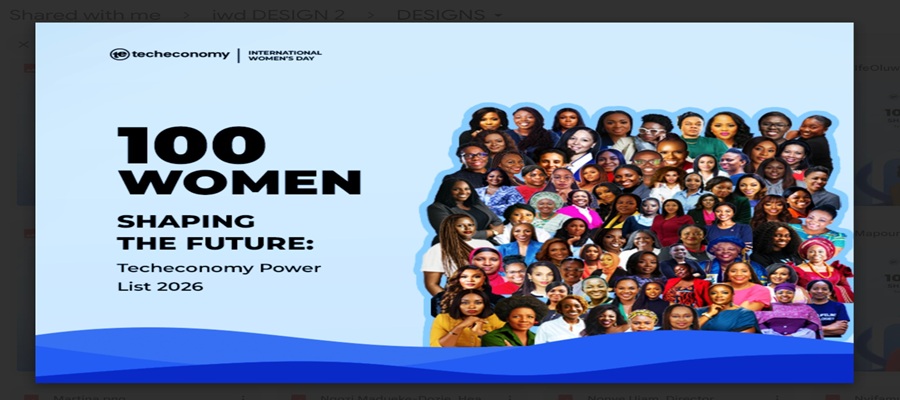
In celebration of International Women’s Day (IWD) 2026, Techeconomy, a leading business news platform in Nigeria, has unveiled its “100 Women Shaping the Future: Techeconomy Power List 2026,” recognizing exceptional women driving innovation, leadership, and impact across technology and the broader digital economy.

Techeconomy
The annual recognition spotlights women who are transforming industries through entrepreneurship, policy leadership, digital innovation, financial inclusion, media, education, and emerging technologies.
The initiative is part of Techeconomy’s commitment to promoting gender inclusion and highlighting female leadership shaping Africa’s technology ecosystem.
The Techeconomy IWD Power List features a diverse group of women, from corporate executives and startup founders to policymakers, ecosystem builders, and social innovators, whose work continues to influence the future of technology, business, and digital transformation in Nigeria and across Africa.
Speaking on the initiative, Joan Aimuengheuwa, the Managing Editor at Techeconomy, noted that the recognition goes beyond celebrating titles, focusing instead on impact, resilience, and the ability to shape the future through innovation and leadership.
According to her, “the women on the list represent different sectors including fintech, banking, healthcare, agriculture, education, communications, and the creative economy, demonstrating the growing role of women in advancing technology-driven development.
The unveiling aligns with the global celebration of International Women’s Day, which highlights the achievements of women and calls for accelerated progress toward gender equality. Across the world, the technology sector continues to push for greater female representation and leadership as part of efforts to build more inclusive digital economies.
Also speaking, Oluwatosin Aloba, the Brand Manager at Techeconomy, said: “Techeconomy IWD 2026 Power List is specially designed to inspire the next generation of female innovators and leaders by showcasing role models who are breaking barriers and redefining possibilities in the technology landscape.
“Techeconomy encouraged industry stakeholders, institutions, and the broader public to celebrate the achievements of these women while continuing to support policies, programs, and investments that expand opportunities for women in technology”, she added.
The full list of the “100 Women Shaping the Future: Techeconomy Power List 2026” is available on the Techeconomy website or visit: https://techeconomy.ng/techeconomy-iwd-2026-power-list-celebrates-100-women-shaping-the-future-of-tech/.

VDT Communications Achieves Two Prestigious Certifications ISO /IEC 27001:2022, ISO/IEC 27032:2023 Reinforcing its Leadership in Broadband Service Provision

CBN Orders Banks to Restrict Access to Banking Services for Loan Defaulters

NLNG Advances Media Excellence with Change Your Story Workshop

Interswitch Advocates Trust-Driven Infrastructure as Cornerstones of Africa’s Cross-Border Capital Future

Why JustMarkets Is a Strong Choice for Gold Trading

Kaspersky Discovers New Phishing Campaign Exploiting Google Tasks Notifications to Steal Corporate Credentials

esentry 2025 Report Shows Healthcare, Financial Services and Telecoms as Staging Grounds for Increased Cyberattacks in Africa

AfDB, UNDP Launch $10Bn AI Initiative for Africa

Pheelz Shares His Journey on Glo-Sponsored African Voices

Mutual Benefits Assurance Settles ₦5.9bn Claims in January 2026




 General News2 days ago
Court Freezes Bank Accounts of Petrocam, Founder over Alleged N9Bn Zenith Bank Debt

 General News2 days ago
FCCPC Says Telcos, Energy Firms Lead Consumer Complaints in Nigeria

 Telecom2 days ago
Techeconomy Unveils IWD 2026 Power List Celebrating 100 Women Shaping the Future

 E-Business2 days ago
Kaspersky Uncovers a New Android Malware Campaign Disguised as Starlink Application
 News1 day ago
NLNG Advances Media Excellence with Change Your Story Workshop

 News2 days ago
Easybuy Sales Talent Program to Empower 10,000 Nigerians to Become Millionaires
 General News1 day ago
Interswitch Advocates Trust-Driven Infrastructure as Cornerstones of Africa’s Cross-Border Capital Future

 News2 days ago
FG Approves First National Policy on Cosmetic Safety, Health