

Telecom
NgREN Pushes Bandwidth Demand to 377 STM-1

Launch of Nigerian Research and Educational Network (NgREN) recently have increased bandwidth demand by telecommunications operators, banks among other companies using the commodity to 377 Synchronous Transport Module, level 1 (STM-1) frame.
The Synchronous Transport Module, level 1 (STM-1) frame is the basic transmission format for SDH—the first level of the synchronous digital hierarchy of bandwidth from undersea cable infrastructure as well as satellite.
There is 155 megabyte per second in an STM-1 frame.
Nigeria CommunicationsWeek gathered that NgREN currently delivers 155mbps (STM-1) capacity to each of the 27 university in addition to 350 STM-1 on demand before the launch of NgREN.
Also, demand for STM-1in the country has recorded a steady increase from 200 STM-1 in 2012 to 350 as June this year representing 75percent growth.

Dewole Ajao, operations manager, Bandwidth Consortium, said that beyond just downloading from the Internet, students and researchers in connected universities should be empowered to further their research and education using NgREN.
A basic example is access to meteorological data for research into suitability of different areas for crop production.
The applications are limitless; the key is to open up the networks and content to students and researchers for innovation.
The NREN should also be used to encourage collaboration and reduce duplication of efforts.
“Very importantly, it would be good to see all the various research institutes we have across Nigeria plugged into the REN so we can harness their output. After all, what is the usefulness of research that ends up in a remote silo that cannot be accessed by those that could benefit from it?
He added that the celebration could be seen by some as a demonstration of videoconferencing which has been a basic communication tool for several years. It goes beyond that; it is hopefully the beginning of a new era in learning and research in Nigeria. I look forward to seeing real work being done with the REN and at the very least, access to research data that will help exploit opportunities and solve problems.
Mohammed Rudman, managing director, Internet Exchange Point of Nigeria, stressed the need for the required bandwidth for higher educational institutions and research centres.
According to him, with the launch of National Research Network (NREN) by National University Commission that has got 27 federal universities connected to the network, universities will require bandwidth for its operation.
Nigeria CommunicationsWeek investigations revealed that the available bandwidth capacity from undersea cable infrastructure is put at 7,862 STM-1.
It was gathered that as at 2009 fiber link capacity available in the country were provided through Sat-3 operated by Nigerian Telecommunications Limited (Nitel) and Suburban Telecom. Sat-3 has 64 STM-1 capacity out of which 30 is demanded while Suburban contributes 3 STM-1 bringing available capacity in the country from the fiber optic infrastructure to 67 STM-1.
In the last three years the capacity has increased by over 4,000 per cent due to the launch of commercial service by Glo 1 contributing 2,345 STM-1 and MainOne which has 1,765 STM-1. More so, the coming of WACS with additional capacity of 3,685 STM-1 brought about the overall percentage increase to rise by 7000%.


MTN Nigeria is accelerating investments in network expansion and modernization to address rising demand for mobile and data services across the country.

The operator is deploying additional base stations, upgrading existing infrastructure, and expanding fiber connectivity to improve network capacity, coverage, and service quality.
The investments are designed to support increasing smartphone adoption, higher data consumption, and the growing use of digital services by consumers and businesses.
MTN said the expansion aligns with its long-term strategy to enhance customer experience while strengthening Nigeria’s digital infrastructure.
The company expects the ongoing upgrades to improve connectivity, support economic growth, and enable broader access to reliable telecommunications services as demand for high-speed broadband continues to increase.

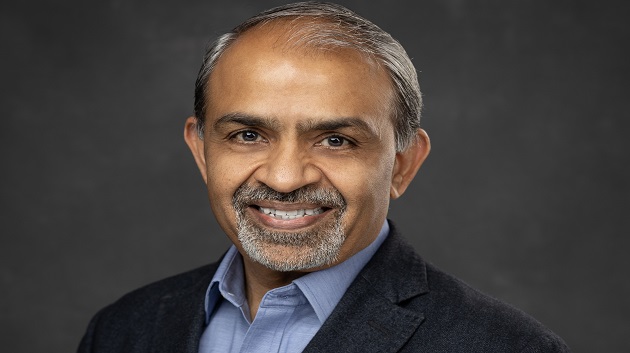
Airtel Africa’s CEO, Sunil Taldar, has announced the telco’s commitment to connecting 5,000 schools across its operating countries in Africa to the internet by 2027 through its philanthropic arm, Airtel Africa Foundation, in partnership with the United Nations Children’s Fund (UNICEF).

So far, the $57m partnership, which was launched in 2021, has cumulatively connected 3,296 schools and provided access to over 2 million learners and about 40,000 teachers. 64 digital learning platforms have been zero-rated thereby enabling more than 11m users to access educational content at no cost.
Speaking during a visit to St. Monica’s Girls School in Lusaka, which is one of the 300 schools already connected to the internet in Zambia, the Airtel Africa CEO stated that the initiative is having a profound impact on the quality of education by expanding access to digital learning resources for African children, in collaboration with governments.
Mr Taldar added: “Students are accessing best-in-class education from the curriculum developed by UNICEF in partnership with various Ministries of Education and provided through Airtel’s connectivity.
“We are also training teachers, so that they deliver digital education effectively. We aim to continue deepening meaningful connectivity in schools by providing free internet access, zero‑rated platforms and training teachers across the continent”.
Expressing her appreciation, the Headmistress of St. Monica’s Girls’ School, Sr Matilda Soloko said: “Being among the first schools connected in the initial stage, our learners have been able to study using the learning portal and their studies have been intensified. We remain grateful to Airtel and UNICEF.”
UNICEF’s Country Representative for Zambia, Dr Saja Farooq Abdullah said: “What this partnership has brought is really bridging the equality gap and the digital divide. It is making sure that every child learns wherever they are. It was exciting and interesting to see and hear from the girls how they can learn at their own pace, how they can review the materials, and how they do their homework with comfort.
The Director of Secondary Education in Zambia’s Ministry of Education, Yvonne Mwemba Chuulu lauded UNICEF and Airtel for the partnership saying: “At the Ministry of Education, we cannot do it alone, and we are grateful for the partnership that we have today.
“Our children are able to learn in a blended fashion, where we have a teacher who is also employing digital devices. We have also heard from the learners that they are able to access the portal when they are at home, which is a good thing because our learners continue to learn in the comfort of their homes”.
The School Connection programme is expanding digital learning to learners in 13 countries: Chad, Congo, Democratic Republic of Congo, Gabon, Kenya, Madagascar, Malawi, Niger, Nigeria, Rwanda, Tanzania, Uganda, and Zambia. By equipping these schools with internet connectivity and training teachers on using the digital tools, it is providing children, particularly in underserved and remote regions, with the digital tools and skills they need to thrive.
Airtel Africa Foundation is advancing inclusive development across four strategic pillars, Financial Inclusion, Education, Environmental Sustainability and Digital Inclusion.


MultiChoice has officially become a wholly owned subsidiary of French media company Canal+, marking the completion of one of the largest acquisitions in Africa’s media and entertainment industry.

The integration brings the South Africa-based pay television operator under the full ownership of Canal+, a global media group with operations in 70 countries.
Announcing the completion of the transaction on Thursday, Chief Executive Officer of Canal+ Africa and MultiChoice, David Mignot, described the development as the beginning of a new phase of growth for the broadcaster.
“MultiChoice is now a full subsidiary of a truly international media group operating in 70 countries.
“The group was founded in France, is listed in London and Johannesburg, and has a strong African presence with operations in more than 45 countries,” Mignot said.
The acquisition combines Canal+’s international operations with MultiChoice’s extensive footprint across sub-Saharan Africa, where it serves millions of households through its DStv and GOtv platforms, as well as the Showmax streaming service.
According to Canal+, the integration will strengthen MultiChoice’s competitive position by giving it access to broader financial resources, technology, content partnerships and operational expertise.
The company said the combined business would increase investment in local content production, sports broadcasting and streaming services as competition intensifies from global platforms such as Netflix, Amazon Prime Video and Disney+.
The transaction is also expected to provide MultiChoice with greater access to international markets at a time when traditional pay television operators are adapting to changing consumer viewing habits and the rapid growth of digital streaming platforms.
Canal+ has expanded steadily across Africa over the past decade and now assumes full control of a business operating in more than 45 African countries, further strengthening its position in the continent’s media and entertainment sector.
The acquisition followed Canal+’s gradual increase in its shareholding in MultiChoice, which began in 2024.
After exceeding the regulatory threshold, the company launched a mandatory offer in April 2024 to acquire the remaining shares of the Johannesburg-listed broadcaster.
Following regulatory approvals and shareholder acceptance, Canal+ secured control of MultiChoice in 2025 before completing the process that has now made the company a wholly owned subsidiary.
Industry observers describe the acquisition as one of the most significant media transactions involving an African company, reflecting a broader trend of consolidation as global entertainment firms seek greater scale to compete in the streaming era.

Police Busts Syndicate Who Allegedly Stole N3Bn from Financial Institution

MTN Accelerates Network Expansion to Meet Surging Telecom Demand

Court Remands Akujobi, Ex Access over alleged Theft of N294.5m

TeKnowledge, Equinix Partner to Advance Nigerian Digital Infrastructure

NSIB Faults Runway Identification, Reveals Cockpit Disagreement in Asaba Jet Incident

NASENI Moves to Digitize CCB’s 5m Assets Declaration and Operations

Mobile Internet Gender Gap Widest in Africa – GSMA

Nigeria Launches FreeTV Nationwide

CANAL+ Partners Samsung to Pre-Load DStv Stream on New Samsung TVs In Nigeria, Other African Countries

Lebara Nigeria Launches Lebara Play, Africa’s First Telecom-Owned Micro-Drama Platform




 Telecom2 days ago
NCC Seeks Cost-Based Pricing Framework for Ducts

 E-Financial2 days ago
CBN Warns against Rejection of N100 Banknotes

 News2 days ago
Flutterwave Secures Circle Ventures Investment to Deepen USDC Payment

 Telecom1 day ago
Fixed Wired Internet Market Lags as Mobile Gains Ground

 Telecom2 days ago
Meta Introduces Muse Image With Advanced AI Image Editing Across WhatsApp and Instagram

 E-Financial2 days ago
BVN Enrollments Hit 69.55m- NIBSS

 News2 days ago
How EFCC Turned Recovered Loot Into School Supplies for Thousands of Nigerian Students

 News2 days ago
CJN Warns Judges: Reject Gifts or Risk Petitions and Ruined Careers