

General News
Nigeria, Others Spend $400m on Local Traffic Annually—Rudman

Mohammed Rudman, managing director, Internet Exchange Point of Nigeria is a multitalented IT expert who has contributed immensely to the development of the industry in Nigeria. He has worked with Galaxy Information Technology Telecommunications (GTT) now Galaxy Backbone. He also pioneered Jigawa state government rural telephony project, Personal Handy phone System (PHS) before he joined IXPN.
Internet Exchange Point of Nigeria
Internet Exchange of Nigeria is actually a spot where more than two Internet Service Providers do interconnect. Here, what we do is interconnect our service providers so that they can exchange local Internet traffic locally. What I mean by local Internet traffic is all local files or contents that are hosted in Nigeria locally. All over the world, there are lots of ISPs. The history of Internet Exchange of Nigeria actually began when ex-president Obasanjo visited Tunisia during the World Summit on Information Society; the Internet governance forum recommended that for the next 1 billion people to get connected to the Internet, an exchange point must be built across all the developing countries so that local content can be developed. When he came back, he gave the mandate to the minister of communications and then the Nigerian Communications Commission (NCC) gave us the initial funding to start the Internet Exchange Point of Nigeria. Without an exchange point, it means that all our local traffic would wander before coming home. For example, in the case of Joint Admission and Matriculation Board, University Matriculation Examination candidates in Lagos browsing the board’s website to register, their traffic would go round the world only to come back to Lagos and that does not make sense. Another example is when you have two communities between the border of Cotonou and Lagos and both of them are just living 10km apart, if anyone there wants to make a phone call, it would assume the status of an international call. Why is it an international call? It is because that traffic is not restricted to the Nigerian space. It goes from Nigeria and most likely to British Telecoms; from there it goes to France Telecoms and then to Cotonou because there is no direct relationship between those service providers like GSM operators and that is why GSM international calls were very expensive but when those GSM operators understand the benefit of agreement among them, they would then have a Memorandum of Understanding between themselves and Cotonou. That implies that whenever you make calls from Nigeria to Cotonou, it goes directly there and turns out to be cheaper and that is why you can see that international call rates are dropping. In data terms, that is not what is happening as it still goes round the world before coming back. That is why most Nigerian contents are hoisted abroad because it does not make business sense for them to be hoisted here as they would still be routed round the world before coming back. But with the Exchange point now, it makes more business sense for you to hoist that content in Nigeria; it means that the traffic would not need to go round the world. That is about the Exchange Point and its impact on the country’s super highway.
ISPs and IXPN
We have about 16 Internet Service Providers connected to the exchange; some of them are PTOs like Starcomms, which is connected too. Almost all the bigger players in Lagos are connected and we are waiting now for one of the GSM operators to get connected and they have indicated interest strongly. On the total, we have about 16 that are exchanging traffic and most of them are among the biggest players in Lagos.
Interconnect Voice
We do not interconnect voice; there are other companies that are licenced to do that – interconnect-clearing houses which connect all GSM operators. What we basically do is data connection but as long as you are connecting via Internet Protocol, you can even exchange voice as long as it is VoIP. But that is not our focus; we are really into promoting local content development in Nigeria and ensuring that there are seamless e-transactions in banks. We want to promote all those things using data, which happens to be our area of competence.
Benefit to ISPs
Linkserve and Direct-on-PC are actually Satellite link providers and the truth of the matter is, for some of them, there might not be a direct benefit because they sell Vsat across the place, they sell from the U.S because there hubs are not located in Nigeria. That means they connect in the U.S and sell here. So, there are actually no direct benefits unless for those who sell wireless links – they have a Vsat here and then sell the bandwidth as an ISP using different technologies, to the customers. The reason why I told you it is not beneficial for the Nigerian ISPs is because we do not have a Vsat in Nigeria and if you want to browse a Nigerian site, that Vsat most likely is connected to a hub in the U.S.
400 million dollars are spent on local traffic in Africa alone every year. That is why some African countries have exchange points: South Africa, Egypt, Ghana; all have it. If you take a little part of that money and channel it into developing other areas of economy it is going to be beneficial as it is obtainable in western countries. We can achieve what they have achieved. Most of the ISPs in Nigeria only buy and sell while those abroad have value added services. For data, they provide web hosting, video conferencing, VoIP – these are value added services that go with the Internet but in Nigeria they buy and sell, that is all. People are now reaping benefits from companies like Google, Yahoo that offer free e-mails, which are hosted in the U.S and no matter what you do the traffic will go through there. That is why we are trying to promote local content development in Nigeria so that we can have good programmers and hosting facilities that would stimulate change for the better and the market would start drifting from mere service provision to content provision.
Today, the reason why Internet is expensive is because you have to get connected to the hubs in the U.S and that is tasking. But if they are located here, you do not have to pay anybody and that would eventually drive down the price. The Chinese have their own local content; in China they do not need to go to the U.S that much as they have their own exchange point. They are there and exchanging in tens of gigabytes per second. That is what we are trying to promote in Nigeria – we should understand the concepts of cooperation and competition. We need to cooperate as people so that we can move forward.
The Internet is no respecter of border integrity; if you do not control your traffic locally, it would have to go through other places before coming back to you. So, it is better for us to exchange local traffic than to allow international providers make money off us. That unfortunately, is what is happening today. You can see the proximity between UBA and Sterling Bank buildings, but traffic from Sterling Bank to UBA goes through multiple hubs as much as 16 equipment and that is not right. But I would like to think that things have started changing and that implies that when UBA and Sterling Bank are connected, the traffic between them would go directly. Nigerian Internet Registration Association (Nira) had to register the .ng domain – formerly they were hosted in Ibadan and before they got connected to the exchange point, it goes round the world just for it to get to Ibadan. But later on, they got connected from Ibadan and now their traffic goes through 6 locations instead of the 20 locations that it used to be. You can see it is quite significant and the reason why it is 6 locations is because it is in Ibadan; if it were in Lagos, it might have been reduced to about 2 or 3 locations.
Connection to the Exchange Point
All our service providers are supposed to get connected including those using Vsat. Even Linkserve is connected because they are among stakeholders in the industry and as business trends change, people also change. We still encourage Vsat operators to get connected – as you know, it is good for remote areas – we do not make exemptions.
Exchange and 3G Technology
Yes. As long as you are browsing and using IP, you have the benefit of being connected to the exchange point and especially those GSM operators that are providing 3G; if they get connected to the exchange point, it means that all their subscribers that are browsing using their handsets, browse local contents and the traffic would be local and does not have to be routed round the world before reaching targets. The data goes directly from the handset to the mobile operator and from there, the ISP that is hosting those contents in Nigeria. So, it gives them a lot of advantage more than being directly connected to the Internet switch.
Wimax Technology
You see, in spite of any equipment you have access to, as long as you are browsing on the Internet, you are using IP and as long as you are using IP, it is necessary for you to get connected to the exchange point. As long as you are connected to the Internet, you have an IP address because you browse not with your telephone number but with that IP address that an ISP provided for you. IP contains a lot of things: Voice, data, video, etc.
Exchange Capacity
Well, anybody that connects to the Exchange point gets a minimum of 100mbps port. You can also connect at Gigabyte – that is 1000mega byte per second, which is large. None of these ISPs have the capacity for international practice – none of them uses up to 100meg for their international cycling. But we are giving them that for local traffic, though for some of them, the traffic might be 1Meg but as the traffic builds up; as local content builds up and as we promote the .ng as our national pride and start hosting sites for .ng locally in Nigeria, the content would really grow and what we are charging them is really minimal compared to international prices; it is about less than 1% if they were to pay for international traffic. We have excess capacity and it would take a lot to weigh it down.
Regulating Internet Service Delivery
NCC cannot monitor anyone and find out which customer is getting the right service. I think it is left for the users to complain to NCC so that they can address it. There are Consumer Parliaments where NCC meets with the consumers every month and iron out issues with them. In most parts of the world, they have gateways – platforms that are used to connect to the Internet. But in Nigeria, we barely have such. We do not know what is coming in or going out of the country and that is why so many scam mails are moving all over and people are saying they are from Nigeria. How did they know they are from here? Most of the ISPs in Nigeria actually borrow their addresses from other Internet service providers in the world. That is why connecting to the Exchange point is very necessary and we always encourage people to always have their own IP address so that we can trace and Government can now intervene and trace all scam mails and ensure good quality of service. But without the Exchange point; without the national gateway, you cannot really monitor anything because everybody is totally independent.


Socio-Economic Rights and Accountability Project (SERAP) has filed a lawsuit against the Code of Conduct Bureau (CCB) over its failure to investigate an alleged abuse of office in the National Assembly regarding the amendments to the Electoral Act and tax reform laws.

“Public officers hold their offices in trust for the people and must not deploy official power for personal or sectional advantage,” SERAP said in a statement on Sunday.
In the suit marked FHC/ABJ/CS/634/2026, SERAP is seeking an order of mandamus to compel the CCB to immediately probe lawmakers and executive officials involved in the processes.
SERAP specifically wants the CCB to investigate claims that critical provisions on electronic transmission of election results were secretly removed from the Electoral Act Amendment Bill, as well as alleged discrepancies between the tax reform bills passed by the National Assembly and the versions signed into law.
The group is also asking the CCB to refer any public officers found guilty of violating the Code of Conduct to the Code of Conduct Tribunal for prosecution.
No date has been fixed for the hearing.
The statement reads, “We’re also seeking an order of mandamus to direct and compel @CCBNigeria to probe the allegations that certain lawmakers and officers of the executive branch unlawfully altered some aspects of the tax reform bills, which resulted in differences between the tax laws passed by lawmakers and the gazetted copy available to the public.”
SERAP emphasised that granting the reliefs sought would help address critical concerns relating to conflict of interest, abuse of office, non-disclosure of interests, and reinforce adherence to due process.
The group added that, “It would serve to curb the erosion of the Code of Conduct for Public Officers in the exercise of legislative powers.”
“Where lawmaking is shaped by abuse of office and conflict of interest, it ceases to be a legitimate exercise of constitutional and fiduciary responsibility and becomes a legal and ethical infraction prohibited under the Code of Conduct for Public Officers,” the statement concluded.
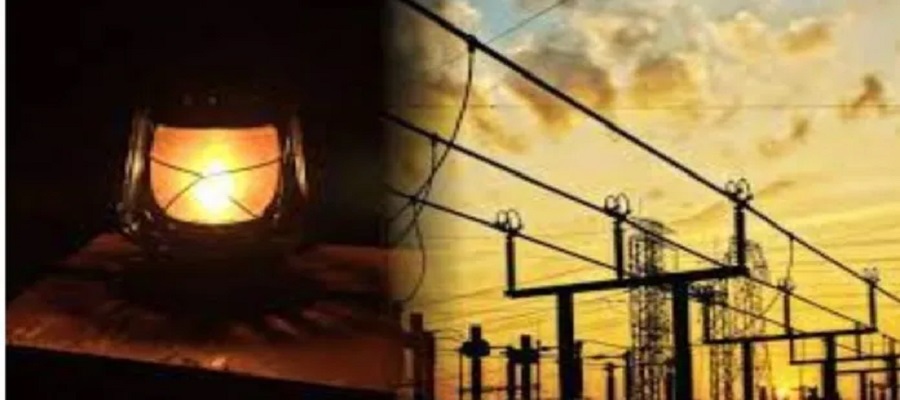
President Bola Tinubu has approved a N3.3 trillion payment plan aimed at settling long-standing debts in Nigeria’s power sector, in a move expected to improve electricity supply and restore investor confidence.

The development was disclosed in a statement issued on Sunday by Bayo Onanuga, special adviser to the President on Information and Strategy.
According to the statement, the approval followed a final review of legacy debts accumulated under the Presidential Power Sector Financial Reforms Programme over 10 years, spanning February 2015 to March 2025.
“Following verification, ₦3.3 trillion has been agreed as a full and final settlement, ensuring a fair and transparent resolution,” the statement partly read.
The government noted that implementation of the repayment plan has already commenced, with 15 power generation companies signing settlement agreements valued at ₦2.3 trillion.
It added that the Federal Government had so far raised ₦501 billion to fund the initiative, out of which ₦223 billion had already been disbursed, while further payments are ongoing.
Explaining the significance of the programme, Olu Arowolo-Verheijen, special adviser on Energy to the President, said the initiative goes beyond debt clearance.
“This programme is not just about settling legacy debts. It is about restoring confidence across the power sector, ensuring gas suppliers are paid, power plants can keep running, and the system begins to work more reliably,” she said.
She added that the plan formed part of the sector reforms, including improved metering and the introduction of service-based tariffs.
“It is part of a broader set of reforms already underway, including better metering and service-based tariffs that link what you pay to the quality of electricity you receive.
“The government is also prioritising power supply to businesses, industries, and small enterprises because reliable electricity is critical to creating jobs, supporting livelihoods, and growing the economy.
“The goal is simple: more reliable power for homes, stronger support for businesses, and a system that works better for all Nigerians,” she added.
The presidency stated that the settlement of the debts was expected to enhance liquidity across the power value chain, leading to more stable electricity generation and improved service delivery.
President Tinubu also commended stakeholders for their roles in resolving the long-standing issues and confirmed that the next phase of the programme, known as Series II, will commence within the current quarter.
Nigeria’s fragile power supply has been marked by frequent grid collapses, low generation levels, and persistent outages affecting homes and businesses.
A 2024 report by Africa Trade Barometer disclosed that Nigeria loses an estimated $26 billion yearly to power failures.
It said businesses spend about $22 billion annually on off-grid fuel to offset the impact of power shortages. This further pushes operational costs.
“Economic losses arising from Nigeria’s electricity shortages are estimated to be USD 26 billion annually, without accounting for spending on fuel for off-grid generators, which is estimated to be a further USD 22 billion,” the report by Standard Bank said.
“In Nigeria, surveyed businesses must contend with a national grid that frequently collapses as it fails to meet a daily peak demand which is nearly four times its generation capacity,” it added.
General News
Union Bank Looted: How Former Directors Gambled with Billions and Nearly Destroyed a National Bank


The former directors and owners of Union Bank did not just fail, they engineered a financial disaster. They manipulated reports, hid massive losses, diverted foreign loans and treated depositors’ money like a private wallet.

Union Bank
Investigators uncovered billions of dollars in misconduct. These directors buried over ₦250 billion in losses, piled a $300 million foreign loan onto the bank without protection and then forced Union Bank to carry the burden. They even used the bank’s own funds to buy its shares, an outrageous betrayal of trust.
It didn’t stop there. Over $100 million was pulled out improperly, leaving the bank exposed and struggling. Loans meant for customers were secretly diverted into shady transactions. False reports were sent to lenders. The system was deliberately deceived.
This was not incompetence. It was exploitation.
By 2025, their actions had created nearly ₦400 billion in losses and over ₦147 billion in unpaid charges. The bank was on the edge.
The Central Bank of Nigeria (CBN) stepped in just in time. Without that intervention, Union Bank could have collapsed, dragging others down with it.
Now, the bank is stabilising. But let’s be clear: this recovery is happening in spite of those former directors, not because of them.
They didn’t build value. They destroyed it.
And Nigerians deserve to never forget who was responsible.

Offset Communications Slams N50m Suit against Qore Technologies for Alleged Copyright Infringement

Compensation for Poor Service Quality is Automatic- NCC

SERAP Sues CCB over Electoral Act, New Tax law

Tinubu Approves N3.3 Trillion Payment Plan to Boost Power Supply

NDPC Investigates Remita, Others over Alleged Data Breaches

Spotify’s Loud & Clear Report Reveals Over ₦60Bn Revenue for Nigerian Artists in 2025

Madonna University Taps Tech Guru Adote for Strategic Board Role

China Threatens to Shut Nigeria’s Satellite Over $11.44m Unpaid Debt

Healthcare Under Attack: Why Cybersecurity is Now Critical Care

Why JustMarkets Is a Strong Choice for Gold Trading




 General News3 days ago
FG, Others Say Nigeria Wastes 38m Tonnes of Food Annually

 E-Financial3 days ago
CBN, Banks, Fintechs Launch PSPC to Boost Nigeria’s Payment System

 News3 days ago
NITDA Strengthens Collaboration with NIPSS to Drive Digital Innovation, Orange Economy Growth

 E-Financial3 days ago
CycleFlow, IFC Launch Supply Chain Finance Platform in Nigeria

 E-Financial3 days ago
Anchor Gets Nigerian, Canadian Licences as Transactions Crosses $2.5Bn

 E-Financial3 days ago
Ecobank Assures of Seamless Easter Banking Services

 News3 days ago
NRS Takes Over Mineral Royalties Collection Under New Tax Laws

 E-Financial2 days ago
N4.65 Trillion in the Vault, but is the Real Economy Locked Out?