

Telecom
Nigeria Retains 143rd Spot in Global ICT Rankings


By peter oluka
Nigeria, at number 143, has retained its global ranking in this year’s ICT Development Index (IDI), according to assessment by the International Telecommunication Union (ITU).
The country’s position remains unchanged despite improvement in the performance of the majority of countries.
The IDI is a feature of the Measuring the Information Society Report (MISR), which the ITU released during its World Telecommunication/ICT Indicators Symposium Wednesday.
Developed by the ITU in 2008, the IDI is a composite index that combines 11 indicators into one benchmark measure, which can be used to monitor and compare ICT developments between countries across the world.
The ranking index has been described as a tool for monitoring progress towards a global information society and a core feature of the MISR.
The 2017 IDI edition ranks the performance of 176 economies with regard to ICT infrastructure, use and skills, allowing for comparisons to be made between countries and over time.
The most important aspect of the IDI is that countries should track their own year-on-year progress and make policy adjustments to grow their telecommunication or ICT sector, said Brahima Sanou, director of the Telecommunication Development Bureau for the ITU.
This year’s results show improvements have been most significant among countries in the middle of the IDI rankings, many of which are middle-income developing countries.
In addition, least developed countries improved their average IDI value, with mobile broadband attributed as the driving force behind bringing previously unconnected individuals online and catering for the ubiquitous data needs of the ICT ecosystem.
According to the index report, Africa has by far the lowest average IDI performance of any region. Only one country in the region, Mauritius, falls into the top half of the IDI distribution or exceeds the global average value for IDI 2017.
Although Nigeria’s global ICT IDI rankings remained on same spot during the period under review, the country, lags behind South Africa, Senegal Mauritius and Seychelles, which are regarded as relatively high-performing on the African continent, according to the report.
According to the report assessed by Nigeria CommunicationsWeek, as in other regions, there was relatively little movement in regional rankings between IDI 2016 and IDI 2017. At the top of the distribution, Seychelles moved from fourth to second position, at the expense of SA and Cabo Verde, while Gabon moved above Ghana, from seventh to sixth.
The biggest gain in the regional rankings was made by Uganda, which moved from 24th to 20th position.


Telecom
VDT Communications Achieves Two Prestigious Certifications ISO /IEC 27001:2022, ISO/IEC 27032:2023 Reinforcing its Leadership in Broadband Service Provision


VDT Communications Limited, a provider of Enterprise communication solutions, is proud to announce that it has been awarded the ISO/IEC 27001:2022 Information Security Management System (ISMS) and ISO/IEC 27032:2023 Cybersecurity Management System certifications.

These prestigious certifications demonstrate VDT’s commitment to maintaining the highest standards of information security and cybersecurity, ensuring the protection of sensitive customer data and maintaining the trust of its clients.
These certifications are a testament to VDT’s dedication to implementing robust information security and cybersecurity measures, aligning with international best practices.
The ISO/IEC 27001:2022 certification recognizes VDT’s ability to establish, implement, maintain, and continually improve its ISMS, ensuring the confidentiality, integrity, and availability of customer information. The ISO/IEC 27032:2023 certification highlights its commitment to protecting its customers’ information assets and preventing Cyber threats.
VDT Communications Limited has consistently demonstrated its commitment to excellence, previously earning and maintaining ISO 9001:2015 Quality Management System and ISO 20000-1:2018 IT Service Management certifications. These certifications have enabled the company to deliver high-quality services, ensuring customer satisfaction and loyalty.
“We are thrilled to receive these two prestigious certifications, which reinforce our commitment to information security and cybersecurity. These certifications demonstrate our dedication to implementing robust security measures that ensure confidentiality, integrity and availability of customer data” said Engr. Abiodun Omoniyi, GMD of VDT Communications Limited.
The ISO/IEC 27001:2022 and ISO/IEC 27032:2023 certifications bring numerous benefits to VDT’s customers, including:
- Enhanced information security and cybersecurity posture
- Protection of sensitive customer data
- Compliance with international standards and regulations
- Improved risk management and incident response
- Increased trust and confidence in VDT’s services
“We are proud to serve our customers with the highest level of security and quality,” Bimbo Ikumariegbe, Chief Operating Officer (COO) of VDT. “These certifications demonstrate our commitment to excellence and our dedication to delivering innovative communication solutions that meet the evolving needs of our customers” – Olufemi Akinola, Head, Information Technology.
Nigeria Data Protection Commission (NDPC) has issued a stern warning to content creators filming and sharing videos of unsuspecting citizens on social media, describing such practices as direct violations of citizens’ rights to informational self-determination.

NDPC
The Commission drew attention to individuals capturing pictures and footage of the general public without consent, breaching Section 37 of the 1999 Constitution of the Federal Republic of Nigeria (as amended) and the Nigeria Data Protection Act, 2023 (NDP Act).
NDPC specifically flagged a content creator in Lagos State who films unsuspecting passersby at roadsides for a “reality show”. The Commission stressed that processing personal images in this manner demands explicit consent or a justifiable lawful basis under the NDP Act.
Preliminary investigations revealed no public or legitimate interest served by this “wilful invasion of privacy”. Data subjects, the Commission noted, have no reasonable expectation that their images would be captured and broadcast globally by an unknown individual.
National Commissioner/CEO Dr Vincent Olatunji has instructed social media platform owners—including TikTok, X (formerly Twitter), and Meta—to intensify enforcement of community guidelines to prevent harm from unlawful and unfair personal data processing.
Platforms failing to act promptly face sanctions under the NDP Act. Individual creators remain personally liable for violations, potentially facing criminal prosecution for infringing citizens’ and data subjects’ privacy rights.
The advisory was signed by Babatunde Bamigboye, Esq. CDPRP, Head of Legal, Enforcement and Regulations.
NDPC emphasised that abuse of rights under the guise of entertainment will not be tolerated, urging compliance to safeguard Nigerians’ data privacy in the digital age.
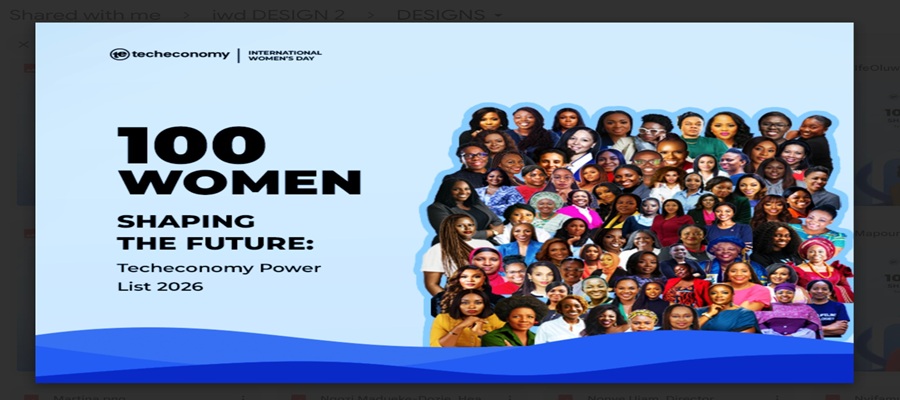
In celebration of International Women’s Day (IWD) 2026, Techeconomy, a leading business news platform in Nigeria, has unveiled its “100 Women Shaping the Future: Techeconomy Power List 2026,” recognizing exceptional women driving innovation, leadership, and impact across technology and the broader digital economy.

Techeconomy
The annual recognition spotlights women who are transforming industries through entrepreneurship, policy leadership, digital innovation, financial inclusion, media, education, and emerging technologies.
The initiative is part of Techeconomy’s commitment to promoting gender inclusion and highlighting female leadership shaping Africa’s technology ecosystem.
The Techeconomy IWD Power List features a diverse group of women, from corporate executives and startup founders to policymakers, ecosystem builders, and social innovators, whose work continues to influence the future of technology, business, and digital transformation in Nigeria and across Africa.
Speaking on the initiative, Joan Aimuengheuwa, the Managing Editor at Techeconomy, noted that the recognition goes beyond celebrating titles, focusing instead on impact, resilience, and the ability to shape the future through innovation and leadership.
According to her, “the women on the list represent different sectors including fintech, banking, healthcare, agriculture, education, communications, and the creative economy, demonstrating the growing role of women in advancing technology-driven development.
The unveiling aligns with the global celebration of International Women’s Day, which highlights the achievements of women and calls for accelerated progress toward gender equality. Across the world, the technology sector continues to push for greater female representation and leadership as part of efforts to build more inclusive digital economies.
Also speaking, Oluwatosin Aloba, the Brand Manager at Techeconomy, said: “Techeconomy IWD 2026 Power List is specially designed to inspire the next generation of female innovators and leaders by showcasing role models who are breaking barriers and redefining possibilities in the technology landscape.
“Techeconomy encouraged industry stakeholders, institutions, and the broader public to celebrate the achievements of these women while continuing to support policies, programs, and investments that expand opportunities for women in technology”, she added.
The full list of the “100 Women Shaping the Future: Techeconomy Power List 2026” is available on the Techeconomy website or visit: https://techeconomy.ng/techeconomy-iwd-2026-power-list-celebrates-100-women-shaping-the-future-of-tech/.

VDT Communications Achieves Two Prestigious Certifications ISO /IEC 27001:2022, ISO/IEC 27032:2023 Reinforcing its Leadership in Broadband Service Provision

CBN Orders Banks to Restrict Access to Banking Services for Loan Defaulters

NLNG Advances Media Excellence with Change Your Story Workshop

Interswitch Advocates Trust-Driven Infrastructure as Cornerstones of Africa’s Cross-Border Capital Future

Why JustMarkets Is a Strong Choice for Gold Trading

Kaspersky Discovers New Phishing Campaign Exploiting Google Tasks Notifications to Steal Corporate Credentials

esentry 2025 Report Shows Healthcare, Financial Services and Telecoms as Staging Grounds for Increased Cyberattacks in Africa

AfDB, UNDP Launch $10Bn AI Initiative for Africa

Mutual Benefits Assurance Settles ₦5.9bn Claims in January 2026

Pheelz Shares His Journey on Glo-Sponsored African Voices




 General News3 days ago
Court Freezes Bank Accounts of Petrocam, Founder over Alleged N9Bn Zenith Bank Debt

 Telecom3 days ago
Techeconomy Unveils IWD 2026 Power List Celebrating 100 Women Shaping the Future

 General News3 days ago
FCCPC Says Telcos, Energy Firms Lead Consumer Complaints in Nigeria

 E-Business3 days ago
Kaspersky Uncovers a New Android Malware Campaign Disguised as Starlink Application
 General News2 days ago
Interswitch Advocates Trust-Driven Infrastructure as Cornerstones of Africa’s Cross-Border Capital Future
 News2 days ago
NLNG Advances Media Excellence with Change Your Story Workshop
 E-Business2 days ago
Why JustMarkets Is a Strong Choice for Gold Trading

 News3 days ago
Easybuy Sales Talent Program to Empower 10,000 Nigerians to Become Millionaires