

E-Business
Nigeria to Spend N19Bn on Software in New Budget

The Nigerian government will spend N19 billion on computer software in 2022, according to the budget proposal for the year submitted by President Muhammadu Buhari to the National Assembly.

While the items are essential for government operations, their cumulative cost compiled by Premium Times is higher, in part, due to fragmented purchases by agencies that have little or no consideration for cost-reduction or value.
The amount is spread across nearly 200 offices, and is bound to be a lot higher as it does not cover computer and software expenditure by the armed forces and dozens of government offices whose budgets are not submitted as part of the whole to the National Assembly.
Some offices not listed in the government’s general annual budget document include the Central Bank of Nigeria, Customs Service, NNPC and Federal Inland Revenue Service (FIRS).
Punch reported on Monday that the tax office, FIRS, plans to spend a whopping N2.04 billion all by itself on computers alone, and another N1.3 billion on “office stationery and computer consumables.”
Rising software spending
The huge figures help raise the budget’s total deficit to over N6 trillion.
At a time of low government revenue, they reflect how the country is made to bear the burden of increased spending on items that are ordinarily vital for government operations, but whose costs are made higher, in part, due to fragmented purchases by agencies that have little or no consideration for cost-reduction or value.
As countries continue to respond and recover from public health uncertainties due to the COVID-19 pandemic, spending on IT products by governments around the world is expected to rise next year to $557.3 billion, an increase of 6.5 per cent from 2021, according to Gartner Inc., a Stamford, Connecticut-based technology research and consulting company.
Gartner said in an August forecast that the disruptions caused by the pandemic have also reinforced a key digital government tenet, which is that “public policy and technology are inseparable.”
Many governments have over the years put in place processes that take advantage of bulk and discounted procurement of software to save cost.
In 2016, the United State government issued a new policy that tightened the reins on wasteful software purchasing by its agencies.
The policy made it mandatory for agencies to appoint officials to centrally manage their software buying.
Agencies were also required to continually update inventory of software licenses to track usage and remove redundant applications.
The policy aimed to “save taxpayers’ money and deliver more value for the American people.”
There is no indication the Nigerian government has made efforts to streamline its spending in a similar manner. The lack of coherence sometimes leads to apparently inflated rates for computer services and packages.
In 2020, Premium Times reported how the Kogi State government claimed it spent N150 million on a software to track coronavirus cases.
The company contracted by the government confirmed to Premium Times that the package sold for only N300,000.
Amid public backlash, the government later claimed the actual amount it spent was N890,000, without explaining the whereabouts of the huge balance.
Also, in 2015, Fashola Babatunde, minister of Works and Housing, said a IT firm developed his personal website for N78 million, but the firm initially denied being paid the amount.
It subsequently clarified that less than N10 million was paid by the Lagos state government for the website.


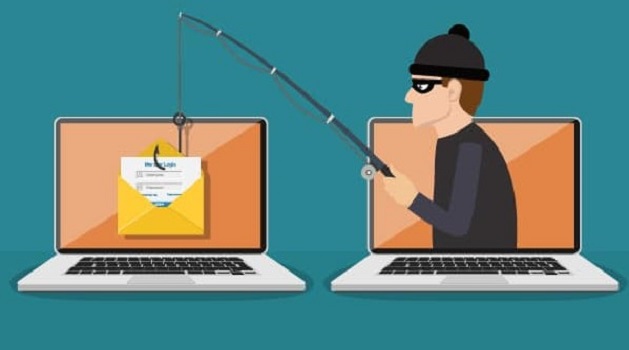
Kaspersky has reported a spike in phishing emails containing malicious QR codes. Detections for these jumped from 46,969 in August 2025 to 249,723 in November 2025 – a more than fivefold growth – as cybercriminals increasingly exploit QR codes, a trend that will likely continue in 2026.

Attackers use QR codes in emails more frequently because they provide a simple and cost-effective way to conceal malicious URLs, evading detection by many protective solutions.
These QR codes are often embedded directly in email bodies or, even more commonly, within PDF attachments – an evolution that both masks phishing links and encourages users to scan them on mobile phones, which may have weaker security than work PCs.
Malicious QR codes commonly appear in mass phishing campaigns as well as targeted ones. Links embedded within them may lead to:
- Phishing forms impersonating login pages for services like Microsoft accounts or internal corporate portals, designed to steal usernames, passwords, and other credentials.
- Fake HR notifications urging employees to review or sign documents, such as vacation schedules, or even view lists of terminated staff, ultimately directing to credential-stealing sites.
- Fraudulent invoices or purchase confirmations in PDF attachments, often combined with vishing (voice phishing) tactics that prompt victims to call provided phone numbers to “cancel” or clarify the transaction, enabling further social engineering attacks.
These tactics exploit trust in routine business communications, leading to credential theft, account takeovers, data breaches, and financial fraud.
“Malicious QR codes have evolved into one of the most effective phishing tools, particularly when hidden in PDF attachments or disguised as legitimate business communications like HR updates.
“The explosive growth in November 2025 highlights how attackers are capitalising on this low-cost evasion technique to target employees on mobile devices, where protection is often minimal.
“Without advanced image analysis at the email gateway and safe scanning practices, organisations are left vulnerable to credential compromise and downstream breaches,” comments Roman Dedenok, Anti-Spam Expert at Kaspersky.
To defend against this escalating threat, Kaspersky recommends educating employees on cybersecurity and deploying a mail server security solution such as Kaspersky Security for Mail Server that provides trusted and secure corporate email exchange, countering spam, email-borne infections, all forms of phishing, business email compromise (BEC), QR code attacks, and other threats.


As the world markets continue into a new cycle that sees them plunging into much trouble and uncertainty, the year 2026 beckons to be one that is ridden with high uncertainty and volatility in terms of geopolitical and macroeconomic trends. Although the year may pose various threats to traders, it also comes along with unparalleled opportunities that may be leveraged to achieve trading success through various trading assets set to display notable volatility trends in the year 2026.

JustMarkets
From long-term fundamentals to trading dynamics, these five key assets on JustMarkets are set to continue to be at the forefront in trading in 2026.
1. Gold (XAU/USD): The Ultimate Macro-Driven Asset
The gold price in 2025 reached $4,500 per troy ounce, and it continues to be one of the most traded assets world-wide. Gold is extremely sensitive to changes in the levels of inflation, interest rate forecasts, geopolitical events, and currency exchange rate movements. The recent years have shown the ability of the gold market to provide an extremely strong bullish momentum, as well as intraday momentum.
The relevance of the market of gold in the year 2026 specifically stems from the fact that the environment surrounding the economy of the world is facing challenges associated with growth, debt, and the policies of monetary easing. Despite the falling inflation rate in the economy, the real interest rates are also expected to be pressured downward, which has traditionally translated to favorable market conditions for the price of gold. The factor of geopolitics uncertainty and tensions between specific countries also adds to the significance of the market of gold.
For traders, the market offers favorable conditions because of its high volatility regime with adequate liquidity.
2. Silver (XAG/USD): Volatility with a Dual Personality
Silver often overshadows gold, but its performance in 2025 significantly outperformed its main competitor. The precious metal briefly reached $85, making it one of the best-performing assets in 2025. While silver, like gold, is sensitive to monetary policy and market sentiment, it also enjoys strong industrial demand related to energy transition technologies, electronics, and manufacturing.
This dual nature makes silver one of the most volatile and fastest-growing precious metals and trading instruments overall. In 2026, as global growth expectations fluctuate and industrial cycles remain uneven, silver will experience sharp directional movements and prolonged periods of volatility, but will fundamentally maintain a growth trend similar to gold.
For traders seeking high volatility, silver offers even greater percentage swings than gold, making it a powerful tool for well-managed strategies, both scalping and holding positions for multiple days.
3. Oil (WTI & Brent): Trading Supply, Politics, and Policy
Oil is still among the market-sensitive commodities. The change in OPEC+ production levels, global events affecting major oil-producing nations, as well as changes in global demand can cause prices to surge within a matter of hours.
Turning the focus on the outlook for the year 2026, it seems likely that the oil market will face well-supplied conditions. However, this will not mean extremely small degrees of volatility. Events surrounding Venezuela represent yet another key source of uncertainty. Changes within US policies regarding Venezuela, the export of oil, and the political leadership of the country could represent important influences on the levels of supply, especially when the focus shifts towards the heavier grades. Yet, the possibility of a substantial recovery looks very unlikely.
Even in highly saturated markets, surprise disruptions, production policy changes, or geopolitical tensions, particularly in the Middle East, Eastern Europe, and Latin America, can cause sharp price moves. Conversely, macroeconomic growth slowdowns or money market cycles may exert pressures on demands, thereby leading to highly two-sided markets.
4. US Stock Indices (Dow 30, S&P 500, Nasdaq): Liquidity and Trend Potential
US indices continue to be key trading assets in global trading activity. The Dow Jones, S&P 500, and Nasdaq reflect US economic performance, as well as global risk appetite, capital flows, and technological leadership, primarily driven by the AI boom.
In 2026, stock markets are likely to face divergent forces. On the one hand, monetary easing is supporting valuations, while slowing economic growth, declining interest in AI, and political uncertainty are increasing volatility and the risk of a deeper sell-off. This combination often leads to strong moves, deep corrections, and renewed all-time highs.
Indices offer unrivaled liquidity, clear technical behavior, and the ability to express macroeconomic views without the risk associated with individual stocks, making them important tools for both short-term and position traders.
5. EUR/USD: The World’s Most Traded Currency Pair
EUR/USD remains the benchmark for forex trading. Its deep liquidity, tight spreads, and technical clarity make it a favorite among professional traders. More importantly, the euro reflects the balance between the world’s two most influential central banks: the Federal Reserve and the European Central Bank.
As interest rate differentials narrow and fiscal dynamics shift on both sides of the Atlantic, there’s every reason to believe EUR/USD will experience prolonged and powerful trending phases, punctuated by strong reactions to economic data and central bank signals.
In 2026, shifts in growth expectations, inflation trajectories, and political developments in both regions will keep this pair highly active, making EUR/USD a preferred option for traders who value stability, transparency, and adaptability across all trading styles.
Perfect Assets to Trade in 2026
These five markets unite their relevance on a global stage, and the responsiveness of these markets to macroeconomic and geopolitical events. Markets traded in gold, silver, oil, US indices, and the currency pair EUR/USD include the combination of markets most traders seek: deep liquidity, clear structure, and meaningful volatility.
On the JustMarkets trading platform, these instruments excel because of the optimal trading conditions offered, ensuring effective active trading. Tight spreads, fast execution of orders, as well as high leverage of up to 3000, enable traders to react swiftly to key market drivers, such as central bank statements or inflation figures, as well as geopolitical events.

Kaspersky has detected a scam tactic leveraging the OpenAI platform. Attackers are abusing OpenAI’s organisation creation and team invitation features to send spam emails from legitimate OpenAI addresses, potentially tricking users into clicking scam links or calling fraudulent phone numbers.

The spam campaign begins with attackers registering an account on the OpenAI platform. During registration, users are prompted to enter an organisation name, which can consist of any combination of symbols. Scammers exploit this by embedding deceptive text and fraudulent links or phone numbers directly into the field for organisation name itself.
Once the “organisation” is created, OpenAI provides an option to “invite your team,” allowing the input of target email addresses of victims. When invitations are sent, they originate from OpenAI’s address, making them appear fully legitimate from a technical standpoint.
Kaspersky detected several types of messages containing email threats sent in such a way. These are scam emails that promote fraudulent offers, such as adult services. Another attack angle is vishing – false notifications claiming a subscription has been renewed for a large sum: attackers instruct recipients to call a provided phone number to “cancel” the charge or take other actions that lead to further compromise. There may also be other email threats spreading via OpenAI platform.
The text that the attackers want the victims to read (highlighted in bold in the email template) is structurally inconsistent with the rest of the email template – which was originally designed to invite project collaborators. But the attackers bet on the fact that the victims would not pay attention.
“This case highlights a vulnerability in how platform features can be weaponised for social engineering email attacks. By embedding deceptive elements in seemingly innocuous fields like organisation names, scammers attempt to bypass traditional email filters and exploit user trust in reputable services.
“We urge all users to verify invitations carefully and avoid clicking embedded links without scrutiny. We also recommend brands to consider whether their online services or platforms could be abused by attackers,” comments Anna Lazaricheva, senior spam analyst at Kaspersky.

LIRS to Invoke NTAA to Recover Unpaid Taxes from Bank Accounts, Others

NIBSS, Others Flag 13,417 Nigerian Fraudsters on Person of Interest Portal

CBN Prepares Fresh Debit Card Rules to Improve ATM Services

First Asset Management Receives Upgraded Ratings from Agusto &Co and DataPro

Nigeria Treats Religious Violence as Attack on State – NSA Ribadu

19 Nigerian Banks Meet CBN Recapitalization Targets Ahead of March Deadline

Jumia CEO says Black Friday Signals Nigeria’s E-Commerce Maturity

Galaxy Backbone Celebrates the Federal Government’s Paperless Civil Service Milestone

DStv Offers Instant Package Upgrade for Customers from January to February

Banks to Impose N50 Stamp Duty on Transfers of N10,000 and Above from January 1




 General News3 days ago
PalmPay User Shares Experience on Fintech Apps to Trust in Nigeria

 News3 days ago
Stakeholders Demand Stronger Governance and Infrastructure to Drive Tech Adoption @ Lagos AI Summit

 General News3 days ago
Nigerians Target Self-Improvement, Business Startups in 2026 Google Data

 News3 days ago
35 Million Nigerians Face Acute Hunger in 2026, UN Warns

 General News3 days ago
How Inside Jobs and Policy Shocks Trigger Nigeria’s Rising Loan Crisis
 E-Financial18 hours ago
First Asset Management Receives Upgraded Ratings from Agusto &Co and DataPro

 News18 hours ago
Anambra Cuts Monday Pay to Kill Sit-at-Home
 General News18 hours ago
Nigeria Treats Religious Violence as Attack on State – NSA Ribadu