

General News
Novartis, Malaria No More Launch Digital Fundraising Campaign to Curb Malaria Deaths


Novartis and Malaria No More have joined hands to launch the Power of One campaign, encouraging people around the world to help end child deaths from malaria.
Novartis will support the campaign financially and donate up to three million CoartemR Dispersible treatments to match antimalarials funded by the public.
The company’s commitment to Power of One aligns with its long history in the fight against malaria; the Novartis Malaria Initiative is one of the largest access-to-medicine programs in the healthcare industry.
Malaria is a preventable and treatable disease, but it still kills a child every minute.
It is estimated that 436 million additional treatments will be needed to treat malaria patients across Africa between now and the end of 2015.
Power of One campaign aims to address this treatment gap through direct donations and existing government commitments.
Every dollar donated to the campaign will buy and deliver a treatment to a child diagnosed with malaria.
“I am proud of the significant and longstanding commitment Novartis has to the fight against malaria. For all our progress though, there’s still more work to do” said Joseph Jimenez, CEO of Novartis.
“We need more help to close the treatment gap and Power of One offers everyone a chance to engage and make a difference for children suffering from malaria.”
Harnessing social, mobile, and e-commerce technologies, Power of One enables the public to purchase a treatment and track the journey of a treatment.
Donors will be able to see the effect of their donation on the ground, share information with their networks and recruit other donors.
“It’s unacceptable that a child dies every minute for lack of a dollar’s worth of treatment,” said Martin Edlund, CEO, Malaria No More.
“We’re urging the world to join the Power of One campaign and to donate and engage their friends in this fight.”
Novartis is the exclusive treatment sponsor of the Power of One campaign, joining some of the world’s most innovative companies.
Additional sponsors include Alere Inc., which will provide malaria rapid diagnostic tests, 21st Century Fox, AHAlife.com, Causes.com, Time Warner, Twitter, Venmo and others. Zambia will be the first country to receive deliveries of treatments and tests as a result of the Power of One campaign.
Novartis reaches 200 million deliveries of CoartemR Dispersible
Since 2009, Novartis has delivered 200 million treatments of its pediatric antimalarial CoartemR Dispersible without profit to more than 50 malaria-endemic countries. Never before have so many pediatric treatments been distributed in such a short time frame for children suffering from malaria.
The 200 millionth treatment was delivered to Zambia, which also received the first consignment of Novartis treatments for the Power of One campaign, raised during World Malaria Day on April 25, 2013.
“MMV applauds Novartis on this laudable achievement,” said David Reddy, CEO of Medicines for Malaria Venture. “Novartis has done a tremendous job of bringing an innovative drug to the vulnerable young victims of malaria in Zambia and over 50 other countries, giving it global reach. We at MMV are proud to have partnered with Novartis on the development of this important formulation.”
The Novartis Malaria Initiative is one of the largest access-to-medicine programs in the healthcare industry. Moving forward, Novartis is committed to malaria elimination by driving the development of the next generation antimalarials, with two new classes of anti-malaria drugs currently in development. The most advanced compound is in Phase II clinical trials.


General News
Interswitch Advocates Trust-Driven Infrastructure as Cornerstones of Africa’s Cross-Border Capital Future

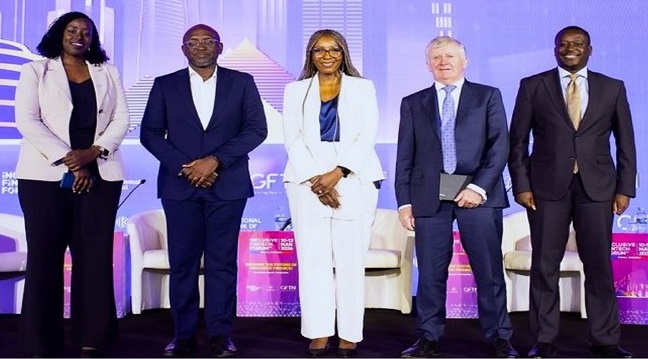
Interswitch Group, one of Africa’s leading integrated payments and digital commerce companies, has reaffirmed its commitment to advancing a seamless and inclusive financial ecosystem across the continent at the recently concluded Inclusive Fintech Forum 2026, which held at the Kigali Convention Centre, in Rwanda from 10 -12 March 2026.

Speaking during a high-level session themed “Financial Centres & the Future of Cross-Border Capital” Akeem Lawal, Managing Director, Payments Processing & Switching (Interswitch Purepay), highlighted the critical factors shaping the next phase of financial integration across Africa.
He noted that while rapid advancements in digital technology have made it possible for capital to move across borders at unprecedented speed, the ultimate destination and impact of such capital flows are determined by trust, robust infrastructure, and strategic collaboration.
According to Lawal, as Africa’s economies continue to digitize and integrate, stakeholders must prioritize building resilient payment systems and fostering partnerships that enhance transparency, interoperability, and shared prosperity.
He emphasized that sustainable growth in cross-border financial flows will depend not only on technological innovation but also on the collective ability of institutions to inspire confidence and enable seamless transactions at scale.
Throughout the forum’s engagements, Interswitch, as one of Africa’s leading and pioneering digital technology enablers reiterated its long-standing vision of fostering a prosperous and interconnected Africa. The company continues to champion the development of a secure, technologically advanced digital payments ecosystem designed to connect and empower individuals, businesses, governments, and communities across the continent.
Participation at the Inclusive Fintech Forum underscores Interswitch’s strategic focus on driving thought leadership, strengthening regional collaboration, and supporting initiatives that accelerate financial inclusion and economic resilience.
As Africa navigates the evolving landscape of digital finance and cross-border commerce, Interswitch remains committed to delivering innovative solutions and partnerships that unlock opportunities for growth and shared value creation.
General News
FCCPC Launches Fuel Price Surveillance, Probes Airline Price Gouging, Resolves N10bn Complaints

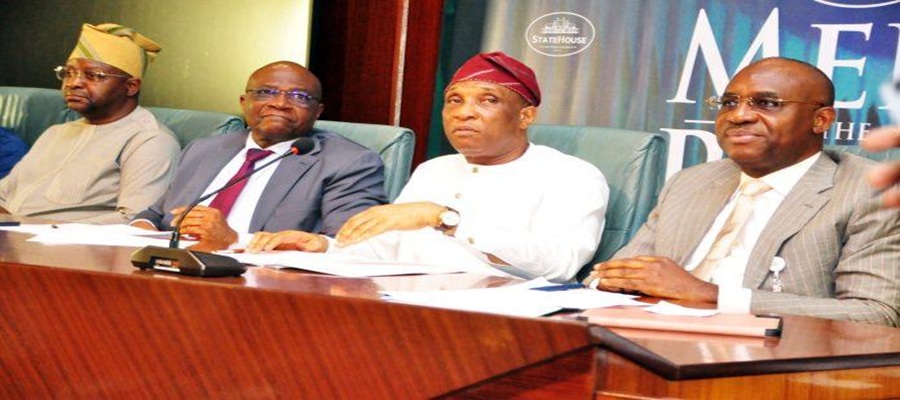
In a robust move to shield consumers from opportunistic profiteering, the Federal Competition and Consumer Protection Commission (FCCPC) has rolled out comprehensive nationwide monitoring of fuel prices, zeroing in on petrol marketers amid escalating global hostilities between the United States, Israel, and Iran that threaten to jolt Nigeria’s volatile petroleum market.

FCCPC
Executive Vice Chairman and Chief Executive Officer Tunji Bello unveiled this proactive strategy during Thursday’s riveting March edition of the Meet the Press briefing at the Presidential Villa, Abuja, underscoring the profound, cascading implications of any petrol price uptick on everyday essentials from transportation to foodstuffs.
“We are presently monitoring the situation now, the effect of the US, Israeli, Iran war as it affects prices in Nigeria. Petrol has far-reaching effects on some of the things we eat or take daily,” Bello articulated, revealing the deployment of dedicated monitors empowered to interrogate stark pricing anomalies—such as when competitors slash rates by ₦100 or ₦200 per litre, yet outliers stubbornly hold at ₦1,100 to ₦1,500—and seamless collaboration with the Department of Petroleum Resources (DPR) to enforce accountability and deter exploitation.
Turning to the aviation sector, Bello disclosed that FCCPC’s exhaustive probe into yuletide price gouging has pinpointed five to six domestic airlines for collusion, inflating fares from a baseline of ₦145,000-₦150,000 to exorbitant ₦500,000-₦700,000 during the Christmas rush.
“We investigated the airlines during the Christmas period because what we found was that they colluded to fix prices at that time,” he affirmed, confirming the issuance of an investigative report with stern penalties in the offing and directives for refunds of exploited excesses to aggrieved passengers. While withholding names pending finalisation, Bello signalled imminent public disclosure to restore market fairness.
Consumer grievances span critical sectors, with energy topping the list—electricity users railing against persistent metering deficits, inflated estimated billing, and unreliable Band A tariffs promising up to 20 hours daily yet delivering far less—prompting FCCPC to rigorously enforce service-tariff proportionality on distribution companies.
Fintech woes, particularly in online transactions and predatory loan apps, alongside telecom billing disputes, also proliferate, reflecting Nigeria’s deepening digital economy pains.
Bello highlighted FCCPC’s stellar track record, resolving over 9,000 complaints between March and August 2025 and clawing back more than ₦10 billion for victims. “Nigerians sometimes grumble more than they complain. Once you complain, the system generates a code for the complaint, and we can begin to act on it,” he urged, championing formal channels for swift intervention.
The Commission recommitted to dynamic partnerships with consumers, trade associations, and sister regulators, fortifying defences against anti-competitive conduct and embedding consumer rights as the bedrock of Nigeria’s evolving market ecosystem.
This multi-pronged offensive arrives at a pivotal juncture, as geopolitical flux and domestic inflation test regulatory mettle.


Federal High Court sitting in Lagos has ordered the freezing of bank accounts belonging to Petrocam Trading Nigeria Limited and Patrick Ilo, its founder, over an alleged N9.05 billion debt.

Patrick Ilo and Petrocam Filling station
Justice Chukwujekwu Aneke of the court granted the interim orders in Suit No: FHC/L/CS/393/2026 which was an ex parte application filed by Zenith Bank to preserve funds allegedly owed by the defendants as of May 31, 2025.
It was gathered that the ex parte motion was argued by Chief A.A. Aribisala (SAN) on behalf of Zenith Bank.
While delivering the ruling on Wednesday, the court restrained the defendants, whether acting by themselves or through agents, privies, or assigns, from withdrawing, transferring, dissipating, or otherwise dealing with funds up to the sum of ₦9,057,511,855.63, pending the hearing and determination of the motion on notice.
“An interim order is hereby granted restraining the defendants/respondents, Petrocam Trading Nigeria Limited and Patrick Ilo, whether by themselves, their agents, privies or assigns, from withdrawing, transferring, dissipating or otherwise dealing with any funds up to the sum of ₦9,057,511,855.63 pending the hearing and determination of the motion on notice,” Justice Aneke ruled.
The court further ordered the freezing of all accounts linked to Bank Verification Number (BVN) 22141926401, which the bank alleged is being used by Ilo to operate Petrocam’s accounts.
In addition, Justice Aneke directed all financial institutions within the jurisdiction of the court to immediately place a lien or “Post-No-Debit” restriction on all accounts associated with the BVN.
According to the order, “All financial institutions within the jurisdiction of this honourable court are hereby directed to place a lien or post-no-debit restriction on all accounts linked to BVN 22141926401 pending further orders of the court.”
The order extends beyond traditional banks to key operators within Nigeria’s electronic payment ecosystem. Among those joined as respondents in the matter are the Nigeria Inter-Bank Settlement System, Interswitch Limited, and Interswitch Financial Inclusion Services Limited.
The court also directed the institutions to disclose the details of all accounts linked to the BVN. Justice Aneke ordered the respondents to file an affidavit of return within seven days, revealing all accounts connected to the BVN, their balances, and the transaction history covering the preceding six months.
Court documents filed in support of the application showed that the credit facility at the centre of the dispute was subject to several pre-disbursement conditions imposed by Zenith Bank.
According to the filings, Petrocam was required to formally accept the facility through its authorised signatories, provide a board resolution approving the loan, and disclose any existing indebtedness to other lenders, including facility limits, outstanding balances, and collateral pledged.
Other conditions included the domiciliation of sales proceeds and Sovereign Debt Note subsidy payments from Oando Plc and Total Nigeria Plc into Petrocam’s account with Zenith Bank.
The company was also required to submit relevant contract agreements for the bank’s approval and provide a five percent counterpart contribution for each transaction, while all required security documentation had to be executed before the facility could be disbursed.
The bank further stated that Petrocam was expected to submit quarterly management accounts within 60 days after the end of each quarter and audited annual financial statements within 120 days.
In addition, Petrocam was required to route all import duty payments and Letters of Credit through its account with Zenith Bank, establish Letters of Credit for petroleum imports, and obtain comprehensive marine insurance naming Zenith Bank as the first loss payee.
Court filings also revealed that General Marine and Oil Services Ltd had been appointed by the bank to monitor petroleum product warehousing at Petrocam’s expense.
The facility agreement further imposed foreign exchange obligations, authorising Zenith Bank to settle maturing Usance obligations at 12 percent interest if Petrocam failed to provide the necessary funds.
The bank maintained that in the event of default, Petrocam would be responsible for all legal, recovery, and ancillary costs arising from enforcement of the facility.
The court also granted Zenith Bank leave to serve the defendants through substituted means.
Justice Aneke ruled that the defendants may be served at their last known address in Victoria Island, Lagos.
The matter has been adjourned to March 17, 2026, for mention.

VDT Communications Achieves Two Prestigious Certifications ISO /IEC 27001:2022, ISO/IEC 27032:2023 Reinforcing its Leadership in Broadband Service Provision

CBN Orders Banks to Restrict Access to Banking Services for Loan Defaulters

NLNG Advances Media Excellence with Change Your Story Workshop

Interswitch Advocates Trust-Driven Infrastructure as Cornerstones of Africa’s Cross-Border Capital Future

Why JustMarkets Is a Strong Choice for Gold Trading

Kaspersky Discovers New Phishing Campaign Exploiting Google Tasks Notifications to Steal Corporate Credentials

esentry 2025 Report Shows Healthcare, Financial Services and Telecoms as Staging Grounds for Increased Cyberattacks in Africa

AfDB, UNDP Launch $10Bn AI Initiative for Africa

Pheelz Shares His Journey on Glo-Sponsored African Voices

Mutual Benefits Assurance Settles ₦5.9bn Claims in January 2026




 General News2 days ago
Court Freezes Bank Accounts of Petrocam, Founder over Alleged N9Bn Zenith Bank Debt

 General News2 days ago
FCCPC Says Telcos, Energy Firms Lead Consumer Complaints in Nigeria

 Telecom2 days ago
Techeconomy Unveils IWD 2026 Power List Celebrating 100 Women Shaping the Future

 E-Business2 days ago
Kaspersky Uncovers a New Android Malware Campaign Disguised as Starlink Application

 News2 days ago
Easybuy Sales Talent Program to Empower 10,000 Nigerians to Become Millionaires
 News1 day ago
NLNG Advances Media Excellence with Change Your Story Workshop
 General News1 day ago
Interswitch Advocates Trust-Driven Infrastructure as Cornerstones of Africa’s Cross-Border Capital Future

 News2 days ago
FG Approves First National Policy on Cosmetic Safety, Health