

General News
NY Times Article Blasts Jonathan, PDP over Graft, Terrorism


A damning article published in The New York Times has painted a not too pleasant picture of Nigerian current government which it said is “widely seen as the most corrupt since independence from Britain in 1960”
The article written by one Adewale Maja-Pearce, a writer and author of the memoir “The House My Father Built” also returned indictment on the government for failure to rescue the school girls seized by Boko Haram.
A version of the op-ed appears in print on November 17, in The International New York Times said that though corruption is a huge problem for President Goodluck Jonathan and his People’s Democratic Party, which has been continuously in power since the end of military rule in 1999.
But things are unlikely to change. To many Nigerians, it sometimes seems as if we merely swapped military dictatorship for a one-party state.
Mr. Jonathan’s name will be on the ballot this February, when Nigerians, many of them fed up with government corruption and incompetence, go to the polls.
Yet events percolating across the country that could come to a boil within the next three months might actually work to the president’s advantage.
Two grave problems — the Boko Haram insurgency and tensions in the oil-rich Niger Delta — hang over the land. A third, West Africa’s Ebola crisis, seems to have been contained so far, and though this has little to do with Mr. Jonathan’s leadership, the people responsible for it are unlikely to gain any political capital at his expense.
The incompetence of Mr. Jonathan’s government is most clearly seen in its inability to rescue the 276 schoolgirls, most of them believed to be Christians, who were kidnapped by Boko Haram insurgents in the largely Islamic north last April.
Even at the time, the president, himself a Christian from the largely Christian south, didn’t seem much concerned about their fate.
It took him almost three weeks to officially acknowledge what had happened, whereupon he belatedly invited their relatives to lunch at the presidential villa in Abuja, an event which one journalist likened to “a wedding reception,” complete with bunting and a band.
What Mr. Jonathan didn’t count upon was the international furor over the kidnappings or the powerful worldwide publicity, negative in his case, of the #BringBackOurGirls campaign. Seven months later, most of the girls are still missing (though dozens have managed to escape).
A report by Human Rights Watch catalogued the “physical and psychological abuse they were subjected to: forced labor, forced participation in military operations, including carrying ammunition or luring men into ambush; forced marriage to their captors; and sexual abuse, including rape.”
Meanwhile, sporadic violence continues. Last week, a suicide bomber killed at least 48 students at a boys’ high school in the northeast. Rescuing the girls — or putting an end to the insurgency altogether — would certainly help Mr. Jonathan’s ambitions, but his government’s ability to do so seems most unlikely. Corruption and low morale have hobbled the military.
Even so, the government announced last month that the extremists had agreed to a cease-fire, though Boko Haram has denied it.
Although the extremists have been widely condemned by leading Muslim clerics and politicians, the insurgency contributes to Christian suspicions of their Muslim compatriots, and this may well play into Mr. Jonathan’s hands come election time.
But in an effort to bridge sectarian divisions and garner votes across the religious divide, the country’s leading opposition parties, one from the largely Muslim northeast, the other from the mostly Christian southwest, have joined forces with other groups to form the All Progressives Congress. In theory, this gives the opposition a fighting chance of wresting control of the Senate and House of Representatives from the People’s Democratic Party.
Unfortunately, efforts to make common cause in Nigeria are invariably sacrificed upon the altars of religion and ethnicity.
The alliance’s likely presidential candidate is a Muslim northerner, Muhammadu Buhari. He also happens to be a former dictator, who ruled Nigeria for 20 months in the mid-1980s.
His administration came to an abrupt end in August 1985, when members of his cabinet, alienated by his efforts to root out corruption, forced him out.
Though widely unpopular, many Nigerians feel he has the credentials to tackle corruption. Moreover, one potential running mate is Babatunde Raji Fashola, the two-term governor of Lagos State who has distinguished himself by successfully tackling the incipient Ebola crisis with the same energy and efficiency that he brought to modernizing the infrastructure of Lagos, the biggest port in West Africa. But there are also doubts about his commitment to clean government, fueled by the fact that he is a protègé of Ahmed Bola Tinubu, a former governor of the same state and a founding member of the All Progressives Congress whose reputation has been tarnished by corruption scandals, even though he has never been convicted of corruption.
Though Mr. Fashola is a Muslim with a Catholic wife, few Christians (or for that matter even the generally more-liberally minded Muslims of the south) would be inclined to vote for a Muslim-Muslim ticket.
Religious differences are a key factor in voting, but perhaps patronage plays a greater role, a lesson Mr. Jonathan learned in the Niger Delta, where he taught school and gained political prominence.
Like any savvy politician, he knows that patronage is a two-way street, and he has been careful to keep the money flowing in a region plagued by resentment over oil rights, piracy and periodic unrest.
Oil is Nigeria’s greatest source of wealth, providing about 90 percent of the nation’s foreign exchange earnings, but many people among the delta’s diverse ethnic groups feel that the central government has seized control of their oil without adequate compensation. The government says it loses about $3 billion a year due to piracy, widely seen as aided and abetted by the military. Local gangs also take what they can by tapping pipelines. In the past, anger over corruption and the unfair redistribution of wealth has fueled a dangerous political militancy. Everyone knows that if the militants want to, they can easily stop oil production, which would bankrupt the country.
Thus Mr. Jonathan takes care to ensure that the region is well looked after, and this contributes to his enormous popularity there. Indeed, he is widely seen as crucial to keeping the lid on potential unrest. In the words of Mujahid Dokubo-Asari, a former leader of the Niger Delta People’s Volunteer Force who is now a key supporter, if Mr. Jonathan is not re-elected next year, there will be “blood in the streets.”



The Nigerians in Diaspora Commission (NiDCOM) has sought to harness the innovation and expertise of Nigerians across the globe with the launch of the Connected Diaspora x DOWA Start-Up Challenge and the Connected Diaspora Flagship Event 2025.

Speaking at a news conference in Lagos, Abike Dabiri-Erewa, Chairman/CEO of NiDCOM, described the initiatives as timely and transformative, noting that they are strategically designed to tap into the creativity, enterprise and professional strength of Nigerians in the diaspora.
She said the Start-Up Challenge, themed “Building, Breaking and Believing in Nigeria,” aims to energise innovators abroad by promoting knowledge transfer, enterprise development and strategic investment to support Nigeria’s rapidly expanding economy.
According to a statement by NiDCOM, the challenge, which offers cash prizes of up to ₦1 million, is targeted at spotlighting exceptional ideas and supporting impactful ventures created by Nigerians living overseas.
According to Dabiri-Erewa, the initiative aligns with the Federal Government’s overarching goal of engaging the diaspora community as key partners in national progress.
She further announced that the Connected Diaspora Flagship Event will take place on December 19, 2025, in Lagos, and will bring together entrepreneurs, policymakers, investors, technology leaders and strategic partners for critical discussions on Nigeria’s future.
Kadiri Hamzat, Deputy Governor of Lagos State, will serve as the Special Guest of Honour and is expected to speak on the importance of collaboration between government and the diaspora in accelerating development.
NiDCOM also revealed that notable contributors from the global diaspora community and Nigeria’s entrepreneurship ecosystem will enrich the sessions and help shape new pathways for meaningful engagement.
Dabiri-Erewa said their support remains invaluable in driving the success of the initiative. She emphasized that their continued collaboration helps unlock the potential of Nigeria’s global talent pool and fosters sustainable economic growth.
The Commission called on stakeholders across both the public and private sectors to support the initiative, stressing that the opportunities for innovation, collaboration and nation-building are immense.
NiDCOM urged young Nigerians and diaspora returnees to participate actively in the Start-Up Challenge, reminding them that entries close on December 12, 2025.
The December event will also feature a Diaspora Talent Career and Internship Fair, aimed at connecting diaspora returnees with internship opportunities offered by DOWA partner organisations.
NiDCOM said the fair will further strengthen talent exchange and deepen the country’s development capacity.
The programme timeline includes the opening of applications for the Start-Up Challenge from November 18 to December 12, followed by public voting on Instagram from December 13 to 17.
The winner will be announced on December 18, ahead of the final presentation at the JK Randle Centre in Lagos on December 19.
NiDCOM encouraged interested participants to follow the provided registration details and take advantage of the platform created to connect, innovate and contribute to national advancement.
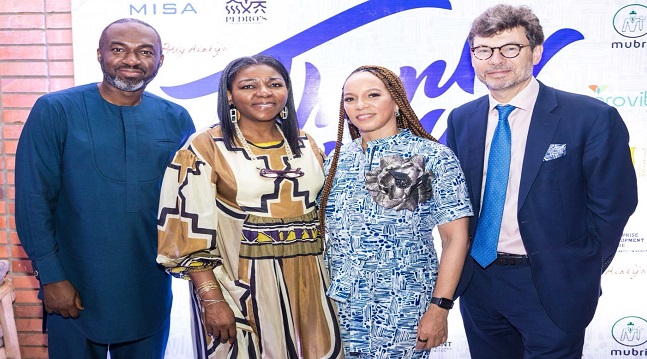
Indigenous printing company, PromoPrint Ventures Ltd, celebrated 25 years of operations in the country on Tuesday 2nd December, at an event held at the Lagos Motor Boat Club in Lagos.

The evening saw business executives, clients and stakeholders in the printing space gathered to attest to the dexterity and Nigerian resilience demonstrated by Mrs. Patricia Ojora, the Founder and Chief Executive of the company in sustaining the growth of PromoPrint over the last 25 years.
Amongst many things on display that evening were PromoPrints very first t-shirt printed in the year 2000. Guests also cheerfully adorned custom-made patterns done by Promoprint on our indigenous cotton fabric (Funtau).
In her opening remarks, Mrs. Patricia Ojora recalled the past 25 years of operation in Nigeria at the helm of PromoPrint. While not easy, she says:
“We’ve been able to do it and we enjoy it. There’s nothing better than creation. To create something from nothing and do it so well, it’s a passion for me. It’s something that I really, value. I’m a great supporter of Nigeria, so I believe that we should be able to do things well in Nigeria. We don’t need to always import, that’s why we’re doing this today, to be able to collaborate with people. Most of the people here are people we’ve collaborated with and have worked hard to build Nigeria back up”.
She recounts how she was able to change the narrative of many Nigerians that were printing outside of the country who are now printing with PromoPrint Ventures. “People used to print outside the country because they didn’t trust the quality that was here in Nigeria,” Patricia explains with an understanding that “we can produce good quality here within Nigeria.”
The company is a one-stop shop for all things printing with all operations happening in-house, from the expertise of crafting graphics and garment production to the t-shirts, roller banners, corporate gifts and more being rolled out on a daily basis. “What we are selling is peace of mind in a chaotic place.” Patricia says, with nearly three decades of successful operations and collaboration under her belt.
Significantly, she makes sure the company remains primed for the future, using AI and the like to remain progressive in strategy and implementation. Patricia proudly states, “Our automated printing carousel can churn out 10,000 tees a day if needed and our many corporate clients can attest to this.”
In attendance was Atedo Peterside (CON), Founder, Stanbic IBTC Bank Plc, one of many guests in the room who spoke to PromoPrints impact. “There’s something about longevity,” he shares with the crowd, “If you’ve kept the business going for 10 years, I always tell people, it means you’re doing something right. If you get it going for 20 years, you’re doing something very correct. Patricia must be doing something phenomenally right and it’s my sincere hope that she keeps it going, keep building, keep innovating.”
“Patricia can create almost everything,” Peterside remarks, “she has the courage, audacity and the commitment.”
Mrs. Ibukun Awosika, Nigerian businesswoman and the first female Chairperson of First Bank of Nigeria, contextualises the tenacity of Patricia’s efforts rather well. She reminds the room that “when you think of how many big multinationals who have so much that protects them, who have a lot of support systems internationally and locally, who gave up on Nigerian manufacturing, then you have to go back and think about those of us like Patricia.”
Even after 25 years, Nigeria remains in need of more Entrepreneurs, particularly those like Patricia, to boost the SME and manufacturing industry in the country despite the odds. “She didn’t give up,” Awosika says in admiration.
“What is key is that, when we celebrate the likes of Patricia and her company, we know without a doubt that it’s not just because they want to have a celebration. It’s because, in truth, the Nigerian entrepreneur is a star, and even more so, the Nigerian manufacturer.” Awosika concludes.
So, we celebrate Mrs. Ojora and her PPV entire team, and all that has gone into 25 years of hard work, commitment, creativity, we also recognise the passion that does not allow you to give up on the vision, the commitment to not only creating jobs for other Nigerians but creating value within Nigeria. The commitment to innovating a solution for every challenge and every situation. Indeed, it was a worthy celebration.


Mr. Lanre Basamta, Chief Executive Officer and Co-Founder of Optimus AI LABS, has unveiled a suite of artificial intelligence innovations poised to transform Nigeria’s financial services industry, aligning with recent Central Bank of Nigeria (CBN) directives on consumer protection and fraud prevention.

Mr. Lanre Basamta, Chief Executive Officer and Co-Founder of Optimus AI LABS
Basamta, speaking at a media parley in Lagos, said the company’s flagship product, Omnis, is redefining customer engagement in banking by serving as a virtual assistant embedded within mobile applications.
According to him, the platform is capable of analyzing customer behavior to recommend tailored financial products, effectively functioning as a “digital salesperson” that boosts bank revenues while enhancing customer experience.
He noted that Optimus AI LABS, which began as a modest startup targeting small businesses such as schools, has now identified greater opportunities in serving banks, fintechs, and microfinance institutions.
“The financial sector presents the biggest opportunity for AI to deliver value at scale,” Basamta said.
In response to rising fraud concerns and new CBN regulations mandating resolution of fraud cases within 14 days, Basamta highlighted the company’s AI-powered support platform designed to address customer frustrations over delayed assistance.
The system, he explained, interacts naturally with users, resolves issues promptly, and escalates unresolved cases, thereby strengthening compliance and improving customer satisfaction.
Basamta also recounted the firm’s global expansion, citing its work with Canadian clients, including the development of a dental learning environment for a major dental group.
He said this international footprint demonstrates Nigeria’s capacity to compete globally through homegrown innovation.
Reflecting on the company’s relocation into office space formerly occupied by KUDA, a fast-rising Nigerian fintech, Basamta expressed optimism that Optimus AI LABS is on a similar trajectory toward scaling into a major industry player.
He emphasized that the company’s growth would contribute not only to technological advancement but also to national development.
Basamta concluded by appreciating partners and stakeholders, stressing that “big things can emerge from small beginnings when powered by AI’s transformative capabilities.”

Lagos Launches Tele-Vet, Nigeria’s First Veterinary Call Centre

NiDCOM Launches Diaspora Startup Challenge to Boost Nigerian Talent

PromoPrint Rekindles Nigerian Resilience @ 25th Anniversary

Nigeria Lacks AI-Ready Data Centres, Trails in Capacity – Nnamani

Anambra Leads Southeast in Digital Governance Under Soludo’s ICT Agenda

Kaspersky Introduces Cyber Pathways to Support Career Development in Cybersecurity

NITDA DG Tasks Youths to Drive Africa’s Digital Transformation

Firm Urges Organizations to Check Protection of their Websites Amid Search Engine Optimisation Attack Schemes

Hackers Breach Phones of Dangote and Otedola, Demand Ransom

FCCPC Sets Deadline for Digital Lending Regulatory Compliance




 News3 days ago
PAPSS Cowry to Benefit Manufacturers, SMEs

 Telecom3 days ago
MTN Nigeria Launches Y’ello Data Gifting Campaign as Digital Connectivity Shapes Festive Celebrations

 E-Financial3 days ago
Access Bank’s Digital Innovation Earns Top Financial Inclusion Award

 General News3 days ago
Manufacturers Block More Ransomware, But Data Theft Surges – Sophos Report

 E-Financial3 days ago
CBN’s New Cash Policy: A Welcome Liberalisation or a Risky Retreat?

 Broadcasting3 days ago
NIPR Postpones Maiden PRICE Awards to January 25, 2026

 Telecom3 days ago
Africa Must Build Its Own Cybersecurity Intelligence, Says Tizel CEO At AfriTech 5.0

 Telecom3 days ago
MTN Partners with SMEDAN to Drive Digital Growth and Job Creation Nationwide