

Broadcasting
Optimising success: How digital marketers can leverage ChatGPT for strategies, ad campaigns


By Stephen Newton, Managing Director for Sub-Saharan Africa, Ad Dynamo by Aleph
Over the past few months, OpenAI’s ChatGPT has taken the world by storm. If you haven’t been following news about the artificial intelligence (AI) tool, you might think that sounds hyperbolic. But it’s not.

Stephen Newton, Managing Director, Sub-Saharan Africa, Ad Dynamo by Aleph
In February this year, it became the fastest consumer tool ever, with 100 million users, taking just two months to reach that point.
While the tool isn’t perfect (like many AI applications, it’s prone to occasional bouts of hallucination), it is still incredibly powerful. When used correctly, it can be transformative for people working across a broad range of industries. Digital marketing is no exception.
Although AI-based image, audio, and video generation tools seem like more of a natural fit for marketing (at least from a creative point of view), ChatGPT can be very effective both on its own and in combination with those other tools. It really comes into its own when it comes to putting together marketing strategies and campaigns.
Research and information gathering
In fact, ChatGPT can play an important role from the very early stages of putting strategies and campaigns together. As anyone with extensive experience in digital marketing will tell you, good research can be vital to a successful campaign. But even basic background research can take an extended period of time.
Even if you’re a search engine whiz, getting the information you want can take hours upon hours of searching. That’s to say, nothing of the expertise needed when the research gets more granular, and you need to analyse large volumes of data. ChatGPT can make both basic research and deep analysis significantly quicker. In the case of the former, you’ll get a much quicker answer to something like “How many 15 to 24-year-olds are there in Nigeria?” (useful for figuring out your total addressable market) on ChatGPT than if you had to search for and sift through the relevant statistics yourself.
And when deeper knowledge is required, ChatGPT can assist in market research by analysing large volumes of data, identifying trends, and generating insights. Marketers can utilise this information to understand consumer preferences, monitor competitors, identify emerging market trends, and refine their marketing strategies accordingly.
ChatGPT can also be used for A/B testing and optimisation. Using the AI tool, marketers can run simulated A/B tests for campaign messaging and variations. By inputting different prompts or content options, they can generate responses from ChatGPT and assess which approach resonates most with the target audience. This can help them better optimise campaign elements before implementation.
Beyond that, ChatGPT can interact with website visitors or social media users to collect information, qualify leads, and gather customer preferences. With those capabilities, marketers can design conversational flows that capture relevant data, segment prospects, and identify potential opportunities for personalised marketing campaigns.
Fueling creativity
Using an AI tool like ChatGPT for those research and insight-gathering purposes would likely make intuitive sense to digital marketers. After all, many of the tools they currently use already have some AI capabilities. ChatGPT just takes things a step further and makes it easier to gather that information.
But those are far from the only capabilities that ChatGPT has. It can also be used in the creative conceptualisation process and, assist in generating high-quality content for various marketing channels, such as blog posts, social media updates, email newsletters, and website copy.
With the correct input of prompts and descriptive briefings, ChatGPT can provide creative ideas, headlines, product descriptions, and engaging narratives.
Of course, it might not deliver the same level of quality as you’d get from an experienced copywriter, but it would provide a useful start or send you in a direction you wouldn’t previously have thought of. Think of it a bit like GPS. You could use it to find the most direct route from A to B, or you can use it to take roads you’ve never been down before without worrying you’ll ever get lost.
ChatGPT can also allow you to take more creative approaches to things like the customer engagement elements of a campaign. For example, it can be integrated into chatbots or live chat systems on websites and social media platforms. That, in turn, means that it can handle customer inquiries, provide personalised recommendations, and offer support in a conversational manner.
Partnerships still matter
With all those capabilities, it would be tempting to think that you could ditch your digital marketing agency and do it all yourself. But, as impressive as the technology is, it’s not quite there yet. The right marketing partner, with deep expertise and experience on the internet’s most popular platforms, is still crucial to ensuring that your marketing messages are seen by the right people. Chances are, such a partner will also have the technical expertise and understanding needed to get the most out of such evolving AI tools like ChatGPT.
So, if you want to make the most of ChatGPT in your digital marketing efforts, don’t go at it alone. That doesn’t mean you shouldn’t get familiar with it and explore its capabilities yourself. AI will play a profound role in future careers, and we should learn how to use all of the relevant tools. But unless you have the deep industry knowledge needed to get the most out of these tools, you will be better off partnering with experts who hold that knowledge for a good while yet.


Nigerian Education Loan Fund (NELFUND) says it is investigating about 34 tertiary institutions over allegations that they failed to refund students whose tuition fees were paid twice under the Federal Government’s student loan scheme.

The Managing Director of NELFUND, Mr Akintunde Sawyerr, disclosed this during an interview on Arise Television.
Sawyerr said the agency had deployed a five-member investigative team, including operatives of the Economic and Financial Crimes Commission (EFCC) and internal auditors, to examine the allegations.
According to him, the investigation was prompted by numerous complaints received from affected students.
“As of right now, there are 34 institutions that we are looking at closely with respect to this issue,” he said.
Sawyerr explained that the double payment issue arose because President Bola Tinubu directed that the student loan scheme commence in the middle of an academic session instead of at the beginning.
He said the decision compelled many students to pay their tuition fees to meet registration deadlines while awaiting approval of their loan applications.
“What happened is that a lot of schools got double payment; some from the students and some from us,” he said.
“The refund process is entirely out of our hands. It is the recipient of the double payments that is obliged to make refunds to the students.”
The NELFUND boss noted that many students had borrowed money from family members, friends and other sources to pay their tuition with the expectation of receiving refunds once the loans were disbursed.
He said while some institutions had promptly refunded affected students, others had failed to do so.
“Some have been very good at this. Others haven’t been so good at it,” Sawyerr said.
“I reserve judgement on the intentionality around it because, for some of them, they just didn’t have the process to make refunds.”
Sawyerr disclosed that NELFUND was exploring a tokenised payment system that would enable students to authorise tuition payments directly to their institutions, thereby reducing the likelihood of duplicate payments.
He said the agency deliberately chose not to disburse tuition loans directly to students to minimise the risk of fund diversion.
“Paying the funds to the students could really lead to the temptation for them to divert and do other things,” he said.
The managing director, however, acknowledged that NELFUND lacked the statutory powers to compel institutions to refund students or prosecute officials found culpable.
He added that many frustrated students had submitted complaints not only to NELFUND but also to anti-corruption agencies, including the EFCC and the Independent Corrupt Practices and Other Related Offences Commission (ICPC).
Sawyerr also expressed concern over increases in tuition fees by some institutions following the introduction of the student loan scheme.
He said NELFUND had declined to pay institutions that increased their tuition fees beyond acceptable levels.
“Some schools, because they get paid easily, started to put up their fees. We refused, point blank, to pay institutions who had hiked their fees beyond a certain level,” he said.
He reaffirmed the agency’s commitment to investigating every reported irregularity and strengthening the implementation of the student loan programme through continuous monitoring and internal reviews.
Broadcasting
Obi, NDC Presidential Candidate Faces N50Bn Defamation Claim over Alleged Podcast Remark

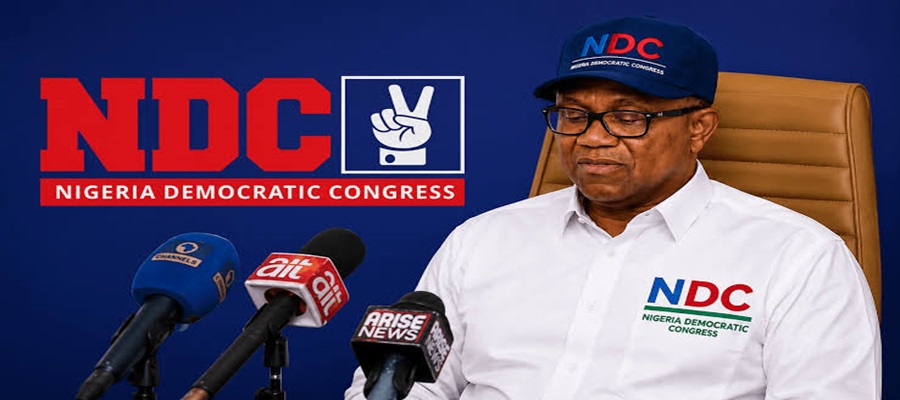
Abayomi Arabambi, national vice chairman (South-West) of the Labour Party, has demanded a public apology, a retraction, and N50 billion in damages from Peter Obi, presidential candidate of the Nigeria Democratic Congress (NDC), over an alleged defamatory statement made during a podcast interview.

The demand was contained in a letter issued by the law firm Neplus Ultra Attorneys and signed by Anderson U. Asemota, Peter O. Asimegbe, and Stanley C. Eziefulle on behalf of Arabambi.
According to the letter, the legal dispute arose from comments allegedly made by Obi during the interview, where he reportedly stated that Arabambi “does not have an address.”
Arabambi’s legal team described the statement as false, malicious, and defamatory, arguing that it portrayed their client as a faceless individual without legitimacy, credibility, or standing in public life.
The lawyers further claimed that the interview was widely circulated on television stations and digital platforms, exposing Arabambi to public ridicule and damaging his reputation.
“Our client has had a known residential and business address, maintains professional and political affiliations within Nigeria, and has never been a person whose whereabouts or identity were unknown,” the letter stated.
The legal team maintained that the alleged publication caused embarrassment and harmed Arabambi’s public image and political standing.
As part of their demands, the lawyers called for an unreserved public apology to be aired on national television, published on Obi’s verified social media platforms, and carried as full-page apologies in national newspapers.
They also demanded the payment of N50 billion as compensation for the alleged injury to Arabambi’s reputation, dignity, political standing, and public image.
Broadcasting
Why We’re Partnering With NIHOTOUR To Bring Nigerians In South Africa Home – Steve Babaeko

When Nigerians began arriving back home on emergency flights following an ultimatum from anti-migrant groups in South Africa, Steve Babaeko, alongside The Nigerian Institute of Hospitality and Tourism (NIHOTOUR), saw an opportunity to step up for his fellow citizens.

Steve Babaeko
The CEO of X3M Ideas explains that he saw a deep obligation, one that had nothing to do with advertising and everything to do with hospitality. For Babaeko, it was a reminder that an agency owes a duty of care to the community it exists within.
That conviction shaped the creative agency’s partnership with the Nigerian Institute of Hospitality and Tourism (NIHOTOUR) for the newly launched ‘Welcome Home’ pilot programme at Murtala Muhammed International Airport (MMIA) in Lagos. Rather than simply crafting a messaging campaign around the crisis, X3M Ideas helped design a tangible, physical system.
“This wasn’t built as a campaign about a crisis,” Babaeko said. “It was a hospitality agency deciding what it owes its own citizens the moment they land.”
For Babaeko, what X3M has built is infrastructure, something returnees can physically walk through, use, and benefit from the instant they clear the arrival gate.
With the MMIA pilot now officially running, NIHOTOUR directs returnees to immediate support services and issues them a Returnee Card. This card grants individuals a free first night at partner hotels, immediate transport assistance from the airport, and fast-tracked business registration support.
Furthermore, the initiative features a dedicated Restart Desk to assist returnee entrepreneurs and tradespeople with job placement referrals and business registration. This operates alongside a public Homecoming counter that tracks the cumulative number of returnees welcomed, businesses restarted, and jobs facilitated.

Court Declares ARCON’s N60Bn Fine against Facebook Nigeria Illegal

NIN Enrollment Hits over 136m as New ID Law Takes Effect

NRC, Ponzi Scheme Collapses Resulting Loss of Billions of Naira

Plateau PCC Collects Nigerians’ Data without Privacy Policy – FIJ

FG Suspends New Internet Regulations to Prevent Overlapping Rules

NASENI Moves to Digitize CCB’s 5m Assets Declaration and Operations

Mobile Internet Gender Gap Widest in Africa – GSMA

Nigeria Launches FreeTV Nationwide

CANAL+ Partners Samsung to Pre-Load DStv Stream on New Samsung TVs In Nigeria, Other African Countries

CredibleVoteNG Opens Free Access to all Polling Units in Nigeria after INEC Demanded N1.Bn for Register




 E-Financial3 days ago
Tokenization, Blockchain Technology will Transform Financial Institutions – IMF

 General News3 days ago
NIS Deploys Advanced Surveillance Masts, other Critical Infrastructure to Boost Border Security

 General News2 days ago
IHS Nigeria, FCT-HSES Concludes Clean Cooking Energy Campaign “Project Breathe Clean Air” in Abuja

 Broadcasting3 days ago
Obi, NDC Presidential Candidate Faces N50Bn Defamation Claim over Alleged Podcast Remark

 E-Business3 days ago
Weebly Websites to Shut Down for Nigeria, 66 Other Countries from September

 E-Financial3 days ago
FG Denies N8 Trillion ‘Shadow Budget’, Says IMF Quoted out of Context

 Telecom3 days ago
No Plans for Fresh Tariff Hike – MTN

 News3 days ago
World Bank Sounds Alarm: Low Revenue, Not Debt, Is Nigeria’s Biggest Fiscal Threat