

News
Panic as Another Toxic Waste Scare Hits Koko

Fresh toxic waste scare has hit Koko town in Warri North Local Government of Delta State, 30 years after 8,000 drums of toxic wastes were dumped in the ancient Itsekiri community by some unscrupulous Italian businessmen, according to the Nation.
The dumping of a yet unknown quantity of industrial wastes from the facilities of an oil multinational is causing panic in the community.
Sources in the town told The Nation that the materials started arriving in the community by vessels several months ago, but the panic was sparked by reports that laboratory tests have confirmed the waste to be toxic.
“Our initial reports have confirmed our fears; the materials are toxic. The tests were carried out in several facilities, including some belonging to a government agency.
“We have all the results ready now and are preparing to take the reports to the Minister of Environment before the end of this week,” a source said.
Despite the concern, more consignments of the alleged harmful materials were still being shipped to the town, last Tuesday evening.
There are fears that many children may have drunk from water sources that are likely to have been contaminated by the waste as a primary school water source is located directly near the site.
“People around the area first noticed the material sometime last year. They are being brought in by barges and trucks picked them up to the site, where they are now burying them,” a source, who asked not to be named because of ongoing investigations, told our reporter.
Nevertheless, an official of Ebenco Services, the company behind the materials, said contrary to the allegation, they are not toxic but sludge, which are being recycled.
The official, simply identified as Ebenezer, told our reporter on telephone on Tuesday night: “This is sludge and it is not toxic; it is wealth to us because we are recycling them.”
Our reporter’s request for independent verification of the recycling claim was turned down because he “needed management’s approval”.
Follow-up calls and text messages to the official on Wednesday afternoon were unanswered.
The materials were brought in from an international oil company, which runs a Joint Venture (JV) with the Nigerian National Petroleum Corporation (NNPC).
Mr Amorighoye Mene, Secretary of the Itsekiri Leaders of Thought (ILOT), in a telephone chat with our reporter, differed with Ebenezer, stressing: ” These substances, from test reports, are toxic and dangerous to schools and residential buildings around there.
“It must be stopped and proper remediation must be done to cure the land and environment around there.”
It was gathered that the materials were brought in by several vessels and transported by truck to a populated area of the city by a local contractor.
Expectedly, the incident is causing anxiety in Koko, which attracted global attention in 1987, following the deposition of 3,500 tonnes of some of the world’s most hazardous waste comprising polychlorinated biphenyl sulphate (PCBS) and methyl melamine, among others from Italy.
Although the 1987 waste was returned to Italy in two vessels – Karin B and Deepsea Carrier – after prolonged negotiation between the Federal and Italian governments, Koko has never been the same again.
The incident coincided with the collapse of economic and social activities in the then bustling port city, which is now a ghost of itself.
Ebenco Services seems to be enjoying the support of some prominent indigenes of the community.
Shortly after our reporter contacted the company on Tuesday night, a high-ranking official of the Koko Community Executive Council called our reporter to “appeal for soft handling of the report”.
The official, who apparently did not see anything wrong in the matter, said.
“I do not know why this is coming up now; we have been on this and the man has been doing his business since without any problem. Please lets find a way to help him (contractor).”


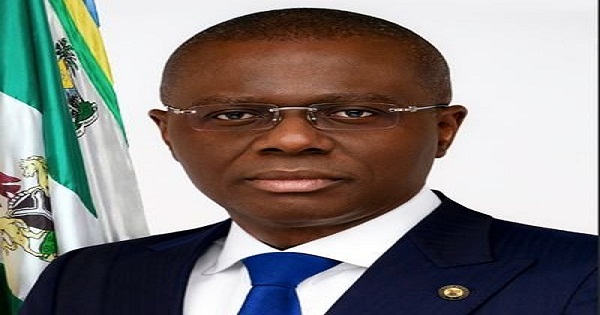
Lagos State has dragged 45 individuals and firms, including Bi-Courtney Aviation, DAAR Communications and Leaders & Company, to revenue court for tax debts running into billions of naira.

Lagos Govt
Bi-Courtney, operators of Murtala Muhammed Airport Terminal Two, faces N38.7 million claim; DAAR, behind Africa Independent Television, owes N22.4 million; ThisDay publishers Leaders & Company allegedly skip N67.1 million.
GMT Energy Resources tops corporates at N145.8 million, followed by Sheriff Deputies at N132.1 million; others like Heyden Petroleum, AA Rescue, BRT operator Primero also listed.
Individuals owe N13.5 million to N35 million each.
Attorney-General Lawal Pedro said suits followed ignored notices, aiming to enforce laws and fund infrastructure.
More defendants: IENG Nigeria, James Fisher, V Care Diagnostics, Venture Garden, Saro Africa, Barry Callebaut, Native Media, First Consulting, Eyowo Payments.
Compliant taxpayers post-notice escaped prosecution; defaulters risk penalties, interest, jail.
Pedro urged prompt filings and payments.


National Agency for Food and Drug Administration and Control (NAFDAC) has alerted Nigerians on counterfeit and unregistered Cerelac Mixed Fruits and Wheat products being sold in Lagos.

NAFDAC said Nestle Nigeria, the genuine Marketing Authorisation Holder of the product, received a complaint of suspected counterfeit purportedly manufactured by Nestlé Spain, bearing Batch Code 308002910.
It said that Nestle Nigeria reported that the complainant described that the counterfeit product emitted an odour suggestive of possible contact with fuel.
NAFDAC said that preliminary review of the product by Nestle Nigeria indicated that it had expired, in spite of the container displaying an expiry date of 10-2026, which suggested that the date coding had been tampered with (revalidated).
Nestle Cerelac Mixed Fruits and Wheat is a nutritious infant cereal, designed to be a delicious first food for infants.
NAFDAC said that its post-marketing surveillance’s directorate officers in Lagos conducted a surveillance visit to Maxland Shopping Centre, 193 Ago Palace, Okota, where the product was purchased by the complainant.
It added that the suspected counterfeit and unregistered Cerelac were found on sale at the premises and subsequently mopped up, while Nestle assisted in identifying the distinguishing features between registered and unregistered product.
According to the regulatory agency, Nestle revealed that the unregistered product used a hyphen (-) to separate the day from the year, while the registered product used a slash (/) to separate the day from the year.
“It is important to note that Nestle Nigeria is not aware of the channels through which the products are supplied into the country.
“Healthcare professionals and consumers are advised to report any suspicion of the sale of substandard and falsified regulated products to the nearest NAFDAC office, call 0800-162-3322, or send an email to [email protected],” NAFDAC said.
The agency warned that counterfeit formula often lacked essential nutrients, vitamins and minerals, leading to stunted growth or developmental issues.
It said that such formula might also contain contaminants that might lead to severe health consequences to infants or even death.
NAFDAC reiterated its commitment to safeguarding public health adding that it would continue surveillance activities to ensure the quality, safety, and efficacy of all NAFDAC-regulated products circulating in Nigeria.
It said that all zonal directors of the agency and state coordinators had been directed to carry out surveillance and mop up the revalidated product, if found within the zones and states.
The agency urged distributors, retailers, healthcare professionals, and caregivers to exercise caution and vigilance within the supply chain, to avoid the distribution, sale, and use of fake products.

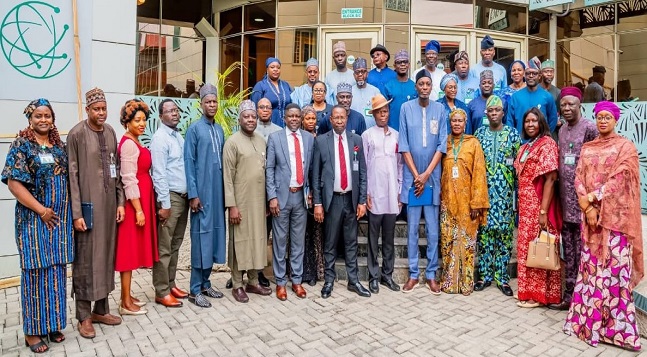
The National Information Technology Development Agency (NITDA) has reinforced its commitment to advancing Nigeria’s digital transformation agenda through strengthened collaboration with key strategic institutions, as it hosted the Director General of the National Institute for Policy and Strategic Studies (NIPSS), Professor Ayo Omotayo, alongside participants of the Senior Executive Course (SEC) 48, 2026.

The visit, which builds on an earlier strategic study tour, provided a platform for in-depth engagement on the role of digital innovation in driving sustainable economic growth, with particular focus on the Orange Economy.
Representing the Director General of NITDA, Kashifu Inuwa CCIE, the Director of Stakeholder Management and Partnerships, Dr Aristotle Onumo, highlighted the Agency’s commitment to fostering a vibrant digital ecosystem through inclusive policies, strategic partnerships, and capacity development initiatives.
“NITDA is committed to creating an enabling environment where innovation can thrive by bringing together government, private sector, academia, and creatives to drive Nigeria’s digital economy,” he stated.
Inuwa underscored the growing importance of the Orange Economy, describing it as a critical driver of innovation and economic value through intellectual property. He identified sectors such as digital content creation, film, animation, and digital art as key contributors to national development.
“The Orange Economy represents a powerful opportunity to transform our rich cultural heritage and creativity into sustainable economic growth,” he noted.
He further highlighted Nigeria’s unique advantage, particularly its youthful and creative population, while calling for stronger collaboration among stakeholders to fully harness the sector’s potential.
“With our youthful population and rich cultural assets, Nigeria is well-positioned to become a global leader in the Orange Economy if we deepen collaboration and investment across the ecosystem,” he added.
During the engagement, NITDA also presented its strategic initiatives aimed at supporting the digital and creative sectors, including digital infrastructure development, promotion of digital literacy, and implementation of policies that enable startups and innovators to scale.
Addressing challenges facing the sector, Inuwa pointed to issues such as limited access to funding, infrastructure gaps, weak intellectual property protection, and ecosystem fragmentation, while emphasising the need for coordinated action.
“Addressing challenges such as funding gaps, infrastructure deficits, and intellectual property protection is critical to unlocking the full potential of Nigeria’s creative economy,” he said.
The Agency reiterated its target of achieving 70 per cent digital literacy by 2027, noting that ongoing programmes are equipping millions of Nigerians with essential digital skills, including those in underserved and informal sectors.
In his remark, Professor Omotayo described the visit as an important opportunity to deepen understanding of how digital technologies are reshaping economic sectors, particularly the creative industry. He noted that the insights gathered would contribute significantly to policy recommendations aimed at strengthening Nigeria’s economic framework.
Participants of the SEC 48 programme engaged actively during the session, raising questions on capacity development, access to tools, and frameworks for protecting digital content. NITDA highlighted its ongoing collaborations with industry stakeholders to provide training, innovation hubs, and access to digital tools for young Nigerians.
The engagement concluded with a renewed commitment from both NITDA and NIPSS to strengthen collaboration in research, policy development, and capacity building, aimed at positioning Nigeria as a globally competitive force in the digital and creative economy.

Multichoice Bleeds Customers in South Africa, Loses 580,000 Subscribers

FG Asks MDAs to Halt New Policies Until Full Compliance with RIA

Broadcast Station Owners Reject IBAN’s Threat to Boycott Wike’s Media Engagements

BVN Database hits 68.6m – NIBSS

How Unethical Deals Triggered CBN Takeover of Union Bank -Forensic Report

Spotify’s Loud & Clear Report Reveals Over ₦60Bn Revenue for Nigerian Artists in 2025

Madonna University Taps Tech Guru Adote for Strategic Board Role

China Threatens to Shut Nigeria’s Satellite Over $11.44m Unpaid Debt

Healthcare Under Attack: Why Cybersecurity is Now Critical Care

Why JustMarkets Is a Strong Choice for Gold Trading




 E-Business3 days ago
FG to Strengthen Cybersecurity Coordination as NDPC Probes Alleged Data Breach

 Telecom3 days ago
Compensation for Poor Service Quality is Automatic- NCC

 Telecom3 days ago
FG Moves to Strengthen Cybersecurity Coordination as NDPC Probes Alleged Data Breach

 E-Business3 days ago
Offset Communications Slams N50m Suit against Qore Technologies for Alleged Copyright Infringement

 General News3 days ago
Tinubu Approves N3.3 Trillion Payment Plan to Boost Power Supply

 News3 days ago
Beware of Fake Cerelac Products – NAFDAC

 General News3 days ago
SERAP Sues CCB over Electoral Act, New Tax law

 E-Business2 days ago
Nigeria Cyberattacks: Stronger Collaboration as a Panacea