

News
Panic as Monkeypox Hits Lagos, Others


Two suspected cases of Monkeypox have been recorded in Lagos State, according to Dr. Jide Idris, commissioner for Health in the state.
Idris, on Monday, said that “Though no confirmed case has been recorded, there is need to sensitise members of the public and provide adequate information on measures for prevention and control of the disease in line with the policy of the state government.”
Idris, said the two suspected cases were recorded in a private hospital which he did not name and added that one of the suspected cases just came from Bayelsa State and ate bush meat.
Idris said the two suspected cases had been quarantined in their various houses pending the result of the investigation.
The commissioner said in the wake of this outbreak, the government was reiterating the need for members of the public to observe and maintain a high standard of personal and environmental hygiene at all times as part of the precautionary measures to prevent the spread of the disease to the State.
He urged the public to be vigilant and report any suspected case of the disease to the nearest public health facility or the Directorate of Disease Control in the Ministry of Health.
“Also, health workers are advised to practise universal safety precautions in the management of suspected or confirmed cases, wear appropriate Personal Protective Equipment when attending to cases, wash hands after each contact with patient or contaminated materials while surveillance system must be strengthened.
“The state government has mobilised the Disease Surveillance Officers in the 57 LGAs and LCDAs in the state and health workers in both public and private health facilities have been placed on high alert,” Idris said.
Idris called on residents to remain calm and go about their businesses without fear as the government had put in place adequate measures to effectively prevent and control the spread of the infection to the state.
“In case of any suspected case of Monkey Pox, the Lagos State Ministry of Health should be notified through the following mobile lines: 08037170614, 09087106072,” the commissioner said.
Elsewhere, Monkey pox, which started with an index case in Bayelsa on September 22, has spread to six other states, including Lagos.
There are 31 cases, the National Centre for Disease Control (NCDC), said.
Dr. Chikwe Ihekweazu, national coordinator/CEO, NCDC listed the states as Bayelsa, Rivers, Ekiti, Akwa Ibom, Ogun and Cross River.
He said samples had been collected from each suspected case for laboratory confirmation.
Said Ihekweazu: “It is unlikely that many of the suspected cases are actually monkey pox, but all are being investigated.”
He said all the suspected cases were receiving medical care and the patients improving clinically in their various states.
Ihekweazu said the centre had activated an Emergency Operation Centre (EOC) to coordinate the outbreak investigation and response across the affected states.
“The EOC is currently supporting state ministries of Health in their response to the outbreak through active case finding, epidemiological investigation and contact tracing. Measures have been put in place to ensure effective sample collection and testing to enable laboratory confirmation. Risk communication activities have been heightened to advise the public on preventive measures. All 36 states and the FCT have been notified for preparedness,” he explained.


News
New Study Reveals How Moniepoint Powers Nigeria’s Downstream Oil Sector with Same-Day Settlements and Working Capital Boost

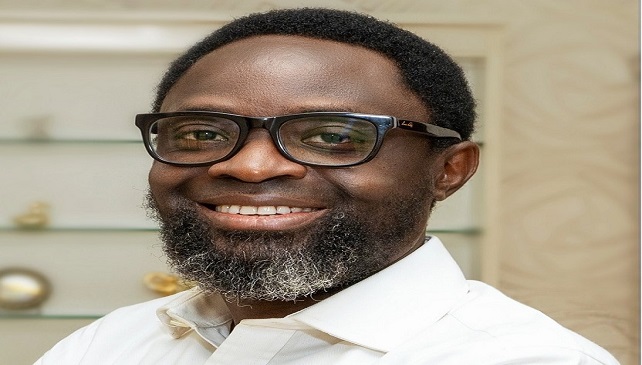
In a move to strengthen Nigeria’s downstream oil and gas sector, Africa’s all-in-one financial platform for businesses and their customers, Moniepoint Inc. says it is transforming how petrol stations across the country manage payments, access credit, and track inventory through innovative financial solutions.

As the largest distribution network for financial services in Nigeria, the leading banking and payments platform trusted by million in its latest case study titled, “Fueling the Nation: How Moniepoint Powers Nigeria’s Oil and Gas Industry”, reaffirmed its commitment to providing digital payment solutions and business management tools to improve operational efficiency in Nigeria’s downstream sector.
The study released recently examined how petrol stations play a crucial role as vital distribution points for fuel in Nigeria, especially in areas with limited access to alternative energy sources. Over 90 per cent of passenger and freight movement in Nigeria is by road, literally fueled by petrol stations that facilitate an average of 41 to 47 million litres of petrol every day.
The downstream oil and gas sector has been considered as the lifeblood of the Nigerian economy, however, for decades, petrol station operators have grappled with the “T+1” settlement cycle, where funds from card payments are only accessible the next day. In an industry with razor-thin margins and the need for immediate restocking, this delay often leads to “dead tanks” and lost revenue.
According to the case study, Moniepoint has bridged this gap by introducing same-day settlements, ensuring that station owners can access their funds instantly to pay suppliers and keep pumps running. The report further reveals that 90.9% of petrol stations now utilize POS terminals as standard infrastructure, with digital channels accounting for 43% of all fuel payments nationwide.
The Moniepoint case study on Nigeria’s downstream oil and gas sector provides very insightful commentary on critical aspects of running a petrol station, including payment systems, inventory management, and funding challenges.
Giving insight into the report and its relevance to the nation’s energy segment, Managing Director, Moniepoint Microfinance Bank, Babatunde Olofin, noted that the study seeks to deepen policy engagement, provide actionable intelligence on critical success factors needed for the nation’s socio-economic growth across different verticals.
Olofin noted, “We are pleased to release this comprehensive report on Nigeria’s downstream sector. Moniepoint’s reason for being is to create financial happiness and power dreams. Reports like this move us in that direction, enabling us to support critical infrastructure that keeps the nation moving.
“Looking at the relevance, with data on their business transactions and our business management tools, petrol stations can effectively plan their inventory and availability, knowing exactly when to stock up and ensuring operations run smoothly to serve more customers.
“By providing fuel retailers with the financial tools they need, Moniepoint is creating a future where access to reliable fuel distribution is improved and represents more than a fundamental right for all in an equitable and efficient system.”
Some other Key insights from the report include: The Liquidity Gap: 1-in-3 station owners identify access to credit as their biggest recurring challenge.
Credit Success: Moniepoint has disbursed millions of Naira in working capital to the sector with a 99.81% repayment success rate.
These tools have enabled nearly three in five fuel stations nationwide to transition from cash-dependent, manually-operated businesses into digitally-enabled enterprises with reliable access to both payments’ infrastructure and growth capital.
This study by Moniepoint comes on the heels of others like the previous case studies on family-owned businesses, South-East’s Onitsha Market, community pharmacies, women-owned businesses, North-East agriculture and the definitive Informal Economy Report, which collectively demonstrated how digital payment solutions are transforming Nigeria’s commercial landscape across diverse sectors and market structures.
Moniepoint’s ongoing commitment to financial inclusion and economic development has positioned it as a catalyst for growth across Nigeria and beyond. The company processes billions in transactions monthly and continues to expand its reach, supporting millions of businesses with payments, banking, credit, and business management solutions.


Federal Government has directed state governments to begin sharing the cost of electricity subsidy alongside the Federal Government.

It was gathered that payments for the subsidy will now be funded through the Power Assistance Consumers Fund (PCAF), a government-backed pool created to subsidise electricity bills for low-income and vulnerable consumers.
The fund is designed to replace blanket subsidies with targeted support, improve affordability amid rising tariffs and stabilise the power sector.
More than 18 states are already operating electricity regulatory agencies, while others are preparing to do so. The states include Lagos, Ondo, Osun, Ekiti, Edo, Delta, Bayelsa, Akwa Ibom, Cross River, Abia, Anambra, Imo, Kogi, Niger, Nasarawa, Plateau, Gombe and Jigawa.
The Director-General of the Budget Office of the Federation, Mr. Tanimu Yakubu, disclosed this in Abuja at the opening of the 2026 Post-Budget Preparation workshop on the Government Integrated Financial Management Information System (GIFMIS).
Speaking in an address read on his behalf by the Director of Expenditure Social, Mr. Yusuf Muhammed, Yakubu said states that enjoy the political benefits of electricity subsidy must also contribute to covering the financial gap created by the policy.
“Mr. President has directed that we operationalise a clearer framework to share the cost of electricity across the federation, so the burden is not treated as an open-ended fiscal residual — I mean federal residual,” he said.
“If you want a stable power sector, we must pay for the choices we make. When tariffs are held low, a gap is created. That gap is a subsidy, and a subsidy is a bill.”
He added: “In 2026, we will stop pretending that this bill can be left to the Federal Government alone, especially where the policy choice or the political benefit is shared across tiers of government.”
According to him, the President has ordered the activation of the electricity sector’s legal framework to ensure subsidy burden-sharing is practical and transparent.
“This means subsidy costs must be explicit, tracked and funded, so they do not return as arrears, liquidity crises or hidden liabilities in the market,” Yakubu said.
“It also means that if any tier of government chooses affordability intervention, the responsibility must be clear, agreed and enforceable. This is not punishment. It is an alignment.”
He further warned MDAs to make subsidy-related costs visible in their planning.
“The implication is simple: make subsidy-related costs visible in your planning and submissions. Do not push liabilities into the market as arrears or unfunded commitments,” he said.
Yakubu also disclosed that President Bola Tinubu has directed a review of Nigeria’s Fiscal Responsibility Framework to make fiscal rules more dynamic and enforceable.
“Fiscal rules are not a slogan; they are the guardrails of government,” he said.
“Without guardrails, spending becomes impulsive, debt becomes casual, and the budget becomes a statement of intent rather than a tool of delivery.”
He added that capital projects in 2026 must be delivery-ready and properly financed.
“A long list of projects is not a development strategy. It is often a map of disappointment. What citizens feel is delivery, completed roads, reliable power, functional schools and working hospitals,” Yakubu said.
Reacting to the development, the Director of Media and Communications of the Nigerian Governors’ Forum, Mr. Yunusa Abdullahi, said: “We are reviewing the context and content of the information. We will not be making further comments on it.”

Spanish Prime Minister Pedro Sánchez has unveiled plans to ban children under 16 from social media platforms, mandating robust age verification systems as part of a sweeping legislative package to curb toxic online content.

Speaking at the World Government Summit in Dubai, Sánchez declared platforms must erect “real barriers that work” beyond mere checkboxes, shielding minors from the “digital Wild West” where they navigate unprotected.
The proposal, set for approval by Spain’s Council of Ministers next week, amends a draft bill in parliament and holds social media executives legally accountable for illegal content like disinformation, hate speech and child pornography.
The measures introduce tools to track harmful material spread, while criminalising algorithm manipulation that amplifies such content for profit.
“Spreading hate must come at a legal, economic and ethical cost platforms can no longer ignore,” Sánchez emphasised, vowing governments would stop turning a blind eye.
Spain joins Europe’s hardening stance on youth online access, mirroring Denmark’s under-15 ban plans from last fall, France’s push for restrictions by September, and Portugal’s new bill requiring parental consent for under-16s.
The moves signal a continental shift to “regain control” of digital spaces amid rising concerns over youth vulnerability.

New Study Reveals How Moniepoint Powers Nigeria’s Downstream Oil Sector with Same-Day Settlements and Working Capital Boost

OADC Lagos Reinforces Commitment to Local Data Hosting and Digital Transformation @ NDPC’s National Privacy Week Summit

Firm Gives Advice on How to Stay Secure as AI, robots and VR are Redefining Family Life

FG Signs MoU with ICAN, CIBN, Others to Train 10m Nigerians in Financial Literacy

Corporate Comms in the Age of Crypto: Why Nigeria’s Digital Finance Future Depends on Trust

19 Nigerian Banks Meet CBN Recapitalization Targets Ahead of March Deadline

Youth Talent Takes Center Stage as T2 Ignites High-Octane Rap Battles @ Carnival Calabar

Aig-Imoukhuede Foundation Wrapped Up 2025 with Real Change in Governance, Health, Media Across Africa

Showmax Unlocks Easier Payments for Nigerian Subscribers via Baxi

Nigerian Terra Industries Secures $11.8m for Expansion




 Telecom3 days ago
Telecom Operators Invest Over $1Bn on 2,850 New Sites in 2025 – NCC

 E-Financial3 days ago
If Capital is the Answer, What Exactly is the Problem with First Holdco

 E-Financial3 days ago
Amaanah Finance to Unveils Non-Interest Banking Services Today

 News3 days ago
NSCDC Hands over Fake Crypto Currency Trader to EFCC

 General News3 days ago
First Trustees to Host 8th Islamic Estate Planning Clinic in Abuja

 News3 days ago
Alakija’s Flourish Africa Provides N300m Grants for Women Entrepreneurs

 E-Financial2 days ago
Accidental Billionaire Opts for Jail Instead of Returning Money Credited Him by Mistake

 General News3 days ago
Security Forces Probe Use of Drones by Terrorists