

General News
Partnerships in Times of Crisis

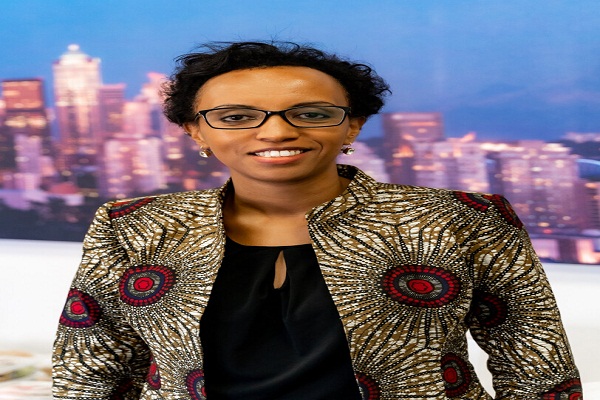
By Amrote Abdella, Regional Director, Microsoft 4Afrika Initiative,
The current global crisis has highlighted a number of areas, from the need of efficient information management to the need of accurate data gathering for faster medical response. In looking at the role of technology during this period, one area that has stood apart in driving meaningful change is the role of partnerships.Today, more than before, Microsoft 4Afrika is steadfast in supporting healthcare partners across the continent as they adapt their platforms and services to meet current needs.
Microsoft, through its 4Afrika initiative, has formed strategic partnerships with healthcare providers throughout Africa and beyond, providing them with technical support and business consultancy to help them achieve their goals. Each of these healthcare providers has had a significant impact in their sphere of influence, but with the onset of the Covid-19 pandemic, we’ve seen how our partners have used their existing platforms and programmes to pivot and adapt existing technologies to rapidly provide the much-needed response to address the challenges of the pandemic.
Healthcare powered by big data
Artificial intelligence and machine learning are already used in healthcare, but in a rapidly evolving situation, these tools can significantly help boost response times and preparedness.
When Microsoft 4Afrika firstpartnered with BroadReach,they were striving to create and implement data-driven solutions to improve the management and delivery of health programmes in underserved regions around the world. Vantage, an integrated cloud platform powered by Microsoft solutions, delivers powerful analytics that helps development, health and human services organisations quickly identify risks and opportunities.
Using machine learning, AI, big data and cloud computing, the company has enabled significant health outcomes in supported districts, integrating data immediately from a wide range of sources, and delivering real-time data, actionable insights and step-by-step implementation guidelines to boost effectiveness. Their digital HIV Portfolio on Management Solution has helped an estimated 340,000 people access HIV treatment in KwaZulu-Natal, South Africa, while their proactive predictive tool helps keep patients on treatment by predicting which patients are at risk of stopping medicines and empowering healthcare teams to reach out to them before they stop. Other types of predictive analysis help develop an understanding of how particular clinics and staff members are performing, medical stock levels and predicting what may happen and intervening before that happens.

During the Covid-19 crisis, BroadReach has moved quickly to repurpose its existing platforms. The company has used its cloud services, built on Azure, to rapidly gather data from thousands of health workers in the field and instantly upload it into Vantage, where advanced analytics are giving leaders key guidance to manage and prepare for the impact of the pandemic.
In healthcare, quick response times save lives.BroadReach has produced a facility readiness survey that allows government to redirect resources to prioritised hospitals and facilities, so that they have the right equipment and medical supplies on hand. Predictive analysis can be used to help forecast and track outbreak hotspots.
Partnerships like the one with BroadReach demonstrate the significant value that technology can deliver in situations that are rapidly changing and require high volumes of data from disparate sources to be quickly analysed for use in prediction and preventative measures.
Keeping healthcare facilities safe
Our partner Raphta has worked with Microsoft to develop software and hardware solutions that allow contactless biometrics which can be used for access control to facilities, among other things. Of course, during a pandemic where the virus can be transmitted on surfaces, contactless access assumes a far greater importance. Raphta is now offering its Shuri Face Contactless Biometrics solution to hospitals, clinics and buildings for thermal screening and containment, limiting contact and virus spread. Using current AI facial recognition software and hardware technology developed by Raphta and having quickly added the necessary thermal imaging technology, the company is now running pilot projects at the Netcare Gardens Hospital in Johannesburg, South Africaand at Kenyatta Hospital in Nairobi, Kenya.
Using technology to reach out
Telemedicine is another area where technology is enabling safer diagnosis and limiting unnecessary contact between patients and healthcare providers. Globally, the use of telemedicine has been surgingduring the current pandemic.
In Pakistan, we’ve seen first-hand the benefits of telemedicine in reaching patients who have limited access tohealthcare and healthcare workers.Sehat Kahani, an e-health start-up supported by 4Afrika usesMicrosoft platforms to provide patients who are far from healthcare centres with access to qualified doctors via a telemedicine platform, while cloud computing services mean that their patient records are immediately available anywhere using a mobile device.
Telemedicine can perform a vital role in enabling people to access healthcare services, remote diagnoses, and treatment plans. During the Covid-19 crisis, Sehat Kahani is using its smartphone app to provide virtual consultationsto patients across Pakistan, delivering educational content about the pandemic, and helping to direct them to the correct healthcare facilities if necessary. Using its telemedicine platform, it has educated more than a million users about the virus, andprovided more than 6,000 online consultations with patients.The company currently has more than 160 female doctors working non-stop to support citizens through this health crisis.

Bringing positive change in difficult circumstances
It’s encouraging to see how technology can support the humanitarian healthcare goals of countries across the globe, and how leading technology companies can support and enable healthcare partners to provide better, faster and more accurate treatment.Seeing how technologies can be adapted to work best in an emerging crisis shows the value of investing in these partnerships to help develop these platforms and services.
The clear challenge in Africa is bridging the gap in healthcare and providing equal access for all. By working with our partners across the African continent and beyond, we can see how technology is having a powerful impact on providing healthcare to the communities and countries who need it the most. Partners working together always provides more muscle through collaborationand we’ve seen technology allow our partners to scale, broadening their reach and subsequently have greater positive impact even in the current challenging, uncharted times.
About Amrote Abdella
As the Regional Director of Microsoft’s 4Afrika Initiative, Amrote Abdella spearheads Microsoft’s investments in Africa across 54 countries. She works closely with the internal teams in the Middle East and Africa – and globally – to enable and accelerate digital transformation opportunities across the continent.
Before becoming Regional Director, Amrote was 4Afrika’s Director for VC & Startups, where she worked closely with startups supporting the innovation ecosystem in Africa.
Prior to joining Microsoft, Amrote worked with the World Economic Forum in Geneva, as an Associate Director for Africa. She also served as a Financial Analyst at the World Bank in Washington, and worked in micro-finance with the Global Hunger Project, an NGO based out of New York. Here, she oversaw projects across eight countries in Africa and worked with African women farmers, driving financial inclusion.
In 2017, Amrote was named one of Africa’s Top 100 Young Business Leaders, ranking 12th out of 100 leaders under 40 who are playing a major role in driving the continent’s economic development. In 2019, she appeared on the same list, this time ranking 10th. In 2018 and 2019, she was also recognized by Jeune Afriqueas one of the top 50 influential leaders shaping digital evolution and supporting start-ups in the African continent.
Amrote constantly strives to learn new skills and believes in the values of passion, ambition and hard work. She also encourages all young women to have a grounding in STEM subjects.
Amrote holds a Masters degree in International Economic Development from the Heller School at Brandeis University in Massachusetts, and a Bachelor of Arts from Davidson College in North Carolina.



Dr. Evans Woherem, an award-winning African technology researcher, analyst, and writer, has proposed a comprehensive and implementable strategy to end terrorism, banditry, and criminal violence in Nigeria, warning that the country’s prolonged insecurity has reached a critical point that demands urgent, coordinated action.

Titled “A Comprehensive Strategy for Ending Terrorism, Banditry, and Criminal Violence in Nigeria: A Pragmatic, Multi-Layered, and Implementable Framework,” the paper presents a holistic roadmap designed to reverse more than a decade of escalating violence that has claimed thousands of lives, displaced communities, weakened local economies, and eroded public trust in governance.
According to him, insecurity has become deeply entrenched in everyday life across the country. “Terrorism, banditry, and criminal violence have become so commonplace that they now dominate daily conversations among Nigerians,” Dr. Woherem noted, adding that while the crisis is most acute in the North-East, North-West, and North-Central regions, “its effects are now being felt even in the southern parts of the country.”
Citing the 2025 Global Terrorism Index, which ranks Nigeria sixth globally in terms of terrorism impact, Dr. Woherem described the ranking as “a sobering statistical confirmation that terrorism still weighs heavily on the Nigerian state.”
The paper traces the roots of the crisis to the emergence of Boko Haram in 2009 and the subsequent rise of splinter groups such as ISWAP. It recalls high-profile incidents including the 2014 abduction of schoolgirls in Chibok, the Dapchi and Kankara kidnappings, and a series of mass abductions and attacks on schools and places of worship recorded in 2025.
Dr. Woherem observed that banditry, largely driven by ransom payments, “has spread across the entire nation, creating fear, weakening productivity, and pushing millions of households deeper into poverty.”
While acknowledging the role of military action, the author cautioned against relying on force alone. “Nigeria cannot defeat insurgency and violent crime through arms and ammunition alone,” he said. “Any sustainable solution must confront the internal conditions that allow insecurity to thrive.”
Among the key drivers identified in the paper by Dr. Woherem, are porous borders, arms proliferation, youth unemployment, economic stagnation, and persistent conflicts over land and resources, challenges Dr. Woherem stressed can be addressed through “a deliberate, intelligence-led, and whole-of-society approach.”
At the heart of the proposed framework, Woherem noted, is a call for intelligence-driven security operations, including the establishment of a National Counter-Insurgency and Intelligence Fusion Centre. “Security operations must be guided by accurate, actionable intelligence rather than fear-led mass actions that often harm civilians and undermine public trust,” he stated.
The paper also advocates comprehensive policing reforms, including the creation of constitutionally backed state police systems supported by a more specialized federal police structure. “Nigeria’s over-centralised policing model is structurally incapable of effectively addressing widespread criminality across such a vast and diverse country.”
Recognising the realities at the grassroots, Woherem calls for the formal regulation of community-based security groups, and noted that “ignoring vigilante groups is dangerous, and banning them outright is unrealistic,” but stressed that their roles must be clearly defined, regulated, and subject to strict oversight.
On border security, particularly in the Lake Chad Basin, the author warned that instability in neighbouring countries continues to fuel Nigeria’s insecurity. “No permanent solution is possible without deep regional cooperation,” he said, advocating an Integrated Border Management system supported by joint operations with neighbouring states.
The paper places strong emphasis on prevention through economic inclusion, youth employment, and skills development. “Jobs and income remain the most powerful tools for preventing recruitment into violent groups,” Dr. Woherem asserted, adding that immediate livelihood opportunities significantly weaken the appeal of extremist narratives.
He also called for structured deradicalisation and reintegration programmes, noting that “a humane, community-accepted process is essential for breaking cycles of violence and preventing relapse into extremism.”
Dr. Woherem further emphasised the need for governance reforms and accountability in the security sector. “Without transparency, oversight, and institutional integrity, even the best security strategies will fail,” he warned.
The white paper outlines a phased implementation plan from 2025 to 2030, beginning with intelligence fusion, pilot state police initiatives, community security registration, drone surveillance, and financial crackdowns on terror networks, before expanding into nationwide reforms and long-term consolidation.
Concluding, Dr. Woherem expressed cautious optimism about Nigeria’s future. “Nigeria can overcome this prolonged phase of insecurity,” he said, “but only through political will, coordinated institutions, and the active participation of society.”
He added that the proposed framework offers “a realistic pathway to restoring security, rebuilding public trust, and unlocking Nigeria’s vast human and economic potential.”

In a market where less than 3% of land is formally registered and property fraud remains systemic, infrastructure, not apps, is becoming the defining battleground for real estate innovation.

L-R: Ndifreke Ikokpu, COO, Sytemap, HRM Oba Akintoye Adeoye, President REDAN & Cholatte Odunlade-Akeji, Director, RightHome
That reality came into sharp focus on December 18, 2025, as the Real Estate Developers Association of Nigeria (REDAN) signed a Memorandum of Understanding (MoU) with Sytemap Technologies Limited, signaling a major industry endorsement of Sytemap’s land and real estate transaction infrastructure.
The partnership centers on RightHOME, a jointly developed digital real estate platform powered by Sytemap’s secure cloud infrastructure, mapping systems, transaction monitoring, and fraud-prevention architecture, with REDAN driving ecosystem adoption through its nationwide developer network.
Nigeria’s real estate sector processes transactions worth trillions of naira annually, yet remains heavily manual, fragmented, and vulnerable to disputes. Industry data suggests unresolved title issues alone lock up ₦36 trillion in dead capital, limiting access to finance and slowing development.
“This MoU represents a shift from fragmented digitization to coordinated infrastructure,” said Nnamdi Uba, CEO at Sytemap. “When the industry body itself aligns around shared standards, verification, and technology, innovation can finally scale responsibly.”
Under the agreement:
· REDAN will onboard registered developers and promote adoption of the platform as a trusted digital channel.
· Sytemap will deliver secure hosting, real-time monitoring, escrow-aligned transaction workflows, and compliance with Nigeria’s data protection regulations.
· Joint standards will be developed for digital verification, transparency, and asset mapping.
From a technology perspective, the partnership reflects a growing consensus that solving African real estate challenges requires deep infrastructure, not surface-level marketplaces. Fraud detection, uptime reliability, auditability, and regulatory alignment, areas often overlooked in proptech, are central to Sytemap’s approach.
HRM Oba Akintoye Adeoye, representing REDAN noted, “This collaboration allows developers to operate in a system where trust is embedded, not assumed. That is critical for long-term growth.”
For the broader tech ecosystem, the MoU stands out as a rare example of industry-led validation, where a national association formally aligns with a technology provider to modernize an entire sector.
Ndifreke Ikokpu, COO at Sytemap signed on behalf of Sytemap while Cholatte Odunlade – Akeji, CEO of RightHome signed on behalf of the Special Purpose Vehicle.
As pressure mounts to unlock housing finance, attract institutional capital, and reduce transaction risk, the REDAN–Sytemap partnership positions digital land infrastructure not as an optional upgrade, but as a foundational requirement for the future of real estate in Nigeria.

Taiwo Oyedele, Chairman of the Presidential Fiscal Policy and Tax Reforms Committee, has cautioned that failure to implement Nigeria’s new tax laws by January 1, 2026, would leave the vast majority of workers and businesses at a disadvantage.

Taiwo Oyedele
Speaking on Channels Television’s The Morning Brief, Oyedele said postponing the reforms would mean that “the bottom 98 per cent of workers remain overtaxed,” while businesses continue to grapple with multiple taxation and miss out on exemptions.
He added that small and unprofitable enterprises would still be subject to minimum taxes, and hidden VAT charges would keep driving up the cost of essentials such as food, healthcare, and education.
His comments come amid calls by former Vice President Atiku Abubakar, Labour Party’s 2023 presidential candidate Peter Obi, and several civil society groups for a suspension of the reforms. Oyedele argued that rather than halting implementation, specific areas of concern should be identified and corrected.
“So, we need to be clear about what we are asking for,” he said. “Even if it is established that there have been substantial alterations to what the National Assembly passed, my view will be to identify those provisions… and go ahead to implement the law as passed by the NASS, while you address the issues as to how they got in there in the first place.”
Oyedele acknowledged that even the version passed by lawmakers contained sections requiring amendment, citing issues with referencing and definitions.
He also addressed controversy over alleged discrepancies between the gazetted laws and those approved by the National Assembly, noting that without access to the officially harmonised bills certified by the clerk, it was difficult to determine differences.
He pointed to Section 41(8), which initially appeared to require a 20 per cent deposit but was later excluded from the final version, stressing that some draft materials circulating in the media did not originate from the House committee. “I think we should allow them do the investigation,” he said.
President Bola Tinubu has already signed the four tax reform bills into law, describing them as the most significant overhaul of Nigeria’s tax system in decades.
The reforms — the Nigeria Tax Act, Nigeria Tax Administration Act, Nigeria Revenue Service (Establishment) Act, and Joint Revenue Board (Establishment) Act — are scheduled to take effect on January 1, 2026, under a unified Nigeria Revenue Service.

Nigeria’s Internet Usage Hits 1.24m Terabytes – NCC

World Bank Reveals Obstacles to Growth of Mobile Money Accounts in Sub-Saharan Africa

NCC Ranked Among Top 3 MDAs for Best Website Performance in 2025

FIRS Declares NIN, CAC Numbers as Tax IDs from 2026

Woherem Proposes Pragmatic Roadmap to End Terrorism and Banditry in Nigeria

Nigeria Records Highest Weekly Cyberattacks in Africa — Report

Cyber Tsunami Hits Nigeria as Breaches Surge 1,047%, esentry Q3 Report Reveals

Minister Claims Bandits Exploit Poor Network, Bounce Calls Off Multiple Towers

GenAI Adoption Among African workers Outpace Global Peers

Jumia’s Data Shows Nigerians Turning to Digital Retail to Navigate Inflation Pressures




 E-Financial3 days ago
FIRS says NIN, CAC Numbers to Serve as Tax IDs from 2026

 E-Financial3 days ago
AfDB Group Mobilises Global Private Capital to Close Africa’s Financing Gap

 Telecom3 days ago
Oyedele Dismisses Claims Bank Accounts Without TIN Will Be Frozen

 E-Financial3 days ago
Fidelity Bank Bolsters Ikoyi Fire Station with Hoses, Pumps for Safer Communities
 General News3 days ago
Woherem Proposes Pragmatic Roadmap to End Terrorism and Banditry in Nigeria
 News2 days ago
FIRS Declares NIN, CAC Numbers as Tax IDs from 2026
 E-Financial2 days ago
World Bank Reveals Obstacles to Growth of Mobile Money Accounts in Sub-Saharan Africa

 Telecom3 days ago
Amazon Blocks 1,800 North Koreans From Job Applications