

General News
Philips Green Products Sales Hit 52% High, Improves 1.9Bn Lives


Royal Philips has recorded good progress in its sustainability performance with Green Product sales increasing to EUR 11.1 billion in 2014, representing a record level of 52% of total sales.
In 2014, Philips invested EUR 463 million in Green Innovation and achieved its EUR 2 billion EcoVision program target a year ahead of time.
Lighting increased its yearly investments, being the largest contributor to Green Innovation with EUR 255 million, mainly targeted at advancing the development of LED solutions.
In addition, Philips was able to further reduce its operational carbon footprint by 5% compared to 2013.
“Achieving our EUR 2 billion Green Innovation target ahead of time is a clear proof of accelerating sustainable business and value creation across the company. We now improve the lives of 1.9 billion people, demonstrating solid progress towards our EcoVision commitments”, said Jim Andrew, chairman, Sustainability Board and Philips’ Chief Strategy & Innovation Officer.
The total product portfolio saw a slight increase of energy efficiency in 2014.
For example, in the city of Madrid, Spain, Philips will renew the city’s entire lighting system with 225,000 energy-efficient lights, making it the world’s largest street lighting upgrade to date.
In Healthcare, the Green Product portfolio expanded with seven new introductions to improve patient outcomes and access to care while reducing environmental impact.
Philips also expanded its efforts in circular economy and opened a new refurbishment center for medical imaging systems in Best, the Netherlands.
This facility represents an important milestone in bringing the financial and environmental benefits of circular economy to the healthcare industry.
Another example is the new SENSEO® Up coffee machine, which effectively incorporates 13% of recycled plastics into its product design.
Jim Andrew added: “We see that social and environmental considerations have become a crucial element in customers’ decisions and we believe that embedding circular economy principles into our businesses will offer us substantial new opportunities to accelerate our innovation and growth.”
The Philips 2014 sustainability update is an integral part of the Philips 2014 Annual Report.
Its EcoVision program comprises key performance indicators in the areas of improving people’s lives, Green Product sales, Green Innovation (incl. Circular Economy), Green Operations, Health & Safety and Supplier Sustainability.
Green Products need to prove leadership in at least one Green Focal Area compared to industry standards, which is defined by a sector specific peer group.
This is done either by outperforming reference products (which can be a competitor or predecessor product in the particular product family) by at least 10%, outperforming product-specific eco-requirements or by being awarded with a recognized eco-performance label.
The Green Focal Areas are: Energy efficiency, Packaging, Hazardous substances, Weight, Recycling and disposal and Lifetime reliability.
All performance numbers have been restated to exclude the impact of Lumileds and Automotive.
To calculate how many lives it is improving, market intelligence and statistical data on the number of people touched by the products contributing to the social or ecological dimension over the lifetime of a product are multiplied by the number of those products delivered in a year.
After elimination of double counts, the number of lives improved by Philip’s innovative solutions is calculated.
In 2014 it improved the lives of 1.9 billion people.
Also, circular economy is a driver for innovation in the areas of material – component and product reuse, as well as business models such as solutions and services.
In a circular economy, the more effective use of materials enables to create more value, both by cost savings and by developing new markets or growing existing ones.



Joint Admissions and Matriculation Board (JAMB) has said it has uncovered criminal syndicates that are deploying artificial intelligence tools to impersonate its officials and defraud candidates preparing for the Unified Tertiary Matriculation Examination (UTME).

Is-haq Oloyede, registrar of the board, disclosed this on Saturday in Abuja, warning that candidates and parents involved in the scheme would face severe consequences.
Mr Oloyede also said three top officials of the board have been found to have collaborated in sabotaging the system and have been recommended for dismissal.
He added that two other officials and a member of staff of Ahmadu Bello University, Zaria, are currently undergoing criminal prosecution for involvement in activities inimical to the integrity of the examination body.
Mr Oloyede said investigations revealed that more than 100 candidates were linked to the scheme, with 83 confirmed to have made payments to the syndicates.
He added that those involved cut across 25 states with three school proprietors in custody for aiding and abetting examination malpractice.
He further said the board had made recommendations to the Minister of Education for the cancellation of the affected registrations.
“What is important for us to emphasise here is that the students themselves and their parents are willing collaborators and cannot be regarded as innocent,” he said.
Mr Oloyede also expressed concern about the involvement of underage candidates, noting that about 38,000 underage candidates have registered for the 2026 UTME.
He said many of the candidates who patronised the syndicate are underaged, who have been pushed by their parents beyond their academic capacity.
While noting that JAMB’s mandate is limited to conducting examinations, he urged parents to refrain from encouraging malpractice.
“Parents must understand that paying for fraud does not secure a child’s future. It destroys it. You are teaching them that cheating is a strategy, that deception is acceptable, and that merit is optional,” he said.
Mr Oloyede rejected suggestions that the board should negotiate with suspects, including some who allegedly fled the country after last year’s examination.
He added that some computer-based test (CBT) centres had already been sanctioned.
He warned that paying for examination fraud or belonging to online groups offering such services would attract sanctions.
“Let it be clearly understood by all Nigerians that paying for examination fraud is a crime. Receiving illegal assistance is a punishable offence. Being a willing member of a WhatsApp group where these fake services are offered will no longer be condoned. Ignorance will not be accepted as a defence,” he said.
Mr Oloyede said the board is working with security agencies to tackle the fraud schemes.
He thanked the Office of the National Security Adviser, the Directorate of State Services, the Nigerian Police Force and the Nigeria Security and Civil Defence Corps for their support.
“As for capacity, we have the capacity to deal with all these issues. If we did not have the capacity, we would not be able to stay ahead of them. As they are planning, we are planning,” he said.
He added that JAMB has strengthened its technical systems, including the ability to detect prohibited devices during examinations.

Socio-Economic Rights and Accountability Project (SERAP) has urged the Federal Competition and Consumer Protection Commission (FCCPC) “to urgently investigate allegations that Google, Meta (Facebook), Apple, Microsoft (Bing), X (formerly Twitter), TikTok, Amazon, and YouTube are using opaque algorithms and market dominance to undermine Nigerian media, businesses, and citizens’ rights.”

In a complaint dated February 28, 2026, and addressed to Mr Tunji Bello, executive vice chairman and CEO, FCCPC; SERAP accused companies including Google, Meta (Facebook), Apple, Microsoft (Bing), X, TikTok, Amazon and YouTube of deploying opaque algorithms and leveraging market dominance in ways that allegedly undermine Nigerian media organisations, businesses, and citizens’ rights.
The complaint which was signed by Kolawole Oluwadare, deputy director, SERAP, said, “Big technology companies operate with enormous influence over Nigeria’s digital economy and information ecosystem, yet they often escape accountability for the harms they cause.”
SERAP urged the FCCPC “to take measures necessary to urgently prevent further unfair market practices, algorithmic influence, consumer harm and abuses of media freedom, freedom of expression, privacy, and access to information and ensure compliance with Nigerian laws and international standards.”
SERAP also urged the FCCPC “to convene a public hearing into the allegations of algorithmic discrimination, market dominance, data exploitation, and consumer harm involving Google, Meta, Apple, Microsoft (Bing), X, TikTok, Amazon and YouTube.”
SERAP also asked the FCCPC to convene a public hearing to investigate allegations of algorithmic discrimination, data exploitation, revenue diversion, and anti-competitive conduct involving the tech giants.
According to the organisation, dominant digital platforms now act as private gatekeepers of Nigeria’s information and business ecosystem, wielding enormous influence over public discourse and market competition without sufficient transparency or regulatory oversight.
“Millions of Nigerians rely on these platforms for news, information and business opportunities,” SERAP stated, warning that opaque algorithms and offshore revenue extraction models pose both economic and human rights concerns.
The group argued that the alleged practices threaten media plurality, consumer protection, privacy rights, and the integrity of Nigeria’s forthcoming elections.
SERAP pointed to actions taken by the South African Competition Commission, which investigated Google over alleged bias against local media content.
The South African probe reportedly resulted in measures including algorithmic transparency requirements, compliance monitoring and financial remedies.
SERAP urged the FCCPC to take similar steps to safeguard Nigerian media and businesses.
The organisation maintained that if established, the allegations could amount to violations of Sections 17 and 18 of the Federal Competition and Consumer Protection Act (FCCPA), which prohibit abuse of market dominance and anti-competitive conduct.
SERAP stressed that the FCCPC has statutory authority to investigate and sanction conduct that substantially prevents, restricts or distorts competition in Nigeria.
It also warned that failure by the Commission to act promptly could prompt the organisation to pursue legal action to compel regulatory intervention.
Citing concerns reportedly raised by the Nigerian Press Organisation (NPO), SERAP said big tech companies have fundamentally altered Nigeria’s information environment, creating what it described as a structural imbalance of power that threatens the sustainability of professional journalism.
Among the allegations listed are: Algorithms controlled outside Nigeria determining content visibility, monetisation of Nigerian news content without proportionate reinvestment, offshore extraction of advertising revenues, limited discoverability of Nigerian websites and platforms, and lack of transparency in ranking and recommendation systems.
SERAP argued that declining revenues in the Nigerian media industry have led to shrinking newsrooms, closure of bureaus, and the emergence of news deserts, weakening journalism’s constitutional role in democratic accountability.
The organisation further warned that algorithmic opacity and data-driven micro-targeting could influence voter exposure to information ahead of Nigeria’s forthcoming elections, raising concerns about electoral fairness and transparency.
SERAP emphasised that media freedom is guaranteed under Sections 22 and 39 of the 1999 Constitution (as amended), as well as international human rights instruments including the International Covenant on Civil and Political Rights and the African Charter on Human and Peoples’ Rights.
The group urged the FCCPC to: Initiate a full-scale investigation into the alleged conduct, convene a public hearing involving journalists, media organisations, SMEs, content creators and civil society groups, mandate transparency in ranking, recommendation and advertising algorithms, establish remedial measures, including a compensation fund for affected media organisations, summon relevant persons and demand production of documents, and impose sanctions where violations are established.
SERAP said urgent regulatory action is necessary to prevent ongoing consumer harm, protect competition, and safeguard constitutional rights in Nigeria’s digital space.

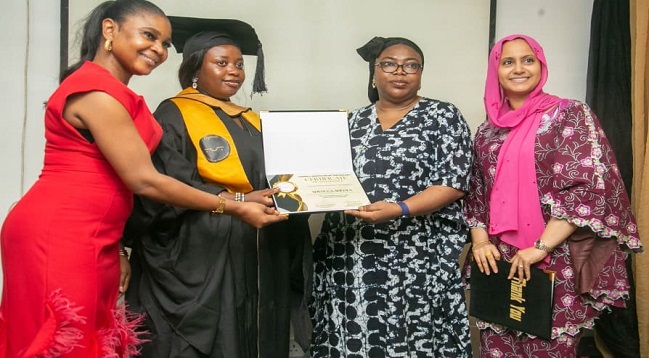
Capelli Institute of Trichology has committed to advancing trichology practice in Nigeria, even as she graduated new set of trichology professional.

Dr. Daisy Obiano, founder of the institute, stated this at the fourth graduation ceremony of the institute held in Lagos recently which was attended by Hajira Abdulkadir of National Board for Technical Education (NBTE).
She noted that Capelli Institute of Trichology (CIT) is a specialized education and training institute dedicated to the science of hair and scalp health. “The institute focuses on equipping learners with professional skills in trichology, hair therapy, scalp diagnosis, and hair health management through robust theoretical and practical training.
“CIT combines scientific rigor with industry-relevant practices to prepare graduates for careers in salons, hair clinics, and professional consultancies”.
According to her, “we envisioned an institution that would raise professionals, not just practitioners; problem-solvers, not product pushers; and leaders, not followers in the evolving world of trichology, hair therapy, and wellness science. The quality of our graduates today is evidence that this vision was not in vain.
“The 2024/2025 academic session demanded much from you. They were challenged intellectually, stretched practically, and refined professionally. They learned not only what to do, but why do it. They were trained to observe, to question, to consult, to document, and to treat with integrity.
“At CIT, we believe that every scalp tells a story, and every client deserves truth, compassion, and competence. That philosophy has been entrusted to you.
She added that service, guided by knowledge, has the power to transform lives and to advance the understanding and treatment of hair and scalp health through innovative research, education, and clinical excellence.
Capelli Institute of Trichology has developed a reputation as one of Nigeria’s foremost trichology education providers. Its curriculum is recognized for rigor and relevance and attracts students seeking practical hair and scalp science expertise.
In recognition of the importance of accessibility and flexibility in modern education, CIT has developed a digital learning ecosystem:
Online Course Delivery where learners enroll and complete courses remotely through the institute’s e-learning portal, covering trichology fundamentals, salon business, and specialized treatment modules.
Modular Learning Structure where courses are divided into bite-size modules with interactive content, assignments, and assessments tailored to remote study.
Flexible Study Options; that allows students space their learning according to their schedules, with options to join virtual sessions, access downloadable content, and communicate via the institute’s virtual classroom email system.

Iran-Israel-US Conflict and CBN’s FX Gains: A Stress Test for Nigeria’s Monetary Stability

JAMB Uncovers AI-Driven Fraud Targeting UTME Candidates, Warns Parents

SERAP Asks FCCPC to Investigate Google, Meta, Others over Alleged Rights Abuses

Reps Mull Commission to Regulate Fintech Operations

TeamApt, Awabah Partner to Boost Pension Drive for Nigerians

Accidental Billionaire Opts for Jail Instead of Returning Money Credited Him by Mistake

New Horizons Nigeria Breaks Ground: First to Fuse Mandarin into ICT Curriculum

Kaspersky Brings more Transparency to Threat Detection with New Hunt Hub

NDPC Commits to Balancing Data Privacy, Protection Information

OADC Lagos Reinforces Commitment to Local Data Hosting and Digital Transformation @ NDPC’s National Privacy Week Summit




 Telecom2 days ago
MTN Nigeria Posts Record N1.70 Trillion Pre‑Tax Profit, Declares N20 Dividend for 2025

 General News2 days ago
More 14m Farmers to Benefit from AfDB-backed Initiative

 Telecom2 days ago
Dimension Data Nigeria Secures ₦20Billion Funding to Strengthen Digital Infrastructure

 Telecom2 days ago
Alerzo Liquidates Delivery Fleet as N4.38bn Moniepoint Loan Row Deepens

 News2 days ago
Galaxy Backbone Confirms Over 150,000 Active Official Government Email Accounts, Clarifies Status of GOVMAIL

 General News2 days ago
Newmark Webinar Explores How AI Could Transform Healthcare in Africa
 General News1 hour ago
SERAP Asks FCCPC to Investigate Google, Meta, Others over Alleged Rights Abuses

 General News2 hours ago
Capelli Institute Commits to Advancing Trichology in Nigeria